Washington Bill of Sale
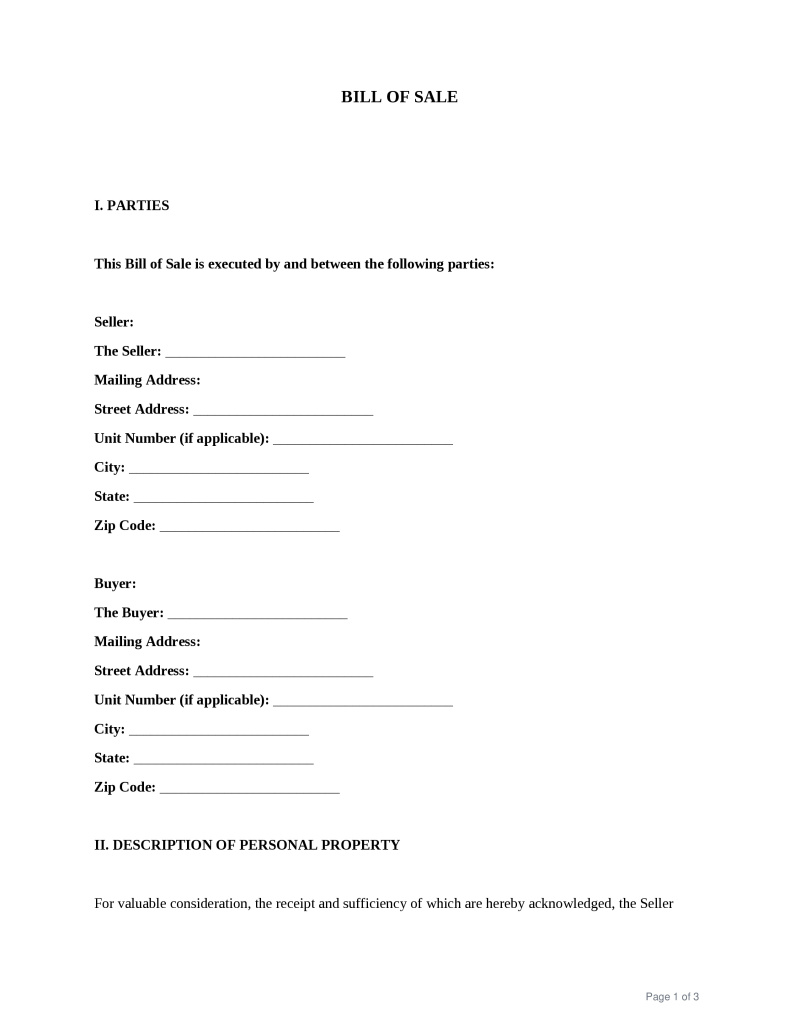
A Washington Bill of Sale is a legal document that records the transfer of ownership of personal property, such as a vehicle or vessel, from a seller to a buyer within the state of Washington.
Asset Type
Choose the category that best describes the item. This helps include the right identifying details, such as VIN, hull number, serial number, or livestock identifiers.
Use this when the item does not fit one of the listed categories.
Table of Contents
What is a Washington Bill of Sale?
A Washington Bill of Sale is a legal document used to record the transfer of ownership of personal property, most commonly vehicles, vessels, or other valuable assets, from a seller to a buyer. It serves as a receipt of the transaction, detailing the purchase price, the identities of the parties, and the specific condition of the item sold. While it provides proof of a transfer, it does not independently transfer legal title or register a vehicle with the state. This document is widely utilized by residents and businesses to establish a clear paper trail of transactions within the state of Washington. It protects both parties by serving as written evidence of the terms agreed upon during the sale.
Types of Washington Bills of Sale
Different transactions require specific formats to comply with state agencies and legal standards:
- Vehicle Bill of Sale - Used to document the transfer of cars, trucks, motorcycles, or other motorized road vehicles between private parties in Washington.
- Vessel Bill of Sale - Designed specifically for registering the transfer of ownership of boats, yachts, and other watercraft with the Department of Licensing.
- Vehicle Parts Bill of Sale - Utilized when acquiring specific vehicle parts, especially major component parts which require additional identification details (WAC 308-65-020).
- Valuable Materials Bill of Sale - Prepared by the state department when materials such as timber, stone, or gravel are sold separately from state-owned land (RCW 79.15.130).
- General Bill of Sale - Used for the sale of personal property such as electronics, furniture, or equipment that do not require specialized state registration.
Mandatory Legal Requirements
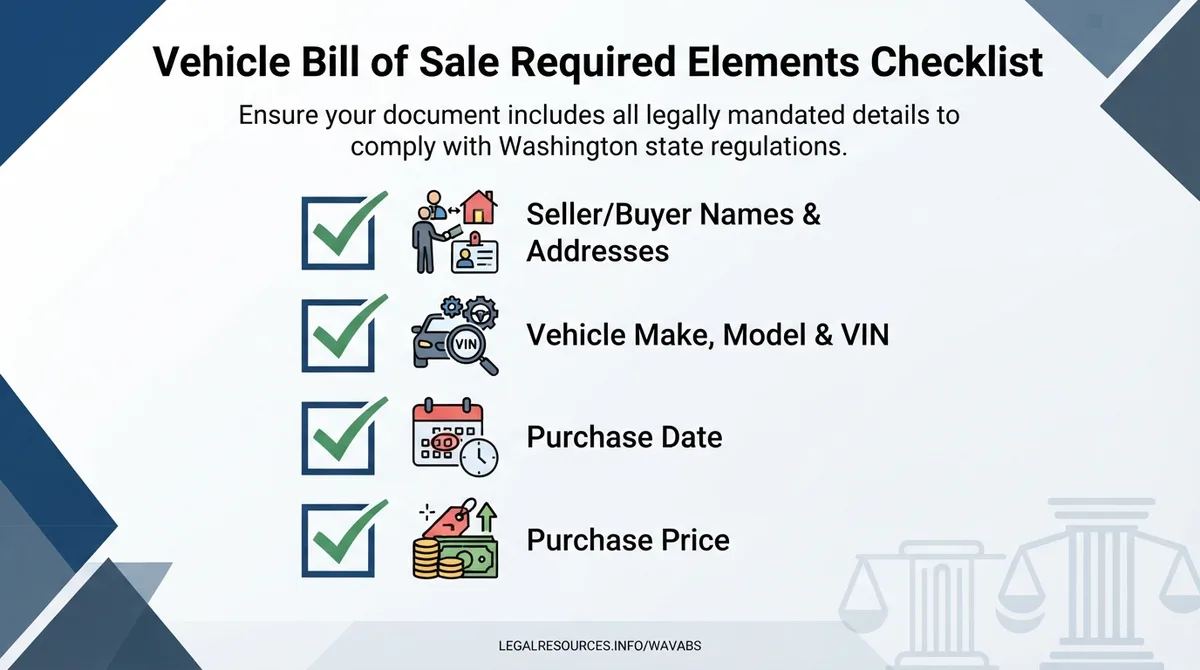
Washington administrative rules establish strict requirements for vehicle and parts transactions to prevent fraud and ensure accurate record-keeping:
- Identity of the Parties - Requires the full names and physical addresses of both the seller and the purchaser (WAC 308-63-020).
- Vehicle Description - Demands a detailed description of the vehicle including the make, model, and vehicle identification or serial number (WAC 308-63-020).
- Transaction Details - Specifies that the date of purchase and the purchase price must be clearly recorded (WAC 308-63-020).
- Vehicle Parts Identification - Mandates describing the specific part, verifying the seller's identity, and providing the vehicle identification number of the vehicle from which a major component part was removed (WAC 308-65-020).
- Acceptance in Lieu of Title - Permits a bill of sale to substitute for a title only for vehicles from nontitle jurisdictions, vehicles with surrendered titles, or vehicles that do not standardly receive titles (WAC 308-63-020).
State Land and Valuable Materials
When valuable materials are sold separately from state land, Washington law mandates a specialized process to ensure public resources are managed appropriately:
- Full Payment Requirement - The Department of Natural Resources prepares the bill of sale only after the purchase price and associated fees are paid in full (RCW 79.15.130).
- Removal Timeline - The document must explicitly define the specific time period allowed for the purchaser to remove the materials from the land (RCW 79.15.130).
- Official Execution - The bill of sale must be signed by the commissioner of public lands and attested by the seal of the commissioner's office (RCW 79.15.130).
Vehicle and Vessel Transfer Procedures
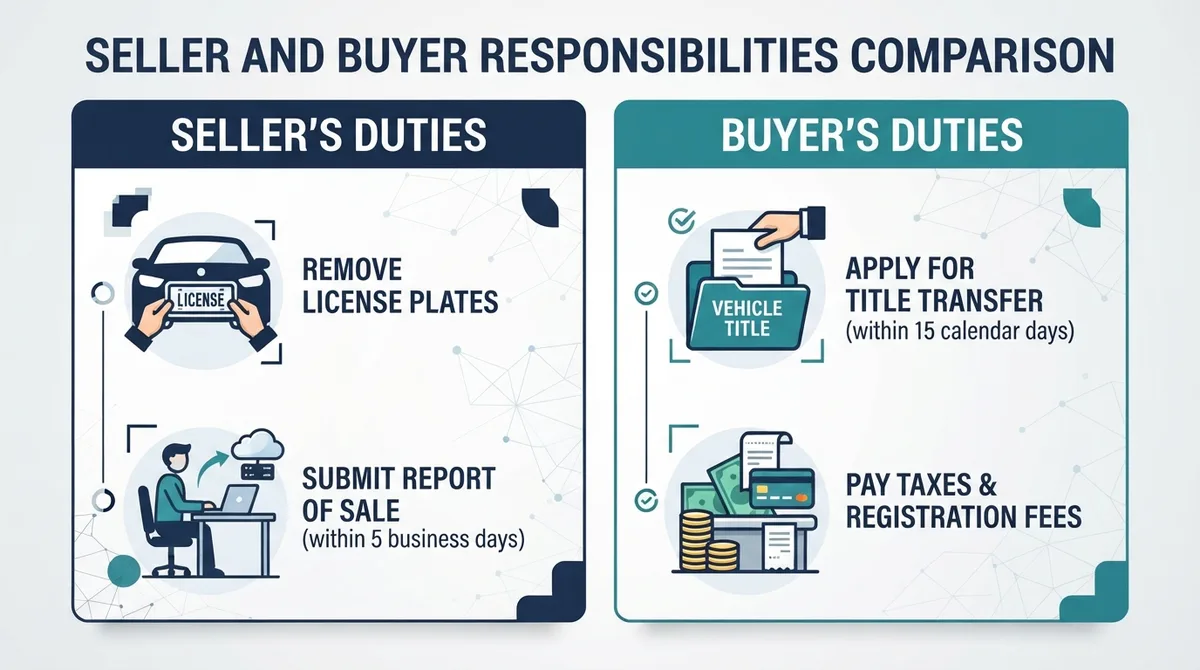
To finalize a vehicle or vessel transaction in Washington, buyers and sellers must perform several distinct tasks beyond completing the bill of sale:
- Complete the Official Form - The parties fill out the Department of Licensing Vehicle/Vessel Bill of Sale form, ensuring all identification numbers and purchase prices are accurate.
- Remove the License Plates - The seller must remove the license plates from the vehicle at the time of the sale before releasing the vehicle to the buyer.
- Submit a Report of Sale - The seller must file a completed Report of Sale with the state within five days of the transaction to protect themselves from liability.
- Apply for Title Transfer - The buyer must submit the completed bill of sale, the current certificate of title, and the appropriate transfer fees to the Department of Licensing within fifteen days to avoid late penalties.
Frequently Asked Questions
Sources
- WAC 308-63-020: Bill of Sale - Defines requirements for vehicle bills of sale in Washington State.
- WAC 308-65-020: Definitions - Provides definitions related to bills of sale for acquiring vehicles and vehicle parts.
- RCW 79.15.130: Bill of Sale - Details the process for preparing a bill of sale when valuable materials are sold separately from land.
- Vehicle/Vessel Bill of Sale Form - Official form for recording the sale of a vehicle or vessel in Washington State.
Bill of Sale in other states
Not the form you're looking for?
Try our legal document generator to create a custom document
Disclaimer: The templates available on this website are provided for general informational purposes only and do not constitute legal advice. They are not intended to be, and should not be interpreted as, compliant with any specific legal, regulatory, or privacy requirements. These templates are not a replacement for professional legal guidance and should not be relied upon for any particular matter or circumstance. Users are strongly encouraged to seek advice from a qualified attorney licensed in their jurisdiction before using, modifying, or relying on any template.
All templates are provided on an "as is," "with all faults," and "as available" basis. The provider disclaims any and all warranties of any kind, whether express, implied, statutory, or otherwise, including without limitation warranties of merchantability, fitness for a particular purpose, title, or non-infringement.
LegalTemplates.com makes no guarantees or representations regarding the accuracy, completeness, expected outcomes, or reliability of the materials contained in these templates or any materials referenced or linked from them.