Vermont Bill of Sale
A Vermont Bill of Sale is a legal document that records the transfer of ownership of personal property, such as a vehicle or vessel, from a seller to a buyer within the state of Vermont.
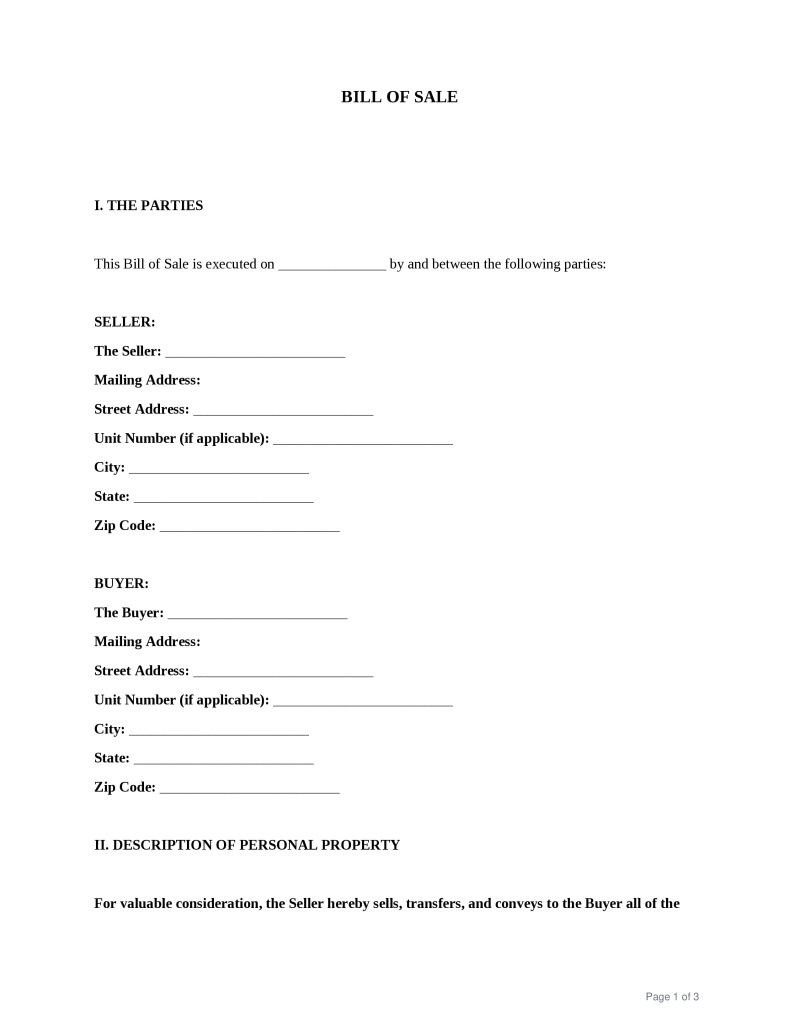
Asset Type
Choose the category that best describes the item. This helps include the right identifying details, such as VIN, hull number, serial number, or livestock identifiers.
Use this when the item does not fit one of the listed categories.
Table of Contents
What is a Vermont Bill of Sale?
A Vermont Bill of Sale is a formal legal document used to record the transfer of ownership of personal property from a seller to a buyer within the state of Vermont. This document serves as a receipt of the transaction, detailing the specific item sold, the purchase price, and the identities of both parties involved. It is commonly utilized for transactions involving motor vehicles, vessels, mobile homes, and other valuable personal assets to establish a clear chain of ownership. By documenting the exchange, the bill of sale protects both the buyer from claims of unlawful possession and the seller from liability associated with the property after the sale.
Types of Vermont Bills of Sale
The state of Vermont recognizes specific forms of ownership transfer documents depending on the type of personal property being transacted:
- Vehicle Bill of Sale and Odometer Disclosure Statement - Used for transferring ownership of motor vehicles through the Vermont Department of Motor Vehicles, combining the purchase record with federal odometer reporting.
- Mobile Home Uniform Bill of Sale - A statutory document required for the sale of mobile homes, which must be executed by all parties and filed with the local town clerk.
- Vessel Bill of Sale - A document used to record the transfer of boats, personal watercraft, and other marine vessels within the state.
- General Bill of Sale - A standard document used for the sale of personal property such as electronics, equipment, or livestock, where no specialized state agency form is mandated.
Vehicle Ownership Transfers and Odometer Disclosures
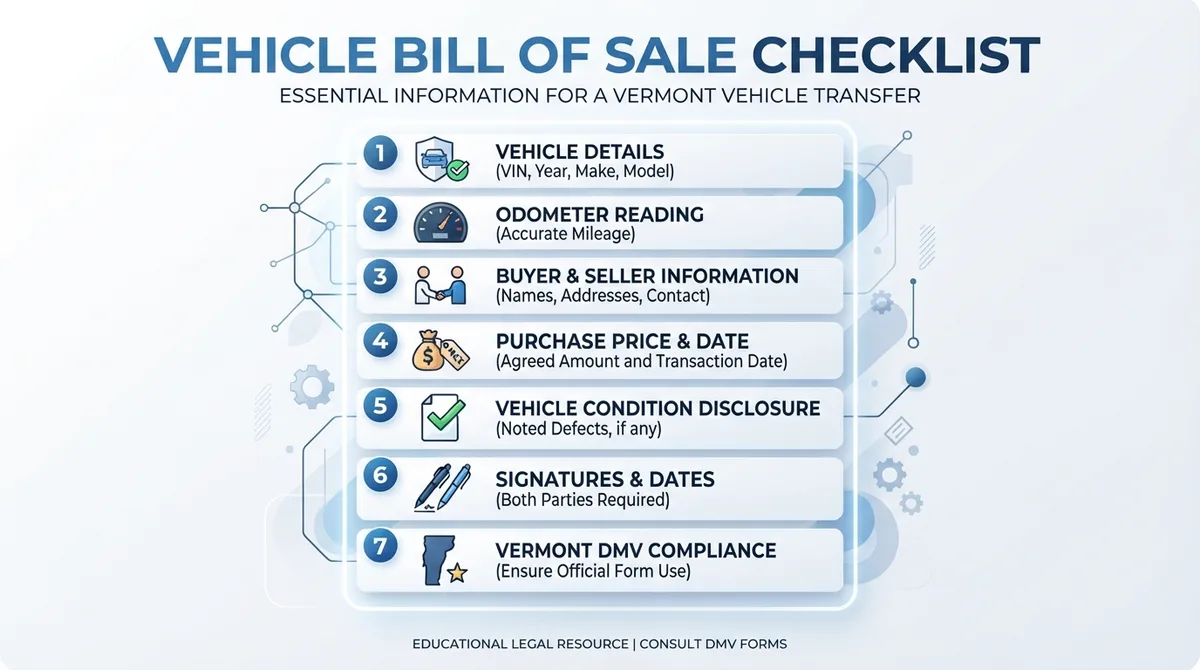
When selling a motor vehicle in Vermont, the transaction requires a specific dual-purpose document provided by the Department of Motor Vehicles. This form acts as both a receipt of sale and a federal mileage declaration, which is necessary for the buyer to register and title the vehicle. Failing to provide an accurate odometer reading can delay the registration process and violate federal truth-in-mileage laws.
Vermont maintains specific regulations regarding vehicle sales:
- Official DMV Form - Parties must use the official Bill of Sale and Odometer Disclosure Statement to ensure the transaction is recognized for title and registration purposes (Form VT-005).
- Odometer Reading - The seller must certify the exact mileage of the vehicle at the time of transfer to comply with federal and state truth-in-mileage laws (Form VT-005).
- Vehicle Identification Number - The document must record the unique identifier of the vehicle, along with its make, model, year, and body type (Form VT-005).
- Purchase Price and Date - The form requires the exact sale price and the date of the transaction to calculate appropriate state purchase and use taxes (Form VT-005).
Mobile Home Sales and Statutory Requirements
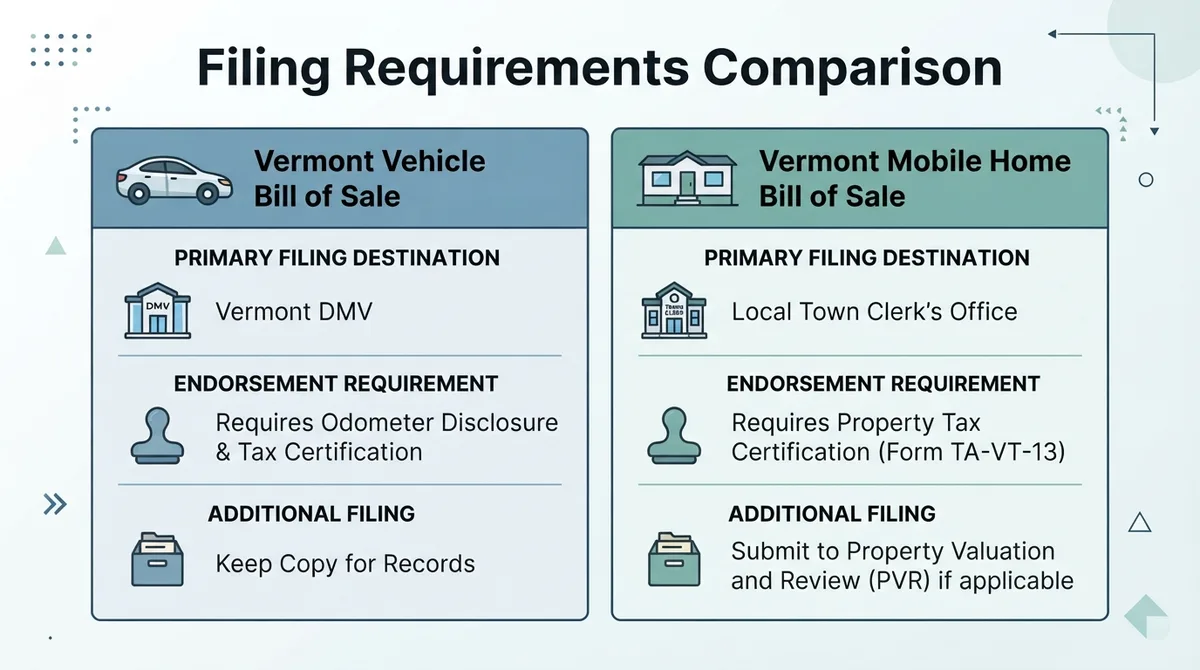
The transfer of a mobile home in Vermont is subject to strict statutory regulations that differ significantly from standard personal property sales. To complete a valid transfer, parties must execute a specific uniform document and comply with local municipal filing requirements. This process ensures that property tax records are updated and that the local municipality can track mobile home placements.
Vermont law mandates the following steps and filings for mobile home transfers:
- Mobile Home Uniform Bill of Sale - Vermont law mandates the use of this specific form to execute the transfer of a mobile home (9 V.S.A. Chapter 72).
- Town Clerk Endorsement - The bill of sale must be endorsed by the town clerk of the municipality where the mobile home is physically located at the time of the transaction (9 V.S.A. Chapter 72).
- Buyer Filing Obligation - The buyer is legally required to file the fully executed and endorsed bill of sale with the local town clerk (9 V.S.A. Chapter 72).
- Lien and Security Interests - Any financing statement establishing a security interest in the mobile home must be filed separately with the Vermont Secretary of State (9 V.S.A. Chapter 72).
Essential Elements of a Vermont Bill of Sale
To ensure legal validity and prevent future disputes, a standard Vermont bill of sale should contain specific, detailed information about the transaction. While some transactions require official state forms, private sales of general merchandise can use a custom-drafted document containing these core elements.
A comprehensive bill of sale must include:
- Party Identification - The full legal names, physical addresses, and contact information of both the buyer and the seller.
- Property Description - A detailed description of the item, including serial numbers, model numbers, colors, and physical condition.
- Financial Terms - The total purchase price, the payment method, and whether the item is sold as a gift or a partial trade.
- Signatures and Dates - The handwritten signatures of both parties and the exact date the transaction was finalized.
Legal Implications and Record Keeping
A bill of sale provides legal protections for both parties after the transaction is complete. For the seller, the document serves as proof that they are no longer responsible for the item, protecting them from liability, parking tickets, or toll violations incurred by the new owner. For the buyer, the bill of sale acts as proof of ownership, which is crucial when registering the property or obtaining insurance.
Parties should observe the following record-keeping practices:
- Retention Period - Both buyers and sellers should keep a copy of the bill of sale in their personal files for at least several years.
- Tax Documentation - The purchase price listed on the document will be used by state agencies to assess taxes, making accuracy essential.
- Proof of Transfer - Sellers should notify the relevant state agency, such as the DMV, immediately after the sale to update ownership records.
Frequently Asked Questions
Sources
- Vermont Bill of Sale and Odometer Disclosure Statement - Official form for transferring vehicle ownership in Vermont, including odometer disclosure requirements.
- Vermont Mobile Home Uniform Bill of Sale - Statutory requirements for mobile home sales in Vermont, including the Uniform Bill of Sale form.
Bill of Sale in other states
Not the form you're looking for?
Try our legal document generator to create a custom document
Disclaimer: The templates available on this website are provided for general informational purposes only and do not constitute legal advice. They are not intended to be, and should not be interpreted as, compliant with any specific legal, regulatory, or privacy requirements. These templates are not a replacement for professional legal guidance and should not be relied upon for any particular matter or circumstance. Users are strongly encouraged to seek advice from a qualified attorney licensed in their jurisdiction before using, modifying, or relying on any template.
All templates are provided on an "as is," "with all faults," and "as available" basis. The provider disclaims any and all warranties of any kind, whether express, implied, statutory, or otherwise, including without limitation warranties of merchantability, fitness for a particular purpose, title, or non-infringement.
LegalTemplates.com makes no guarantees or representations regarding the accuracy, completeness, expected outcomes, or reliability of the materials contained in these templates or any materials referenced or linked from them.