Electrical Contractor Contract
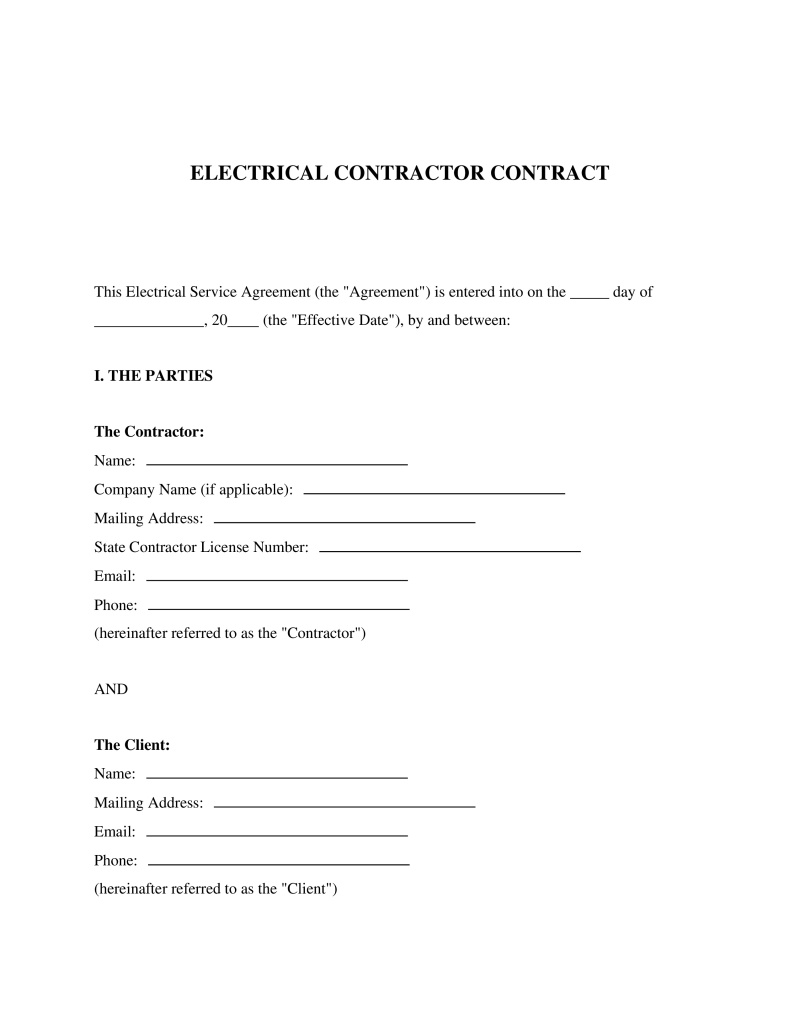
An Electrical Contractor Contract is a legal document that establishes the terms of service between an electrical contractor and their client.
Project Setting
Select the setting that best describes the site. This helps tailor code, access, safety, and insurance terms.
Table of Contents
What is a Electrical Contractor Contract?
An Electrical Contractor Contract is a legally binding agreement between a client and a licensed electrical contractor outlining the scope, terms, and conditions of electrical work to be performed on a project. This document establishes the rights and obligations of both parties, ensuring that the electrical services comply with safety codes and industry standards. It is utilized by property owners, general contractors, and developers to formalize the business relationship with the specialty contractor responsible for power distribution, wiring, and electrical installations.
Scope of Work and Technical Specifications
The scope of work defines the exact boundaries of the electrical installation and the specific responsibilities of the contractor. Contracts delineate where the electrical work begins and how it interacts with other mechanical systems on a project:
- Point of Connection - Electrical work under the contract typically begins at the Main Distribution Panel, wiring gutter, junction box, or power panel provided for service to the equipment.
- System Integration - While equipment for other systems, such as plumbing, may be furnished under separate contracts, the electrical contractor is responsible for providing all labor and materials required for the wiring of that equipment.
- Single-Phase Equipment Requirements - Installations for single-phase units require a motor starting disconnecting type snap switch as an integral part of the equipment, along with a remote control thermal overload switch installed within the target room.
- Three-Phase Equipment Requirements - Installations for three-phase units require remote control switches equipped with pilot lights inside the target room and a dedicated disconnect switch located at the motor.
State Licensing Regulations
State laws impose strict guidelines on who may contract for and perform electrical work to protect public safety:
- Minnesota Electrical Licensing Requirements - Mandates that any business or individual contracting to perform electrical work must hold an electrical contractor license issued by the Department of Labor and Industry (Minn. Stat. § 326B.33).
- National Electrical Code Compliance - Requires all licensed contractors to perform work in accordance with the standards set by the National Fire Protection Association (NFPA 70).
- Unlicensed Employee Registration - Permits unlicensed individuals to assist with electrical work only if they are registered with the state authority and work under the direct supervision of a licensed journeyworker or master electrician (Minn. Stat. § 326B.33 Subd. 12).
Types of Electrical Contractor Contracts
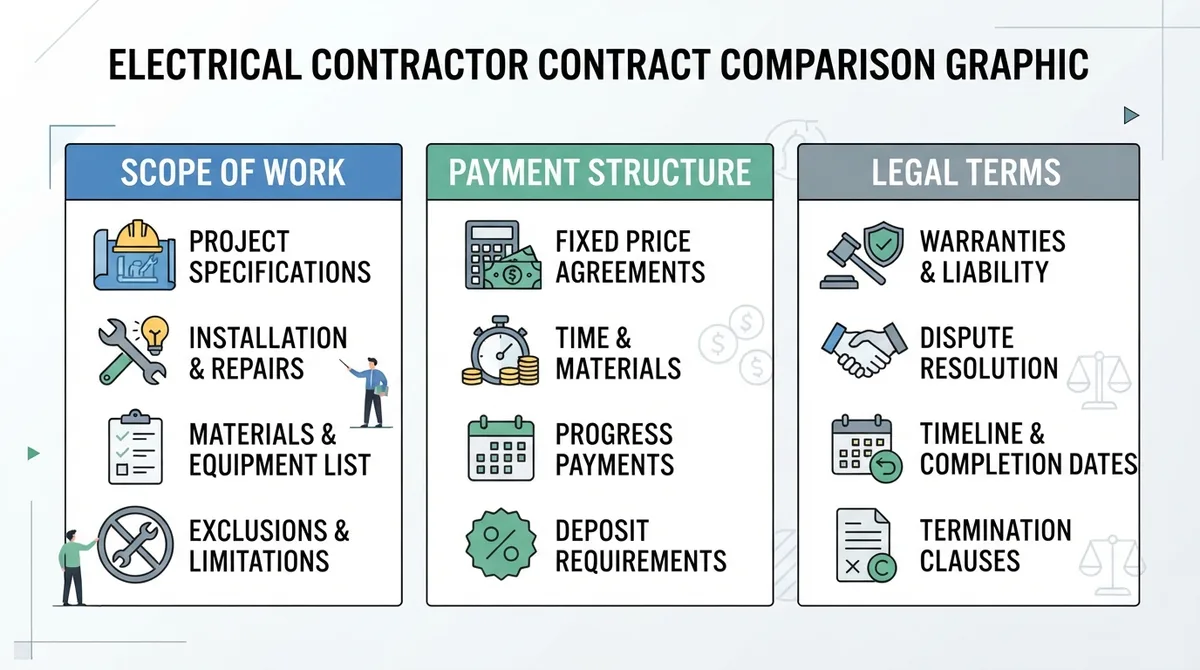
Electrical contracts are structured differently depending on the project delivery method, payment terms, and scope complexity:
- Lump Sum Contract - A contract where the electrical contractor agrees to complete the specified scope of work for a fixed price.
- Time and Materials Contract - An agreement where the client pays the contractor based on the actual hours worked and the cost of the electrical materials used.
- Design-Build Electrical Contract - A specialized contract where the electrical contractor is responsible for both designing the electrical systems and executing the physical installation.
- Unit Price Contract - A contract based on estimated quantities of items, such as a set price per light fixture or linear foot of conduit installed.
Key Provisions in an Electrical Contractor Contract
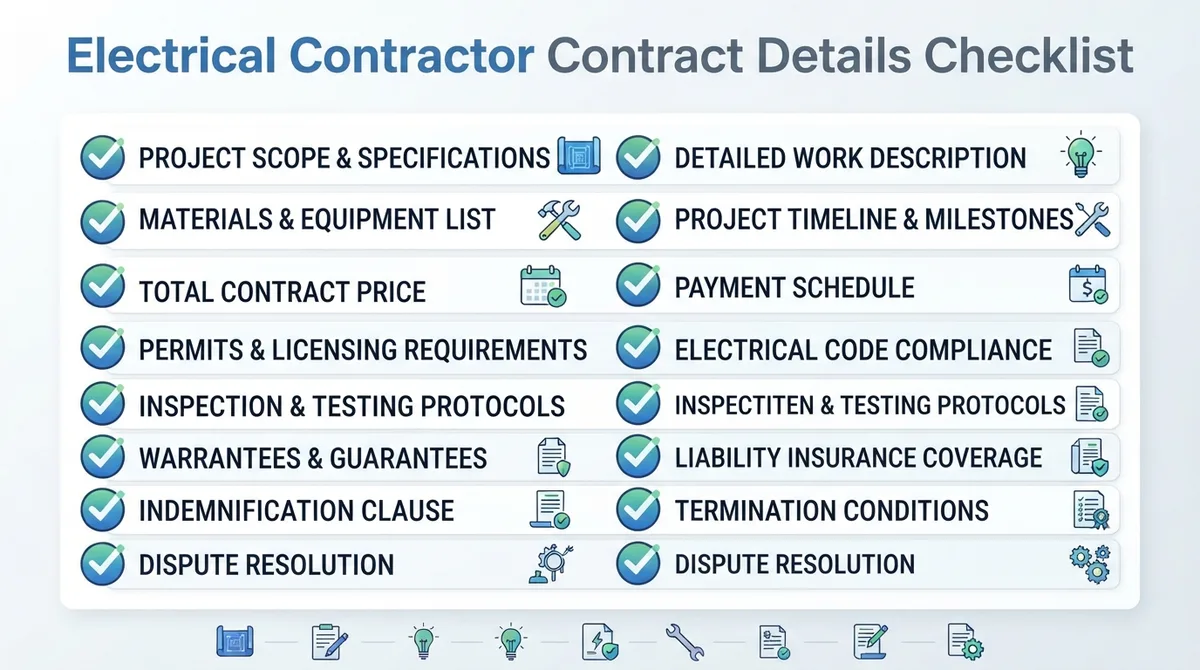
To prevent disputes, an Electrical Contractor Contract contains several standardized clauses that manage risk, project timelines, and financial transactions:
- Payment Schedule - Outlines the milestone payments, mobilization fees, and retention percentages withheld until final inspection and approval.
- Change Order Process - Defines the formal procedure for approving modifications to the original electrical design, including price adjustments and time extensions.
- Warranty of Workmanship - Guarantees that all labor and materials will be free from defects for a specified period, typically one year from project completion.
- Hazardous Materials Clause - Protects the contractor from liability and delays if asbestos or other hazardous substances are discovered during conduit routing.
- Insurance and Indemnification - Requires the contractor to maintain general liability, workers' compensation, and commercial auto insurance throughout the project duration.
Risk Allocation and Site Conditions
Electrical installations require specific site conditions to ensure safety and efficiency. Contracts address these environmental and structural variables:
- Access to Work Areas - The client must provide unobstructed access to all areas where electrical wiring, conduits, and equipment are to be installed.
- Power and Utilities - The client is responsible for providing temporary electrical power and water required for the contractor to perform the installation.
- Existing Conditions - The contractor is not liable for pre-existing electrical code violations or structural deficiencies discovered during the project.
- Damage to Finished Surfaces - The contract specifies who is responsible for patching and painting walls or ceilings cut during the installation of electrical boxes and conduit.
Sources
- Electrical contractor licensing basics - Provides information on licensing requirements for electrical contractors in Minnesota, including definitions, application procedures, and responsibilities.
- Electrical Contractor (.4 Contract) - Contains contract specifications for electrical work, including scope, requirements, and compliance with codes.
- CONTRACT - Provides sample specifications for electrical work, including requirements for roof ventilators, exhaust fans, and wiring for plumbing equipment.
Not the form you're looking for?
Try our legal document generator to create a custom document
Disclaimer: The templates available on this website are provided for general informational purposes only and do not constitute legal advice. They are not intended to be, and should not be interpreted as, compliant with any specific legal, regulatory, or privacy requirements. These templates are not a replacement for professional legal guidance and should not be relied upon for any particular matter or circumstance. Users are strongly encouraged to seek advice from a qualified attorney licensed in their jurisdiction before using, modifying, or relying on any template.
All templates are provided on an "as is," "with all faults," and "as available" basis. The provider disclaims any and all warranties of any kind, whether express, implied, statutory, or otherwise, including without limitation warranties of merchantability, fitness for a particular purpose, title, or non-infringement.
LegalTemplates.com makes no guarantees or representations regarding the accuracy, completeness, expected outcomes, or reliability of the materials contained in these templates or any materials referenced or linked from them.