Firearm Bill of Sale
A Firearm Bill of Sale is a legal document recording the transfer of ownership of a firearm between parties, ensuring compliance with laws.
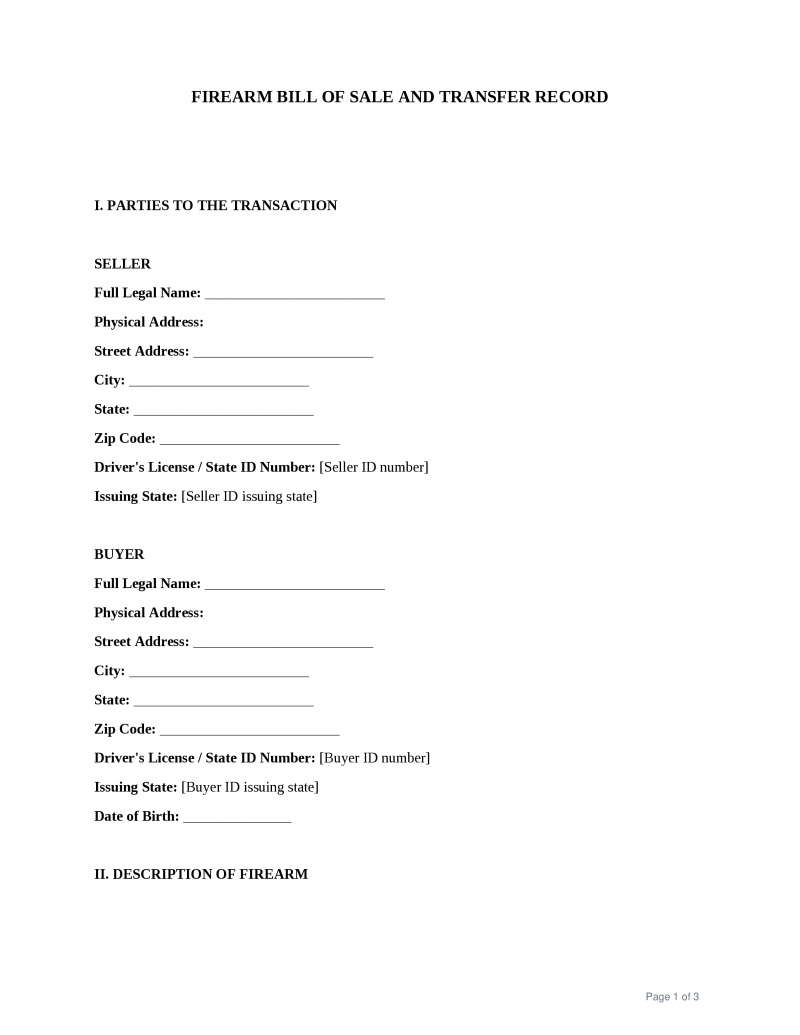
Firearm Category
This helps tailor the firearm description fields. Select the main category for the first firearm listed in the bill of sale.
Use commonly understood firearms terminology if possible.
Table of Contents
What is a Firearm Bill of Sale?
A Firearm Bill of Sale is a legal document that records the transfer of ownership of a firearm from a seller to a buyer. This document serves as a formal receipt of the transaction, detailing the terms of the sale, the purchase price, and the specific characteristics of the firearm being transferred. Private individuals frequently utilize this document during peer-to-peer sales to establish a clear paper trail and document the date of transfer. It acts as crucial evidence of the change in ownership, protecting both parties from potential future liabilities associated with the firearm.
Purpose and Use Cases
Private firearm transactions often occur outside the framework of licensed commercial dealerships, depending on local regulations. In these private sales, a Firearm Bill of Sale provides a mutual record that verifies the transaction took place legally and voluntarily. Sellers use the document to prove they no longer possess the weapon, which is valuable if the firearm is later involved in a crime or lost. Buyers use it to demonstrate legal acquisition and establish their rightful ownership of the property.
Federal Regulations and Dealer Requirements
While private sellers often use a standard bill of sale, licensed commercial entities must follow strict federal guidelines:
- Federal Firearms Licensee Requirements - Licensed dealers must record all firearm sales to non-licensees using specific official documentation (27 CFR § 478.124).
- ATF Form 4473 - The mandatory form used by licensed dealers to record firearm transactions, which must be completed, signed, and dated by the buyer prior to the delivery of the firearm in over-the-counter sales (Firearms Forms | ATF).
- Over-the-Counter Sales - Regulations dictate that the buyer must complete the required identification and background check processes before the physical transfer of the weapon occurs (Firearms Questions and Answers | ATF).
Key Elements of the Document
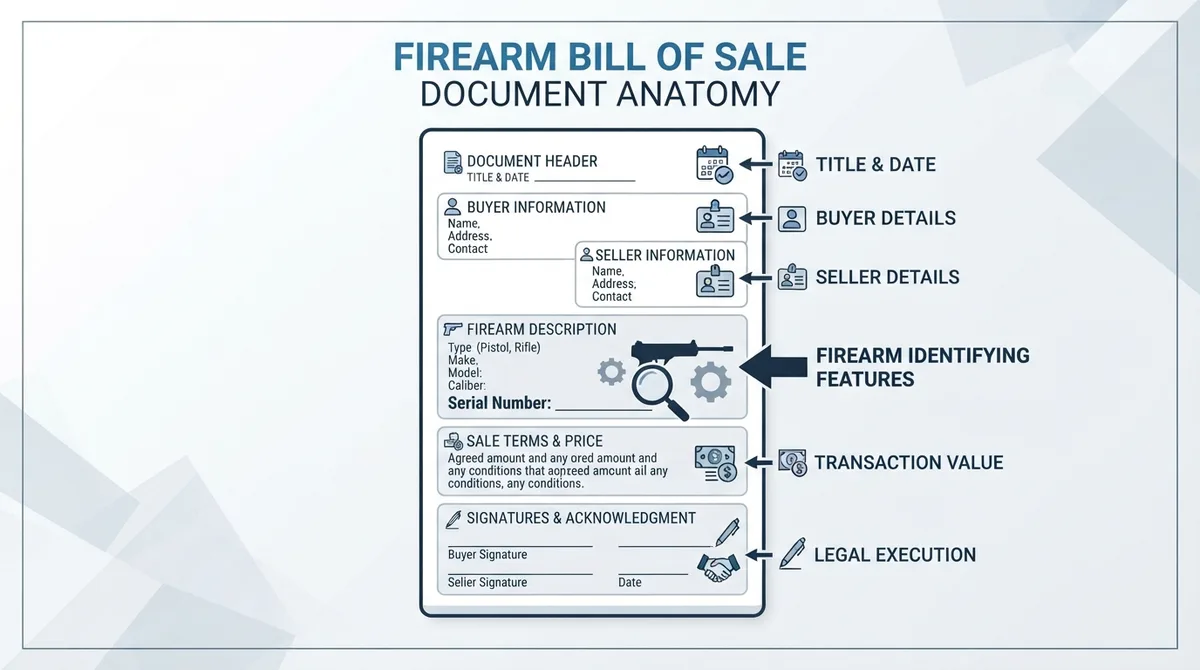
A comprehensive Firearm Bill of Sale contains specific details to ensure the transaction is documented accurately:
- Buyer Information - Full legal name, physical address, driver's license number, or other government-issued identification details of the purchaser.
- Seller Information - Full legal name, physical address, and contact information of the person transferring the firearm.
- Firearm Details - Specific identifying characteristics of the weapon, including the manufacturer, model, caliber or gauge, serial number, and action type.
- Transaction Details - The agreed-upon purchase price, payment method, and the exact date and time the transfer of ownership occurs.
- Seller Disclosure - A statement where the seller certifies that the firearm is free of liens and that they are the lawful owner authorized to sell it.
- Buyer Representation - A clause indicating that the buyer is legally permitted to own firearms under federal and state laws.
Types of Firearm Transfer Documents
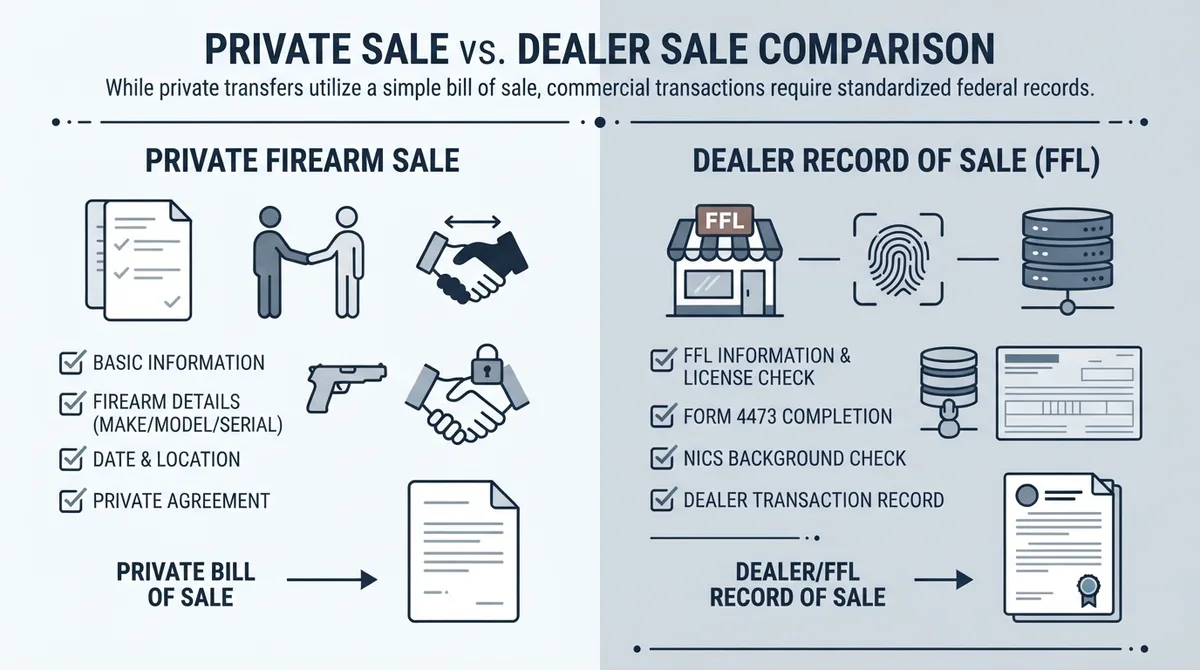
Different scenarios require specific documentation formats to record the transfer of weapons:
- Private Firearm Bill of Sale - A document used for peer-to-peer transactions between individuals who do not hold a federal firearms license.
- Dealer Record of Sale - An official transaction record maintained by licensed gun dealers to track inventory and sales to the public.
- Handgun Bill of Sale - A specialized document tailored for pistol or revolver sales, often including specific state permit numbers or registration details.
- Long Gun Bill of Sale - A transfer document designed for rifles and shotguns, which may have different state-level waiting periods or age requirements than handguns.
Best Practices for Private Transactions
Engaging in a private firearm transfer requires diligence to ensure compliance with general safety and legal guidelines:
- Identity Verification - Both parties should present valid government-issued identification to confirm their identities and state residency.
- Record Retention - Sellers and buyers should retain copies of the signed bill of sale indefinitely in a secure location.
- Voluntary Background Checks - Many private sellers choose to facilitate transactions through a licensed dealer to run a background check on the buyer.
- Witness Signatures - Having a neutral third party witness the transaction and sign the document can add an extra layer of validation.
Frequently Asked Questions
Firearm Bill of Sale Sample
Sources
- Firearms Forms | ATF - Provides official forms related to firearms transactions, including Form 4473, which is used for recording firearm sales by licensed dealers.
- 27 CFR § 478.124 | eRegulations - Details the requirements for recording firearm transactions, specifying that licensed dealers must use Form 4473 for sales to non-licensees.
- Firearms Questions and Answers | ATF - Provides official guidance on various aspects of firearm transactions, including the use of Form 4473 and identification requirements for purchasers.
Not the form you're looking for?
Try our legal document generator to create a custom document
Disclaimer: The templates available on this website are provided for general informational purposes only and do not constitute legal advice. They are not intended to be, and should not be interpreted as, compliant with any specific legal, regulatory, or privacy requirements. These templates are not a replacement for professional legal guidance and should not be relied upon for any particular matter or circumstance. Users are strongly encouraged to seek advice from a qualified attorney licensed in their jurisdiction before using, modifying, or relying on any template.
All templates are provided on an "as is," "with all faults," and "as available" basis. The provider disclaims any and all warranties of any kind, whether express, implied, statutory, or otherwise, including without limitation warranties of merchantability, fitness for a particular purpose, title, or non-infringement.
LegalTemplates.com makes no guarantees or representations regarding the accuracy, completeness, expected outcomes, or reliability of the materials contained in these templates or any materials referenced or linked from them.