Florida Bill of Sale
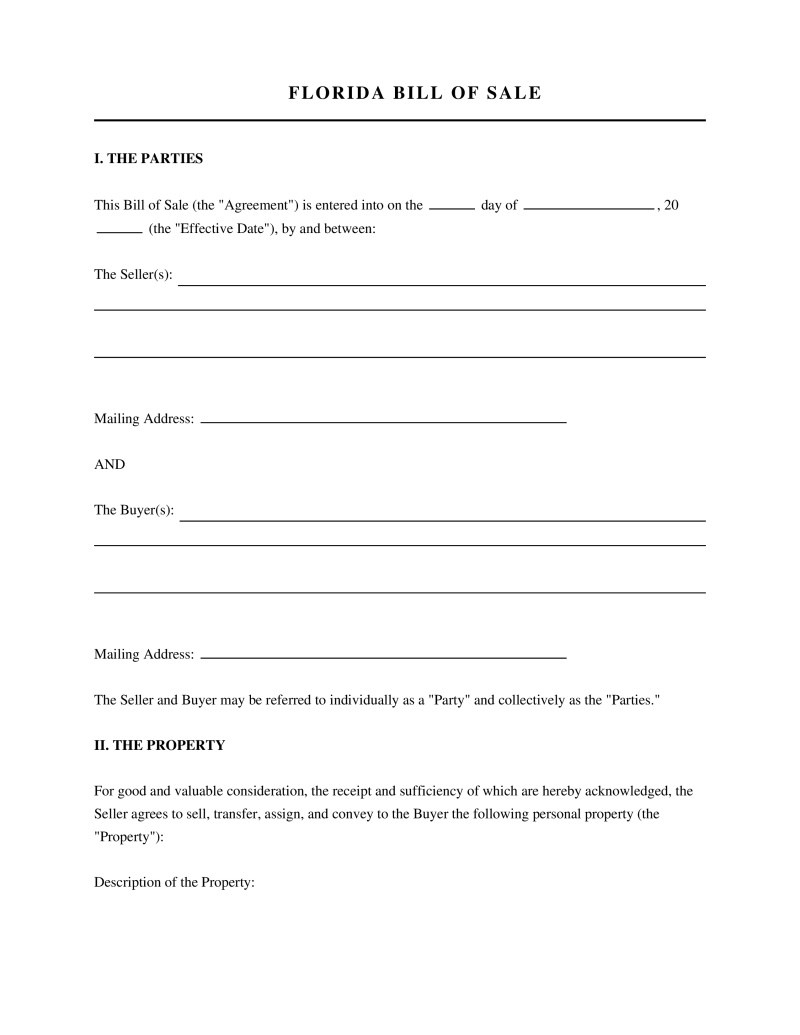
A Florida Bill of Sale is a formal instrument recording the transfer of title for personal property, such as vehicles or vessels, under Florida state law.
Asset Type
Choose the category that best describes the item. This helps include the right identifying details, such as VIN, hull number, serial number, or livestock identifiers.
Use this when the item does not fit one of the listed categories.
Table of Contents
What is a Florida Bill of Sale?
A Florida Bill of Sale serves as a legal document recording the transfer of ownership for personal property from a seller to a buyer. This instrument outlines the specifics of the transaction, including the purchase price, date of sale, and a detailed description of the item being transferred. Residents of Florida utilize this form primarily for vehicle transactions, though it applies to boats, firearms, and general personal property. The document functions as proof of purchase for the buyer and releases the seller from future liability associated with the item.
Florida Statutes and Legal Requirements
The state of Florida maintains specific laws governing the transfer of title and registration for vehicles and vessels. These statutes dictate the obligations of both the buyer and the seller during a private sale:
- Notice of Sale Requirements - Mandates that sellers file a Notice of Sale (Form HSMV 82050) with the tax collector's office within 30 days of the transaction to avoid civil liability (Fla. Stat. § 319.22(2)).
- Sales Tax Collection - Requires the collection of sales tax on the purchase price of vehicles and vessels during registration unless a specific exemption applies (Fla. Stat. § 212.05).
- Odometer Disclosure - Compels sellers to provide an accurate reading of the vehicle's odometer at the time of transfer for vehicles under 10 years old (Fla. Stat. § 319.225).
- Title Transfer Regulations - Stipulates that the certificate of title must be properly assigned to the purchaser at the time of delivery (Fla. Stat. § 319.23).
- Vessel Registration - Requires purchasers of boats to title and register the vessel with the county tax collector within 30 days of purchase (Fla. Stat. § 328.01).
Essential Elements of the Document
For a Florida Bill of Sale to be legally effective and acceptable by the Florida Highway Safety and Motor Vehicles (FLHSMV), it must contain specific data points:
- Parties' Information - Full legal names and physical addresses of both the buyer and the seller.
- Property Description - Comprehensive details identifying the item, including VIN/HIN, make, model, year, color, and body style.
- Consideration - The agreed-upon monetary value or trade details expressed in U.S. dollars.
- Date of Sale - The specific calendar date when the ownership transfer and payment occurred.
- Signatures - Hand-written signatures of all parties involved in the transaction.
- Odometer Statement - A declaration of the vehicle's mileage and a certification that the reading is accurate to the best of the seller's knowledge.
How to Complete a Vehicle Sale in Florida
Completing a private vehicle sale involves several administrative steps to ensure compliance with state regulations:
Step 1: Negotiation and Agreement - The buyer and seller agree on the terms, price, and condition of the vehicle, often deciding if the sale is "as-is."
Step 2: Drafting the Bill of Sale - Parties fill out the Florida Bill of Sale form with accurate information matching the vehicle's title.
Step 3: Signing the Title - The seller completes the "Transfer of Title by Seller" section on the existing certificate of title, including the odometer reading.
Step 4: Filing Notice of Sale - The seller submits Form HSMV 82050 to the local tax collector's office to remove their liability for the vehicle.
Step 5: Registration and Tax - The buyer visits the county tax collector to pay sales tax, apply for a new title, and obtain registration and license plates.
Notarization and Witnessing
Florida law distinguishes between different types of documents regarding notarization requirements:
- Standard Bill of Sale - Notarization is generally not required by state statute for a basic bill of sale to be valid between parties, though it is highly recommended for legal protection.
- Title Transfer - The physical certificate of title does not require notarization for the seller's signature in Florida, unlike in some other states.
- Affidavits - Any supplementary affidavits or specific corrections filed with the FLHSMV typically require notarization.
- County Variations - Certain county tax collector offices may prefer or request notarized bills of sale to prevent fraud during the registration process.
FAQs
Florida Bill of Sale Sample
Bill of Sale in other states
Not the form you're looking for?
Try our legal document generator to create a custom document
Disclaimer: The templates available on this website are provided for general informational purposes only and do not constitute legal advice. They are not intended to be, and should not be interpreted as, compliant with any specific legal, regulatory, or privacy requirements. These templates are not a replacement for professional legal guidance and should not be relied upon for any particular matter or circumstance. Users are strongly encouraged to seek advice from a qualified attorney licensed in their jurisdiction before using, modifying, or relying on any template.
All templates are provided on an "as is," "with all faults," and "as available" basis. The provider disclaims any and all warranties of any kind, whether express, implied, statutory, or otherwise, including without limitation warranties of merchantability, fitness for a particular purpose, title, or non-infringement.
LegalTemplates.com makes no guarantees or representations regarding the accuracy, completeness, expected outcomes, or reliability of the materials contained in these templates or any materials referenced or linked from them.