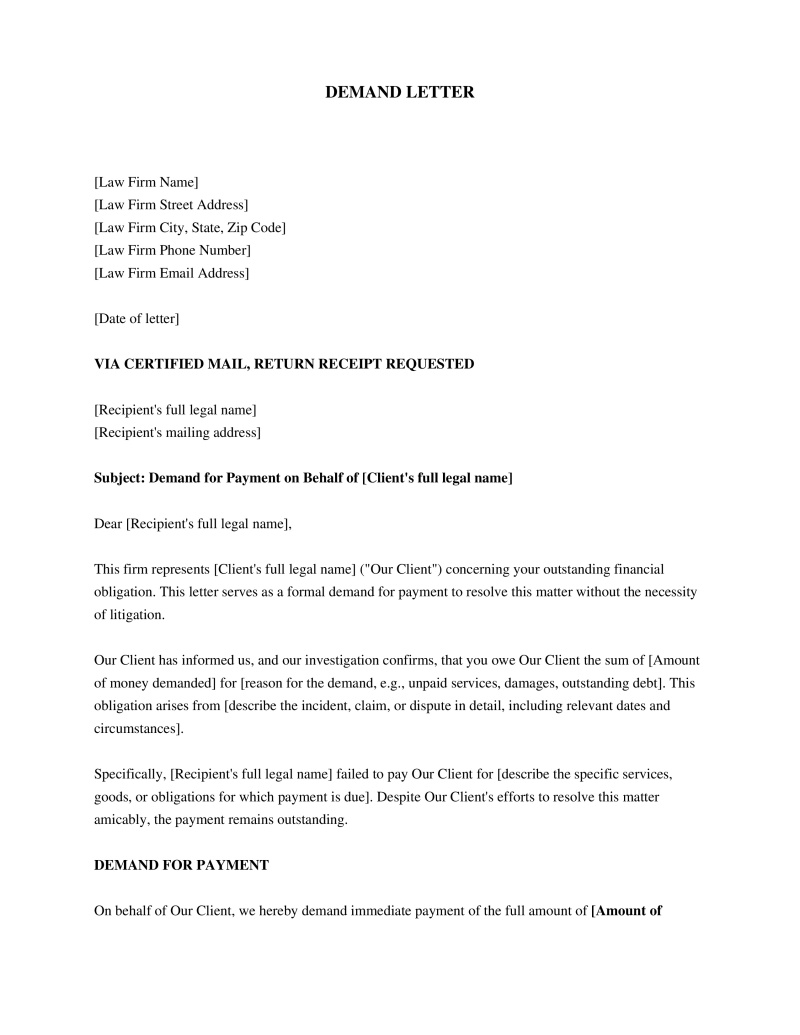
Demand Letter from Attorney
A demand letter from an attorney is a formal legal communication issued by a legal representative, typically outlining a grievance and requesting specific action or monetary compensation.
Demand Type
Select the main type of relief or action you are demanding.
Provide details if your demand does not fit the listed categories.
Table of Contents
What is a Demand Letter from Attorney?
A demand letter from an attorney is a formal, prelitigation written communication sent by a lawyer on behalf of their client to another party. Its primary purpose is to inform the recipient of an existing dispute, articulate the sender's legal position, and demand a specific action or compensation to resolve the matter without initiating a lawsuit. This document serves as a serious notification of a potential legal claim and an invitation to settle the issue before formal legal proceedings commence.
Purpose and Function
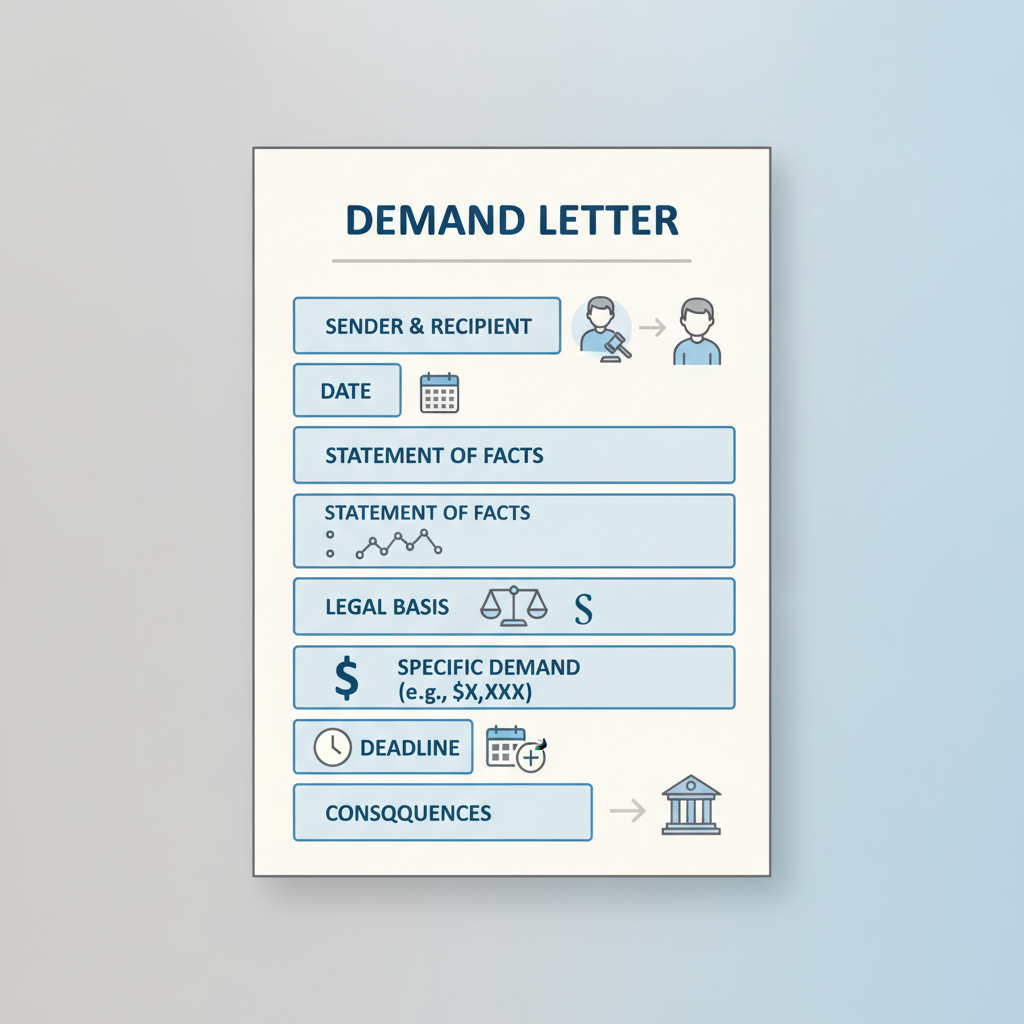
The core function of a demand letter is to clarify the nature of a dispute and outline the legal basis for the client's claim. It typically details the alleged wrong, the damages incurred, and the specific remedy sought, which often involves a monetary payment or the performance of a particular action. The letter aims to persuade the recipient to comply with the demands, thereby avoiding the costs and uncertainties associated with litigation.
Demand letters are frequently employed in various legal contexts:
- Breach of Contract - Seeking performance or damages for a broken agreement.
- Personal Injury Claims - Demanding compensation for medical expenses, lost wages, and pain and suffering following an accident.
- Property Damage - Requesting reimbursement for repairs or replacement of damaged property.
- Debt Collection - Notifying a debtor of an outstanding amount and demanding payment.
- Discrimination Claims - Alleging unfair treatment and demanding restitution, such as in cases involving gender discrimination in pricing services (Selected Statutes Regarding Duties of Attorneys and Discipline).
By clearly articulating the claim and the potential legal consequences of non-compliance, a demand letter can prompt the recipient to engage in negotiations or fulfill the demands, thus facilitating an out-of-court resolution.
Key Elements of a Demand Letter
While the specific content of a demand letter varies depending on the nature of the dispute, certain fundamental elements are almost always present. These components ensure clarity, establish legal standing, and communicate the seriousness of the claim.
Common information included in a demand letter:
- Identification of Parties - Clearly states who the letter is from (the attorney and client) and who it is addressed to (the opposing party).
- Date and Reference - Includes the date of issuance and often a reference number for easy tracking.
- Statement of Facts - A concise, chronological account of the events leading to the dispute, presenting the client's perspective.
- Legal Basis of Claim - Explains the legal principles or contractual terms that support the client's position and the alleged wrongdoing.
- Specific Demand - Clearly states what the client is seeking, such as a monetary amount, specific performance, or a particular action. A sample demand letter for commercial claims arising out of consumer transactions in New York illustrates this structure (Demand Letter (Sample)).
- Deadline for Response - Specifies a reasonable timeframe within which the recipient must respond or comply before further legal action is considered.
- Consequences of Non-Compliance - Informs the recipient of the attorney's intent to pursue litigation if the demands are not met.
- Attorney's Contact Information - Provides details for direct communication and negotiation.
Legal Context and Requirements
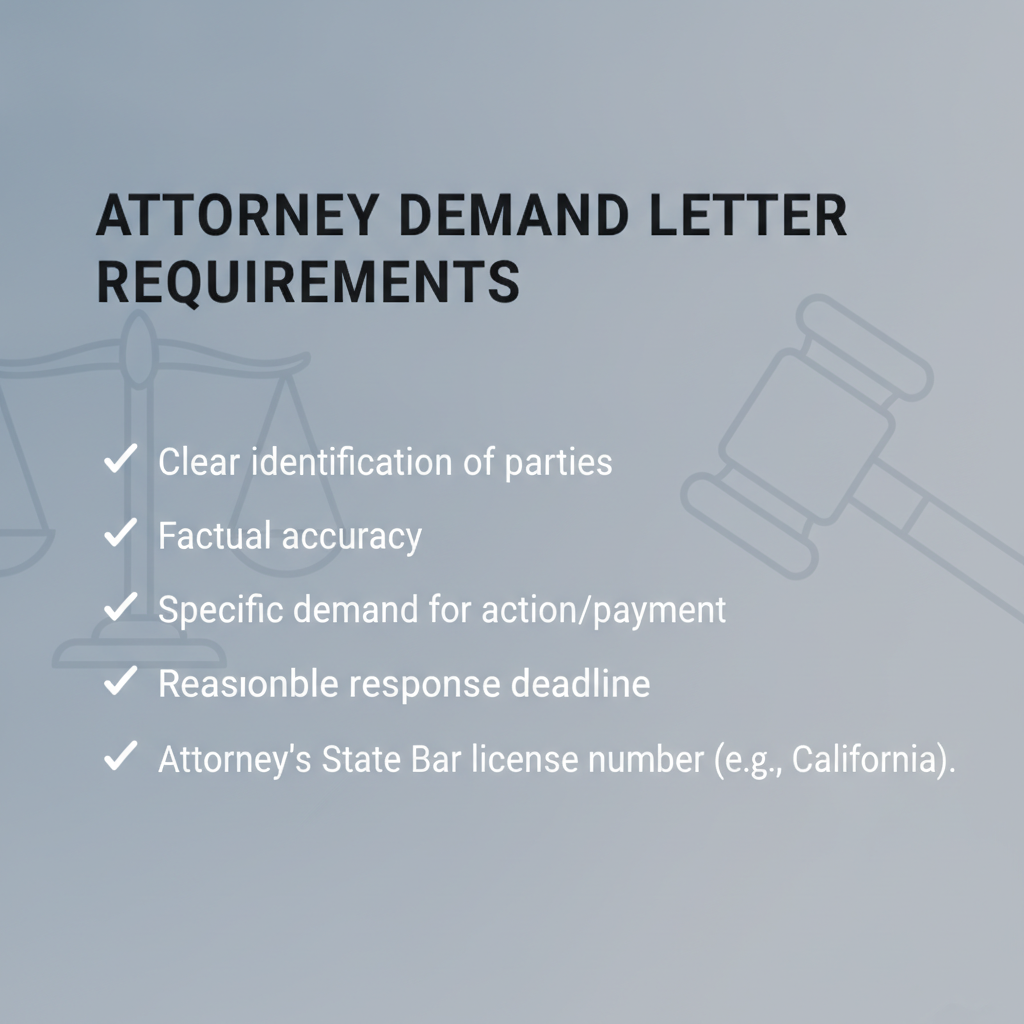
Attorneys drafting demand letters operate under professional and ethical obligations, which can include specific disclosure requirements. These requirements ensure transparency and accountability in prelitigation communications.
For instance, in California, specific attorney duties apply:
- Definition of Demand Letter - A prelitigation written document alleging gender discrimination in pricing services and demanding money is considered a demand letter, regardless of the attorney's intent to file a complaint (Selected Statutes Regarding Duties of Attorneys and Discipline).
- Attorney Identification - An attorney must include their State Bar license number in a demand letter (Selected Statutes Regarding Discipline of Attorneys and Duties of Members of the State Bar of California). This requirement helps ensure the recipient can verify the attorney's credentials.
The content of a demand letter must be truthful and based on a reasonable investigation of the facts. Misrepresentations or frivolous claims can lead to ethical repercussions for the attorney and their client.
Significance in Dispute Resolution
A demand letter often represents the first formal step in resolving a dispute, signaling a serious intent to pursue a claim. It provides an opportunity for the parties to understand each other's positions and to negotiate a settlement without the need for court intervention. The presence of an attorney's letterhead and signature typically lends significant weight to the communication, indicating that the client is prepared to take legal action if necessary.
The letter serves several strategic purposes:
- Formal Notice - Establishes a clear record that the opposing party was formally notified of the claim and the desired resolution.
- Opening Negotiations - Often initiates a dialogue between the parties or their legal representatives, potentially leading to a settlement agreement.
- Assessment of Strength - Allows both sides to assess the strength of their respective cases and the potential risks and costs of litigation.
- Fulfillment of Prerequisites - In some jurisdictions or contractual agreements, sending a demand letter may be a prerequisite to filing a lawsuit.
By clearly outlining the claim and demanding specific action, a demand letter can be an effective tool for achieving resolution efficiently and cost-effectively.
Frequently Asked Questions
Sources
- Selected Statutes Regarding Duties of Attorneys and Discipline - Defines 'demand letter' and outlines attorney requirements in California.
- Selected Statutes Regarding Discipline of Attorneys and Duties of Members of the State Bar of California - Details attorney obligations when providing a demand letter in California, including the requirement to include the attorney's State Bar license number.
- Demand Letter (Sample) - Provides a sample demand letter for commercial claims arising out of consumer transactions in New York.
Not the form you're looking for?
Try our legal document generator to create a custom document
Disclaimer: The templates available on this website are provided for general informational purposes only and do not constitute legal advice. They are not intended to be, and should not be interpreted as, compliant with any specific legal, regulatory, or privacy requirements. These templates are not a replacement for professional legal guidance and should not be relied upon for any particular matter or circumstance. Users are strongly encouraged to seek advice from a qualified attorney licensed in their jurisdiction before using, modifying, or relying on any template.
All templates are provided on an "as is," "with all faults," and "as available" basis. The provider disclaims any and all warranties of any kind, whether express, implied, statutory, or otherwise, including without limitation warranties of merchantability, fitness for a particular purpose, title, or non-infringement.
LegalTemplates.com makes no guarantees or representations regarding the accuracy, completeness, expected outcomes, or reliability of the materials contained in these templates or any materials referenced or linked from them.