Tennessee Bill of Sale
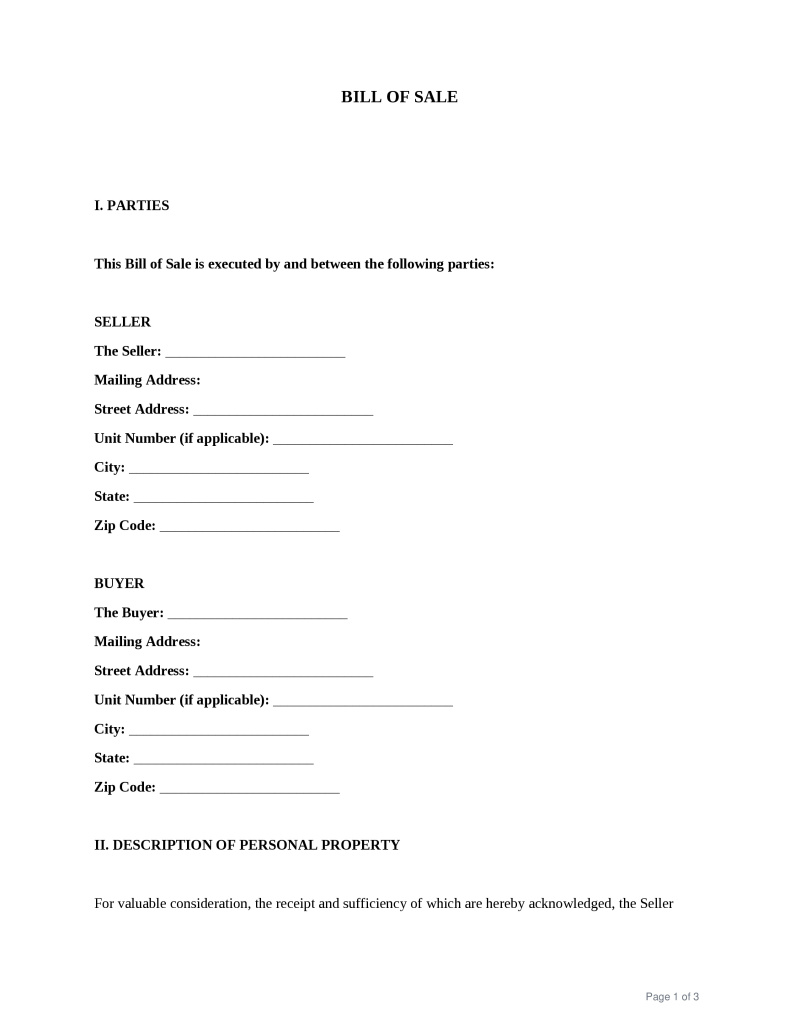
A Tennessee Bill of Sale is a legal document that records the transfer of ownership of personal property, such as a vehicle, vessel, or other goods, from a seller to a buyer within the state of Tennessee.
Asset Type
Choose the category that best describes the item. This helps include the right identifying details, such as VIN, hull number, serial number, or livestock identifiers.
Use this when the item does not fit one of the listed categories.
Table of Contents
What is a Tennessee Bill of Sale?
A Tennessee Bill of Sale is a legal document used to record the transfer of ownership of personal property from a seller to a buyer within the state. This document serves as a receipt of the transaction, detailing the purchase price, the identities of the parties involved, and a description of the item being sold. State agencies often require it alongside other official documents to complete registration and titling processes for specific assets like motor vehicles and aircraft. Both buyers and sellers retain copies of this document to establish a clear paper trail of the transaction and protect themselves from future liability.
Types of Tennessee Bills of Sale
Depending on the asset being transferred, different forms of this document are utilized across the state:
- Vehicle Bill of Sale - Used for transactions involving cars, trucks, motorcycles, and other road vehicles, acting as a supporting document for transfer of ownership.
- Aircraft Bill of Sale - Required by state authorities to document the sale and transfer of helicopters and airplanes.
- General Bill of Sale - Utilized for miscellaneous personal property transactions such as electronics, furniture, or tools where official state registration is not required.
- Vessel Bill of Sale - Used to record the purchase and sale of boats, jet skis, and other watercraft operating on state waterways.
- Mobile Home Bill of Sale - Documents the transfer of manufactured homes that are not permanently affixed to real property.
State Regulations and Guidelines
Tennessee state agencies enforce specific guidelines regarding the transfer of personal property and motor vehicles:
- Senate Bill 3 Rule - Establishes that a notarized bill of sale is not sufficient proof of ownership for vehicle transfers in Tennessee (SB-3).
- Used Vehicle Titling Requirement - Dictates that a valid certificate of title and a bill of sale are required to title a used vehicle in the state (Tennessee Department of Revenue Guidelines).
- Aircraft Transfer Rule - Mandates a bill of sale and an official affidavit to transfer ownership of aircraft or helicopters (Tennessee Department of Revenue Form F1403901).
Requirements for Vehicle Titling and Registration
The Tennessee Department of Revenue oversees the transfer of motor vehicles and enforces strict guidelines regarding ownership documentation:
- Used Vehicle Titling - Buyers must present both a valid certificate of title and a bill of sale to title a used vehicle in the state, ensuring that the county clerk can verify the transaction history.
- Endorsed Title Requirement - A properly endorsed certificate of title remains the primary legal proof of ownership transfer, meaning the seller must sign the actual title over to the buyer.
- Notarization Limitation - A notarized bill of sale alone is not accepted as sufficient proof of ownership for vehicle transfers, requiring the buyer to obtain the official title document to complete the registration.
- Sales Tax Assessment - State county clerks use the purchase price listed on the document to calculate the applicable sales and use tax, preventing tax underreporting during private party sales.
Differences Between a Bill of Sale and a Title
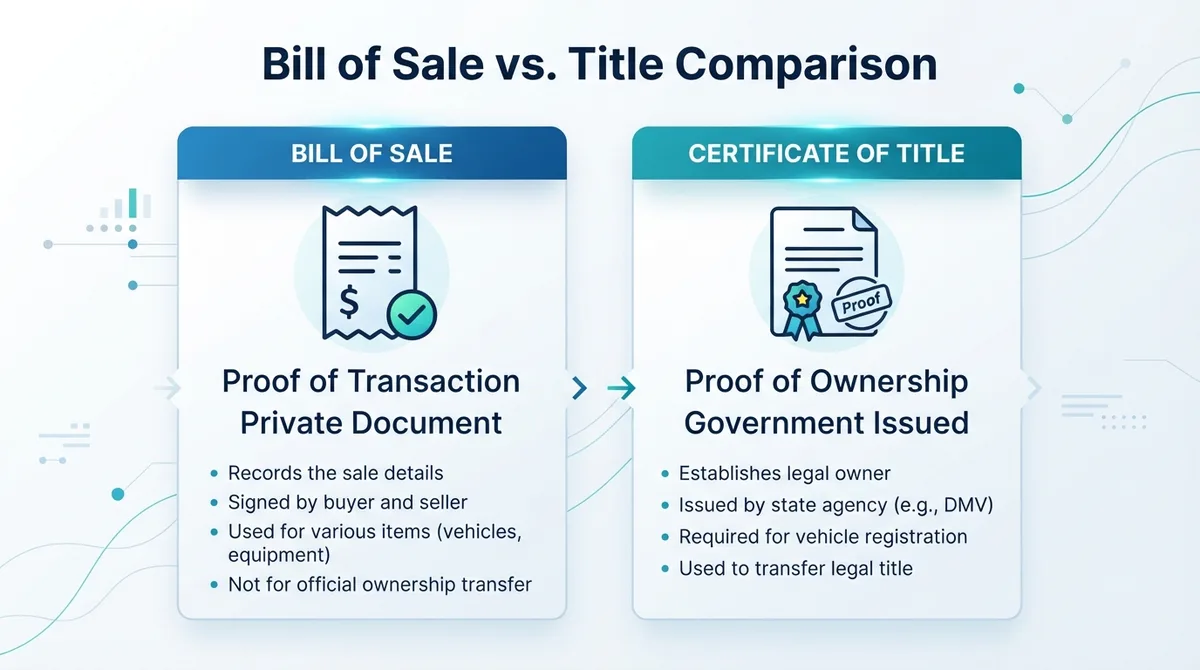
Understanding the distinction between these two documents is essential for anyone purchasing property in Tennessee. Both documents are used during the transfer of ownership, but they serve different legal purposes and carry different levels of authority.
- Proof of Transaction - The bill of sale acts as a receipt or contract showing that a transaction occurred and that money exchanged hands.
- Proof of Ownership - The certificate of title is the official government-issued document that legally establishes ownership of the asset.
- Legal Necessity - A bill of sale is a supporting document, whereas a title is legally required to operate a motor vehicle on public roads.
- Issuing Authority - A bill of sale is drafted and signed by private parties, while a title is issued and recorded by the state government.
Essential Elements of a Bill of Sale
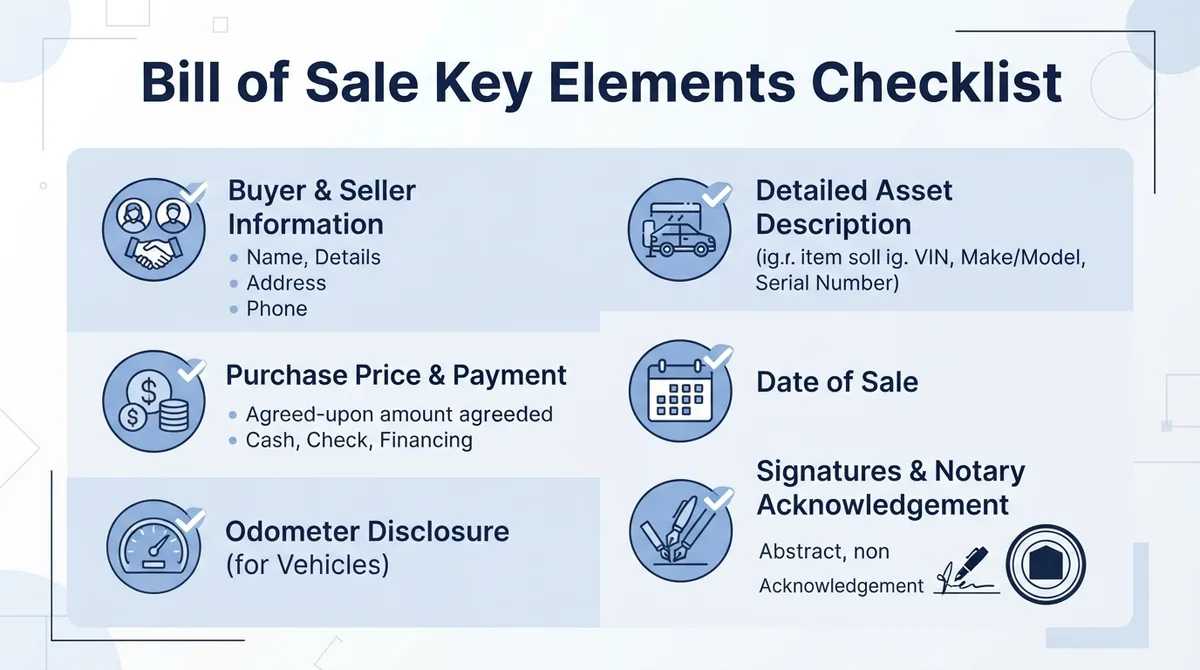
To ensure legal clarity and utility during registration, the document should contain specific details regarding the transaction:
- Party Information - Full legal names, physical addresses, and contact details of both the buyer and the seller, establishing who is involved in the transfer of ownership.
- Asset Description - Detailed description of the property, including serial numbers, make, model, year, and color where applicable to uniquely identify the item.
- Transaction Details - The exact purchase price, date of sale, and any agreed-upon payment terms, which serves as the official financial record of the transaction.
- Odometer Disclosure - The current mileage reading at the time of transfer for motor vehicles, ensuring compliance with federal and state odometer disclosure laws.
- Signatures - Hand-written signatures of both parties, confirming agreement to the terms of the sale and validating the document as an official record.
Legal Significance and Best Practices
A bill of sale protects both parties after a transaction is completed. For the seller, the document proves that ownership and liability for the item have been transferred to the buyer, which is useful if a vehicle is involved in an accident or receives traffic violations. For the buyer, the document serves as a receipt that confirms the purchase price and helps establish a basis for state tax assessments. Maintaining physical and digital copies of the document ensures that both parties can resolve future disputes or inquiries from state agencies. Parties should verify identification before signing to ensure the names on the document match the actual individuals involved in the transfer.
Frequently Asked Questions
Sources
- Affidavit of Transfer of Aircraft/Helicopter - Provides a form for transferring ownership of aircraft or helicopters in Tennessee, including a bill of sale requirement.
- Titling a Vehicle - Outlines the process for titling a vehicle in Tennessee, including the necessity of a bill of sale for used vehicles.
- SB-3. Notarized Bill of Sale Is Not Sufficient Proof of Ownership - Clarifies that a notarized bill of sale alone is not sufficient proof of ownership for vehicle transfers in Tennessee.
Bill of Sale in other states
Not the form you're looking for?
Try our legal document generator to create a custom document
Disclaimer: The templates available on this website are provided for general informational purposes only and do not constitute legal advice. They are not intended to be, and should not be interpreted as, compliant with any specific legal, regulatory, or privacy requirements. These templates are not a replacement for professional legal guidance and should not be relied upon for any particular matter or circumstance. Users are strongly encouraged to seek advice from a qualified attorney licensed in their jurisdiction before using, modifying, or relying on any template.
All templates are provided on an "as is," "with all faults," and "as available" basis. The provider disclaims any and all warranties of any kind, whether express, implied, statutory, or otherwise, including without limitation warranties of merchantability, fitness for a particular purpose, title, or non-infringement.
LegalTemplates.com makes no guarantees or representations regarding the accuracy, completeness, expected outcomes, or reliability of the materials contained in these templates or any materials referenced or linked from them.