Affidavit of Witness
An Affidavit of Witness is a formal sworn written statement of fact, voluntarily made by an individual, attesting to events or observations, affirmed under oath or solemn affirmation before an authorized legal officer.
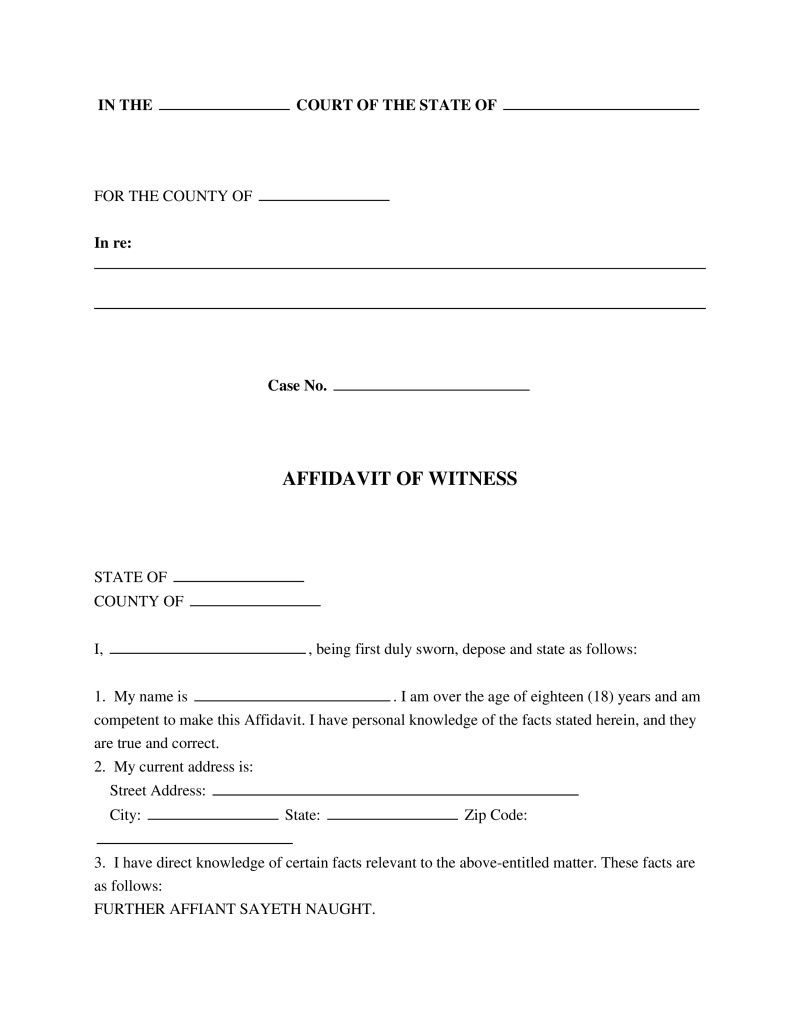
Incident Observed Type
Select the category that best describes what you witnessed or have direct knowledge of.
Provide a brief description if you selected 'Other'.
Table of Contents
What is an Affidavit of Witness?
An Affidavit of Witness is a sworn, written statement of facts made voluntarily by an individual, known as the affiant, who has personal knowledge of the events described. This document is typically used in legal proceedings to present a witness's testimony in a written format, often when the witness cannot appear in court or when the statement is required for preliminary matters. Its primary purpose is to provide credible evidence to a court or other legal body, attested to under oath or affirmation, affirming the truthfulness of its contents.
Purpose and Role in Legal Proceedings
The primary purpose of an Affidavit of Witness is to present factual information to a court or tribunal in a sworn, written format. It serves as a substitute for live testimony in certain circumstances, particularly in civil litigation, family law matters, or administrative hearings. The affidavit allows a witness to provide their account of events, observations, or expertise without necessarily being present in person, streamlining certain legal processes and reducing the burden on courts.
- Evidentiary Tool - Serves as a formal declaration of facts, treated as evidence in judicial and quasi-judicial settings.
- Cost and Time Efficiency - Reduces the need for witnesses to appear in court for minor or uncontested matters, saving time and expense.
- Preservation of Testimony - Records a witness's statement, which can be crucial if the witness becomes unavailable later due to illness, relocation, or death.
- Support for Motions - Often submitted to support or oppose motions, such as motions for summary judgment, temporary restraining orders, or preliminary injunctions.
- Declaration of Truth - The affiant attests to the veracity of the statements, typically under penalty of perjury, lending credibility to the content.
Essential Components of an Affidavit of Witness
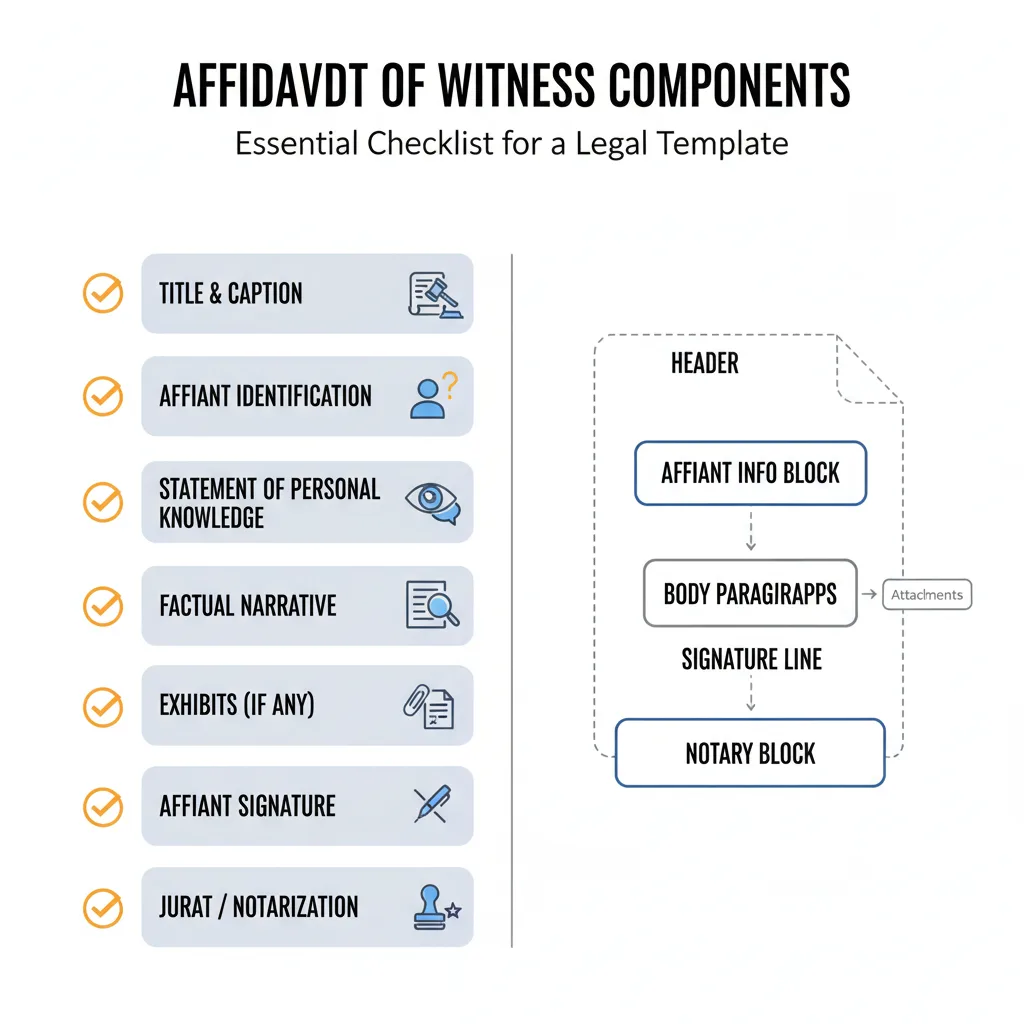
A properly drafted Affidavit of Witness must contain several key elements to be legally valid and admissible. These components ensure the document's authenticity, clarity, and the affiant's accountability for the statements made. Omitting any of these crucial parts can render the affidavit ineffective or subject to challenge.
- Title and Caption - Identifies the court, jurisdiction, and case name or matter to which the affidavit pertains, ensuring it is properly associated with the relevant legal action.
- Identification of Affiant - Clearly states the full legal name, address, and sometimes occupation of the person making the statement, establishing their identity.
- Statement of Personal Knowledge - Includes a declaration that the affiant is competent to testify and that the facts presented are based on their direct personal knowledge, observation, or experience.
- Factual Narrative - Presents a clear, concise, and chronological account of the relevant facts, events, or observations. This section should avoid speculation, hearsay, or legal conclusions.
- Exhibits (if any) - References and attaches any supporting documents, photographs, or other evidence that corroborate the affiant's statements. Each exhibit should be clearly marked and referenced within the affidavit.
- Signature of Affiant - The handwritten signature of the individual making the sworn statement.
- Jurat or Attestation Clause - A certification by a notary public or other authorized officer stating that the affiant appeared before them, was identified, and swore or affirmed the truthfulness of the affidavit's contents. This clause includes the date and place of notarization and the notary's signature and seal.
Execution and Notarization Requirements
The proper execution and notarization of an Affidavit of Witness are critical for its legal validity and admissibility in court. These formal steps ensure that the statement was made voluntarily and under oath, underscoring its reliability.
- Drafting the Affidavit - The affiant or their legal representative prepares the written statement, ensuring it includes all essential components and accurately reflects the affiant's personal knowledge.
- Review and Verification - The affiant thoroughly reviews the entire document to confirm the accuracy and completeness of all facts. Any errors or omissions must be corrected before signing.
- Signing Under Oath/Affirmation - The affiant must sign the affidavit in the presence of a notary public or another officer authorized to administer oaths. Before signing, the affiant typically takes an oath or affirmation, swearing or affirming that the contents of the affidavit are true and correct to the best of their knowledge.
- Notarization - The notary public then completes the jurat, which includes their signature, seal, and the date of notarization. The notary's role is to verify the identity of the affiant and confirm that the oath was administered properly.
It is crucial that the affiant understands the solemnity of signing an affidavit, as false statements made under oath can carry severe legal penalties, including perjury charges.
Distinction from Other Witness Statements
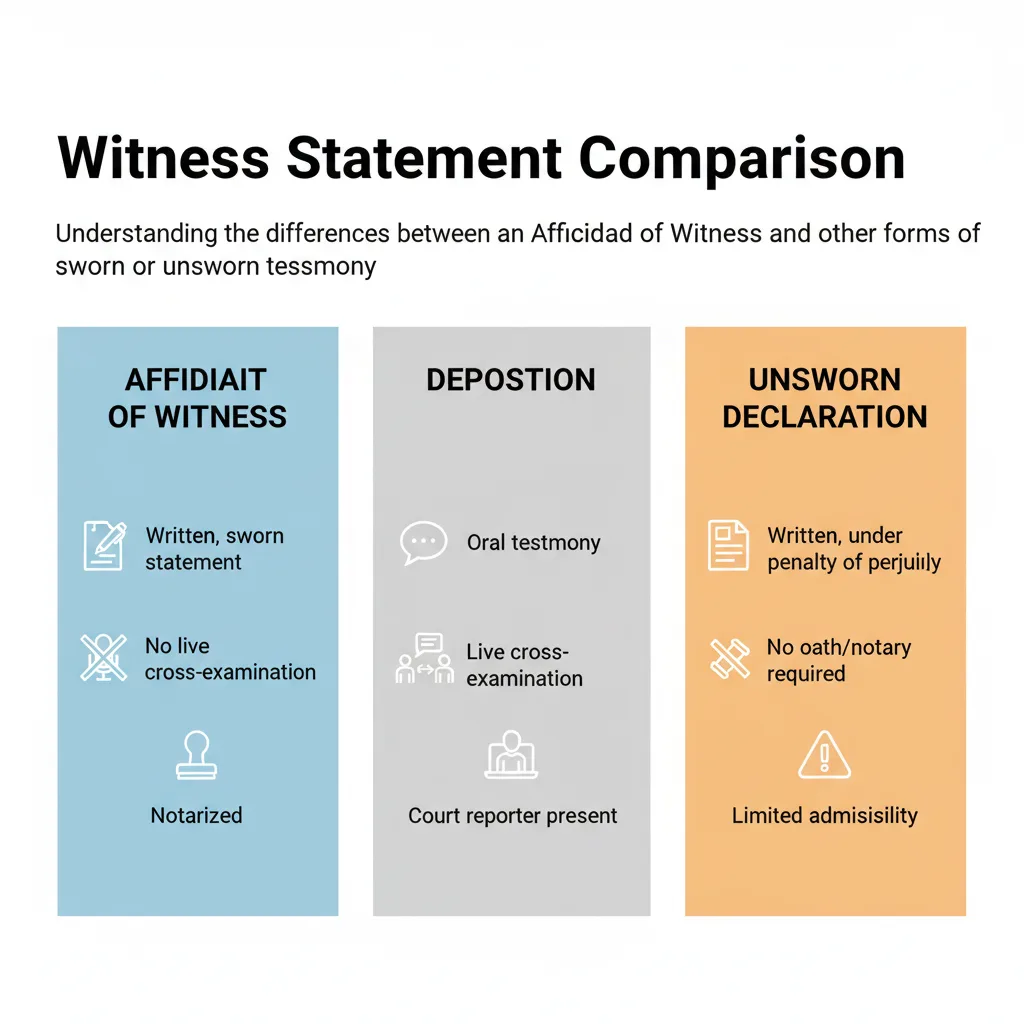
While an Affidavit of Witness serves to present sworn testimony, it differs significantly from other forms of witness statements and legal instruments:
- Affidavit of Witness vs. Deposition - A deposition involves live, oral testimony given under oath outside of court, typically before a court reporter, with attorneys from all parties present to ask questions. An affidavit, conversely, is a pre-written, sworn statement without cross-examination at the time of its creation.
- Affidavit of Witness vs. Unsworn Declaration - An unsworn declaration is a written statement signed under penalty of perjury, but without the formal administration of an oath by a notary or other official. While some jurisdictions allow unsworn declarations in place of affidavits, the formal notarization of an affidavit generally provides a higher degree of solemnity and evidentiary weight.
- Affidavit of Witness vs. Live Testimony - Live testimony occurs in court, where a witness answers questions from attorneys and potentially the judge, subject to immediate cross-examination. An affidavit is a static document, and while its contents can be challenged, the challenge occurs in a different procedural context.
Legal Implications and Admissibility
The legal weight and admissibility of an Affidavit of Witness depend on various factors, including the jurisdiction, the nature of the legal proceeding, and the purpose for which it is submitted. Generally, affidavits are considered hearsay, as they are out-of-court statements offered for the truth of the matter asserted. However, they are often admissible under specific exceptions to the hearsay rule or by statute.
Courts frequently accept affidavits in support of procedural motions, such as motions for summary judgment, where the goal is to demonstrate a lack of genuine dispute over material facts. In such cases, the affidavit helps establish the factual basis for the motion. For trial, however, live testimony is generally preferred, as it allows for direct and cross-examination, enabling the trier of fact (judge or jury) to assess the witness's credibility firsthand. If an affidavit is submitted at trial, the opposing party may have the right to subpoena the affiant for cross-examination.
Frequently Asked Questions
Not the form you're looking for?
Try our legal document generator to create a custom document
Disclaimer: The templates available on this website are provided for general informational purposes only and do not constitute legal advice. They are not intended to be, and should not be interpreted as, compliant with any specific legal, regulatory, or privacy requirements. These templates are not a replacement for professional legal guidance and should not be relied upon for any particular matter or circumstance. Users are strongly encouraged to seek advice from a qualified attorney licensed in their jurisdiction before using, modifying, or relying on any template.
All templates are provided on an "as is," "with all faults," and "as available" basis. The provider disclaims any and all warranties of any kind, whether express, implied, statutory, or otherwise, including without limitation warranties of merchantability, fitness for a particular purpose, title, or non-infringement.
LegalTemplates.com makes no guarantees or representations regarding the accuracy, completeness, expected outcomes, or reliability of the materials contained in these templates or any materials referenced or linked from them.