Utah Bill of Sale
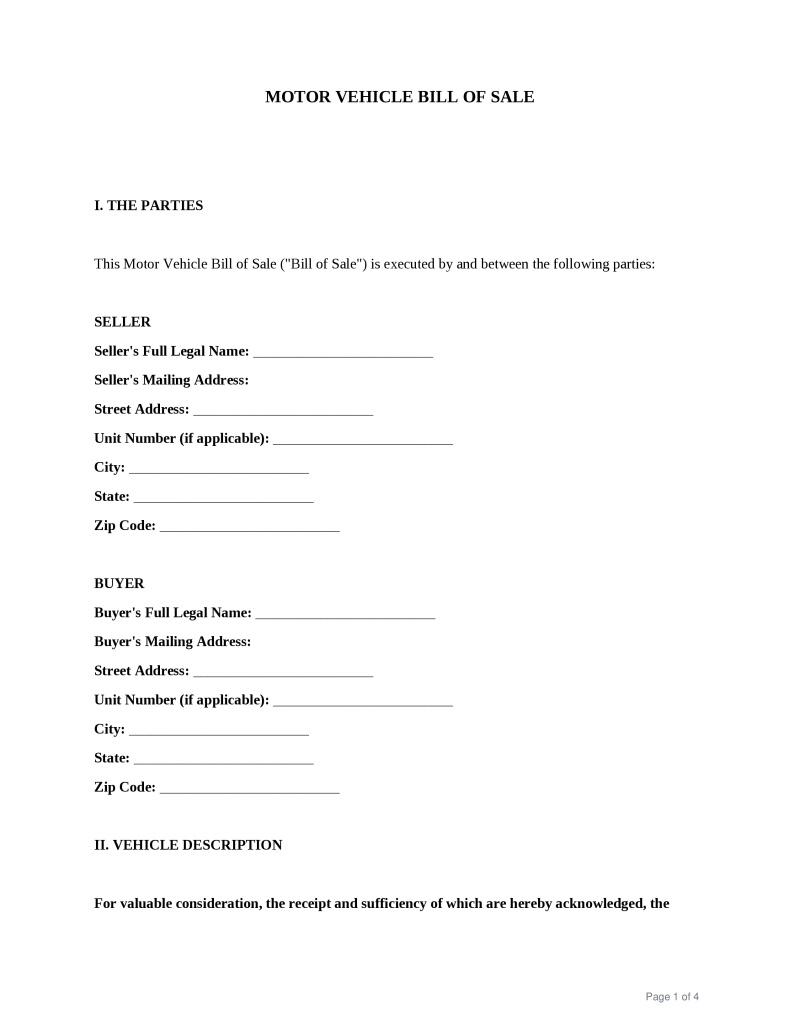
A Utah Bill of Sale is a legal document that records the transfer of ownership of personal property, most commonly motor vehicles, from a seller to a buyer.
Asset Type
Choose the category that best describes the item. This helps include the right identifying details, such as VIN, hull number, serial number, or livestock identifiers.
Use this when the item does not fit one of the listed categories.
Table of Contents
What is a Utah Bill of Sale?
A Utah Bill of Sale is a legal document that records the transfer of ownership of personal property, most commonly motor vehicles, from a seller to a buyer. This document serves as an official receipt of the transaction, outlining the specific terms of the transfer and the agreed-upon purchase price. It is utilized by private individuals and licensed dealerships within the state to establish a clear paper trail and protect both parties from future liability disputes.
When to Use a Utah Bill of Sale
Transactions involving personal property require formal documentation to ensure legal compliance and proper record-keeping. A Utah Bill of Sale is typically executed under the following circumstances:
- Private Vehicle Sales - Documenting the transfer of cars, trucks, motorcycles, or off-highway vehicles between private parties.
- Vessel and Watercraft Transfers - Recording the sale of boats, personal watercraft, and associated trailers.
- High-Value Personal Property - Establishing proof of purchase for trailers, heavy equipment, or other valuable assets.
- Title Corrections - Resolving discrepancies in vehicle ownership history when applying for a new title.
Types of Utah Bills of Sale
Different transactions require specific forms to satisfy state documentation standards:
- Form TC-843 Bill of Sale - The official state-issued form designed specifically for documenting the sale and transfer of motor vehicles, off-highway vehicles, and watercraft.
- General Bill of Sale - A generic legal document used to record the transfer of personal property, such as electronics, tools, or furniture, which do not require state registration.
- Odometer Disclosure Statement - A specialized document, sometimes integrated into the bill of sale, used to certify the exact mileage of a vehicle at the time of transfer.
Required Information on Form TC-843
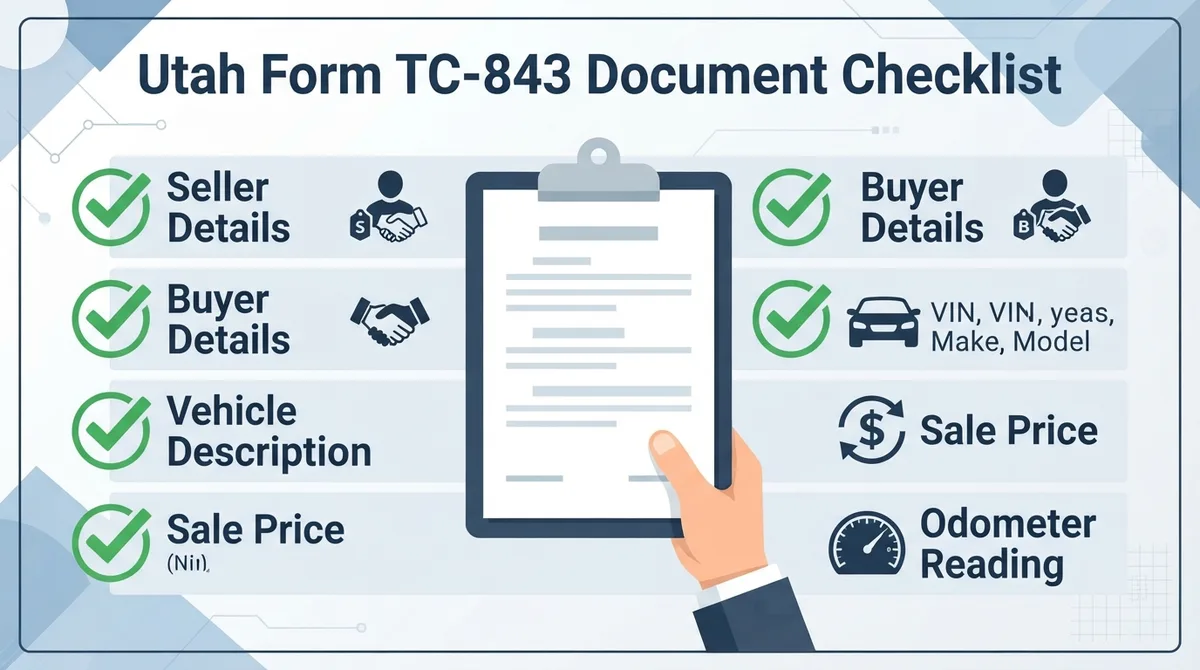
The Utah State Tax Commission requires specific details to be completed on the official Form TC-843 to ensure the document is legally binding and acceptable for registration purposes:
- Buyer and Seller Information - The legal names, physical addresses, and signatures of both the buyer and the seller.
- Vehicle Description - Comprehensive details of the vehicle, including the year, make, model, body type, and Vehicle Identification Number.
- Transaction Details - The agreed-upon purchase price of the vehicle and the exact date of the sale.
- Odometer Reading - The current mileage of the vehicle, recorded without tenths of a mile, to certify the accuracy of the odometer.
Responsibilities of Buyers and Sellers
Both parties involved in a private vehicle transaction in Utah must fulfill specific obligations to complete the transfer legally:
- Seller Verification - The seller must provide an accurate title and complete the bill of sale, ensuring all vehicle details match the physical asset.
- Buyer Registration - The buyer must present the completed bill of sale and the signed title to the Division of Motor Vehicles to register and title the vehicle.
- Record Retention - Both the buyer and the seller must retain copies of the completed document for their personal financial and legal records.
- Plate Removal - The seller must remove the license plates from the vehicle prior to handing over possession to the buyer.
Sales and Use Tax Implications
Vehicle transactions in Utah are subject to state tax regulations, which dictate how and when taxes must be paid on the purchase:
- Tax Liability - Sales tax applies to the purchase of all motor vehicles in Utah, regardless of whether the transaction occurred privately or through a dealership.
- Collection Jurisdiction - The sales tax is collected by the state in which the vehicle is titled and registered, rather than where the sale physically took place.
- Value Determination - The purchase price listed on the bill of sale is used to calculate the tax owed, though the state may assess fair market value if the price is deemed artificially low.
Frequently Asked Questions
Sources
- Bill of Sale Information - DMV - Provides information on the TC-843 Bill of Sale form and its use in vehicle transactions.
- TC-843 Bill of Sale - Official version of the TC-843 Bill of Sale form, including required information and instructions.
- Responsibilities of Buyer and Seller - DMV - Outlines the responsibilities of both parties in a vehicle sale, including the use of a Bill of Sale.
- Sales and Use Tax General Information - Pub 25 - Provides information on sales and use tax as it applies to vehicle sales in Utah.
Bill of Sale in other states
Not the form you're looking for?
Try our legal document generator to create a custom document
Disclaimer: The templates available on this website are provided for general informational purposes only and do not constitute legal advice. They are not intended to be, and should not be interpreted as, compliant with any specific legal, regulatory, or privacy requirements. These templates are not a replacement for professional legal guidance and should not be relied upon for any particular matter or circumstance. Users are strongly encouraged to seek advice from a qualified attorney licensed in their jurisdiction before using, modifying, or relying on any template.
All templates are provided on an "as is," "with all faults," and "as available" basis. The provider disclaims any and all warranties of any kind, whether express, implied, statutory, or otherwise, including without limitation warranties of merchantability, fitness for a particular purpose, title, or non-infringement.
LegalTemplates.com makes no guarantees or representations regarding the accuracy, completeness, expected outcomes, or reliability of the materials contained in these templates or any materials referenced or linked from them.