Family Member Proof of Residency Letter
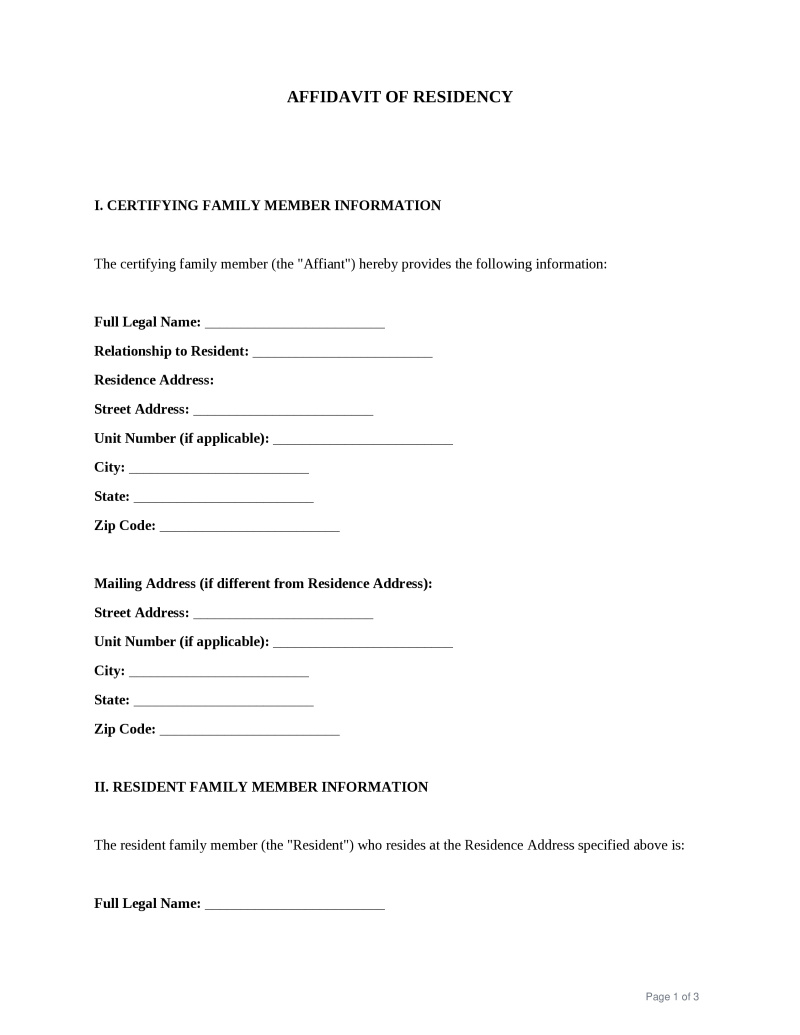
A Family Member Proof of Residency Letter confirms a person's residence at a specific address, often used for legal or administrative purposes.
Verification Purpose
Select the purpose that best matches where the letter will be submitted.
Use this if the intended use is not listed above.
Table of Contents
What is a Family Member Proof of Residency Letter?
A Family Member Proof of Residency Letter is an official written statement used to verify that an individual resides at a specific address with a family member who holds the primary lease or utility accounts. This document is commonly utilized when an applicant lacks traditional proof of address, such as utility bills or lease agreements, in their own name. Government agencies, educational institutions, and financial organizations accept this letter to establish a person's local residency for administrative purposes.
Common Uses and Applications
Establishing a physical address is a standard administrative requirement across various public and private sectors. Individuals who live with family members and do not pay rent directly or hold utility accounts often face challenges proving their residency.
Common scenarios requiring a residency letter include:
- Driver Licensing and Identification - Presenting proof of address to local motor vehicle departments to obtain or renew an identification card.
- School Enrollment - Demonstrating residency within a specific school district to enroll children in public primary or secondary schools.
- Government Benefit Applications - Qualifying for state-funded assistance programs, healthcare services, or local social benefits.
- Voter Registration - Confirming a voter's eligibility to register in a specific precinct or voting district.
- Banking and Financial Services - Opening checking or savings accounts when the applicant lacks standard utility bills or lease agreements in their name.
Types of Proof of Residency Documents
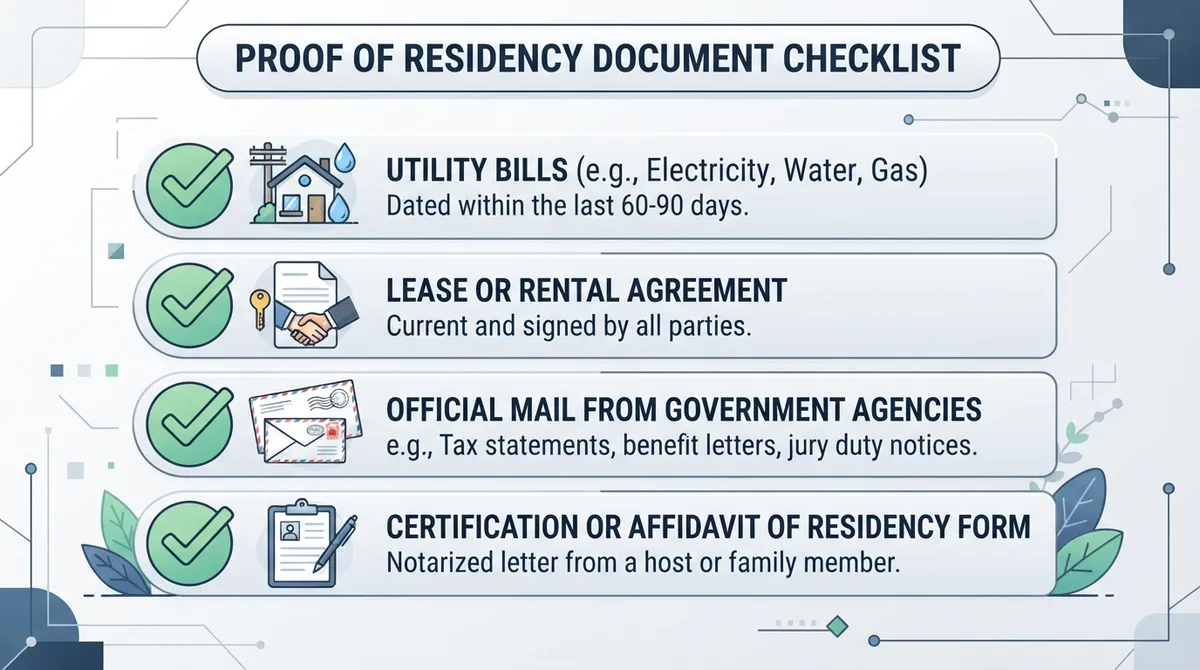
When submitting a residency verification, applicants typically rely on specific categories of documentation. The primary types of proof of residency documents accepted by state agencies include:
- Utility Bills - Statements for electricity, gas, water, or internet services registered in the name of the primary resident.
- Lease Agreements - Active rental contracts or tenancy agreements indicating the names of the authorized occupants and the property address.
- Official Mail - Correspondence from government agencies, insurance companies, or financial institutions delivered to the shared address.
- Proof of Residency Certification Forms - Official state-issued templates completed by the primary resident to verify a co-habitant's address.
State-Specific Certification Procedures
State departments of motor vehicles and health agencies maintain distinct protocols for verifying residency through family members:
- District of Columbia Residency Certification - Permits residents living with a current District resident to submit a Proof of Residency Certification form if they lack individual documentation.
- Washington State Residency Guidelines - Accepts utility bills, lease agreements, and official mail addressed to a family member residing at the same address as valid proof.
- Wisconsin Department of Transportation Standards - Recognizes utility bills, pay stubs, and bank statements addressed to a family member as acceptable verification of residency.
Standard Components of the Letter
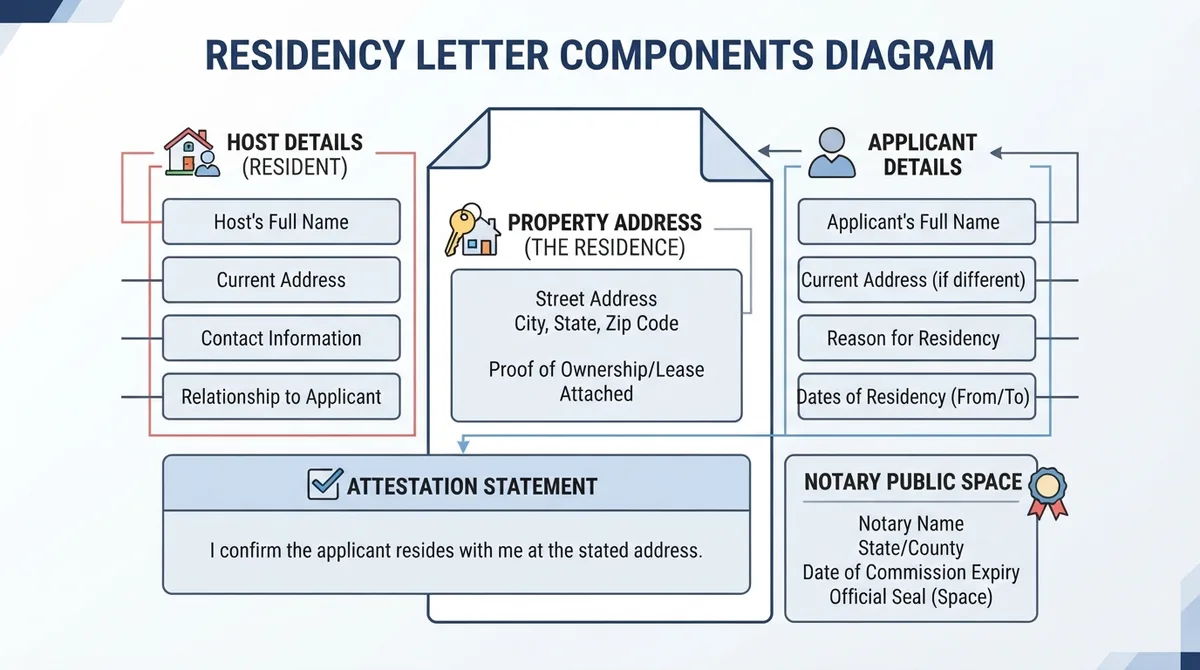
To ensure acceptance by official agencies, a residency letter must contain precise factual details. Omitting key details can result in the rejection of the application.
The letter should contain the following elements:
- Primary Resident Information - The full legal name, contact details, and signature of the family member hosting the applicant.
- Applicant Information - The full legal name of the individual whose residency is being verified.
- Property Details - The complete physical address, including street number, apartment number, city, state, and zip code.
- Relationship and Duration - A statement clarifying the relationship between the parties and the length of time the applicant has resided at the property.
- Declaration of Truthfulness - A formal statement certifying under penalty of perjury that the information provided in the document is accurate.
Verification and Notarization Requirements
Many government institutions require additional verification measures to prevent fraudulent declarations. Self-written letters without official oversight may not meet the evidentiary standards of state agencies.
Verification procedures often involve:
- Notarization - Having the primary resident sign the letter in the presence of a licensed notary public to verify their identity.
- Supporting Documentation - Attaching the primary resident's own proof of address, such as an active mortgage statement or utility bill, to the letter.
- Official Forms - Utilizing state-provided templates rather than custom-written letters when applying for driver's licenses or state IDs.
- Photo Identification - Presenting a valid government-issued photo ID belonging to the primary resident alongside the letter.
Frequently Asked Questions
Sources
- Acceptable Proof of Residency for Washington State - Guidelines on acceptable proof of residency documents in Washington State, including requirements for family members.
- Proof of Residency Certification in the District of Columbia - Information on obtaining proof of residency certification in DC, including requirements for family members.
- Acceptable Documents for Proof of Wisconsin Residency - List of acceptable documents for proving Wisconsin residency, including those from family members.
Not the form you're looking for?
Try our legal document generator to create a custom document
Disclaimer: The templates available on this website are provided for general informational purposes only and do not constitute legal advice. They are not intended to be, and should not be interpreted as, compliant with any specific legal, regulatory, or privacy requirements. These templates are not a replacement for professional legal guidance and should not be relied upon for any particular matter or circumstance. Users are strongly encouraged to seek advice from a qualified attorney licensed in their jurisdiction before using, modifying, or relying on any template.
All templates are provided on an "as is," "with all faults," and "as available" basis. The provider disclaims any and all warranties of any kind, whether express, implied, statutory, or otherwise, including without limitation warranties of merchantability, fitness for a particular purpose, title, or non-infringement.
LegalTemplates.com makes no guarantees or representations regarding the accuracy, completeness, expected outcomes, or reliability of the materials contained in these templates or any materials referenced or linked from them.