North Carolina Bill of Sale
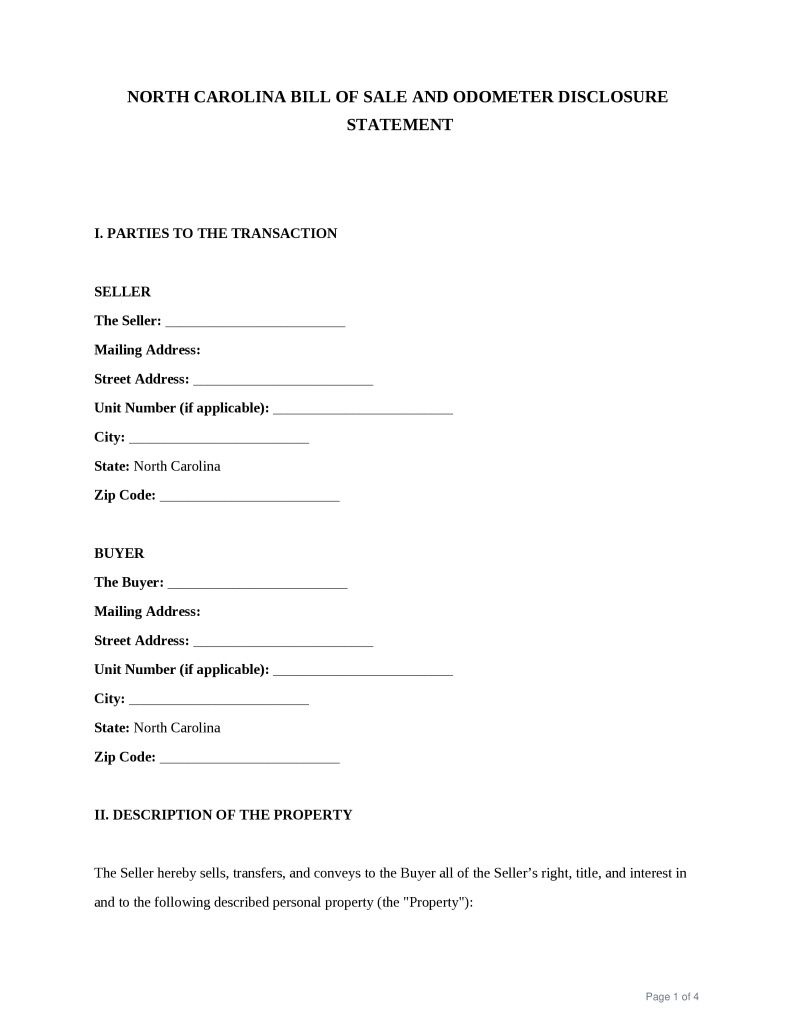
A North Carolina Bill of Sale is a legal instrument that records the transfer of ownership of personal property from a transferor to a transferee within the jurisdiction of North Carolina.
Asset Type
Choose the category that best describes the item. This helps include the right identifying details, such as VIN, hull number, serial number, or livestock identifiers.
Use this when the item does not fit one of the listed categories.
Table of Contents
What is a North Carolina Bill of Sale?
A North Carolina Bill of Sale is a legal document used to record the transfer of ownership of personal property from a seller to a buyer. This document serves as a receipt and proof of purchase, detailing the transaction terms, the purchase price, and the specific identities of the parties involved. Residents and businesses across the state utilize this instrument to establish a clear paper trail for tax, registration, and liability purposes.
Legal Framework for Private Property Sales
North Carolina statutes recognize the execution of a bill of sale as a formal method to transfer ownership during a transaction. The legal foundation for these transfers in specific private sale contexts is established under state law:
- Private Sale of Personal Property - Authorizes the person conducting a private sale of personal property to execute and deliver a bill of sale or other muniment of title once the purchaser complies with the terms of the sale (G.S. 1-339.39).
- Proof of Ownership - Establishes a legal record that protects both parties from future disputes regarding the condition, ownership, and transfer date of the property.
Types of North Carolina Bills of Sale
North Carolina residents use different variations of this document depending on the specific asset being sold:
- Vehicle Bill of Sale - Used for purchasing or selling cars, trucks, and motorcycles, often required to support title applications and odometer disclosures.
- Vessel Bill of Sale - Facilitates the transfer of ownership for motorized boats, personal watercraft, and other vessels registered with the state wildlife commission.
- General Bill of Sale - Covers the transaction of miscellaneous personal property such as electronics, furniture, tools, or livestock where formal state registration is not required.
Vehicle Title Transfers and Documentation
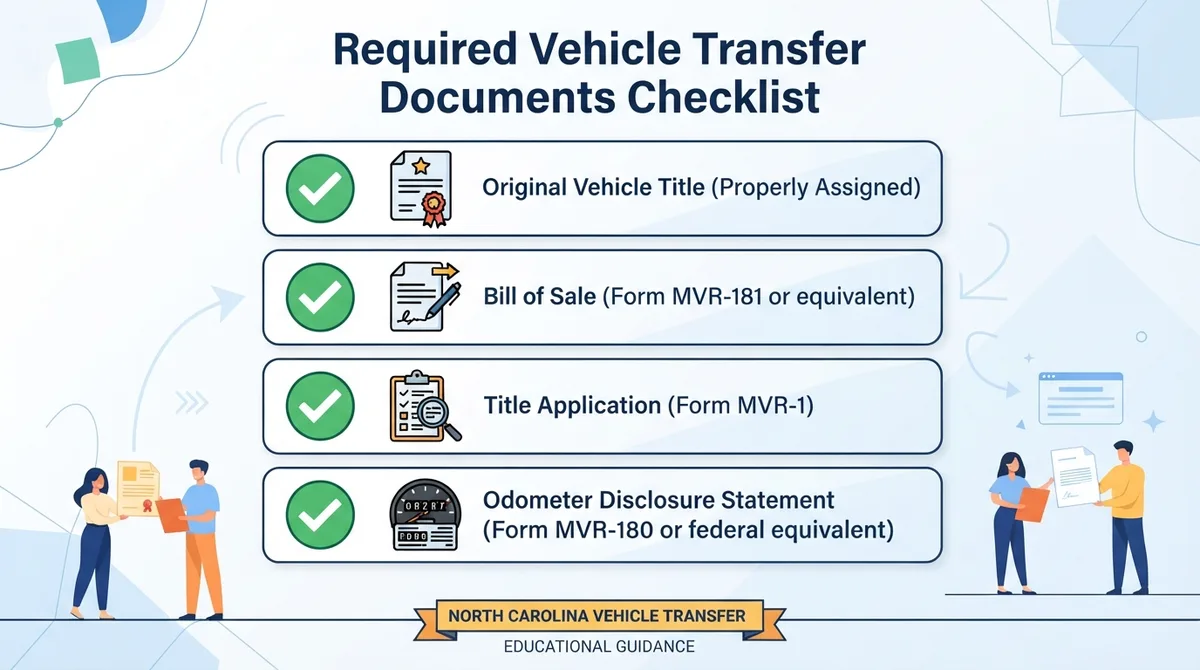
The North Carolina Department of Transportation Division of Motor Vehicles enforces specific requirements when a vehicle changes hands. A North Carolina Bill of Sale often accompanies other mandatory state forms to complete a legal transfer:
- Title Information Completion - Requires both the original owner and the recipient to complete the information on the back of the original title, which must include the buyer and recipient name and address, along with the date of sale or delivery.
- Title Application - Demands the submission of a completed Title Application form to establish new ownership records (Form MVR-1).
- Odometer Disclosure Statement - Mandates the disclosure of accurate mileage at the time of transfer for vehicles under a certain age (Form MVR-180).
- Notarization Requirement - Requires certain vehicle title signatures to be notarized before the state will process the transfer of ownership.
Essential Elements of a Bill of Sale
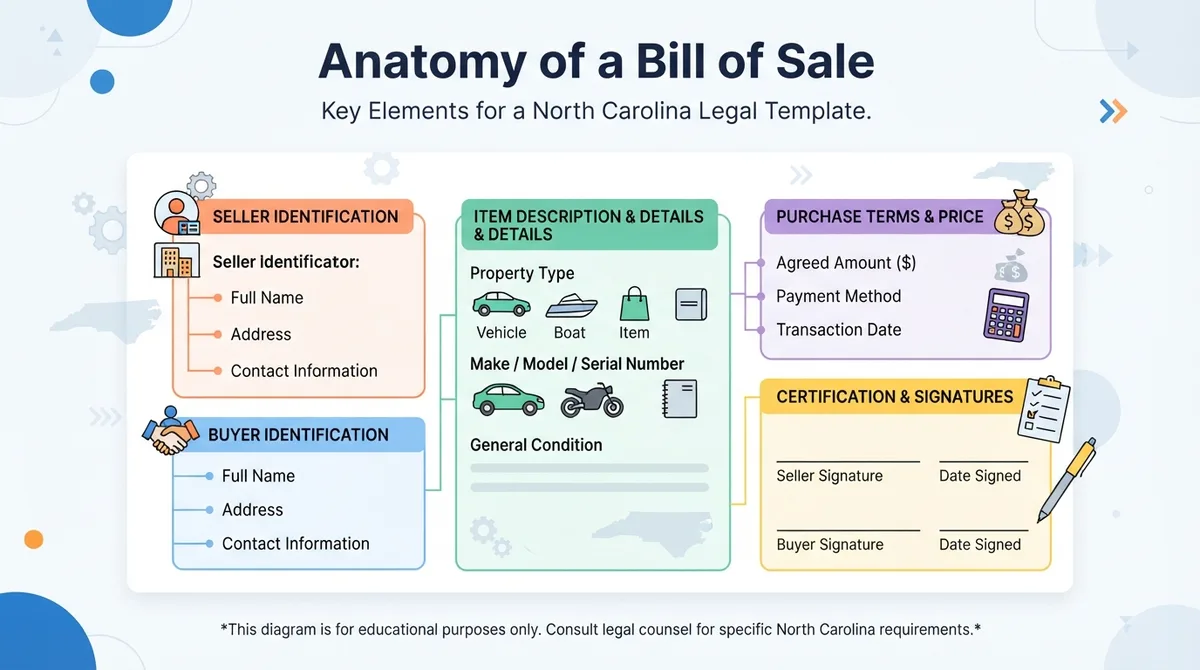
To ensure a North Carolina Bill of Sale is legally useful and provides adequate protection, the document should contain several specific details:
- Party Identification - Full legal names, physical addresses, and contact information of both the buyer and the seller.
- Property Description - Detailed specifications of the item, including make, model, year, serial number, color, and any other unique identifying marks.
- Transaction Details - The exact purchase price, date of the transfer, and the agreed-upon payment method.
- As-Is Clause - A statement indicating that the item is sold in its current condition without any explicit or implied warranties.
- Signatures - The handwritten signatures of both parties, along with the date of signing, to confirm mutual agreement to the terms.
Drafting and Executing a Bill of Sale
To draft and execute a North Carolina Bill of Sale successfully, parties should follow a structured process:
- Gather Information - Collect the full names, addresses, and identification of both parties, along with all relevant details about the personal property.
- Draft the Document - Write or compile the terms of the sale, ensuring all essential details and the "as-is" status are clearly stated.
- Review and Sign - Both parties must carefully review the document for accuracy before signing and dating the physical copy.
- Provide Copies - The seller should deliver the completed bill of sale to the buyer, and both parties should retain a copy for their personal tax and financial records.
Frequently Asked Questions
Sources
- Official NCDMV: Vehicle Title Transfers - Provides information on transferring vehicle ownership, including the use of a bill of sale.
- Official NCDMV: Vehicle Documents & Forms - Lists forms required for vehicle title and registration, including the MVR-1 Title Application and MVR-180 Odometer Disclosure Statement.
- G.S. 1-339.39 - Private sale; personal property; delivery; bill of sale - Statute outlining the use of a bill of sale in private sales of personal property in North Carolina.
Bill of Sale in other states
Not the form you're looking for?
Try our legal document generator to create a custom document
Disclaimer: The templates available on this website are provided for general informational purposes only and do not constitute legal advice. They are not intended to be, and should not be interpreted as, compliant with any specific legal, regulatory, or privacy requirements. These templates are not a replacement for professional legal guidance and should not be relied upon for any particular matter or circumstance. Users are strongly encouraged to seek advice from a qualified attorney licensed in their jurisdiction before using, modifying, or relying on any template.
All templates are provided on an "as is," "with all faults," and "as available" basis. The provider disclaims any and all warranties of any kind, whether express, implied, statutory, or otherwise, including without limitation warranties of merchantability, fitness for a particular purpose, title, or non-infringement.
LegalTemplates.com makes no guarantees or representations regarding the accuracy, completeness, expected outcomes, or reliability of the materials contained in these templates or any materials referenced or linked from them.