Texas Bill of Sale
A Texas Bill of Sale is a legal document that records the transfer of ownership of personal property, such as a motor vehicle, vessel, or other personal effects, from a seller to a buyer.
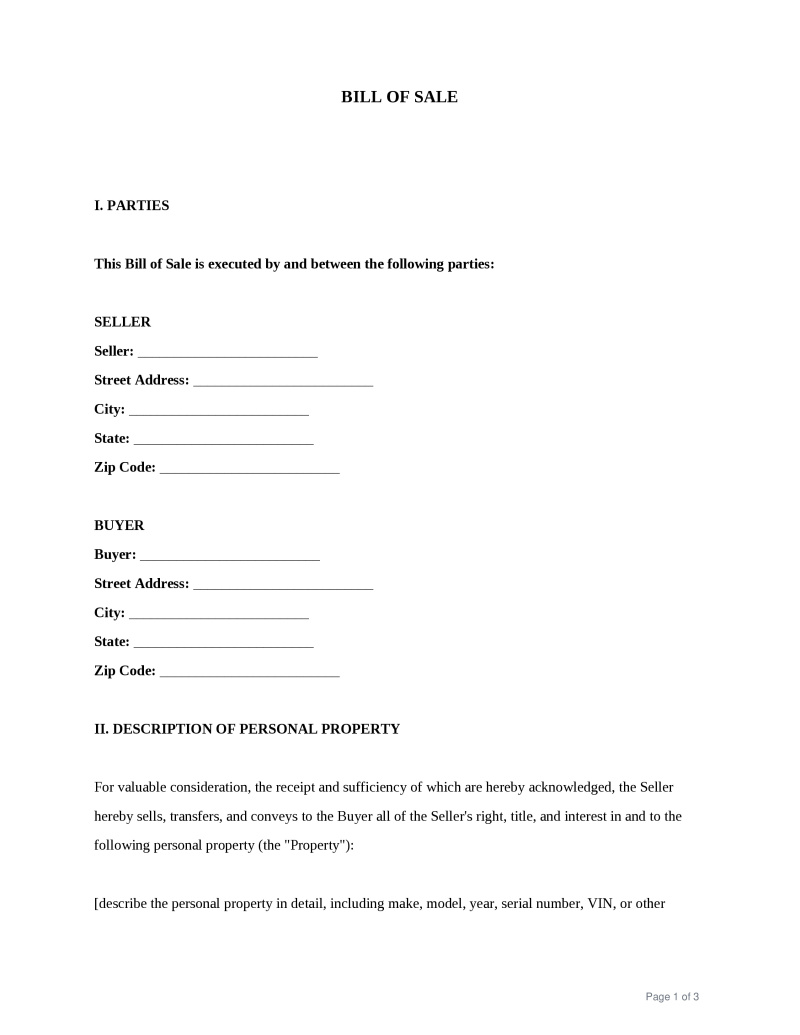
Asset Type
Choose the category that best describes the item. This helps include the right identifying details, such as VIN, hull number, serial number, or livestock identifiers.
Use this when the item does not fit one of the listed categories.
Table of Contents
What is a Texas Bill of Sale?
A Texas Bill of Sale is a legal document that records the transfer of ownership of personal property, such as a motor vehicle, vessel, or other personal effects, from a seller to a buyer. It serves as a formal receipt of the transaction, detailing the terms of the sale, the purchase price, and the identities of both parties involved. While it does not replace an official certificate of title, the document provides essential proof of purchase and transfer of liability. Private individuals and businesses across Texas utilize this document to establish a clear paper trail for tax, registration, and legal purposes.
Common Uses and Applications
A Texas Bill of Sale is utilized in various private transactions where ownership of property changes hands. The document is most frequently associated with the sale of motor vehicles, but its application extends to several other scenarios where proof of transaction is required. Understanding when to draft this document helps protect both buyers and sellers from future disputes regarding ownership or liability.
Typical scenarios involving the use of this document include:
- Private Vehicle Sales - Documenting the transfer of cars, trucks, or motorcycles between private individuals before the official title transfer occurs.
- Component Part Transfers - Recording the sale of major vehicle parts used in rebuilding or repairing automobiles.
- Salvage Operations - Documenting transactions involving salvage or non-repairable vehicles through official state-approved channels.
- General Personal Property - Selling high-value items such as electronics, tools, or furniture where a written record of payment is desired.
Types of Texas Bills of Sale
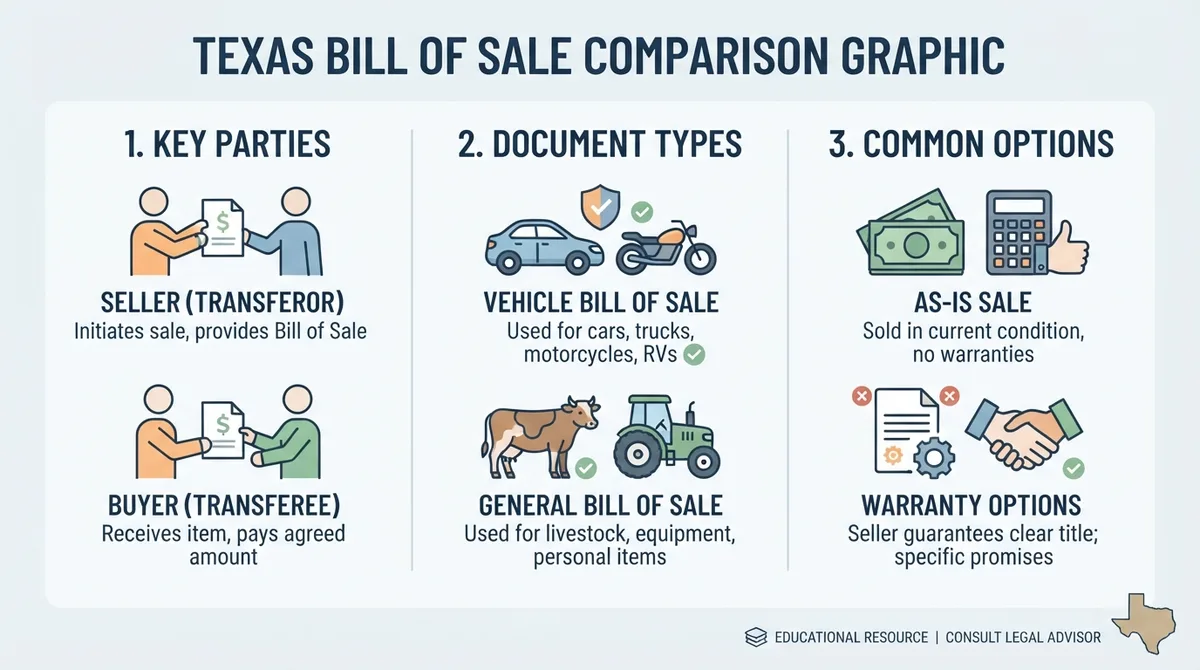
Different transactions require specific forms to ensure compliance with state regulations and to facilitate proper record-keeping:
- Component Part Bill of Sale (Form VTR-63) - Required for transferring ownership of vehicle component parts in Texas, which must be submitted with a Rebuilt Vehicle Statement (Form VTR-61) when applying for a new motor vehicle title.
- Salvage Vehicle Bill of Sale - Provided through the Texas Department of Motor Vehicles for transactions involving salvage operations and specific non-repairable vehicle types.
- General Bill of Sale - Used for standard transactions involving personal property where no specialized state form is mandated.
- Vehicle Bill of Sale - Drafted by private parties to record the sale of a standard motor vehicle, acting as a receipt and supporting evidence of ownership.
Required Elements of a Texas Bill of Sale
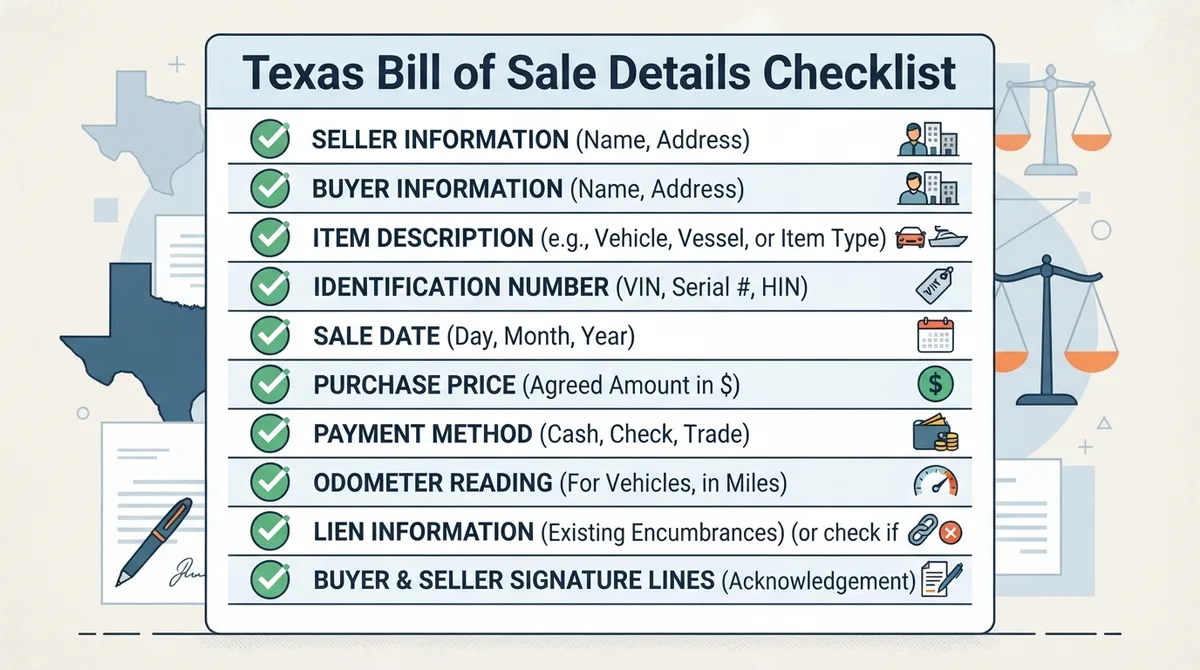
To ensure the document is legally useful and serves as sufficient proof of transaction, certain key details must be clearly stated:
- Party Identification - The legal names, physical addresses, and signatures of both the buyer and the seller.
- Property Description - Specific details of the item being sold, including the make, model, year, vehicle identification number (VIN), or serial numbers where applicable.
- Transaction Details - The exact date of the sale and the agreed-upon purchase price in US dollars.
- Odometer Disclosure - The mileage reading at the time of transfer for motor vehicles, ensuring compliance with state odometer disclosure rules.
Establishing Ownership Without a Title
Acquiring a vehicle without a proper title presents legal challenges in Texas, but a bill of sale plays a critical role in resolving these issues. The Texas Department of Motor Vehicles outlines specific procedures for motorists to obtain a title in these situations.
The document serves as key evidence during the following processes:
- Bonded Title Application - A bill of sale can serve as supporting evidence of ownership when applying for a bonded title for a vehicle without an existing title.
- Tax Office Evaluation - County tax offices review the bill of sale to verify the transaction details and assess appropriate motor vehicle sales tax.
- Ownership Disputes - The document provides written proof of the transfer of ownership, protecting the buyer from claims of theft or unauthorized possession.
Texas Regulations and Official Forms
The Texas Department of Motor Vehicles regulates the transfer of vehicles and major parts, requiring specific documentation for compliance:
- Component Part Transfer Requirements - Mandates the use of Form VTR-63 when transferring ownership of vehicle component parts in Texas (Form VTR-63).
- Rebuilt Vehicle Certification - Requires the submission of Form VTR-63 alongside the Rebuilt Vehicle Statement when applying for a new title for a motor vehicle using component parts (Form VTR-61).
- Salvage Operation Regulations - Governs the sale and documentation of salvage vehicles using specific forms provided by the Texas Department of Motor Vehicles (Texas DMV Salvage Forms).
- Evidence of Ownership Rules - Permits the use of a bill of sale as supporting evidence of ownership when obtaining a title for a vehicle without one (Texas DMV Title Guidance).
Frequently Asked Questions
Sources
- Component Part(s) Bill of Sale (Form VTR-63) - Official form for transferring ownership of vehicle component parts in Texas.
- Salvage Operation Forms - Collection of forms related to salvage operations, including bills of sale for various vehicle types.
- Bought a Vehicle Without a Title? - Guidance on obtaining a title for a vehicle without one, including the use of a bill of sale as supporting evidence of ownership.
Bill of Sale in other states
Not the form you're looking for?
Try our legal document generator to create a custom document
Disclaimer: The templates available on this website are provided for general informational purposes only and do not constitute legal advice. They are not intended to be, and should not be interpreted as, compliant with any specific legal, regulatory, or privacy requirements. These templates are not a replacement for professional legal guidance and should not be relied upon for any particular matter or circumstance. Users are strongly encouraged to seek advice from a qualified attorney licensed in their jurisdiction before using, modifying, or relying on any template.
All templates are provided on an "as is," "with all faults," and "as available" basis. The provider disclaims any and all warranties of any kind, whether express, implied, statutory, or otherwise, including without limitation warranties of merchantability, fitness for a particular purpose, title, or non-infringement.
LegalTemplates.com makes no guarantees or representations regarding the accuracy, completeness, expected outcomes, or reliability of the materials contained in these templates or any materials referenced or linked from them.