Pennsylvania Bill of Sale
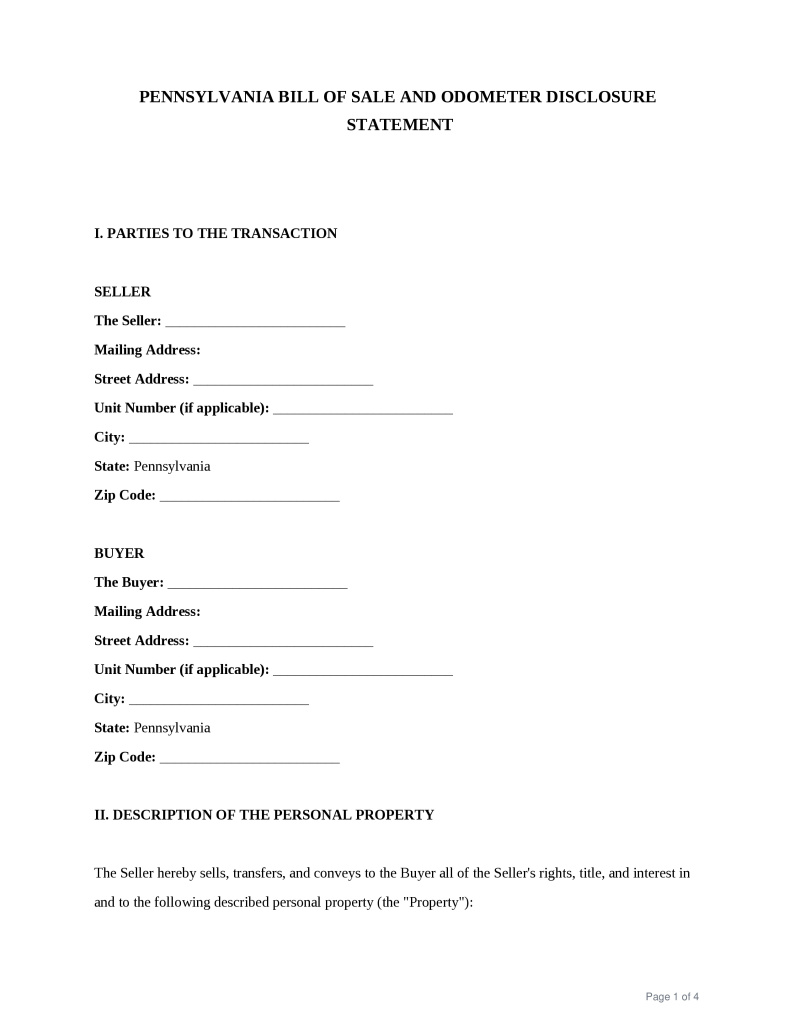
A Pennsylvania Bill of Sale is a legal document that records the transfer of ownership of personal property, such as a vehicle or vessel, from a seller to a buyer within the state of Pennsylvania.
Asset Type
Choose the category that best describes the item. This helps include the right identifying details, such as VIN, hull number, serial number, or livestock identifiers.
Use this when the item does not fit one of the listed categories.
Table of Contents
What is a Pennsylvania Bill of Sale?
A Pennsylvania Bill of Sale is a legal document that records the transfer of ownership of personal property from a seller to a buyer. It serves as a receipt for the transaction, detailing the terms of the sale, the purchase price, and the condition of the item. This document is commonly used for transactions involving motor vehicles, vessels, and general personal property. While it establishes proof of purchase and transfer of ownership, it does not replace official state-issued titles or registration documents required by state agencies.
Common Types of Pennsylvania Bills of Sale
Transactions involving different categories of personal property require specific formats to ensure all relevant details are captured:
- Vehicle Bill of Sale - Used for the purchase and sale of motor vehicles, providing essential details required for title transfer and registration with the Pennsylvania Department of Transportation.
- Boat Bill of Sale - Documents the transfer of ownership for motorized and non-motorized vessels, which is necessary for registration with the Pennsylvania Fish and Boat Commission.
- General Bill of Sale - Facilitates the sale of miscellaneous personal property, such as electronics, furniture, or tools, where formal state registration is not required.
- Firearm Bill of Sale - Records the private transfer of a firearm, documenting the serial number, make, model, and the identities of both parties for personal record-keeping.
Key Elements of a Pennsylvania Bill of Sale
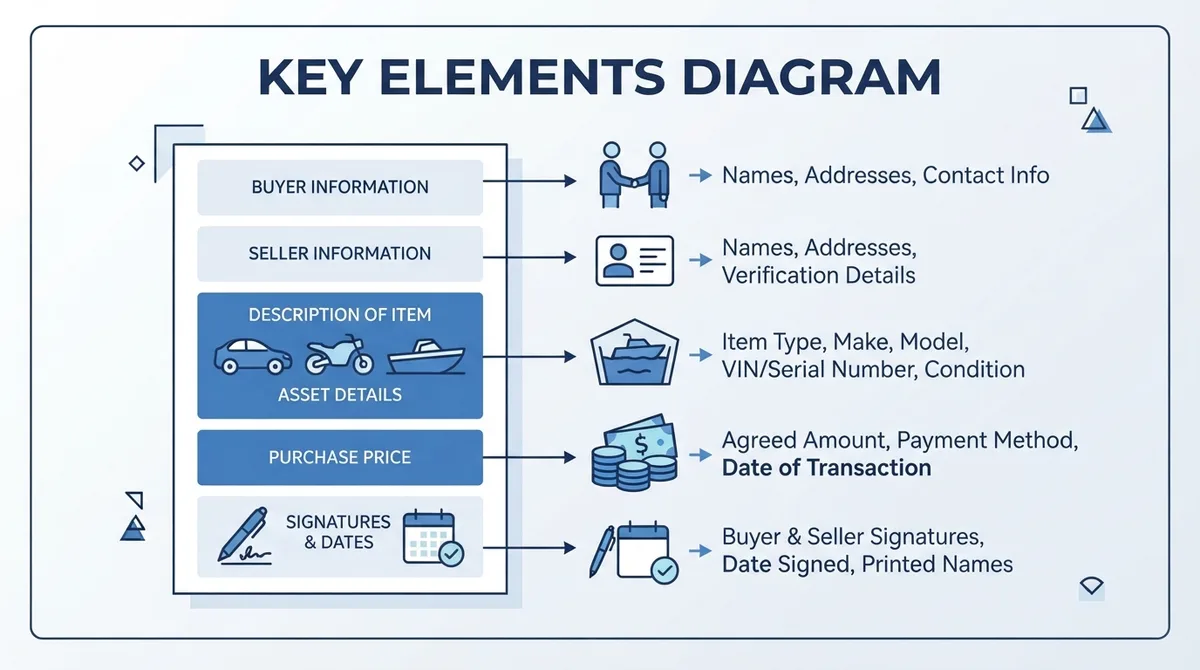
To ensure validity and clear proof of transfer, a comprehensive Pennsylvania Bill of Sale must include several critical pieces of information:
- Party Information - Full legal names, physical addresses, and contact details of both the buyer and the seller.
- Detailed Item Description - Specific identification details of the property, such as make, model, year, serial number, color, and any unique markings.
- Financial Terms - The exact purchase price, the date of payment, and the accepted payment method, such as cash, check, or bank transfer.
- As-Is Clause - A statement indicating that the property is sold in its current condition without any explicit or implied warranties.
- Signatures and Date - The signatures of both the buyer and the seller, along with the exact date the transfer of ownership occurs.
Pennsylvania Vehicle Transfer and Registration Requirements
The Pennsylvania Department of Transportation maintains specific procedures for transfering motor vehicle ownership:
- Title Transfer Notarization - Pennsylvania law mandates that the seller's signature on the vehicle title must be notarized to complete a valid transfer.
- Form MV-4ST Submission - Buyers must complete and submit the Motor Vehicle Transfer/Registration Tax Application to register the vehicle and pay applicable sales tax.
- Odometer Disclosure Statement - Sellers must disclose the accurate mileage of the vehicle on the title at the time of sale to prevent mileage fraud.
- Registration Timeline - New owners must apply for a new title and registration within 20 days of purchasing the vehicle.
Distinction Between a Bill of Sale and a Title
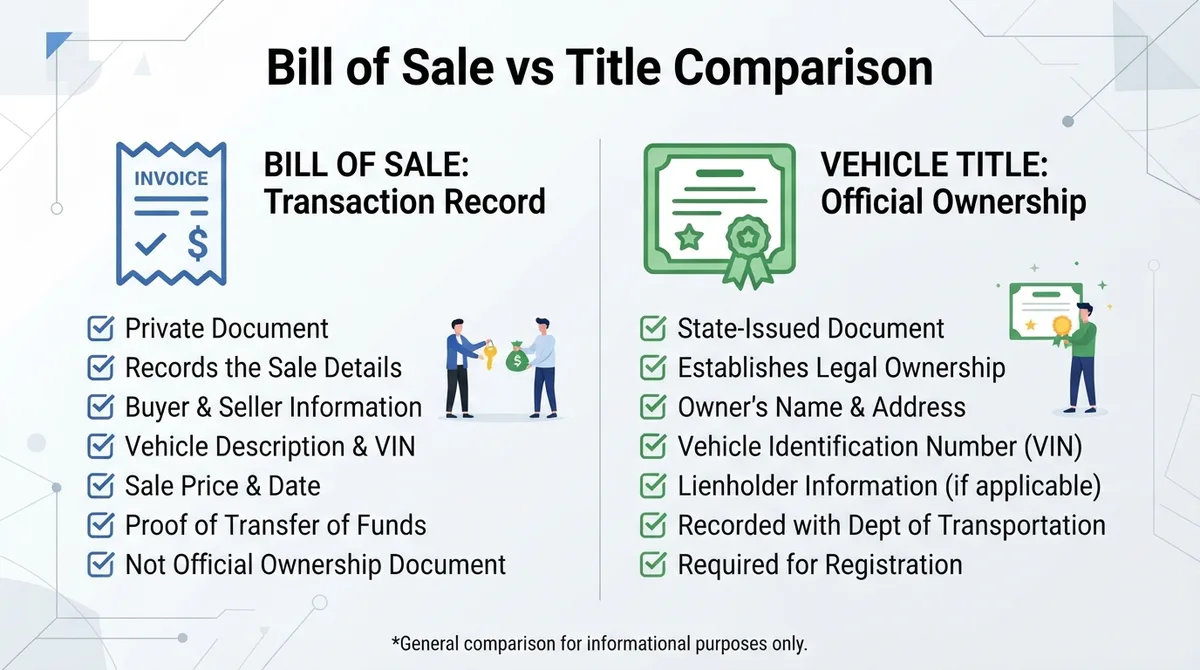
Understanding the difference between ownership documents prevents legal and administrative complications during property transfers:
- Proof of Transaction - A bill of sale acts as a sales receipt documenting the financial agreement and transfer of physical possession between two private parties.
- Legal Ownership Certificate - A certificate of title is a government-issued document that serves as the official, legal proof of ownership for registered assets like vehicles and boats.
- Registration Necessity - Government agencies require a signed and notarized title to register a vehicle, whereas a bill of sale supports the transaction details and sales tax calculations.
Notarization and Witnessing Guidelines
While not all transactions require formal verification, incorporating specific authentication steps enhances the legal standing of the document:
- Vehicle Title Requirements - Pennsylvania requires the signature of the seller on a vehicle title to be notarized, though the accompanying bill of sale does not strictly require notarization.
- Fraud Prevention - Having a notary public witness the signing of a general bill of sale verifies the identities of the parties and prevents future claims of forgery.
- Witness Signatures - Adding disinterested third-party witnesses to sign the document provides additional evidence of a voluntary agreement if a dispute arises.
Frequently Asked Questions
Bill of Sale in other states
Not the form you're looking for?
Try our legal document generator to create a custom document
Disclaimer: The templates available on this website are provided for general informational purposes only and do not constitute legal advice. They are not intended to be, and should not be interpreted as, compliant with any specific legal, regulatory, or privacy requirements. These templates are not a replacement for professional legal guidance and should not be relied upon for any particular matter or circumstance. Users are strongly encouraged to seek advice from a qualified attorney licensed in their jurisdiction before using, modifying, or relying on any template.
All templates are provided on an "as is," "with all faults," and "as available" basis. The provider disclaims any and all warranties of any kind, whether express, implied, statutory, or otherwise, including without limitation warranties of merchantability, fitness for a particular purpose, title, or non-infringement.
LegalTemplates.com makes no guarantees or representations regarding the accuracy, completeness, expected outcomes, or reliability of the materials contained in these templates or any materials referenced or linked from them.