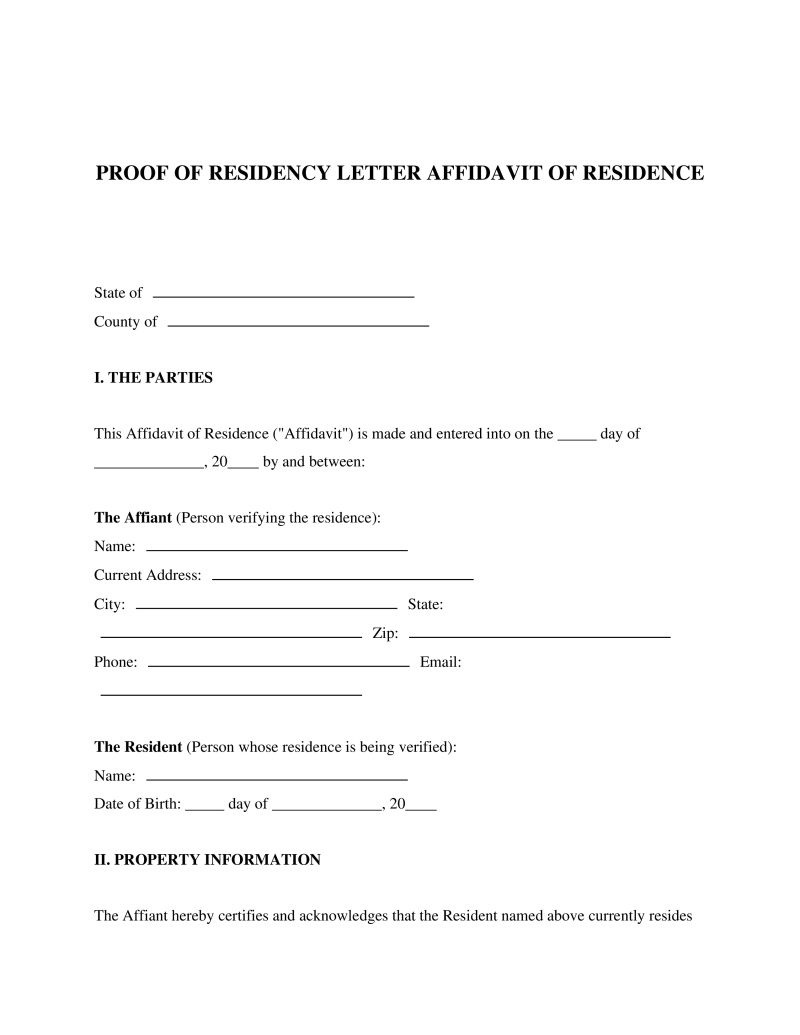
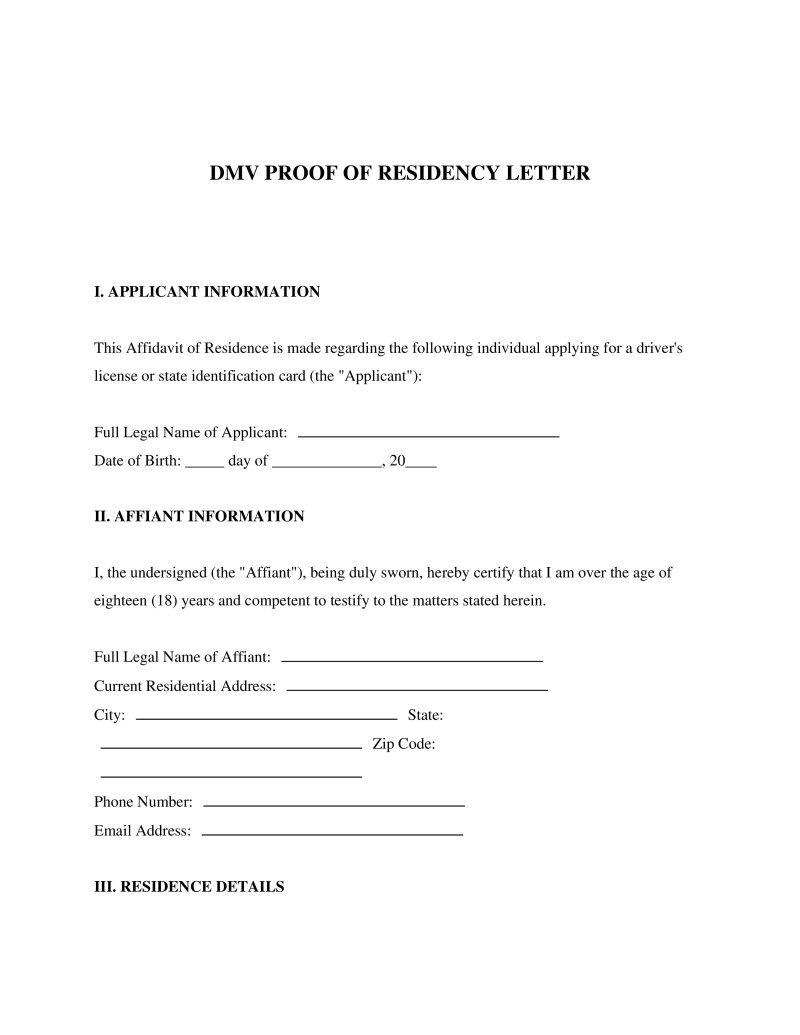
Proof of Residency Letter (Affidavit of Residence)
Create Proof of Residency Letter (Affidavit of Residence)
Proof of Residency Letter (Affidavit of Residence)
A Proof of Residency Letter verifies an individual's address, often required for legal, financial, or governmental purposes to confirm residence.
Answer the question(s) below to create your Proof of Residency Letter (Affidavit of Residence)
Residency Use Purpose
Choose the main reason the affidavit is needed. This helps tailor the wording and any caption or recipient details.
Briefly describe the specific purpose if it is not listed.
Table of Contents
What is a Proof of Residency Letter (Affidavit of Residence)?
A Proof of Residency Letter, also known as an affidavit of residence, is a formal legal document used to verify an individual's current residential address for various official purposes. This document is typically sworn under oath by a landlord, employer, family member, or roommate who can attest to the applicant's living situation. Government agencies, educational institutions, and financial organizations frequently require this verification to establish eligibility for local services, benefits, or identification cards.
Common Uses of a Proof of Residency Letter
Verification of address is a standard administrative requirement across public and private sectors. Organizations require standardized proof to prevent fraud and ensure compliance with local regulations.
Common scenarios requiring this documentation include:
- Driver Licensing - Obtaining or renewing a driver's license or state identification card at a department of motor vehicles.
- School Enrollment - Registering children for public school districts that require proof of local residency.
- Tax Administration - Applying for tax identification numbers or claiming dependents on tax returns.
- Financial Services - Opening bank accounts or securing loans where financial institutions must comply with identity verification regulations.
- Government Benefits - Accessing state or municipal programs, public housing, or localized healthcare services.
Types of Residency Verification Documents
Different jurisdictions and organizations accept various forms of documentation to establish a person's living address. The acceptable types of documentation generally fall into distinct categories depending on the verifying agency's requirements.
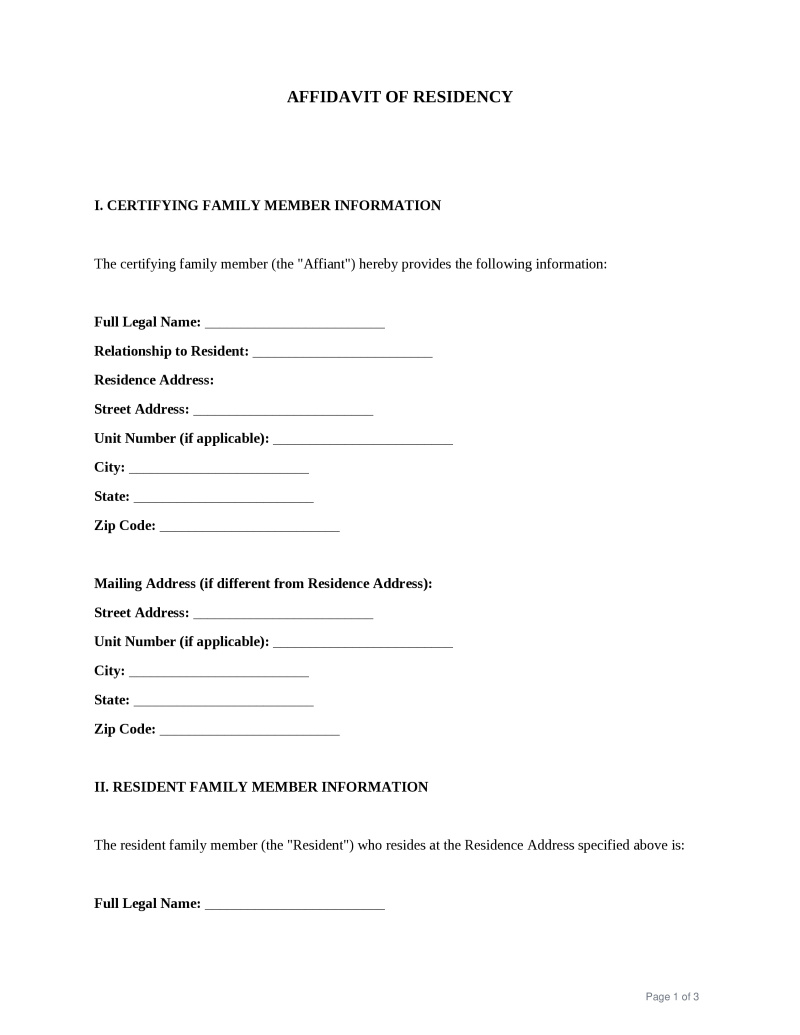
- Affidavit of Residence - A sworn written statement signed by a landlord, cohabitant, or property owner certifying that the applicant resides at the specified address.
- Utility and Service Bills - Recent statements for electricity, water, gas, or landline telephone services issued directly in the applicant's name.
- Financial and Property Records - Legal deeds, active mortgage statements, or unexpired lease agreements reflecting the applicant's name and address.
- Government-Issued Identification - Valid passports, state identity cards, or official correspondence from government agencies containing the residential address.
- Medical and Educational Records - Official transcripts, enrollment letters, or medical bills from recognized providers containing the resident's details.
State and Federal Agency Guidelines
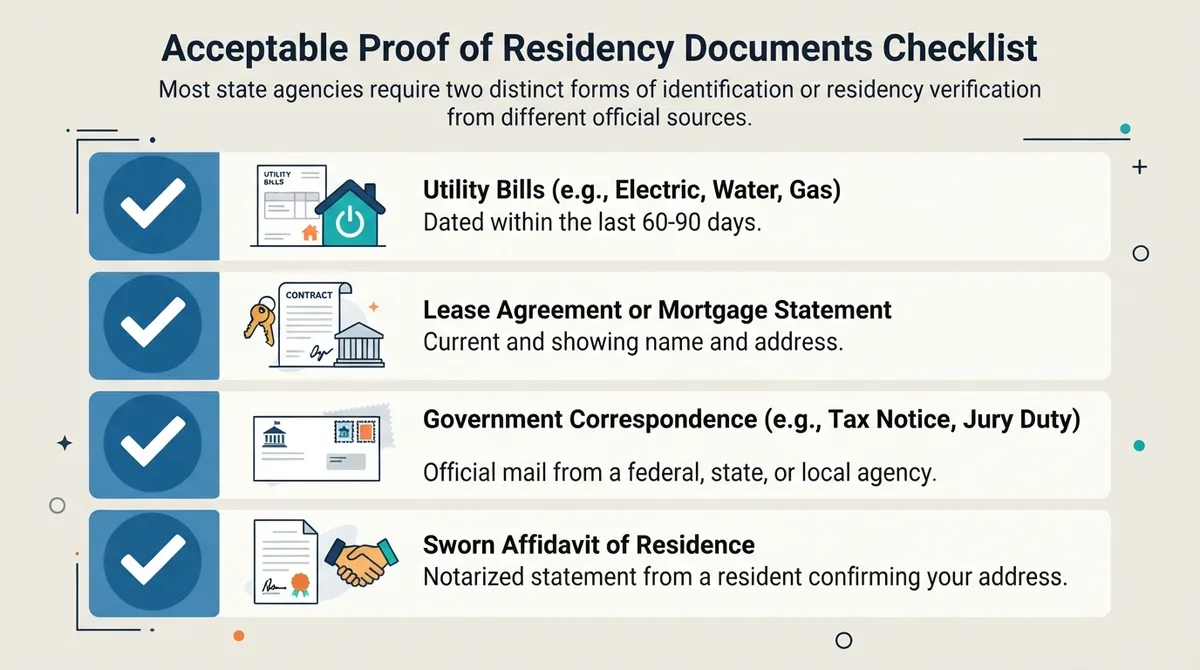
The criteria for proving residency depend heavily on the specific state, district, or agency processing the application. Official guidelines highlight distinct standards across different jurisdictions:
- District of Columbia DMV Requirements - Applicants must provide two documents from different sources, such as utility bills, telephone bills, deeds, mortgage statements, or unexpired lease agreements, to prove current residency (D.C. Mun. Regs. tit. 18, § 112).
- District of Columbia Residency Certification - Residents who live with a current District resident and lack residency documents in their own name may use a certification form, which is available in English, Spanish, Amharic, Chinese, French, Vietnamese, and Korean (D.C. DMV Certification Guidelines).
- Tennessee Driver Services Standards - Applicants must present two current documents issued within the past four months from different sources showing their name and residential address (Tenn. Comp. R. & Regs. 1340-01-13).
- Pennsylvania DMV Residency Affidavit - Applicants who lack utility bills in their name can have a cohabitant sign an affidavit of residency, provided they also submit a second proof of residency such as official mail (75 Pa. C.S. § 1510).
- Federal ITIN Dependent Guidelines - The Internal Revenue Service permits the use of a valid passport with a U.S. entry date, or alternative documents like a civil birth certificate or medical records, to establish U.S. residency for dependents (26 CFR § 301.6109-1).
Essential Elements of an Affidavit of Residence
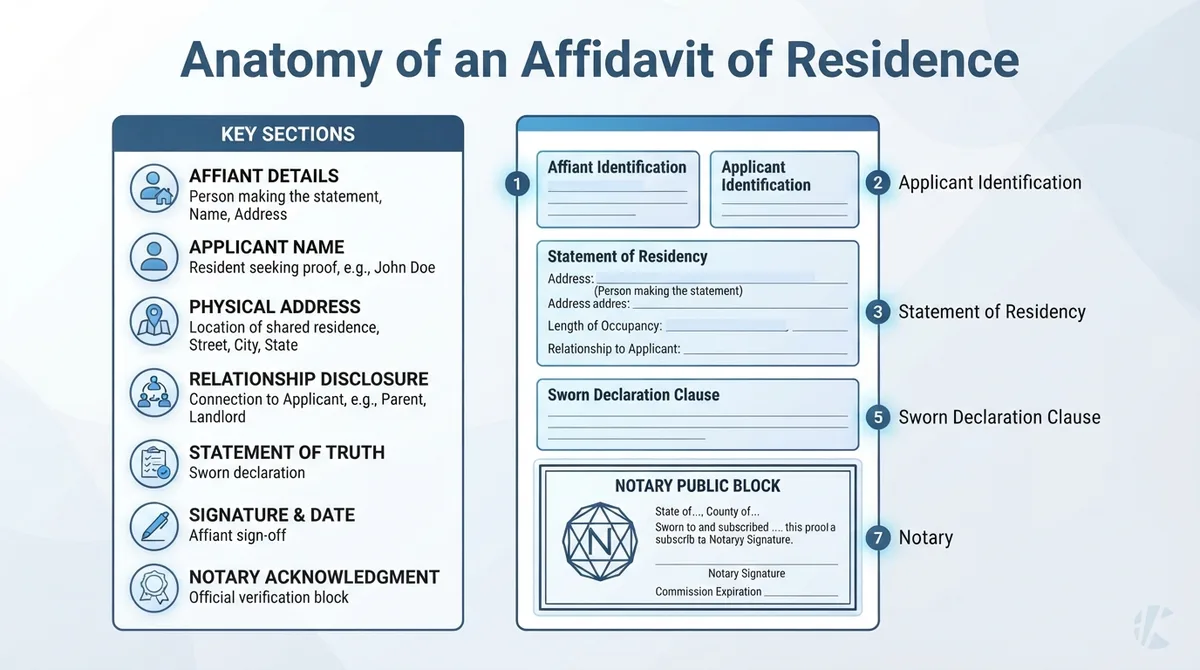
To ensure legal validity and administrative acceptance, an affidavit of residence must contain specific details. Omitting key information can result in the rejection of the application by the receiving agency.
Every formal residency letter must include the following components:
- Affiant Details - The full legal name, contact information, and signature of the person certifying the applicant's residency.
- Applicant Details - The full legal name of the person whose residency is being verified.
- Residential Address - The complete physical address, including street name, apartment number, city, state, and zip code, excluding post office boxes.
- Relationship Statement - A description of the relationship between the affiant and the applicant, such as landlord, roommate, or parent.
- Duration of Residency - The specific length of time the applicant has lived at the physical address.
- Notary Public Block - A formal section for a notary public to witness the signature, administer the oath, and apply their official seal.
How to Draft and Execute a Proof of Residency Letter
Executing a residency letter requires careful adherence to administrative steps to ensure the document is legally binding and accepted by the requesting authority.
- Identify the Requesting Agency Requirements - Review the specific rules of the department of motor vehicles, school district, or organization to determine if they require a specific form or notarization.
- Gather Supporting Documentation - Collect secondary evidence such as utility bills, official mail, or lease agreements that match the address stated in the letter.
- Draft the Statement - Write the letter clearly, stating the affiant's relationship to the applicant and confirming the applicant's physical address under penalty of perjury.
- Execute before a Notary Public - Sign the document in the presence of a licensed notary public, who will verify the identity of the signer and stamp the document.
- Submit to the Authority - Deliver the notarized letter along with any required secondary proof of residency to the verifying agency within the specified timeframe.
Frequently Asked Questions
Yes, a family member can write the letter if they own or lease the property where the applicant resides. The letter must clearly state the relationship and may require notarization to be accepted by official agencies.
Many government agencies, such as state DMVs, require the affidavit to be notarized to verify the identity of the signer. It is best to check the specific guidelines of the requesting organization before submission.
You can have the primary homeowner or leaseholder sign an affidavit of residence certifying that you live with them. You should also provide secondary documents like official mail, medical records, or school transcripts.
Most state agencies, including driver services departments, require supporting documents to be current. These documents are generally expected to be issued within the past two to four months depending on local regulations.
No, a post office box cannot be used to establish physical residency. Requesting agencies require a physical street address to verify where the applicant actually lives.
Sources
- Proof of U.S. residency for dependents - Guidelines on acceptable documents to prove U.S. residency for dependents applying for an Individual Taxpayer Identification Number (ITIN).
- Proof of Current District of Columbia Residency - Acceptable documents for proving current residency in the District of Columbia for DMV purposes.
- Proof of Tennessee Residency - Requirements for providing proof of residency in Tennessee for driver services.
- Proof of DC Residency Certifications - Information on DC DMV Proof of Residency Certification for residents without residency documents in their name.
- Proof of Identity & Residency - Guidelines for providing proof of identity and residency in Pennsylvania for driver's licenses and identification cards.
Related Documents
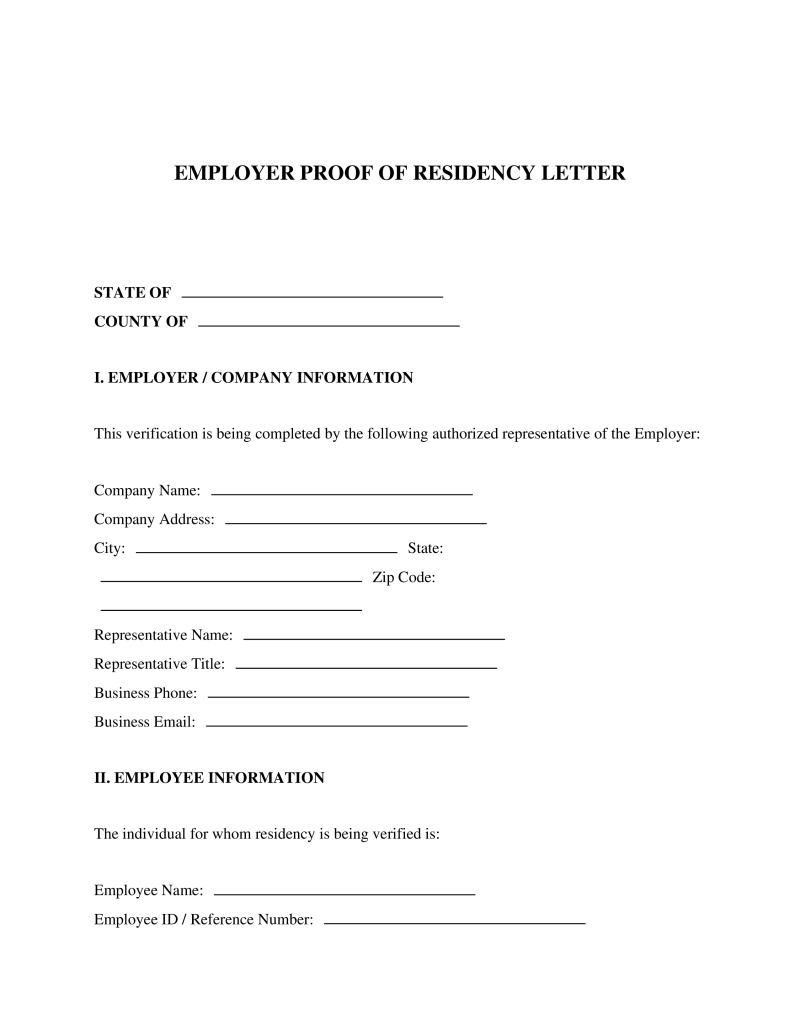
Forms commonly used with Proof of Residency Letter (Affidavit of Residence).
Not the form you're looking for?
Try our legal document generator to create a custom document
Disclaimer: The templates available on this website are provided for general informational purposes only and do not constitute legal advice. They are not intended to be, and should not be interpreted as, compliant with any specific legal, regulatory, or privacy requirements. These templates are not a replacement for professional legal guidance and should not be relied upon for any particular matter or circumstance. Users are strongly encouraged to seek advice from a qualified attorney licensed in their jurisdiction before using, modifying, or relying on any template.
All templates are provided on an "as is," "with all faults," and "as available" basis. The provider disclaims any and all warranties of any kind, whether express, implied, statutory, or otherwise, including without limitation warranties of merchantability, fitness for a particular purpose, title, or non-infringement.
LegalTemplates.com makes no guarantees or representations regarding the accuracy, completeness, expected outcomes, or reliability of the materials contained in these templates or any materials referenced or linked from them.