New Jersey Bill of Sale
A New Jersey Bill of Sale is a legal document that records the transfer of ownership of personal property, such as a vehicle or vessel, from a seller to a buyer within the state of New Jersey.
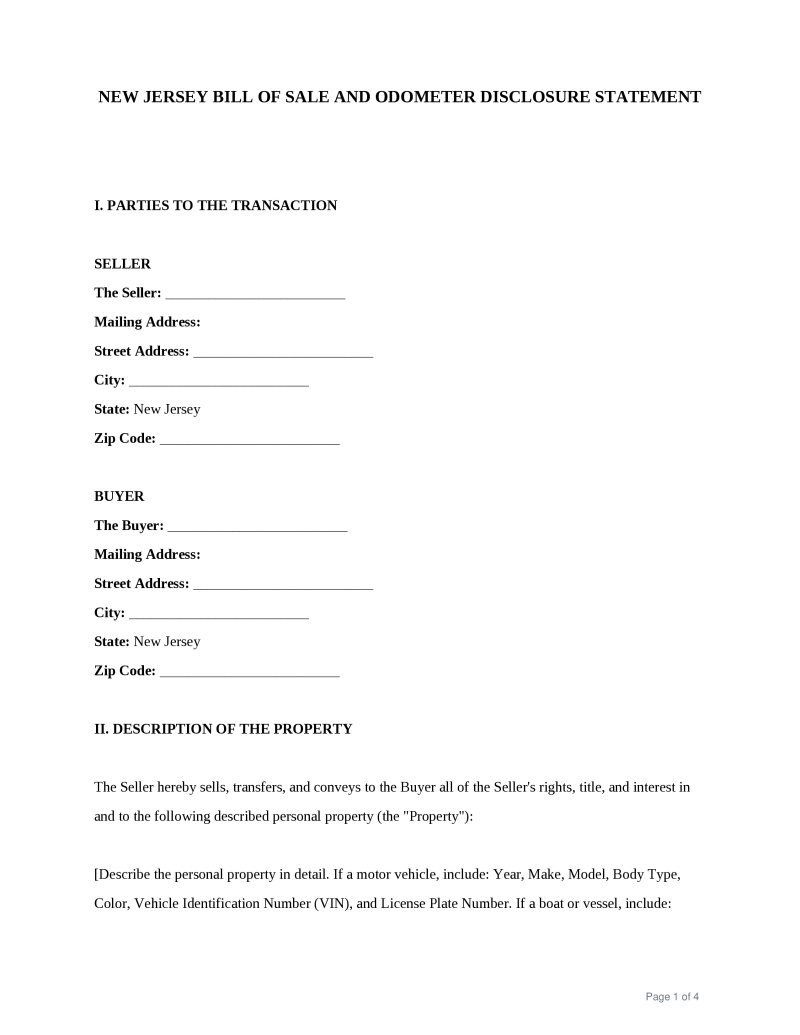
Asset Type
Choose the category that best describes the item. This helps include the right identifying details, such as VIN, hull number, serial number, or livestock identifiers.
Use this when the item does not fit one of the listed categories.
Table of Contents
What is a New Jersey Bill of Sale?
A New Jersey Bill of Sale is a legal document that records the transfer of ownership of personal property from a seller to a buyer. It serves as a receipt of the transaction, detailing the specific terms of the sale, the purchase price, and the identities of the parties involved. In the state of New Jersey, this document is particularly critical for vehicle transactions, where it is used to substantiate the transfer of title and register the asset with the state authorities.
Required Elements of a New Jersey Bill of Sale
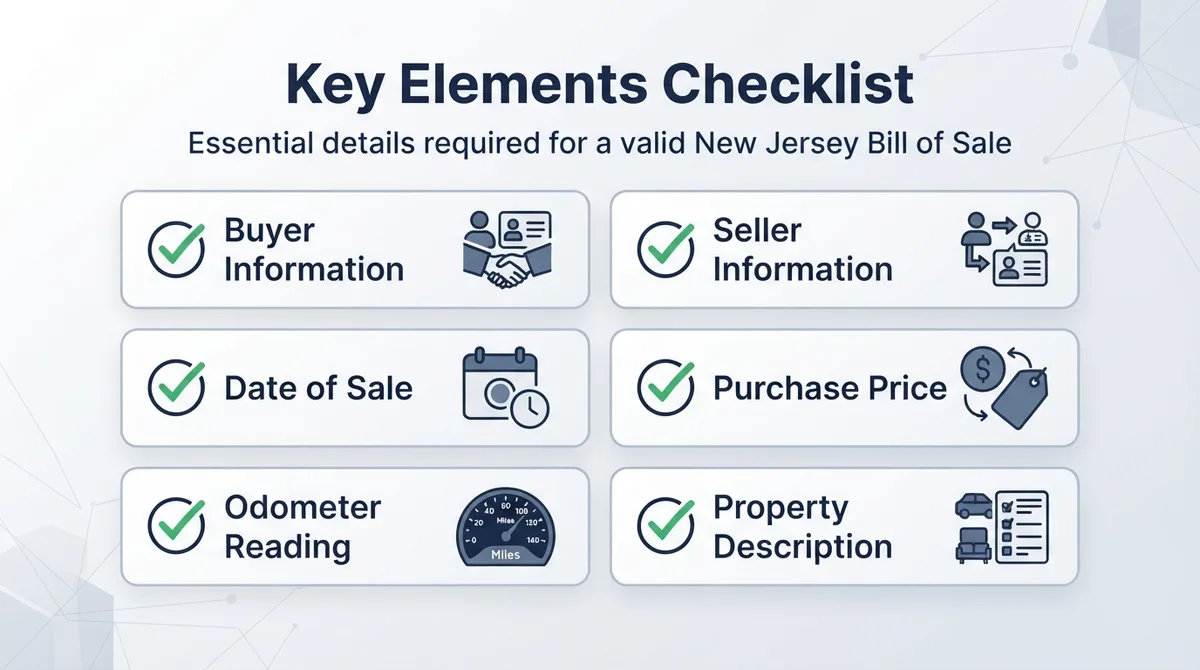
The state authorities require specific details to verify the transaction and ensure the document is legally binding. A properly executed New Jersey Bill of Sale must contain several key pieces of information:
- Buyer Information - The full legal name and physical address of the individual or entity purchasing the property.
- Seller Information - The full legal name and physical address of the individual or entity selling the property.
- Date of Sale - The exact calendar day, month, and year the transaction was finalized and the property changed hands.
- Sale Price - The total monetary amount paid for the property, written in clear numerical figures.
- Odometer Reading - The exact mileage displayed on the vehicle odometer at the time of transfer for motor vehicle transactions.
- Property Description - Detailed physical characteristics of the item, including the make, model, year, and identification numbers.
Types of New Jersey Bills of Sale
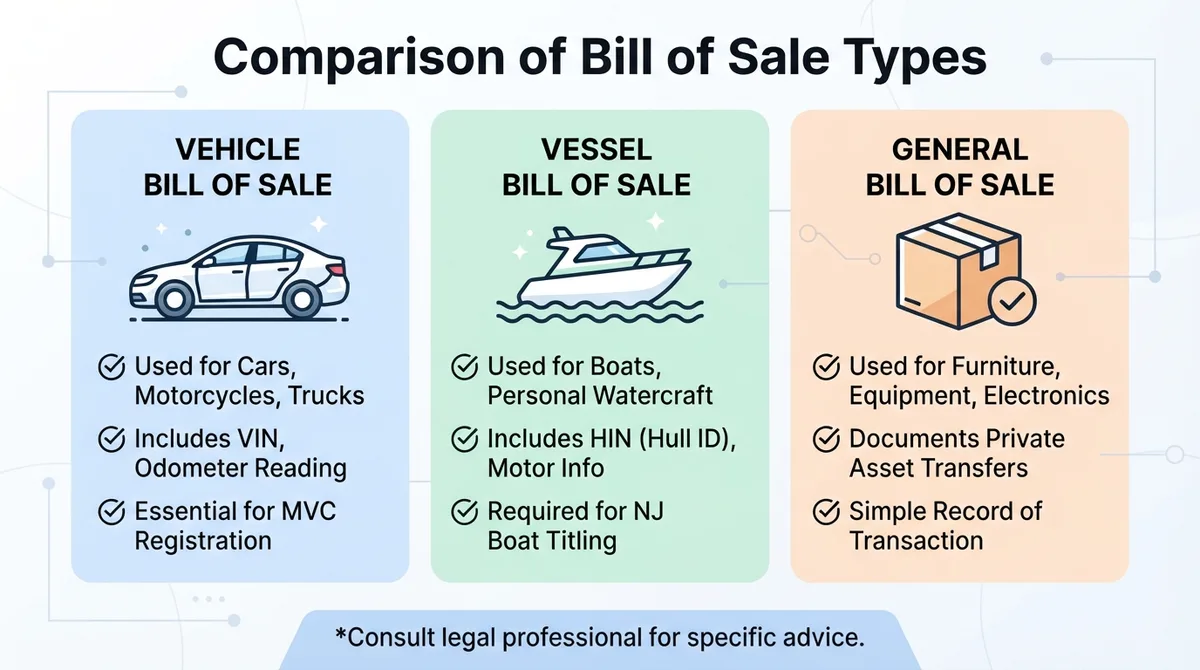
Different transactions require distinct forms to accurately document the transfer of personal property. The primary varieties utilized in the state include:
- Vehicle Bill of Sale - Documents the transfer of ownership for cars, trucks, motorcycles, and other motorized vehicles registered with the state.
- Vessel Bill of Sale - Records the purchase and sale of boats, personal watercraft, and other marine vessels operating in state waters.
- General Bill of Sale - Serves as a receipt for the transfer of non-regulated personal property such as electronics, furniture, or tools.
Vehicle Ownership Transfers in New Jersey
When transferring vehicle ownership, the seller must provide specific documentation to the buyer. The transaction must comply with state regulations to allow successful registration:
- Title Transfer - The seller must sign the back of the current title and transfer it to the buyer.
- Bill of Sale Provision - The seller must provide a completed bill of sale containing the required transaction details to verify the sale price and date (New Jersey Motor Vehicle Commission Guidelines).
- Odometer Disclosure - The seller must record the accurate mileage on the title and the bill of sale to prevent mileage fraud.
- Registration Timeline - The buyer must present the completed documents to the motor vehicle agency within 10 days of purchase to avoid late fees.
Lien Removal and Proof of Ownership
A bill of sale plays a role in resolving legal claims against a vehicle title. The state requires clear evidence of ownership to modify title records:
- Proof of Ownership - The bill of sale serves as primary evidence of a legitimate transaction when disputing or updating title records (New Jersey Motor Vehicle Commission Lien Rules).
- Lien Release Documentation - Owners must present a lien release letter or a bill of sale indicating the lien has been satisfied to remove a lien from a vehicle title.
- Title Correction - The motor vehicle agency relies on the bill of sale to verify the chain of custody before issuing a clean title to the new owner.
Best Practices for Executing the Document
To ensure the document holds up in legal disputes, parties should follow specific execution standards:
- Identity Verification - Both parties should review government-issued identification to confirm names match the document.
- Duplicate Copies - The buyer and the seller must retain signed copies of the completed form for their personal records.
- Notarization - Obtaining notarization is recommended as it helps verify the identities of the signing parties and prevents future disputes.
- As-Is Clause - Sellers should include language specifying the property is sold without warranties to protect themselves from future liability.
Frequently Asked Questions
Sources
- NJ MVC | Transferring Vehicle Ownership - Provides guidelines for transferring vehicle ownership, including requirements for a bill of sale.
- NJ MVC | Liens - Details the process for removing a lien from a vehicle title, including the use of a bill of sale as proof of ownership.
Bill of Sale in other states
Not the form you're looking for?
Try our legal document generator to create a custom document
Disclaimer: The templates available on this website are provided for general informational purposes only and do not constitute legal advice. They are not intended to be, and should not be interpreted as, compliant with any specific legal, regulatory, or privacy requirements. These templates are not a replacement for professional legal guidance and should not be relied upon for any particular matter or circumstance. Users are strongly encouraged to seek advice from a qualified attorney licensed in their jurisdiction before using, modifying, or relying on any template.
All templates are provided on an "as is," "with all faults," and "as available" basis. The provider disclaims any and all warranties of any kind, whether express, implied, statutory, or otherwise, including without limitation warranties of merchantability, fitness for a particular purpose, title, or non-infringement.
LegalTemplates.com makes no guarantees or representations regarding the accuracy, completeness, expected outcomes, or reliability of the materials contained in these templates or any materials referenced or linked from them.