Cease and Desist Letter
A cease and desist letter is a formal notice sent to an individual or business demanding they stop specified illegal or alleged infringing activity immediately.
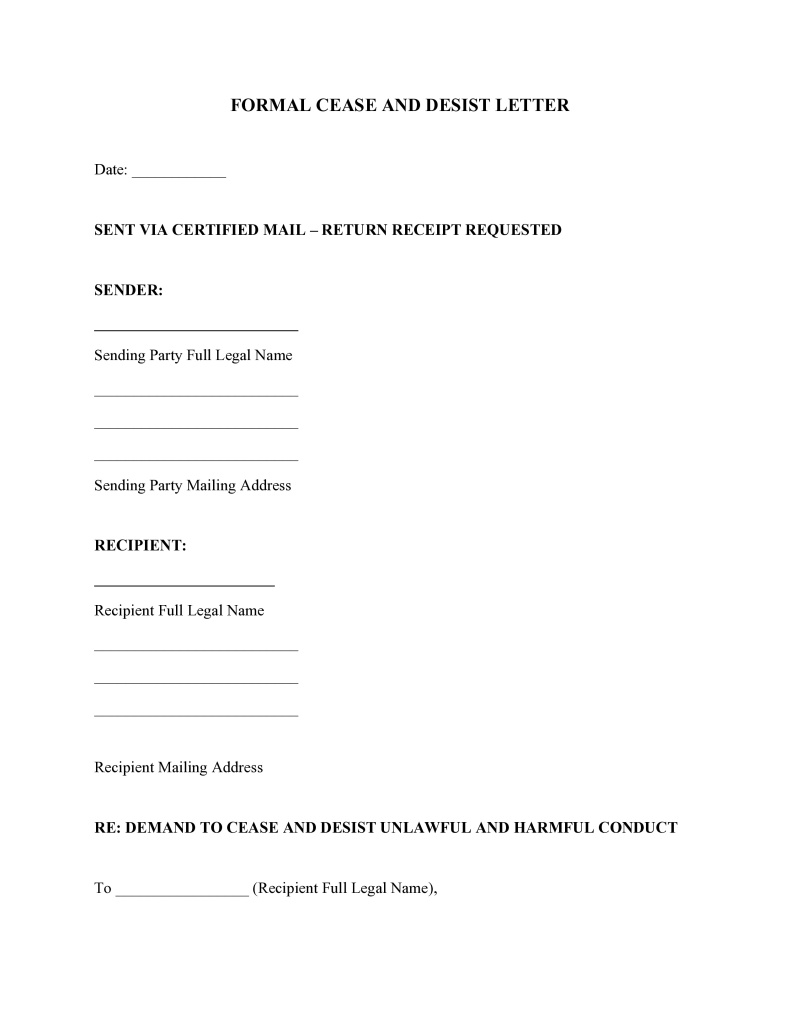
Letter Tone
Choose the tone that best matches the situation. A firm legal tone is common, while a final-warning tone is stronger and may be appropriate if prior requests were ignored.
Table of Contents
What is a Cease and Desist Letter (Template)?
A Cease and Desist Letter, in its most commonly understood form, is a formal document sent by an individual or entity to another, demanding that an alleged illegal or infringing activity be stopped immediately. While often used in private disputes, the term also applies to formal directives issued by governmental or regulatory bodies. These official directives, more accurately termed Cease and Desist Orders, are legally binding commands that compel a party to halt specific actions or practices deemed unlawful or in violation of regulations, often following an investigative process and a hearing.
Governmental Cease and Desist Orders
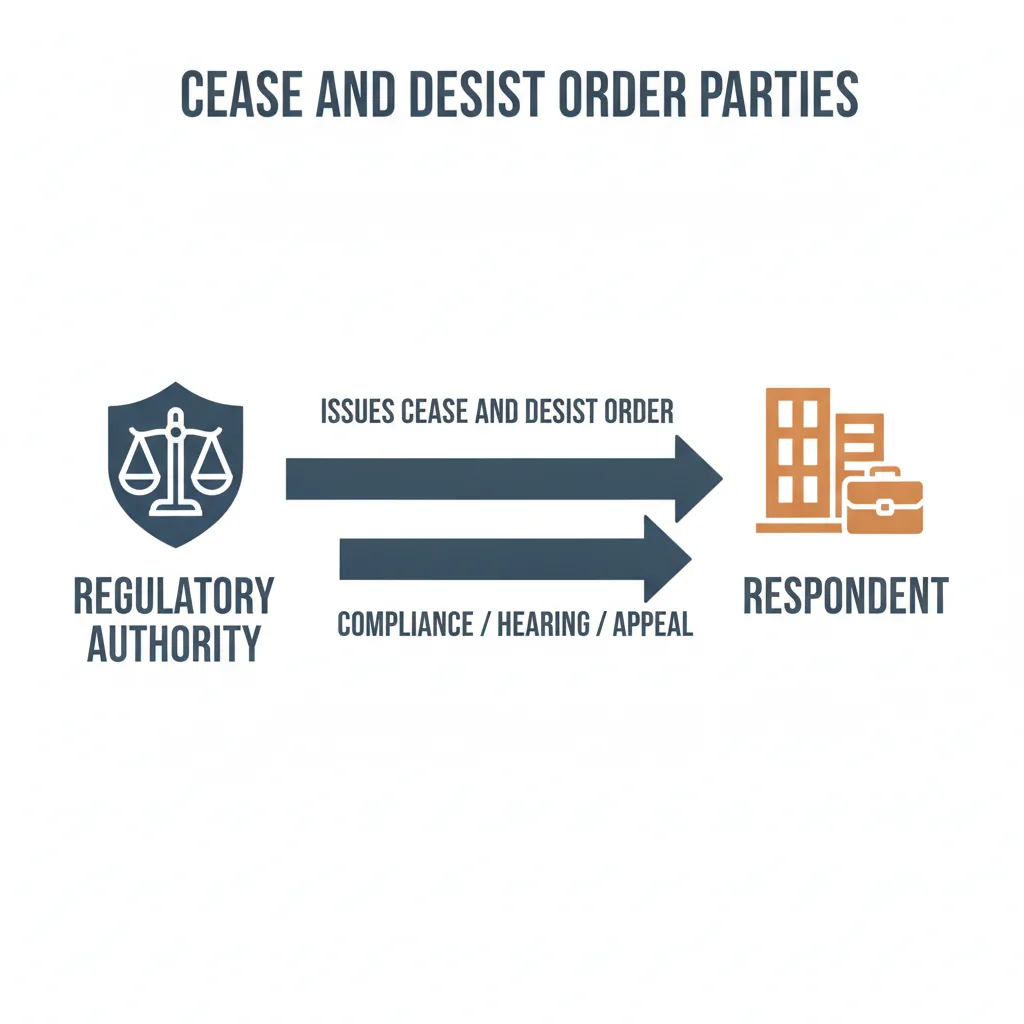
Governmental cease and desist orders are formal legal directives issued by authorized administrative agencies to prevent or remedy violations of laws and regulations within their jurisdiction. Unlike informal demand letters exchanged between private parties, these orders are the culmination of official proceedings initiated by a regulatory body. They carry the full weight of the law and are backed by the enforcement powers of the issuing agency, often including potential penalties for non-compliance.
These orders serve as a critical tool for regulatory bodies to enforce compliance and protect public interest. They are typically issued after a finding that a person or entity is engaging in, or is about to engage in, practices that contravene specific statutory provisions or rules. The scope and authority for these orders vary significantly across different sectors and are explicitly defined in federal statutes.
Key Regulatory Authorities and Their Powers
Several federal statutes grant specific governmental bodies the authority to issue cease and desist orders in various sectors to ensure compliance with federal law. These powers are designed to address and rectify violations within their respective domains:
- Agricultural Sector Violations - The Secretary of Agriculture can initiate cease and desist proceedings when there is reason to believe someone has violated provisions related to agricultural practices, requiring a formal complaint and a hearing (7 U.S.C. § 1599).
- Securities Law Enforcement - The Commission, referring to the Securities and Exchange Commission (SEC), has the authority to issue cease and desist orders if it finds, after notice and hearing, that a person is violating or about to violate securities provisions (15 U.S.C. § 78u-3).
- Education Program Compliance - The Secretary of Education may issue a complaint to a recipient under an applicable program, describing the basis for belief that the recipient is failing to comply substantially with a requirement of law, allowing the recipient to show cause why a cease and desist order should not be entered (20 U.S.C. § 1234e).
- Farm Credit System Oversight - The Farm Credit Administration can issue a notice of charges if it believes an institution or individual within the Farm Credit System is engaging or about to engage in unsafe or unsound practices or violating laws, rules, or regulations (12 U.S.C. § 2261).
- Animal Welfare Act Enforcement - The Secretary of Agriculture can issue cease and desist orders for violations by licensees involved in the transportation, sale, and handling of certain animals, potentially including license suspension and civil penalties (7 U.S.C. § 2149).
Procedural Aspects of Cease and Desist Actions
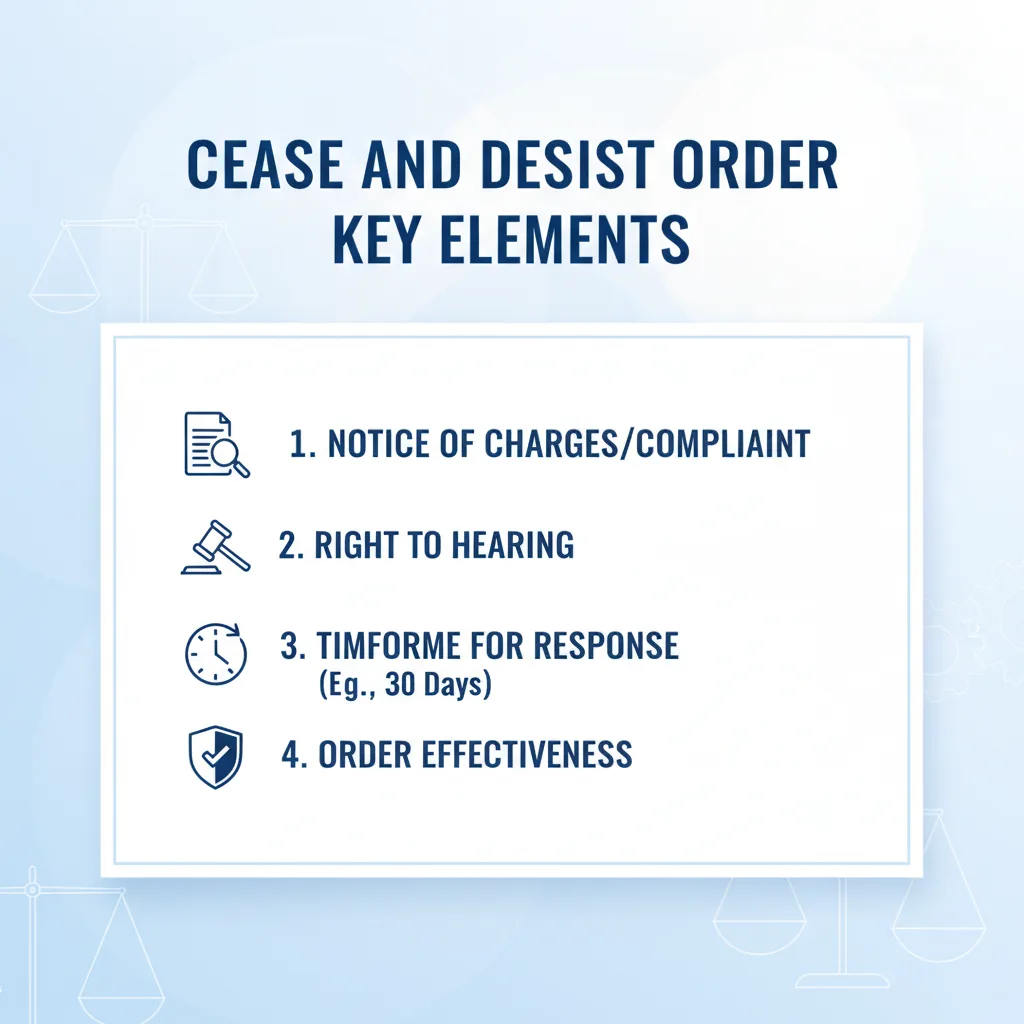
The process for issuing governmental cease and desist orders typically follows a structured administrative procedure designed to ensure due process. While specific details may vary by statute and agency, common elements are present across different sectors:
- Notice of Charges or Complaint - The regulatory body must serve a written complaint or notice of charges detailing the alleged violations. This document informs the respondent of the specific issues and the legal basis for the agency's concerns (7 U.S.C. § 1599; 20 U.S.C. § 1234e; 12 U.S.C. § 2261).
- Right to a Hearing - Recipients of a complaint or notice are generally afforded the right to appear before the agency for a hearing. This provides an opportunity to present evidence, argue against the charges, or show cause why an order should not be issued (7 U.S.C. § 1599; 15 U.S.C. § 78u-3; 20 U.S.C. § 1234e).
- Timeframe for Response - Statutes often specify a minimum period between the service of the complaint and the scheduled hearing, such as at least 30 days, to allow the respondent adequate time to prepare their defense (7 U.S.C. § 1599).
- Order Effectiveness - A cease and desist order typically becomes effective after a specified period following its service, for example, 30 days, unless it is stayed, modified, or set aside by the administration or a reviewing court (12 U.S.C. § 2261).
Consequences of Non-Compliance
Failure to comply with an official cease and desist order can lead to significant legal and financial repercussions. The specific penalties are often outlined in the statutes granting the authority to issue such orders and are designed to enforce adherence to regulatory requirements.
Consequences can include:
- Civil Penalties - Agencies may assess monetary fines for each violation and for each day a violation continues (7 U.S.C. § 2149).
- License Suspension or Revocation - For regulated entities or licensees, non-compliance can result in the temporary suspension or permanent revocation of their operating license (7 U.S.C. § 2149).
- Court Enforcement - Regulatory bodies may seek enforcement of their orders through federal courts, which can impose further sanctions for contempt of court if the order is still disregarded.
- Mandatory Compliance Actions - Orders may require specific steps to be taken to effect compliance with specified provisions, rules, or regulations, beyond simply halting the prohibited activity (15 U.S.C. § 78u-3).
Frequently Asked Questions
Cease and Desist Letter Sample
Sources
- Cease and Desist Proceedings under Title 7, Section 1599 - Provides procedures for cease and desist actions related to violations in the agriculture sector.
- Cease and Desist Proceedings under Title 15, Section 78u-3 - Details the authority of the Commission to issue cease and desist orders in the securities sector.
- Cease and Desist Orders under Title 20, Section 1234e - Outlines the process for issuing cease and desist orders in the education sector.
- Cease and Desist Proceedings under Title 12, Section 2261 - Describes cease and desist proceedings within the Farm Credit System.
- Cease and Desist Orders under Title 7, Section 2149 - Addresses violations by licensees in the transportation, sale, and handling of certain animals.
Not the form you're looking for?
Try our legal document generator to create a custom document
Disclaimer: The templates available on this website are provided for general informational purposes only and do not constitute legal advice. They are not intended to be, and should not be interpreted as, compliant with any specific legal, regulatory, or privacy requirements. These templates are not a replacement for professional legal guidance and should not be relied upon for any particular matter or circumstance. Users are strongly encouraged to seek advice from a qualified attorney licensed in their jurisdiction before using, modifying, or relying on any template.
All templates are provided on an "as is," "with all faults," and "as available" basis. The provider disclaims any and all warranties of any kind, whether express, implied, statutory, or otherwise, including without limitation warranties of merchantability, fitness for a particular purpose, title, or non-infringement.
LegalTemplates.com makes no guarantees or representations regarding the accuracy, completeness, expected outcomes, or reliability of the materials contained in these templates or any materials referenced or linked from them.