Brady Motion
A Brady Motion is a legal request made by a criminal defendant asserting that the prosecution failed to disclose material exculpatory evidence as mandated by due process.
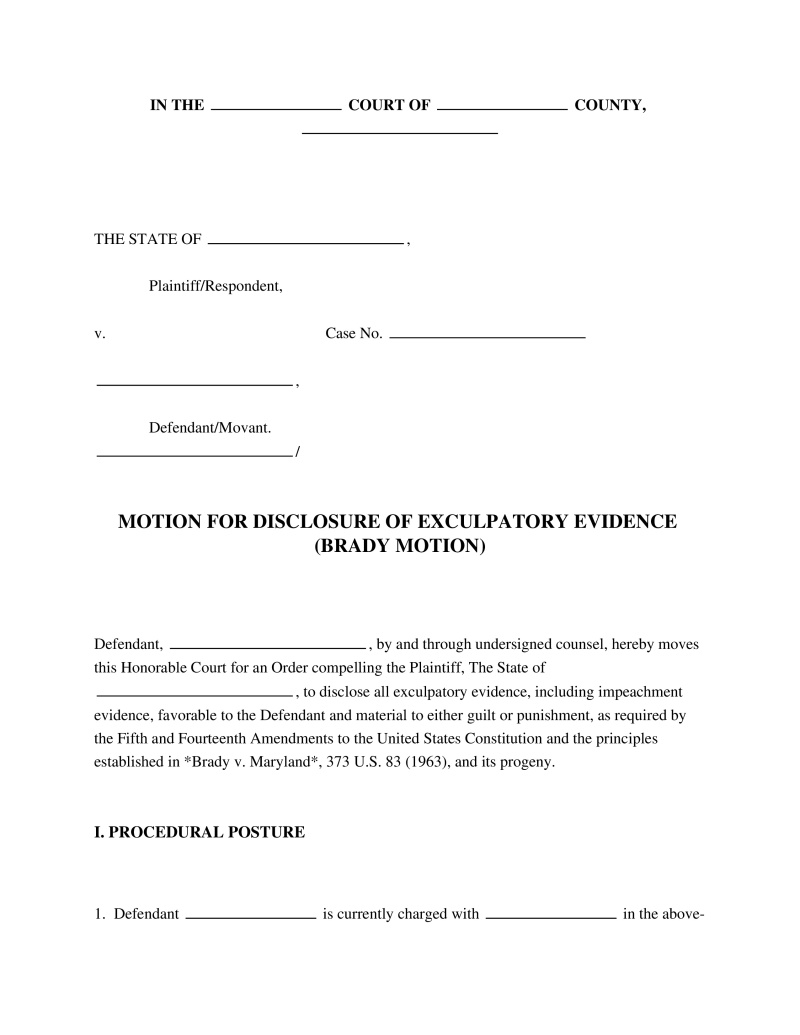
Evidence Type Requested
Select all categories of evidence you believe may be favorable to the defendant.
Describe any other category of exculpatory evidence not listed above.
Table of Contents
What is a Brady Motion?
A Brady Motion is a formal request filed by a defendant in a criminal case, compelling the prosecution to disclose evidence that is favorable to the defense. This obligation stems from the landmark United States Supreme Court decision in Brady v. Maryland, which established that suppressing evidence favorable to an accused violates due process. The motion ensures that defendants have access to material evidence that could negate guilt, reduce punishment, or impeach a government witness.
The Brady Rule: Foundation and Scope
The foundation of the Brady rule lies in the principle that the prosecution has a constitutional duty to disclose evidence favorable to the accused. This duty is not contingent on a request from the defense, though a Brady Motion formally asserts the defendant's right to such disclosure. The rule is rooted in the Due Process Clause of the Fifth and Fourteenth Amendments to the U.S. Constitution, ensuring a fair trial.
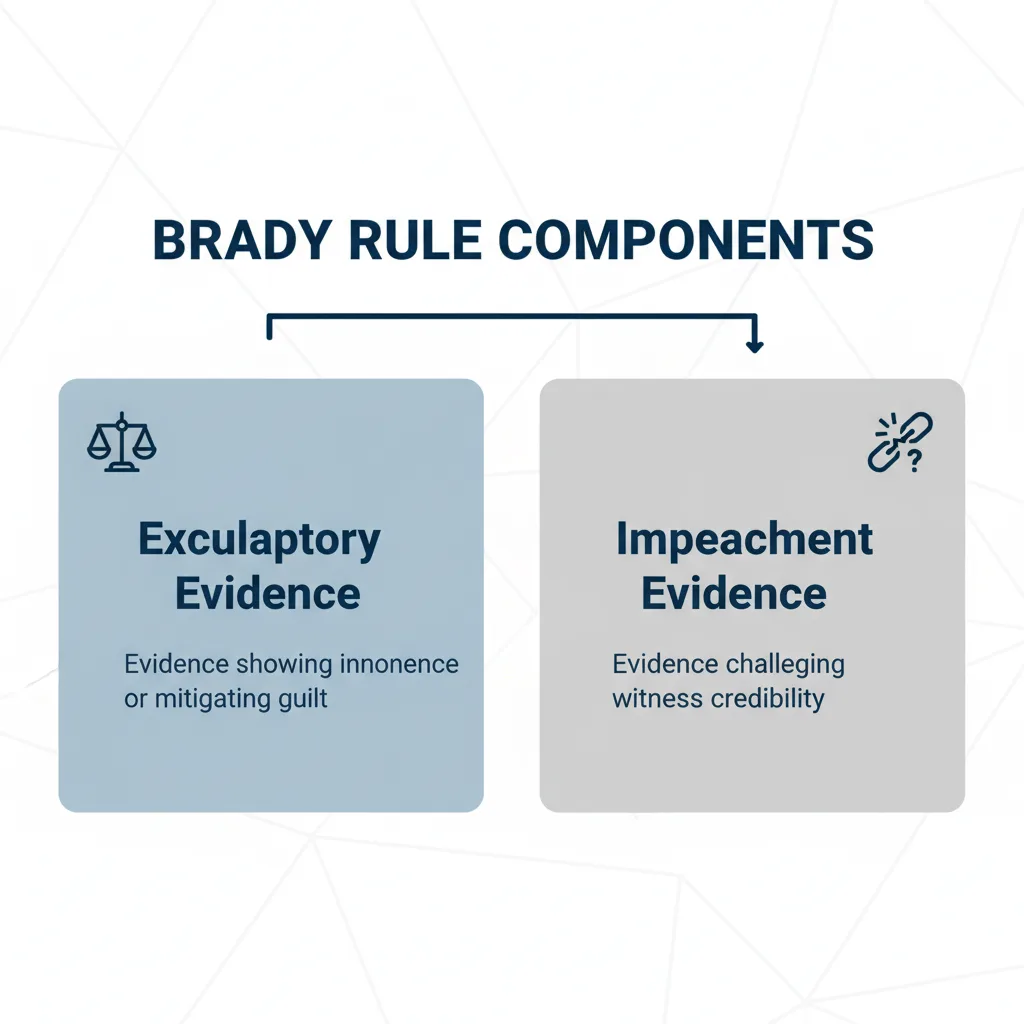
The scope of what constitutes "favorable evidence" under the Brady rule is broad and encompasses two primary categories:
- Exculpatory Evidence - This refers to evidence that tends to show the defendant's innocence or mitigates their guilt (Brady v. Maryland, 373 U.S. 83 (1963)). Examples include evidence that points to another perpetrator, forensic results that do not link the defendant to the crime, or witness statements that contradict the prosecution's theory of the case.
- Impeachment Evidence - This category includes evidence that could be used to challenge the credibility of a government witness (Giglio v. United States, 405 U.S. 150 (1972)). Such evidence might involve promises of leniency or other agreements made between the government and its witnesses, prior inconsistent statements by a witness, or evidence of a witness's bias or motive to lie.
Government's Disclosure Obligations
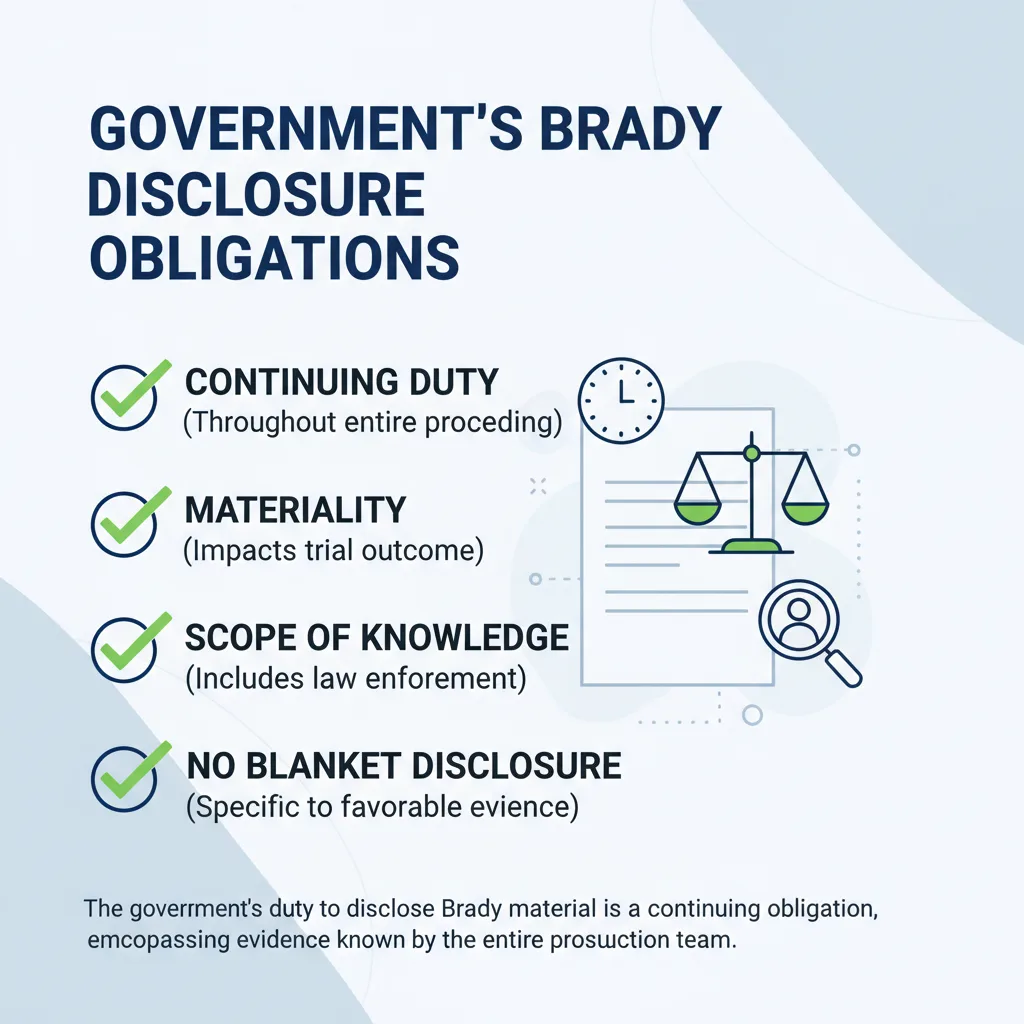
The government's obligation to disclose Brady material is a continuing duty, meaning it applies throughout the entire criminal proceeding, from investigation through trial and even post-conviction appeals. This duty exists regardless of the prosecutor's good faith or bad faith in failing to disclose the evidence. The critical factor is the materiality of the evidence to the defense.
Key aspects of the government's disclosure obligations include:
- Continuing Duty - The government is aware of its continuing duty to disclose information to the defendant as required by the United States Supreme Court's decisions in Brady v. Maryland, 373 U.S. 83 (1963), and Giglio v. United States, 405 U.S. 150 (1972). This means prosecutors must disclose favorable evidence as soon as it becomes known to them, even if it was not known at the outset of the case.
- Materiality - Evidence is considered "material" if there is a reasonable probability that, had the evidence been disclosed to the defense, the result of the proceeding would have been different. This standard ensures that only evidence with a genuine potential impact on the outcome must be disclosed.
- Scope of Knowledge - The government's duty extends not only to evidence known by the individual prosecutor but also to evidence known by other members of the prosecution team, including law enforcement officers involved in the investigation.
- No Requirement for All Notes - While the defendant may assert that the government cannot be relied upon to produce Brady material, the rule does not require the production of all attorney interview notes, even those taken during witness trial preparation interviews. The obligation is specifically for exculpatory or impeachment evidence, not every piece of investigative material.
Filing and Responding to a Brady Motion
Defendants typically file a Brady Motion as a pretrial motion, requesting the court to order the prosecution to fulfill its disclosure obligations. This motion often specifies the types of exculpatory or impeachment evidence the defense believes may exist and seeks an order for its production. The motion serves to put the government on notice of the defense's request and to create a record for potential appellate review.
When responding to a Brady Motion, the government typically acknowledges its awareness of its obligations under Brady and Giglio. The response often states that the government will continue to review its files and disclose any material evidence that falls within the scope of these decisions. The government may also argue against the production of certain materials if it deems them not to be exculpatory or material, or if they fall outside the scope of the established disclosure requirements.
Consequences of a Brady Violation
A violation of the Brady rule occurs when the prosecution suppresses material evidence favorable to the defense, and prejudice results. If a Brady violation is discovered after a conviction, it can lead to significant legal consequences. The most severe consequence is the reversal of the conviction and the granting of a new trial for the defendant. This outcome underscores the fundamental importance of Brady disclosures in upholding the fairness and integrity of the criminal justice system.
The determination of whether a Brady violation warrants a new trial hinges on whether the suppressed evidence was material. If the court finds that there is a reasonable probability that the outcome would have been different had the evidence been disclosed, then a new trial or other appropriate relief, such as resentencing, may be ordered. The purpose of such remedies is to cure the due process violation and ensure that the defendant receives a fair proceeding.
Frequently Asked Questions
Sources
- Government's Response to Defendant's Motion for Disclosure of Promises of Leniency or other Agreements Between The Government and Its witnes - Discusses the government's obligations under Brady v. Maryland to disclose exculpatory evidence to the defendant.
- Government's Response To Defendant's Pretrial Motion And Brief To Require Disclosure Of Evidence Adversely Affecting The Credibility Of Gove - Addresses the government's obligations under Brady v. Maryland to disclose exculpatory evidence to the defendant.
- Government's Response in Opposition to Defendant's Motion for Specific Additional Brady and Jencks Evidence and Proposed Order - Discusses the government's obligations under Brady v. Maryland to disclose exculpatory evidence to the defendant.
Not the form you're looking for?
Try our legal document generator to create a custom document
Disclaimer: The templates available on this website are provided for general informational purposes only and do not constitute legal advice. They are not intended to be, and should not be interpreted as, compliant with any specific legal, regulatory, or privacy requirements. These templates are not a replacement for professional legal guidance and should not be relied upon for any particular matter or circumstance. Users are strongly encouraged to seek advice from a qualified attorney licensed in their jurisdiction before using, modifying, or relying on any template.
All templates are provided on an "as is," "with all faults," and "as available" basis. The provider disclaims any and all warranties of any kind, whether express, implied, statutory, or otherwise, including without limitation warranties of merchantability, fitness for a particular purpose, title, or non-infringement.
LegalTemplates.com makes no guarantees or representations regarding the accuracy, completeness, expected outcomes, or reliability of the materials contained in these templates or any materials referenced or linked from them.