Bill of Sale for Gifted Car
A Bill of Sale for a Gifted Car is a legal document that records the transfer of ownership (for a car) without monetary exchange.
Recipient Relationship To Donor
Some DMV, tax, and gift-affidavit rules vary depending on whether the vehicle is gifted to a family member, spouse, friend, charity, or another recipient.
Use the description that should appear in the gift statement or supporting DMV paperwork.
Table of Contents
What is a Bill of Sale for Gifted Car?
A Bill of Sale for Gifted Car is a legal document that records the transfer of vehicle ownership from one party to another without any monetary exchange. This document serves as formal proof that the vehicle was given as a gift, which is essential for tax purposes and registration updates. Both the donor and the recipient use this form to establish a clear paper trail, protecting both parties from future liabilities associated with the vehicle. It is typically presented to the local department of motor vehicles to facilitate the transfer of the vehicle title.
Purpose and Common Use Cases
The primary purpose of this document is to establish that no money changed hands during the transfer of the vehicle. This distinction is critical because it directly affects how state and federal tax authorities treat the transaction. Common situations requiring this document include:
- Family Transfers - Giving a vehicle to a child, sibling, parent, or spouse as a present or support.
- Charitable Contributions - Donating a functional vehicle to a registered non-profit organization to support their operations.
- Estate Distribution - Transferring ownership of a vehicle to a designated beneficiary according to estate planning arrangements.
Key Information Included in the Document
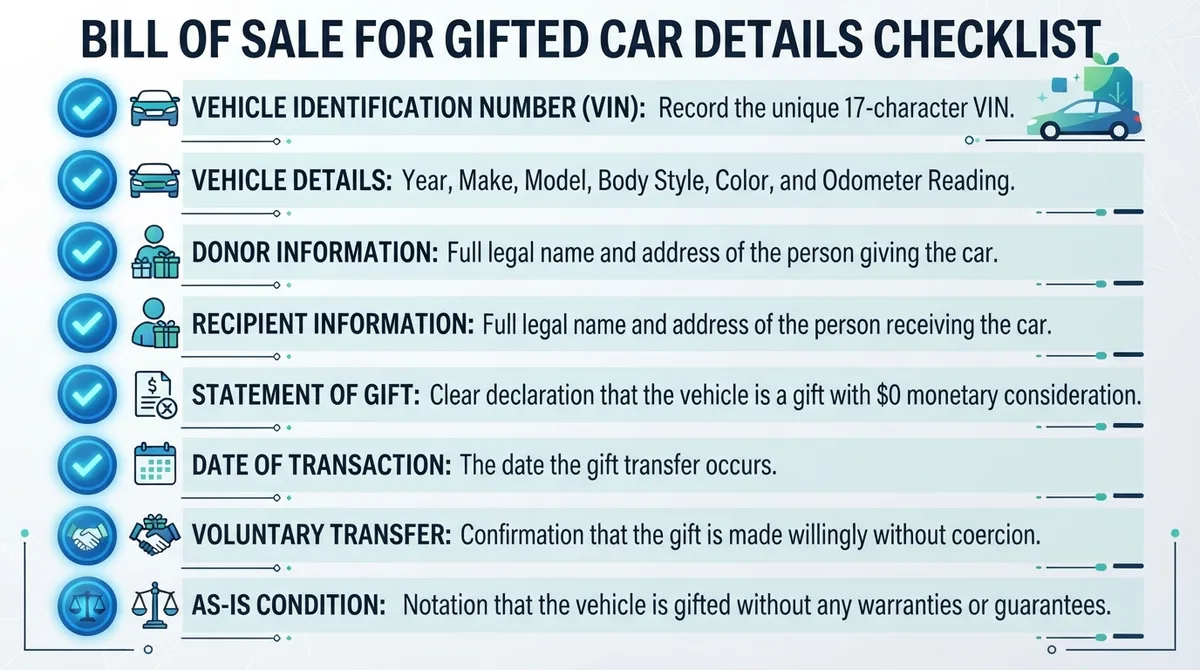
To ensure validity and acceptance by state licensing agencies, the document must contain specific details regarding the parties and the vehicle:
- Donor Information - The full legal name, physical address, and contact details of the person gifting the vehicle.
- Recipient Information - The full legal name, physical address, and contact details of the person receiving the vehicle.
- Vehicle Identification Number - The unique 17-character code that identifies the specific vehicle being transferred.
- Vehicle Details - The exact make, model, year, body style, and color of the vehicle.
- Odometer Reading - The exact mileage displayed on the dashboard at the time of the physical transfer.
- Purchase Price Notation - A clear statement indicating the purchase price is zero dollars or that the vehicle is a gift.
Types of Vehicle Gift Transactions
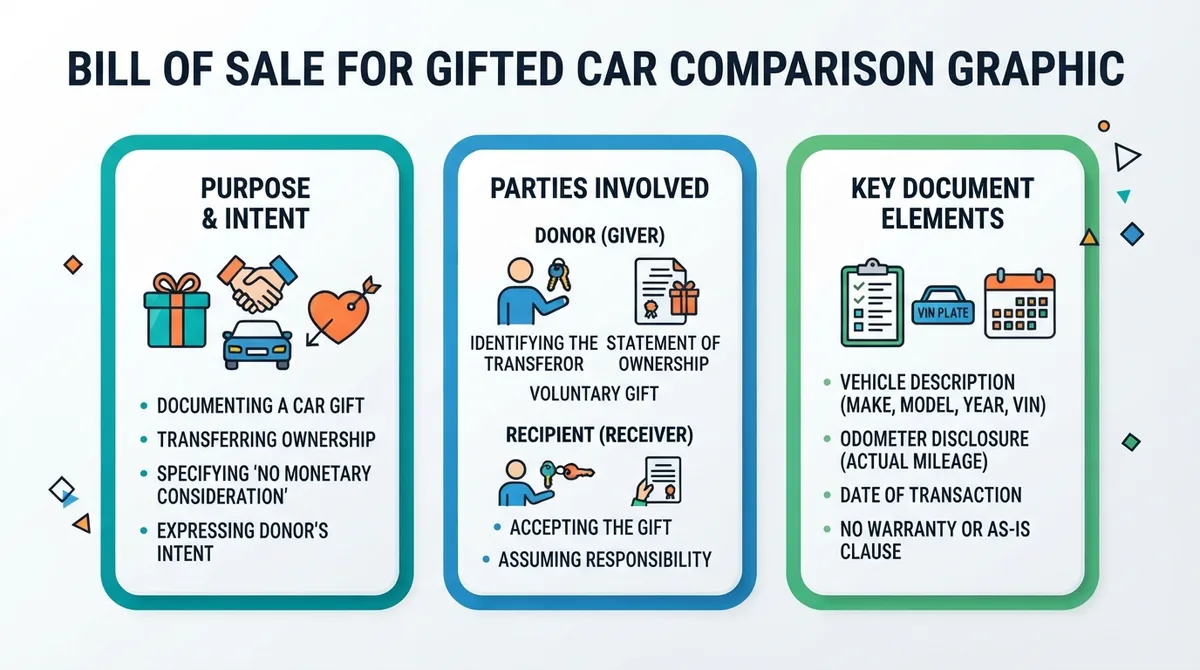
Vehicle gifts generally fall into specific categories based on the relationship between the parties and the purpose of the transfer:
- Intrafamily Gift - A transfer of vehicle ownership between immediate family members, which often qualifies for state sales tax exemptions.
- Charitable Donation - A transfer of a vehicle to a registered non-profit organization, which may provide tax deduction benefits for the donor.
- Prizes or Awards - A transfer where a vehicle is gifted as part of a contest, promotional event, or sweepstakes.
Legal and Tax Considerations
Gifting a vehicle involves specific legal and tax rules that differ from standard vehicle sales:
- Federal Gift Tax Exclusion - Governs the annual monetary limit an individual can gift to another person without triggering a federal gift tax reporting requirement (26 U.S.C. § 2503(b)).
- State Sales Tax Exemptions - Determines whether the recipient is exempt from paying sales tax on the vehicle's fair market value based on their relationship to the donor.
- Affidavit of Gift - Some jurisdictions require a separate notarized affidavit alongside the bill of sale to verify the transfer was a genuine gift.
- Liability Release - The donor must file a notice of transfer with the state department of motor vehicles to release themselves from future toll, parking, or accident liabilities.
Steps to Complete a Vehicle Gift Transfer
Successfully transferring a gifted vehicle requires completing several sequential administrative steps:
- Verify State Eligibility - Research local department of motor vehicles guidelines to confirm if the relationship qualifies for a tax-exempt gift transfer.
- Draft the Bill of Sale - Fill out the document completely, ensuring all vehicle details match the current certificate of title.
- Record Odometer Mileage - Check the vehicle dashboard and write down the precise mileage on both the bill of sale and the title transfer section.
- Execute the Signatures - Both parties must sign and date the document, preferably in front of a notary public if local laws require notarization.
Frequently Asked Questions
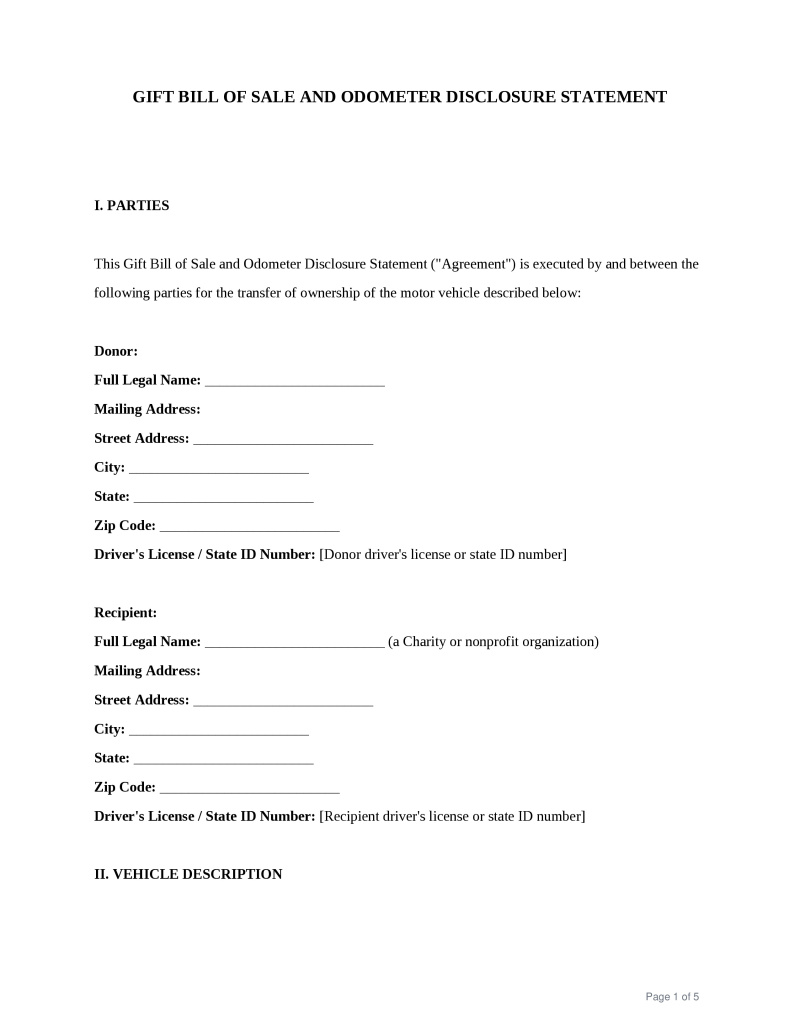
Bill of Sale for Gifted Car Sample
Not the form you're looking for?
Try our legal document generator to create a custom document
Disclaimer: The templates available on this website are provided for general informational purposes only and do not constitute legal advice. They are not intended to be, and should not be interpreted as, compliant with any specific legal, regulatory, or privacy requirements. These templates are not a replacement for professional legal guidance and should not be relied upon for any particular matter or circumstance. Users are strongly encouraged to seek advice from a qualified attorney licensed in their jurisdiction before using, modifying, or relying on any template.
All templates are provided on an "as is," "with all faults," and "as available" basis. The provider disclaims any and all warranties of any kind, whether express, implied, statutory, or otherwise, including without limitation warranties of merchantability, fitness for a particular purpose, title, or non-infringement.
LegalTemplates.com makes no guarantees or representations regarding the accuracy, completeness, expected outcomes, or reliability of the materials contained in these templates or any materials referenced or linked from them.