Lis Pendens
A Lis Pendens is a legal notice filed in public records to warn potential purchasers or encumbrancers that title to property is subject to ongoing litigation.
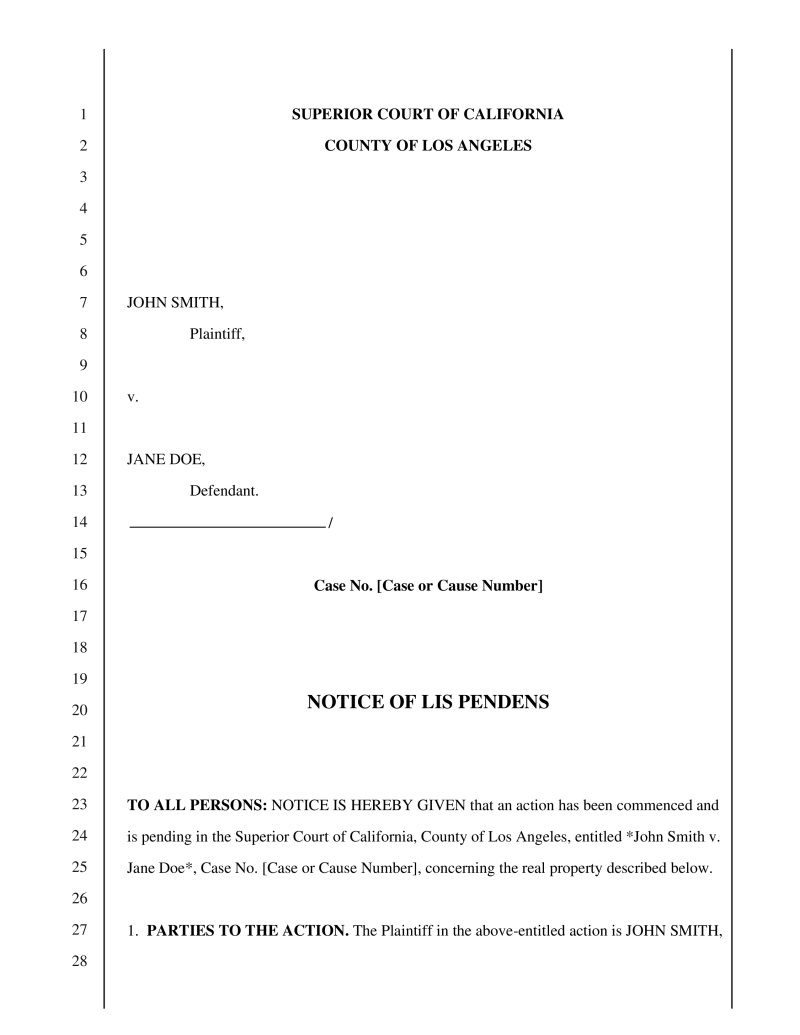
Lis Pendens Filing Status
Select whether the underlying lawsuit has already been filed or is about to be filed.
Table of Contents
What is a Lis Pendens?
A lis pendens, Latin for "suit pending," is a formal notice filed in the public records to alert interested parties that a legal action concerning a specific piece of real property is ongoing. Its primary purpose is to provide constructive notice to potential purchasers, lenders, or encumbrancers that the property's title or some interest in it is subject to litigation. This legal instrument is typically used by a plaintiff or petitioner in a lawsuit to ensure that any judgment rendered will be binding on anyone who acquires an interest in the property after the notice has been filed.
Purpose and Legal Effect
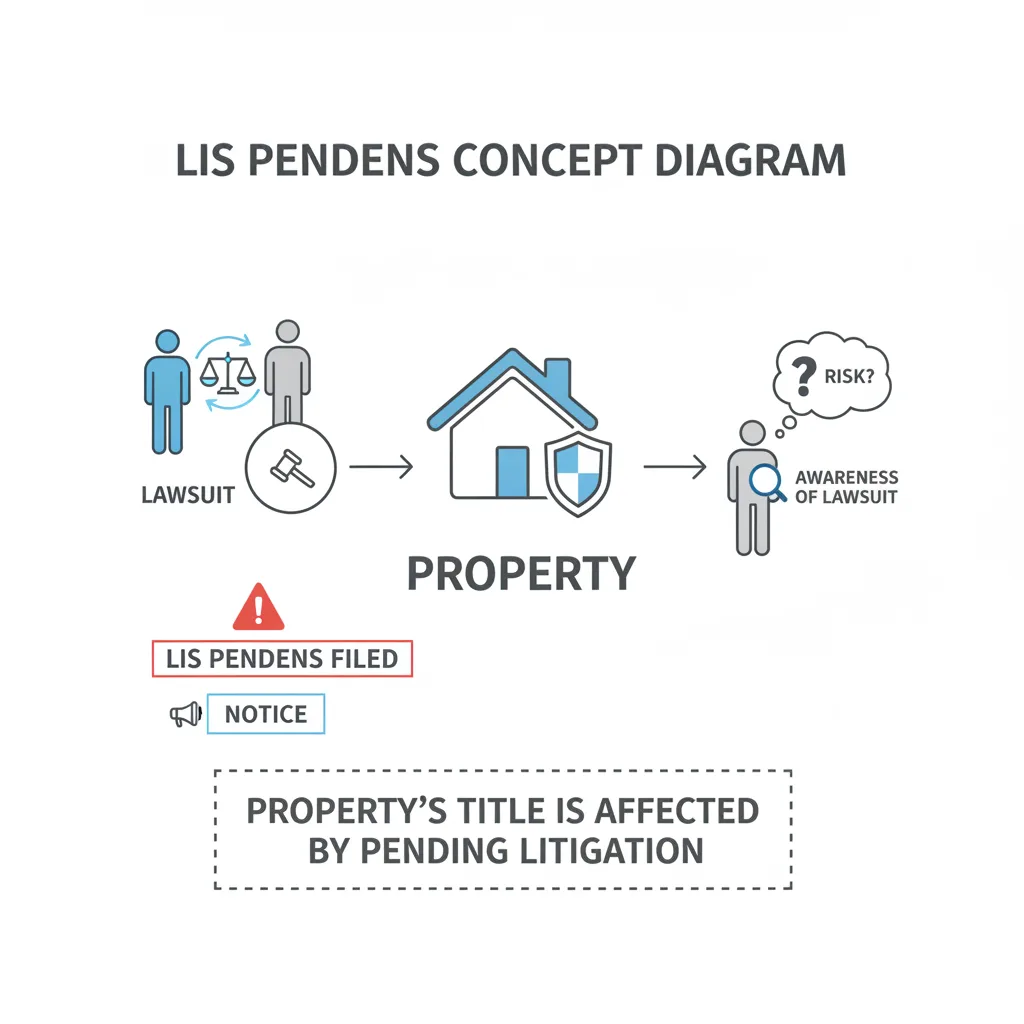
The core function of a lis pendens is to maintain the status quo of the property during the pendency of a lawsuit. By filing this notice, the plaintiff aims to prevent the defendant from selling, mortgaging, or otherwise transferring the property in a way that would make it difficult or impossible to enforce a potential judgment. It operates under the legal principle that anyone who acquires an interest in the property after the filing of the lis pendens takes that interest subject to the outcome of the litigation.
The legal effect is significant: it essentially clouds the title of the property. While it does not prevent a transfer from occurring, it ensures that any subsequent transferee is bound by the court's decision, even if they were not a party to the original lawsuit. This mechanism protects the plaintiff's ability to recover the property or enforce their claim against it, ensuring that the court's final judgment can be effectively implemented.
Common Applications
A lis pendens is commonly filed in various types of lawsuits where the ownership, possession, or control of real property is directly at issue. The underlying legal action must involve a claim that could affect the title to or the right to possess specific real estate. It is not appropriate for lawsuits seeking only monetary damages without a direct claim on the property itself.
Situations where a lis pendens is frequently utilized include:
- Foreclosure Actions - Filed by lenders to notify the public that a property is subject to a mortgage foreclosure lawsuit.
- Quiet Title Actions - Used to resolve disputes over property ownership and clear defects in the title.
- Partition Actions - Initiated when co-owners of a property seek to divide it or force its sale.
- Specific Performance Lawsuits - Brought to compel a seller to complete a real estate transaction as per a contract.
- Mechanic's Lien Enforcement - Filed by contractors or suppliers seeking to enforce a lien against property for unpaid work or materials.
- Divorce Proceedings - In cases where real property is part of marital assets and its division is disputed.
- Adverse Possession Claims - To assert a claim of ownership over property through continuous, open, and hostile possession.
Filing Procedures and Content
The process for filing a lis pendens typically involves submitting a formal notice to the public records office in the county where the real property is located. This office is often the county recorder's office or similar land records department. The specific requirements for filing, including format and content, can vary depending on local jurisdiction.
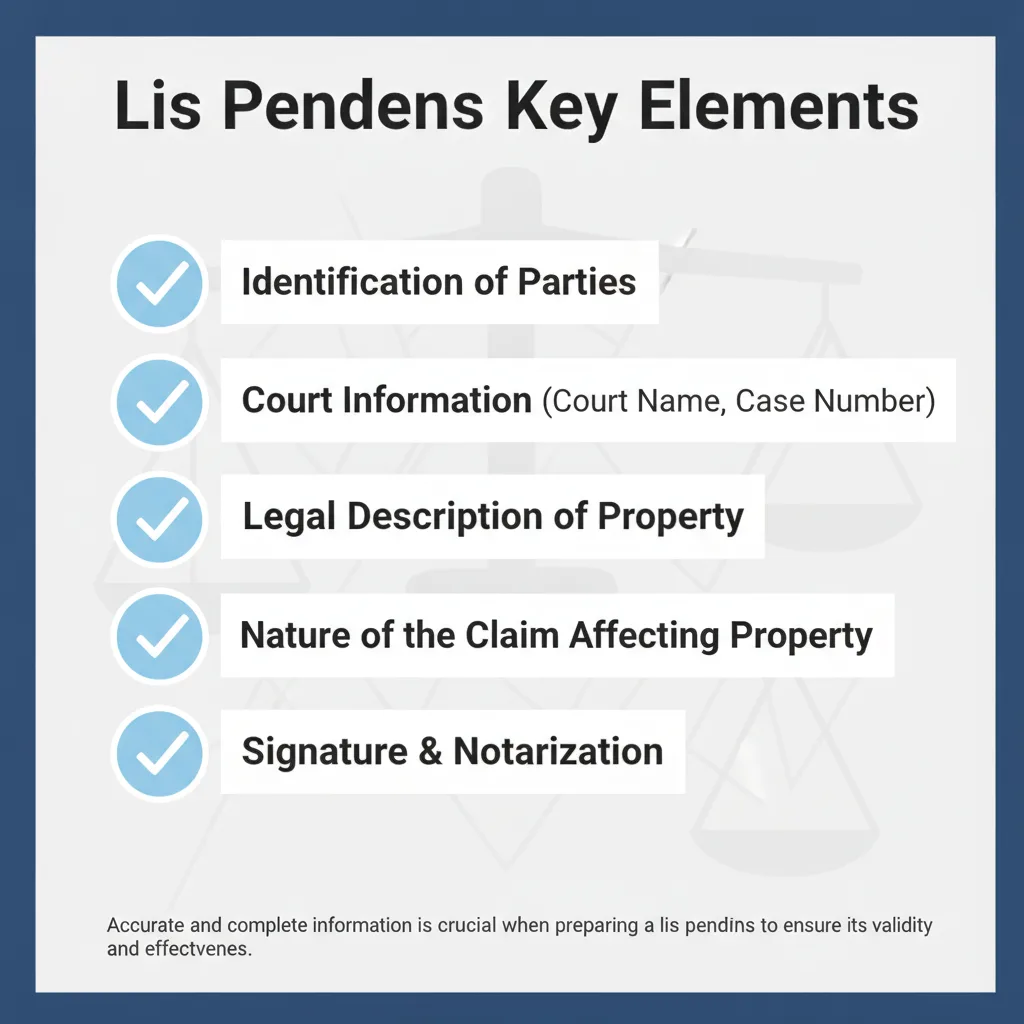
Key information usually required in a lis pendens includes:
- Identification of Parties - The names of the plaintiff(s) and defendant(s) involved in the underlying legal action.
- Court Information - The name of the court where the lawsuit is pending and the assigned case number.
- Legal Description of Property - A precise and accurate legal description of the real property affected by the litigation, sufficient to identify it uniquely.
- Nature of the Claim - A brief statement describing the object of the action or the nature of the claim that affects the real property.
- Signature and Notarization - The notice must typically be signed by the party or their attorney and may require notarization.
It is crucial to ensure that the lis pendens is filed correctly and contains all necessary information, as errors can lead to its invalidation or expungement by a court. The filing party is also usually required to serve a copy of the lis pendens on all parties to the lawsuit.
Duration and Removal
A lis pendens remains effective for the duration of the underlying lawsuit, unless it is otherwise removed or discharged. Its effect continues until the litigation is resolved through a final judgment, dismissal, or settlement. Once the lawsuit concludes, the lis pendens typically loses its legal force, though formal steps may be needed to clear the record.
There are several ways a lis pendens can be removed from the public record:
- Judgment or Settlement - If the lawsuit is resolved, the prevailing party or the parties through a settlement agreement can file a release or satisfaction of lis pendens.
- Dismissal of Action - If the underlying lawsuit is voluntarily dismissed by the plaintiff or involuntarily dismissed by the court, the lis pendens can be removed.
- Withdrawal by Filing Party - The party who filed the lis pendens can voluntarily withdraw or release it at any time.
- Expungement by Court Order - A court may order the expungement of a lis pendens if it finds that the notice was not properly filed, the underlying claim does not affect real property, or the plaintiff is unlikely to prevail in the lawsuit. This often requires a motion from the property owner.
- Expiration - In some jurisdictions, a lis pendens may have a statutory expiration period if the underlying action is not diligently prosecuted or if certain conditions are not met.
Impact on Property Transactions
The presence of a lis pendens on a property's title can significantly hinder or even halt potential property transactions. When a title search is conducted for a sale or refinancing, the lis pendens will appear as an encumbrance, indicating a cloud on the title. This typically makes the property unmarketable or uninsurable until the lis pendens is resolved.
Title insurance companies will generally refuse to issue a clear title policy for a property with an active lis pendens, as the outcome of the litigation could affect the validity of the ownership or other interests. Similarly, most lenders will not approve a mortgage or refinance loan for a property burdened by a lis pendens due to the increased risk it presents. Any buyer who proceeds with a purchase despite the notice does so at their own risk, accepting the possibility that their newly acquired interest could be invalidated or affected by the court's final decision in the pending lawsuit.
Frequently Asked Questions
Not the form you're looking for?
Try our legal document generator to create a custom document
Disclaimer: The templates available on this website are provided for general informational purposes only and do not constitute legal advice. They are not intended to be, and should not be interpreted as, compliant with any specific legal, regulatory, or privacy requirements. These templates are not a replacement for professional legal guidance and should not be relied upon for any particular matter or circumstance. Users are strongly encouraged to seek advice from a qualified attorney licensed in their jurisdiction before using, modifying, or relying on any template.
All templates are provided on an "as is," "with all faults," and "as available" basis. The provider disclaims any and all warranties of any kind, whether express, implied, statutory, or otherwise, including without limitation warranties of merchantability, fitness for a particular purpose, title, or non-infringement.
LegalTemplates.com makes no guarantees or representations regarding the accuracy, completeness, expected outcomes, or reliability of the materials contained in these templates or any materials referenced or linked from them.