Cash For Keys Agreement
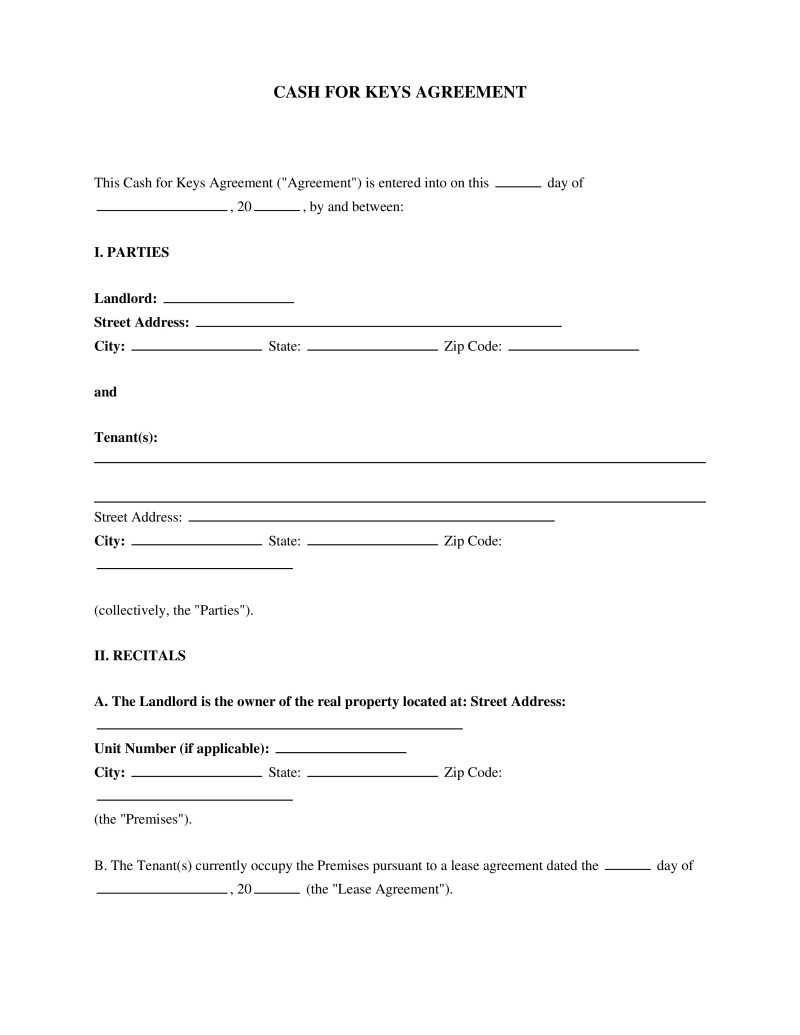
A Cash For Keys Agreement is a legal document used in real estate to facilitate a voluntary eviction, wherein a tenant receives monetary compensation in exchange for promptly vacating a property.
Property Type
Select the property type to ensure the agreement reflects accurate details.
Provide a brief description of the property if you selected 'Other'.
Table of Contents
What is a Cash For Keys Agreement?
A Cash For Keys Agreement is a voluntary contractual arrangement made between a property owner (often a landlord or a new owner, such as after a foreclosure) and an occupant, typically a tenant or former owner. This agreement offers financial compensation to the occupant in exchange for them voluntarily vacating the property by a specified date. It serves as an alternative to the often lengthy and costly legal eviction process, providing a mutually agreeable path for possession transfer.
Purpose and Context of Cash For Keys Agreements
Cash For Keys Agreements are primarily utilized by property owners seeking to gain vacant possession of a property without resorting to formal eviction proceedings. These agreements can be beneficial for both parties by avoiding the adversarial nature, legal fees, and time delays associated with court-ordered evictions. Owners may offer such agreements in various situations, including after purchasing a foreclosed property, preparing a property for sale, undertaking major renovations, or when they intend to occupy the premises themselves.
For tenants, a Cash For Keys Agreement can provide a financial cushion to facilitate relocation, cover moving expenses, and secure new housing. It also allows them to leave the property on their own terms, potentially preserving their rental history and avoiding the negative implications of an eviction record. The voluntary nature of these agreements is a key distinction from an eviction, which is a legal action initiated by the owner to forcibly remove an occupant.
Key Elements of a Cash For Keys Agreement
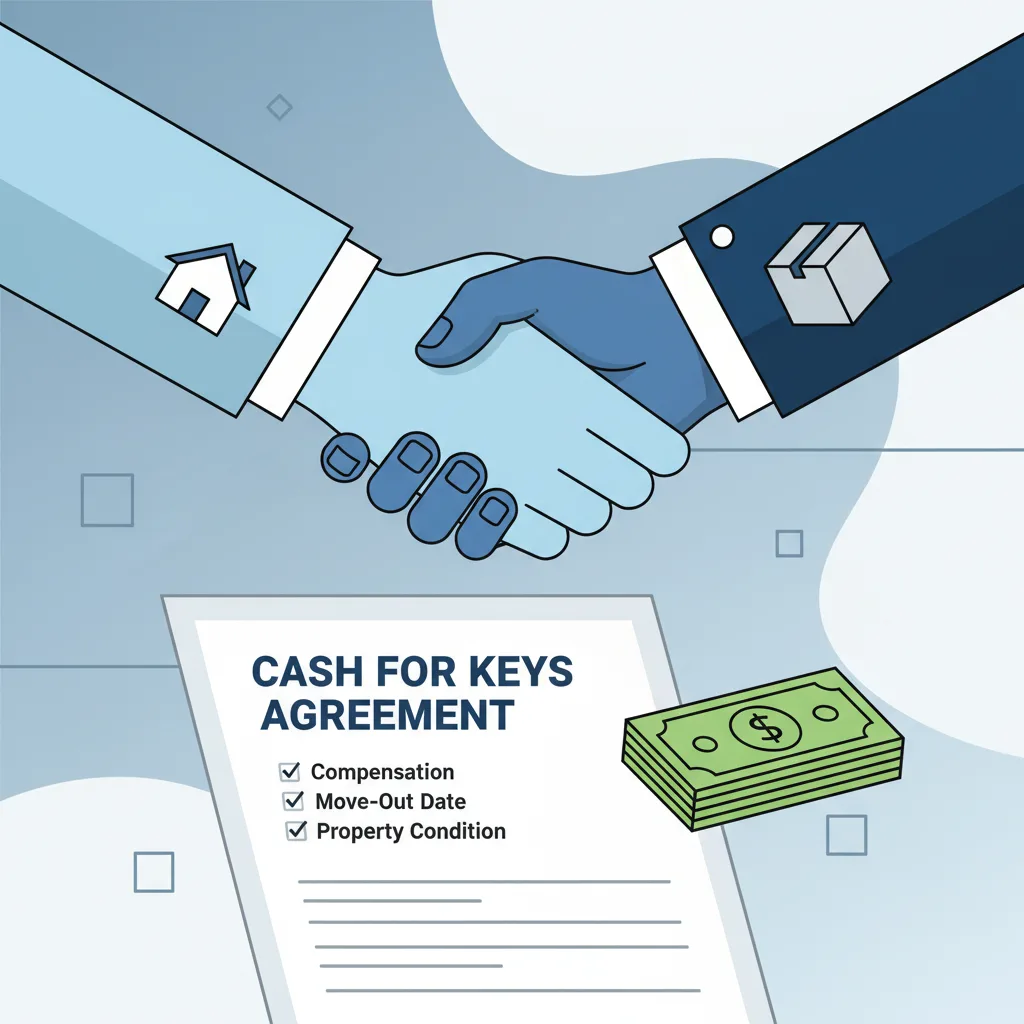
A comprehensive Cash For Keys Agreement typically outlines the specific terms and conditions under which the occupant agrees to vacate the property. To ensure clarity and enforceability, such an agreement generally includes several critical components:
- Identification of Parties and Property - Clearly states the names of the property owner and the occupant(s), along with the full address of the property to be vacated.
- Compensation Details - Specifies the exact amount of money the owner will pay to the occupant, the method of payment (e.g., check, wire transfer), and the timing of the payment (e.g., partial upfront, full upon vacating).
- Move-Out Date - Establishes a firm date by which the occupant must fully vacate the premises and surrender possession.
- Property Condition - Describes the expected condition of the property upon vacating, often requiring the premises to be left clean and free of personal belongings and damage beyond normal wear and tear.
- Key Surrender - Mandates the return of all keys, garage door openers, and other access devices to the owner or their representative.
- Release of Claims - Includes language where both parties typically release each other from any further claims or liabilities related to the tenancy or occupancy.
- Security Deposit Handling - Clarifies how any existing security deposit will be handled, whether it will be returned, applied to damages, or forfeited as part of the agreement.
It is crucial for tenants and resident owners to ensure that any Cash For Keys offer originates from the actual new owner or their authorized representative. Furthermore, all terms of the agreement should be documented in a written contract to provide clear proof of the arrangement and protect both parties' interests.
Tenant Rights and Protections
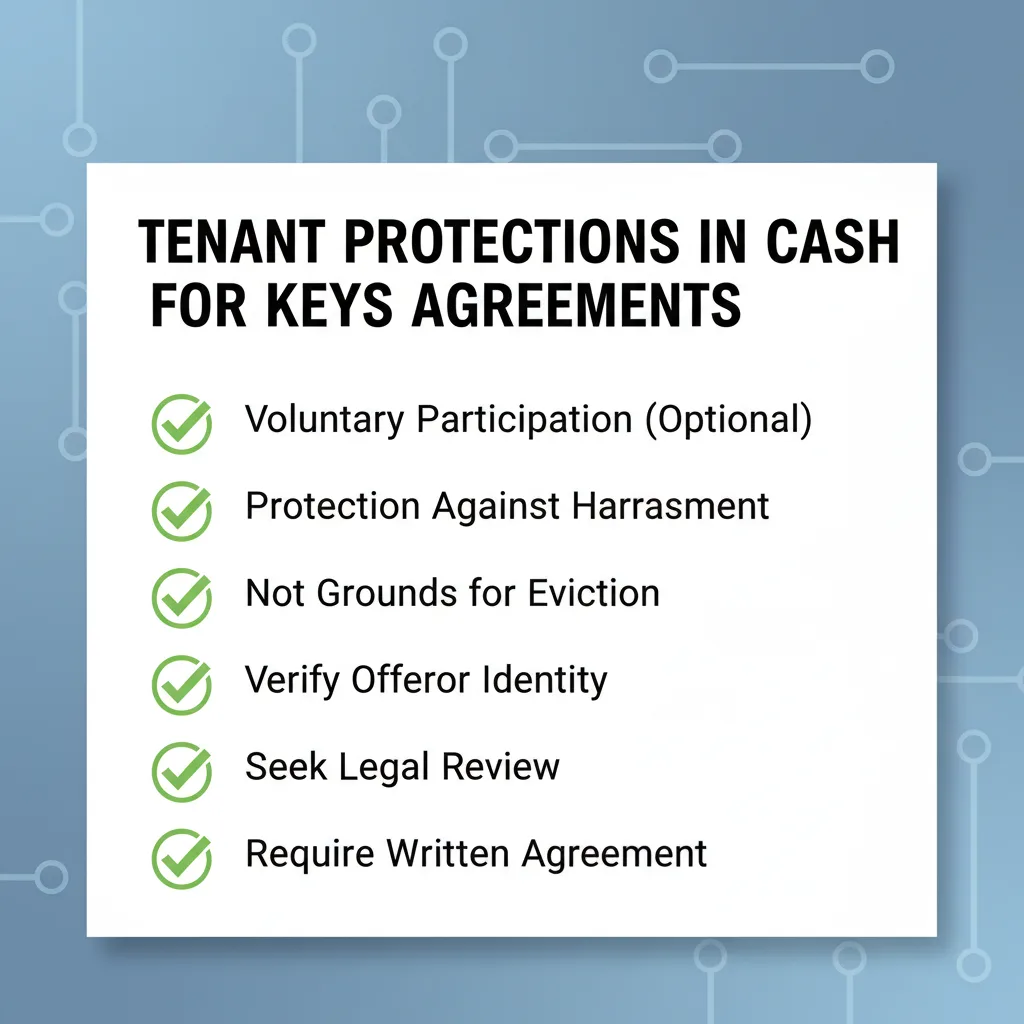
Tenants facing a Cash For Keys offer possess significant rights and protections, as these agreements are fundamentally voluntary. Key aspects of these protections include:
- Voluntary Participation - Tenant buyout agreements, commonly known as “cash for keys,” are entirely voluntary. Tenants are not obligated to accept such offers and have the right to remain in their dwelling unit (Los Angeles County Department of Consumer and Business Affairs).
- Protection Against Harassment and Retaliation - Tenants who choose not to accept a buyout offer are protected from harassment or retaliation by the owner (Los Angeles County Department of Consumer and Business Affairs).
- No Grounds for Eviction - Refusing a tenant buyout agreement is not a legal reason for eviction under rent stabilization and tenant protection ordinances (Los Angeles County Department of Consumer and Business Affairs).
- Verification of Offeror - Tenants should verify the identity and authority of the person making the Cash For Keys offer to ensure they are dealing with the legitimate owner or their authorized agent (California Department of Real Estate Consumer Alert).
- Review by Trusted Party - It is strongly recommended that tenants have someone they trust, such as an attorney or a tenant rights advocate, review the agreement before signing to ensure they understand all terms and implications (California Department of Real Estate Consumer Alert).
- Written Agreement Requirement - Any Cash For Keys offer should be received by the tenant or resident owner in writing, detailing all terms and conditions (California Department of Real Estate Consumer Alert).
These protections ensure that tenants are not coerced into leaving their homes and can make informed decisions about their housing situation without undue pressure.
Distinction from Eviction Proceedings
While both a Cash For Keys Agreement and an eviction proceeding result in an occupant vacating a property, their nature and legal implications are fundamentally different. An eviction is a formal legal process initiated by a landlord to remove a tenant who has violated lease terms or applicable laws, such as non-payment of rent or property damage. It involves court filings, hearings, and potentially a court order for removal, which can become part of a public record and negatively impact a tenant's credit score and future housing prospects.
In contrast, a Cash For Keys Agreement is a mutual, voluntary contract. It is a negotiation between the parties to avoid the complexities and costs of litigation. By agreeing to a Cash For Keys arrangement, tenants can avoid having an eviction on their record, which can be a significant advantage when seeking new housing. For owners, it provides a quicker, less expensive, and less contentious method to regain possession, bypassing court fees, attorney costs, and the often unpredictable timeline of judicial proceedings.
Frequently Asked Questions
Sources
- California Department of Real Estate Consumer Alert: "CASH FOR KEYS" – INFORMATION FOR CONSUMERS AND DRE LICENSEES - Provides guidance on cash for keys agreements, including tenant protections and recommendations for tenants and resident owners.
- Los Angeles County Department of Consumer and Business Affairs: Understanding Tenant Buyout Agreements - Explains tenant buyout agreements, commonly known as "cash for keys," and outlines tenant rights and protections under local ordinances.
Not the form you're looking for?
Try our legal document generator to create a custom document
Disclaimer: The templates available on this website are provided for general informational purposes only and do not constitute legal advice. They are not intended to be, and should not be interpreted as, compliant with any specific legal, regulatory, or privacy requirements. These templates are not a replacement for professional legal guidance and should not be relied upon for any particular matter or circumstance. Users are strongly encouraged to seek advice from a qualified attorney licensed in their jurisdiction before using, modifying, or relying on any template.
All templates are provided on an "as is," "with all faults," and "as available" basis. The provider disclaims any and all warranties of any kind, whether express, implied, statutory, or otherwise, including without limitation warranties of merchantability, fitness for a particular purpose, title, or non-infringement.
LegalTemplates.com makes no guarantees or representations regarding the accuracy, completeness, expected outcomes, or reliability of the materials contained in these templates or any materials referenced or linked from them.