Affidavit of Motor Vehicle Gift Transfer
An Affidavit of Motor Vehicle Gift Transfer is a sworn legal statement attesting to the gratuitous conveyance of ownership of a motor vehicle from one party to another.
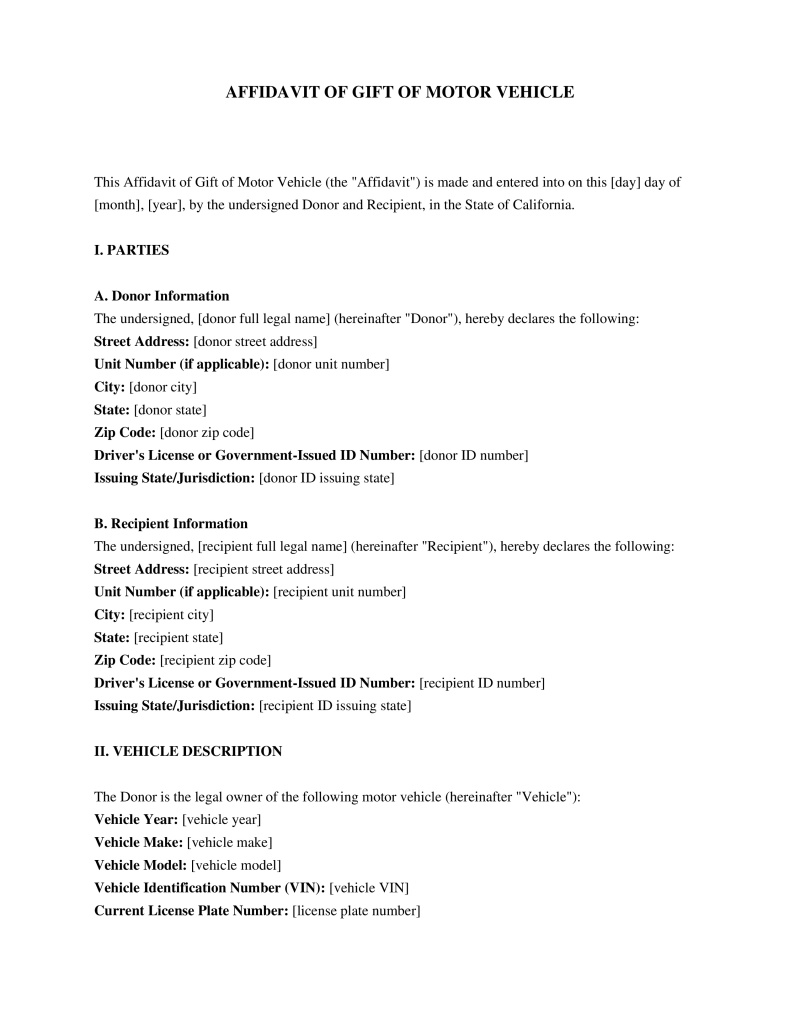
Relationship To Recipient
Select the relationship that best describes the connection between the Donor and the Recipient. Some states require the gift to be between certain family members for tax exemption.
Provide details if 'Other' was selected.
Table of Contents
What is a Affidavit of Motor Vehicle Gift Transfer?
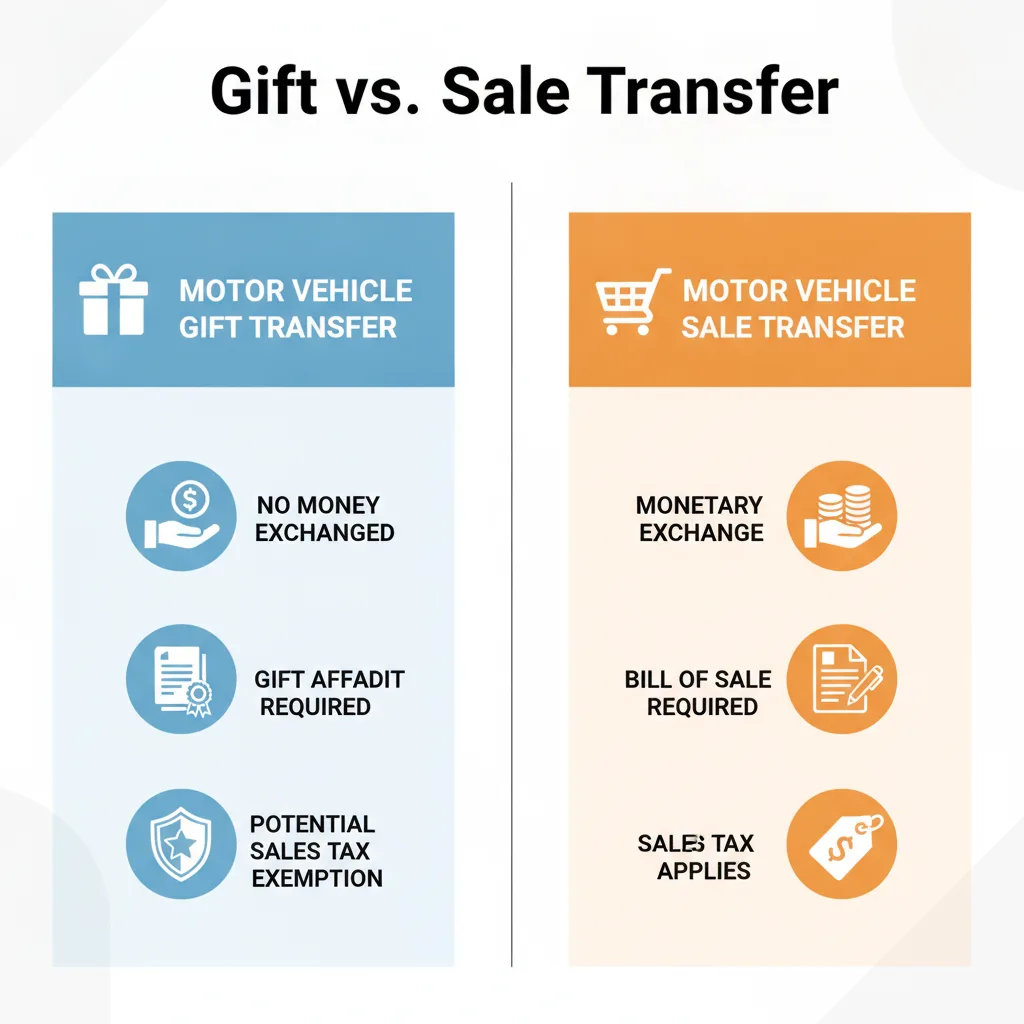
An Affidavit of Motor Vehicle Gift Transfer is a legal document used to formally declare the transfer of ownership of a motor vehicle from one party to another as a gift, rather than through a sale. This affidavit serves as official proof that no monetary exchange occurred, which can have implications for sales tax exemptions and proper title registration. Government agencies, such as state Departments of Motor Vehicles (DMVs), often require this specific form to process a gift transfer and issue a new title to the recipient.
Purpose and Common Use
The primary purpose of an Affidavit of Motor Vehicle Gift Transfer is to establish that a vehicle's ownership has changed hands without financial consideration. This distinction is crucial for various administrative and legal reasons, particularly concerning taxation. When a vehicle is gifted, the recipient may be exempt from paying sales tax on the transfer, depending on state regulations.
This document is commonly used in scenarios such as:
- Family Transfers - Parents gifting a vehicle to a child, or vice versa, or transfers between other relatives.
- Charitable Donations - Donating a vehicle to a qualified non-profit organization.
- Personal Gifts - Gifting a vehicle to a friend or another individual outside immediate family.
The affidavit ensures that the transfer is recorded accurately by the state's motor vehicle department, preventing misunderstandings about the nature of the transaction and facilitating the issuance of a clean title to the new owner. Many states provide specific forms for this purpose, such as California’s Statement of Facts (REG 256) or New York’s Affidavit for Transfer of Motor Vehicle (MV-349.1).
Key Information Included
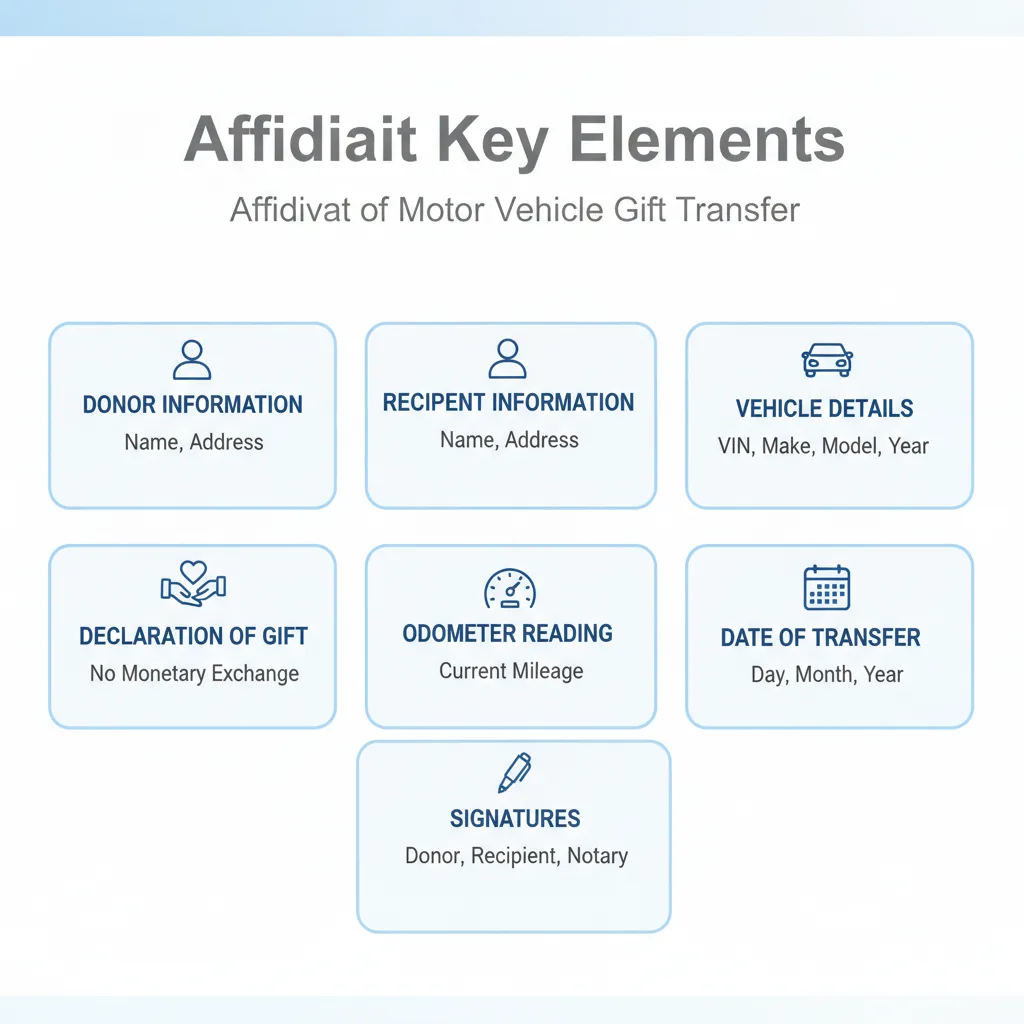
While specific requirements can vary by jurisdiction, an Affidavit of Motor Vehicle Gift Transfer typically includes several critical pieces of information to ensure a complete and legally sound transfer. These details confirm the identities of the parties involved and provide a clear description of the vehicle being gifted:
- Donor Information - Full legal name, address, and contact details of the person gifting the vehicle.
- Recipient Information - Full legal name, address, and contact details of the person receiving the vehicle.
- Vehicle Identification Number (VIN) - A unique identifier for the motor vehicle, ensuring the correct vehicle is being transferred.
- Vehicle Description - Make, model, year, and license plate number of the vehicle.
- Declaration of Gift - A clear statement affirming that the vehicle is being transferred as a bona fide gift, with no money or other consideration exchanged.
- Odometer Reading - The current mileage of the vehicle at the time of transfer, often required for title transfers.
- Date of Transfer - The specific date when the ownership transfer took place.
- Signatures - Signatures of both the donor and the recipient, affirming their consent to the transfer.
Parties Involved and Their Roles
Two primary parties are involved in an Affidavit of Motor Vehicle Gift Transfer, each with distinct roles and responsibilities in ensuring the legal and proper change of ownership:
- Donor (Gifter) - The individual or entity currently holding legal title to the vehicle who wishes to transfer it as a gift. The donor is responsible for accurately completing their portion of the affidavit, signing it, and ensuring the vehicle's title is properly endorsed for transfer. They attest that the vehicle is a gift and that they are the rightful owner with authority to transfer it.
- Recipient (Donee) - The individual or entity receiving the vehicle as a gift. The recipient is responsible for accurately completing their portion of the affidavit, signing it, and submitting all necessary documentation to the state's motor vehicle department to register the vehicle in their name and obtain a new title. They acknowledge receiving the vehicle as a gift and agree to fulfill all subsequent ownership obligations.
State-Specific Requirements and Documentation
The process and specific forms required for an Affidavit of Motor Vehicle Gift Transfer can vary significantly from state to state. It is essential for both the donor and recipient to consult their respective state's Department of Motor Vehicles (DMV) or equivalent agency for precise instructions and required documentation.
Examples of state-specific requirements include:
- California DMV Requirements - The California Department of Motor Vehicles requires a Statement of Facts (REG 256) for transferring vehicle ownership as a gift. This form allows the donor to declare that the vehicle was a bona fide gift, which is necessary for the recipient to potentially qualify for a use tax exemption.
- New York DMV Requirements - In New York, transferring a motor vehicle as a gift typically involves several forms. The New York DMV provides the Affidavit for Transfer of Motor Vehicle (MV-349.1), which is specifically designed for gift transfers. Additionally, the transfer may require a Vehicle Bill of Sale (MV-912) and a Statement of Transaction (DTF-802), which helps determine sales tax eligibility.
Many states also require the original vehicle title, properly endorsed by the donor, and may ask for proof of identity and residency for both parties. Understanding these specific requirements helps ensure a smooth transfer process and avoids delays in registering the vehicle.
Notarization and Filing Procedures
Depending on the state, an Affidavit of Motor Vehicle Gift Transfer may require notarization to be legally valid. Notarization adds an extra layer of authentication, verifying the identities of the signers and ensuring that the signatures are genuine. For example, the New York DMV's Affidavit for Transfer of Motor Vehicle (MV-349.1) includes a section for notary acknowledgment, indicating that notarization is a required step in that state.
After the affidavit and all other required documents are completed and, if necessary, notarized, they must be filed with the appropriate state agency. This is typically the Department of Motor Vehicles (DMV) or its equivalent. The filing process usually involves submitting:
- Completed Affidavit - The signed and potentially notarized Affidavit of Motor Vehicle Gift Transfer.
- Original Vehicle Title - The existing title, properly signed over by the donor.
- Other Supporting Forms - Any additional state-specific forms, such as a bill of sale (even for $0 consideration) or a statement of transaction.
- Fees - Any applicable title transfer or registration fees, even if sales tax is exempt.
Timely filing is important to avoid potential penalties and to ensure the recipient can legally register and operate the vehicle. The recipient typically bears the responsibility for initiating and completing the registration process in their name.
Frequently Asked Questions
Sources
- Title Transfers and Changes - California DMV - Provides information on transferring vehicle ownership, including gifts, and mentions the use of an affidavit for such transfers.
- Affidavit for Transfer of Motor Vehicle (MV-349.1) - New York DMV - Official form used in New York State for transferring ownership of a motor vehicle as a gift, including instructions and requirements.
- Buy, Sell, or Transfer Vehicle Ownership - New York DMV - Guidelines for transferring vehicle ownership in New York, including procedures for gifting a vehicle and necessary documentation.
Not the form you're looking for?
Try our legal document generator to create a custom document
Disclaimer: The templates available on this website are provided for general informational purposes only and do not constitute legal advice. They are not intended to be, and should not be interpreted as, compliant with any specific legal, regulatory, or privacy requirements. These templates are not a replacement for professional legal guidance and should not be relied upon for any particular matter or circumstance. Users are strongly encouraged to seek advice from a qualified attorney licensed in their jurisdiction before using, modifying, or relying on any template.
All templates are provided on an "as is," "with all faults," and "as available" basis. The provider disclaims any and all warranties of any kind, whether express, implied, statutory, or otherwise, including without limitation warranties of merchantability, fitness for a particular purpose, title, or non-infringement.
LegalTemplates.com makes no guarantees or representations regarding the accuracy, completeness, expected outcomes, or reliability of the materials contained in these templates or any materials referenced or linked from them.