Kentucky Bill of Sale
A Kentucky Bill of Sale is a legal instrument that formally documents the transfer of ownership of personal property from a seller to a buyer within the Commonwealth of Kentucky.
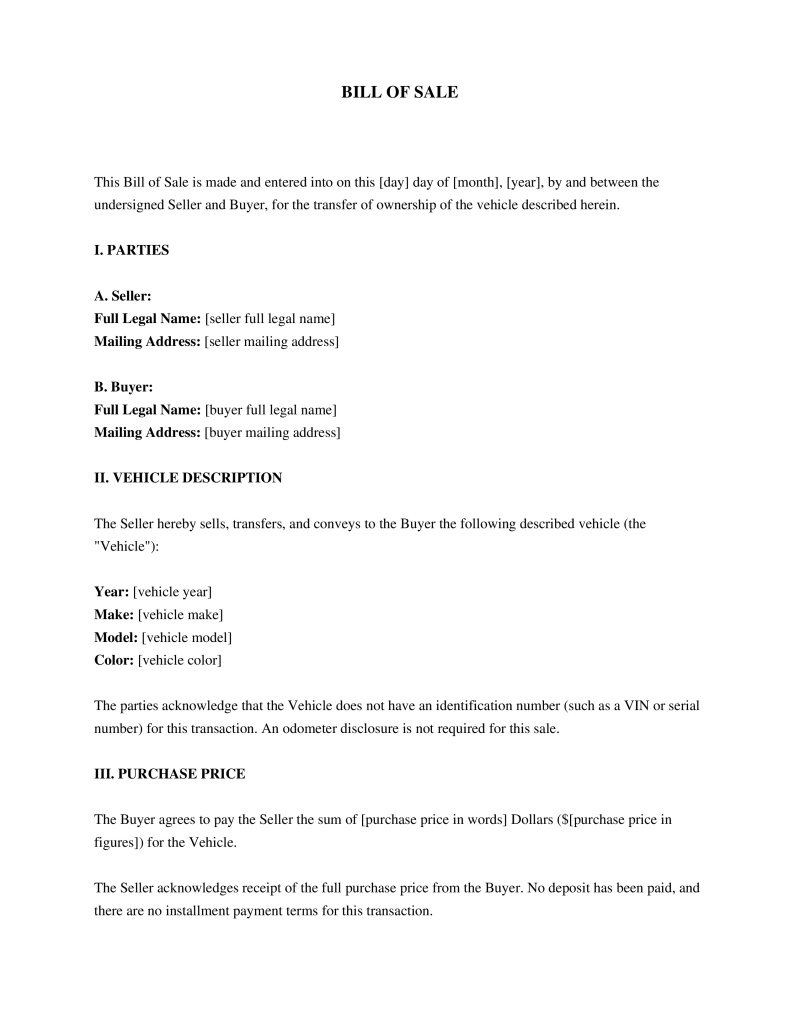
Asset Type
Choose the category that best describes the item. This helps include the right identifying details, such as VIN, hull number, serial number, or livestock identifiers.
Use this when the item does not fit one of the listed categories.
Table of Contents
What is a Kentucky Bill of Sale?
A Kentucky Bill of Sale is a legal document that records the transfer of ownership of personal property from a seller to a buyer within the Commonwealth of Kentucky. It serves as proof of purchase and sale, detailing the transaction specifics and identifying both parties involved. While a bill of sale can be used for various types of personal property, Kentucky law specifies particular requirements for certain high-value assets, such as motor vehicles and equine.
Purpose and Common Uses
The primary purpose of a Kentucky Bill of Sale is to formalize a transaction and provide a clear record of ownership transfer. This document is crucial for both the buyer and the seller, offering protection and clarity regarding the terms of the sale. For the buyer, it establishes legal ownership, which is often necessary for registration, titling, or insuring the property.
For the seller, a bill of sale provides evidence that the property has been sold and is no longer their responsibility, which can be important for liability purposes or to avoid future disputes. While a bill of sale can be used for any personal property, its legal significance is particularly pronounced in transactions involving items that require formal registration or have substantial value, such as:
- Motor Vehicles - Required for titling and registration with the county clerk.
- Equine - Mandated for sales, purchases, or transfers of horses.
- Boats and Watercraft - Often used as proof of ownership for registration.
- Other High-Value Personal Property - Such as machinery, firearms, or specialized equipment, where clear documentation of transfer is prudent.
Required Elements for Motor Vehicles
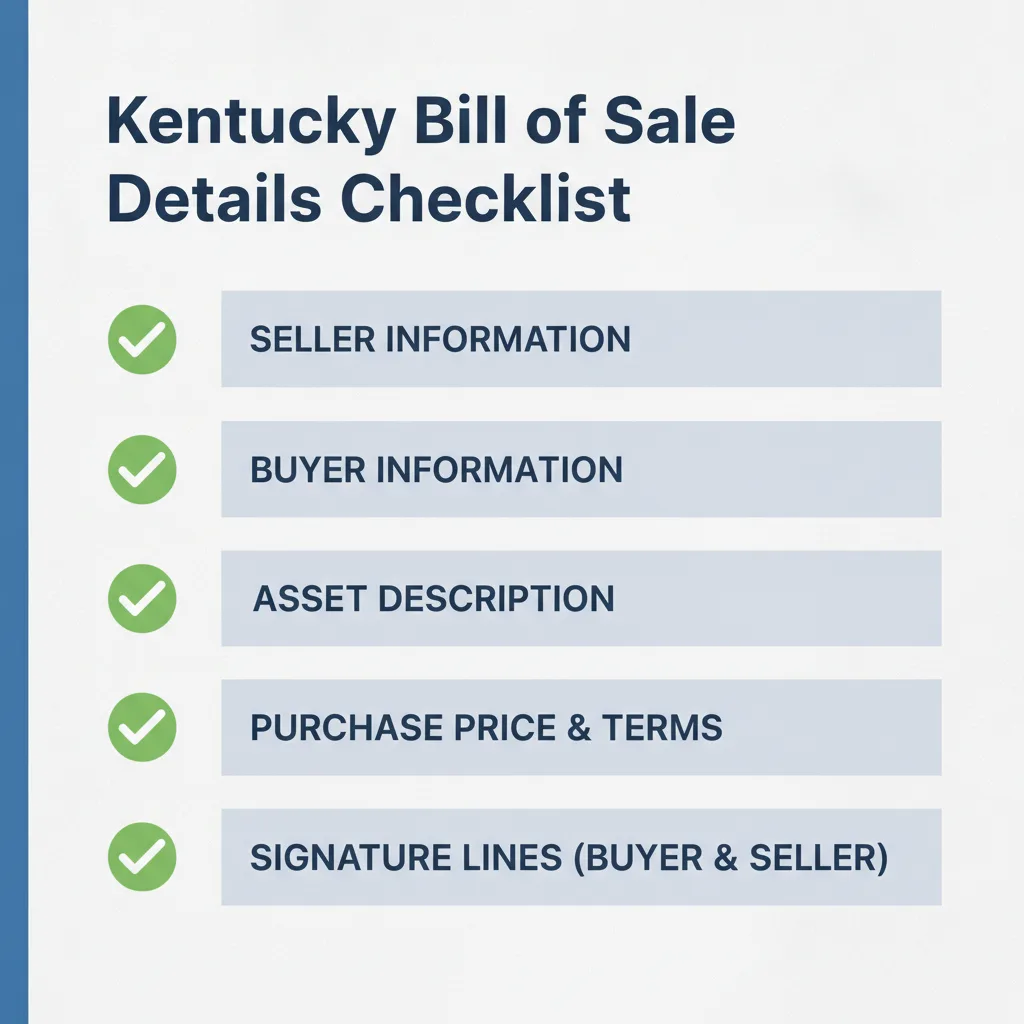
Kentucky law mandates specific information to be included on a bill of sale for motor vehicle transactions. These requirements ensure that all necessary details for registration and titling are present, providing a comprehensive record of the transfer:
- Date of Sale - The exact calendar date on which the transaction occurred (KRS 186.200).
- Purchaser's Name and Address - Full legal name and physical address of the individual or entity acquiring the vehicle (KRS 186.200).
- Seller's Name and Address - Full legal name and physical address of the individual or entity selling the vehicle (KRS 186.200).
- Vehicle Identification Number (VIN) - The unique identifying number assigned to the motor vehicle, as specified by KRS 186.030 (KRS 186.200).
- Make and Model of Vehicle - The manufacturer and specific model designation of the motor vehicle (KRS 186.030).
- Year of Manufacture - The model year of the motor vehicle (KRS 186.030).
- Type of Body - A description of the vehicle's body style (e.g., sedan, SUV, truck) (KRS 186.030).
- Motor Number - If applicable, the serial number of the vehicle's engine (KRS 186.030).
- Gross Weight - The weight of the vehicle as specified by the manufacturer (KRS 186.030).
- Purchase Price or Other Consideration - The amount paid for the vehicle or a clear description of any other consideration exchanged.
Execution and Distribution for Motor Vehicles
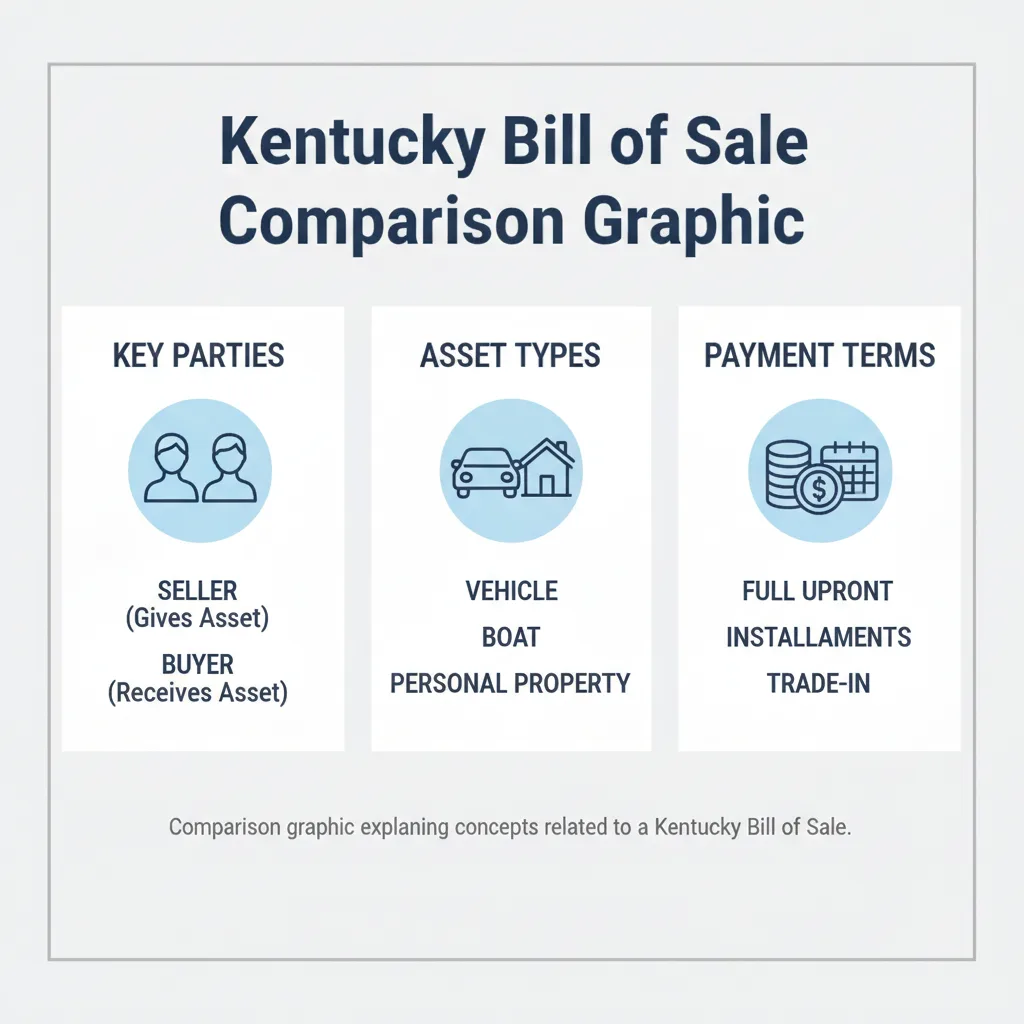
The process for executing and distributing a Kentucky Bill of Sale for motor vehicles is strictly defined by statute to ensure proper record-keeping and legal validity. This involves specific actions by the seller, authorized officers, and the county clerk:
- Subscription and Swearing - The bill of sale must be subscribed (signed) by the seller and sworn to before an officer authorized to administer oaths, such as a notary public (KRS 186.200).
- Execution in Quadruplicate - The document must be prepared in four identical copies (KRS 186.200).
- Submission to County Clerk - The seller is responsible for providing the original and two copies of the bill of sale to the county clerk of the county where the vehicle is to be registered (KRS 186.200).
- Clerk's Retention and Delivery - The county clerk retains one copy of the bill of sale for their records and delivers the original to the purchaser (KRS 186.200). The seller should also retain a copy for their own records.
Equine Transactions
For the sale, purchase, or transfer of equine in Kentucky, specific legal requirements exist to ensure transparency and proper documentation of the transaction. These provisions aim to provide clarity for both parties involved in the transfer of ownership:
- Written Document Requirement - Any sale, purchase, or transfer of an equine must be accompanied by a written bill of sale or an acknowledgment of purchase (KRS 230.357).
- Purchase Price Statement - The written document must clearly state the purchase price of the equine (KRS 230.357).
- Signatures of Parties - The bill of sale or acknowledgment must be signed by both the purchaser and the seller, or by their authorized agents (KRS 230.357).
This requirement helps prevent disputes regarding the sale terms and provides verifiable proof of the transaction, which is particularly important given the significant value often associated with equine.
General Considerations and Best Practices
Even for transactions not explicitly mandated by statute to have a bill of sale, its use is considered a best practice for both buyers and sellers. It provides a tangible record of the agreement, which can be invaluable in resolving misunderstandings or disputes. A well-drafted bill of sale typically includes not only the legally required information but also other pertinent details that clarify the terms of the sale.
Frequently Asked Questions
Sources
- KRS 186.200 - Contents of bill of sale - Defines the required contents of a bill of sale for motor vehicles in Kentucky.
- KRS 230.357 - Written bill of sale or acknowledgment of purchase -- Requirements - Specifies requirements for written bills of sale in equine transactions in Kentucky.
Bill of Sale in other states
Not the form you're looking for?
Try our legal document generator to create a custom document
Disclaimer: The templates available on this website are provided for general informational purposes only and do not constitute legal advice. They are not intended to be, and should not be interpreted as, compliant with any specific legal, regulatory, or privacy requirements. These templates are not a replacement for professional legal guidance and should not be relied upon for any particular matter or circumstance. Users are strongly encouraged to seek advice from a qualified attorney licensed in their jurisdiction before using, modifying, or relying on any template.
All templates are provided on an "as is," "with all faults," and "as available" basis. The provider disclaims any and all warranties of any kind, whether express, implied, statutory, or otherwise, including without limitation warranties of merchantability, fitness for a particular purpose, title, or non-infringement.
LegalTemplates.com makes no guarantees or representations regarding the accuracy, completeness, expected outcomes, or reliability of the materials contained in these templates or any materials referenced or linked from them.