Police Report Template
A Police Report Template is a standardized document framework designed to guide the systematic recording of incidents, investigations, or other official law enforcement activities.
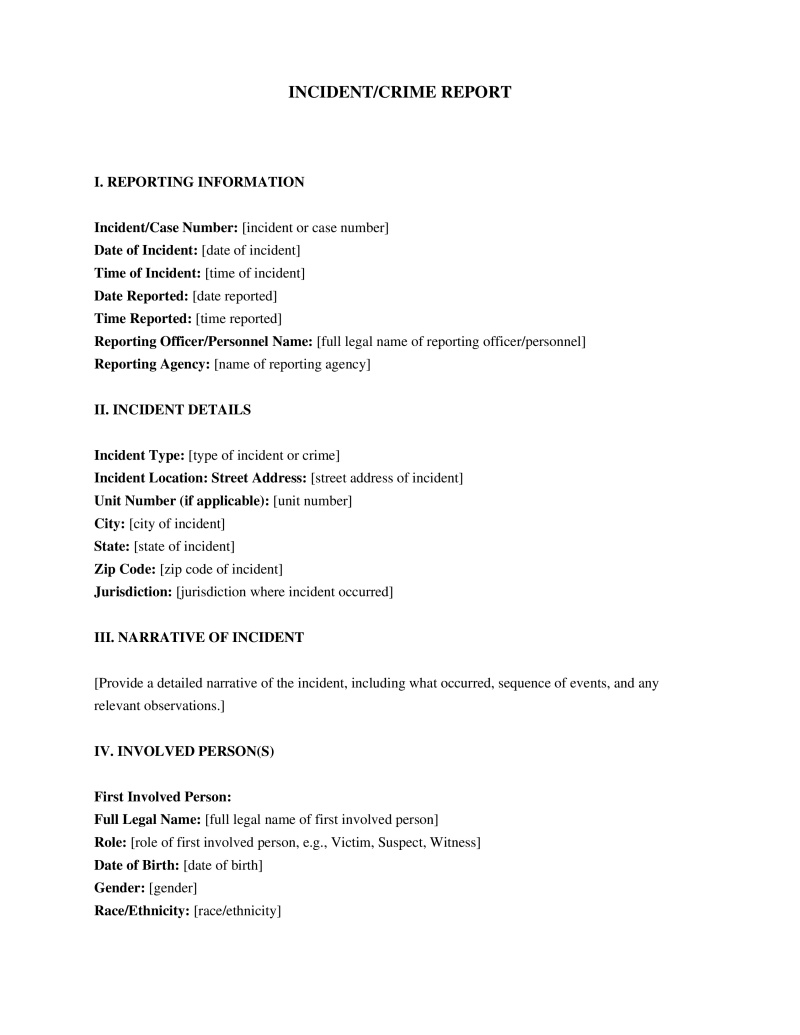
Incident Category
Select the primary category that best describes the incident you are reporting from the options provided. This helps law enforcement understand the nature of the situation and respond appropriately. If none of the categories fit, choose "Other" and briefly explain the incident in the space provided.
Provide a brief description if 'Other' was selected.
Table of Contents
What is a Police Report Template?
A police report template serves as a standardized framework used by law enforcement agencies to document incidents, crimes, and other events requiring official record-keeping. These templates ensure consistency in data collection, aiding officers in recording all necessary details systematically. While the specific layout and fields may vary between jurisdictions, the fundamental purpose remains to create a comprehensive, factual account of an event for investigative, legal, and administrative purposes. The structure helps streamline the reporting process and ensures critical information is not overlooked.
Purpose and Importance of Police Reports
Police reports are foundational documents within the criminal justice system and serve multiple crucial functions. They provide an official record of events, which can be vital for investigations, prosecutions, and insurance claims. Law enforcement relies on these reports to track criminal activity, identify patterns, and allocate resources effectively. For individuals, a police report can be necessary for legal proceedings, to support insurance claims, or simply for personal record-keeping.
The standardized nature of a police report ensures that essential information is captured uniformly across different incidents and officers. This consistency facilitates data analysis and inter-agency communication. Without detailed and structured reports, the ability to investigate crimes, build legal cases, or even provide accurate public safety statistics would be severely hampered.
Common Elements of a Police Report
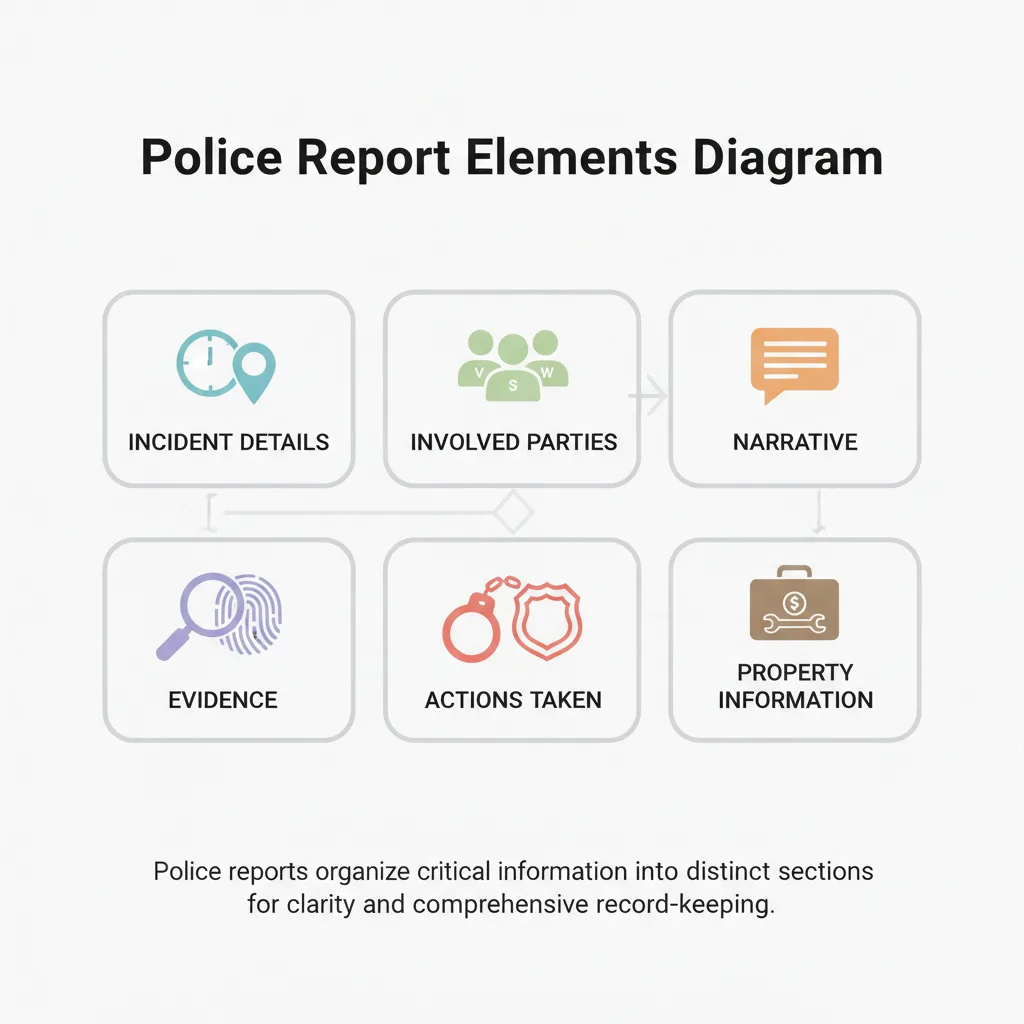
While the exact fields can differ, a typical police report includes various categories of information designed to provide a complete picture of an incident. These elements ensure that all pertinent facts, circumstances, and involved parties are documented comprehensively:
- Incident Information - Details such as the date, time, and location of the incident, the type of incident (e.g., theft, assault, traffic accident), and a unique case number assigned by the department.
- Reporting Officer Details - The name, badge number, and department of the officer completing the report.
- Victim/Complainant Information - Full name, contact details, address, date of birth, and any statements provided by the victim or person filing the report.
- Suspect Information - If known, details about any suspects, including name, physical description, known addresses, and any actions taken by the suspect.
- Witness Information - Names and contact details of any individuals who observed the incident, along with summaries of their statements.
- Narrative Section - A detailed, chronological description of the event as perceived by the reporting officer, often incorporating statements from victims, witnesses, and suspects. This section aims for objectivity and factual reporting.
- Evidence Collected - A list and description of any physical evidence found at the scene, including its location and how it was collected and preserved.
- Actions Taken - Documentation of any immediate actions by law enforcement, such as arrests made, citations issued, or emergency services called.
- Property Information - Descriptions of any stolen, lost, or damaged property, including estimated values and identifying features like serial numbers.
Online Police Reporting Systems
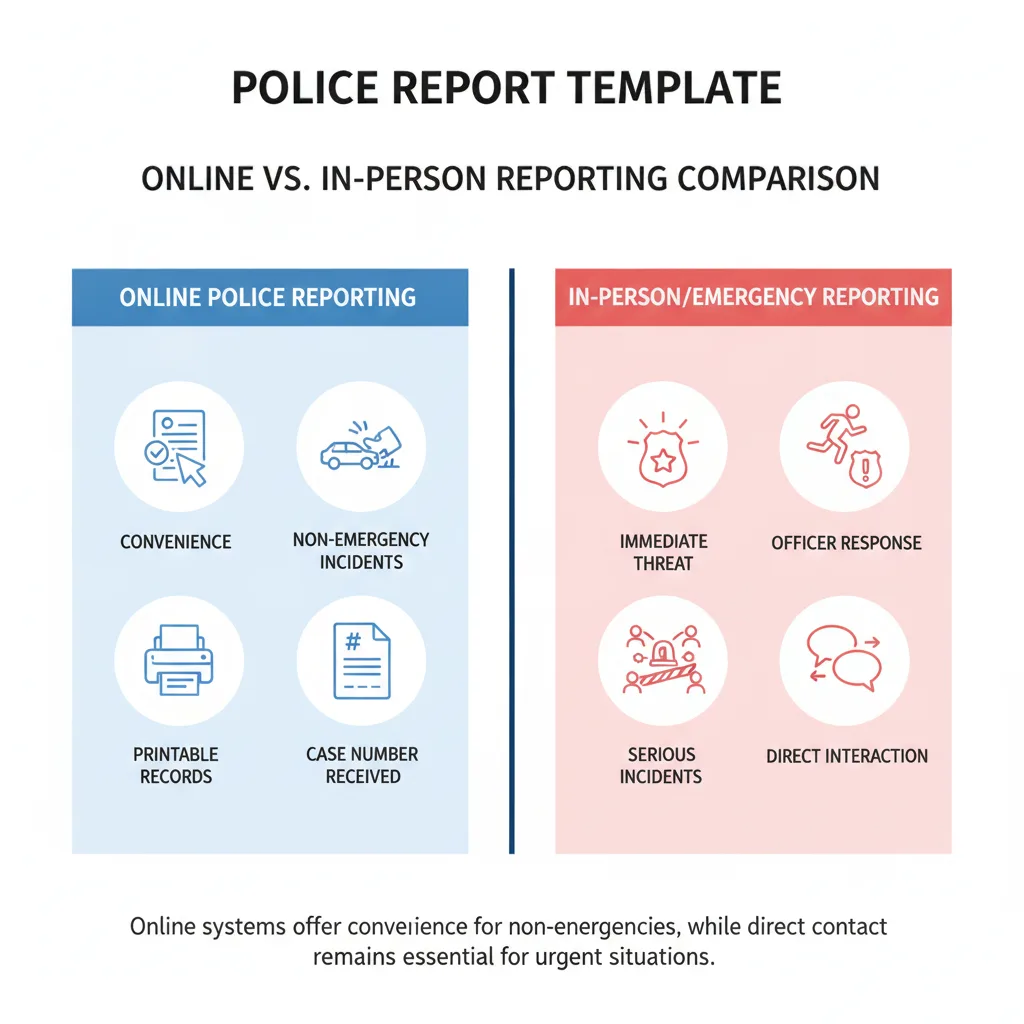
Many police departments across the United States have implemented online reporting systems to streamline the process for certain types of incidents. These systems allow citizens to file reports electronically, often for non-emergency situations, reducing the need for in-person visits or phone calls to dispatchers. This convenience benefits both the public and law enforcement agencies by optimizing resource allocation.
For example, jurisdictions such as Washington County, Oregon, Saint Paul, Minnesota, Dublin, California, Fremont, California, and New Braunfels, Texas, all provide online portals for filing police reports. These systems typically share common features:
- Eligibility Criteria - Online reporting is generally restricted to non-emergency incidents, such as lost property, minor thefts without suspect information, vandalism, or certain types of vehicle accidents. Incidents involving violence, serious injury, or known suspects usually require direct officer response.
- Case Number Assignment - Upon successful submission, online reports are typically assigned an official case number. This number is crucial for tracking the report and for any subsequent inquiries or actions.
- Review Process - Submitted online reports are usually reviewed by police personnel to ensure completeness and determine if further investigation or follow-up is necessary.
- Printable Records - Users often have the ability to print a copy of their submitted report for their personal records, insurance purposes, or other administrative needs.
These online platforms enhance accessibility and efficiency, allowing individuals to report incidents at any time while ensuring that law enforcement maintains a structured record of events.
When to File a Police Report
Deciding when to file a police report often depends on the nature and severity of the incident. Reports are generally classified into emergency and non-emergency categories, guiding individuals on the appropriate method for reporting.
- Emergency Situations - Incidents posing an immediate threat to life or property, such as ongoing crimes, serious accidents, or situations requiring immediate police intervention, should always be reported by calling emergency services. These situations necessitate direct officer response and cannot typically be handled through online systems.
- Non-Emergency Incidents - Many less urgent events are suitable for police reports, often through online systems or non-emergency phone lines. These include:
- Minor Thefts - Such as stolen bicycles or items taken from an unlocked vehicle, where no suspect information is available.
- Vandalism or Property Damage - Incidents where property has been damaged but there is no immediate danger or known perpetrator.
- Lost Property - Reporting items that have been misplaced or lost, which can be important for insurance claims or if the item is later recovered.
- Traffic Accidents (Minor) - Collisions involving minimal damage and no injuries, particularly if all parties exchange information and agree on the circumstances.
- Harassment (Non-Violent) - Instances of non-physical harassment or threats that do not require immediate police presence.
It is always advisable to check the specific guidelines of the local police department, as eligibility for online reporting can vary by jurisdiction and incident type.
Accessing and Utilizing Police Reports
Once a police report is filed, it becomes an official record that can be accessed and utilized for various purposes. The process for obtaining a copy of a police report typically involves a formal request to the law enforcement agency that generated it. This often requires providing the case number, incident date, and other identifying information.
The uses of a police report extend beyond initial investigation:
- Insurance Claims - Individuals often need a police report to file claims for stolen or damaged property with their insurance providers.
- Legal Proceedings - Reports serve as evidence in court cases, including criminal prosecutions, civil lawsuits, or domestic disputes.
- Personal Records - Keeping a copy of a police report can be important for personal documentation, especially for incidents that might have long-term implications.
- Public Record Requests - In some jurisdictions, police reports may be subject to public records laws, allowing broader access with certain redactions.
- Investigative Follow-Up - Detectives and other law enforcement personnel use reports to continue investigations, identify patterns, and apprehend suspects.
Access to reports may be restricted based on the nature of the incident, ongoing investigations, or privacy laws, particularly if minors or sensitive information are involved.
Frequently Asked Questions
Sources
- File a Police Report | Washington County, OR - Provides guidelines for filing police reports online and in person in Washington County, Oregon.
- File a Police Report | Saint Paul Minnesota - Details the process for filing police reports in Saint Paul, Minnesota, including online options.
- File a Dublin (CA) Police Report Online | Dublin, CA - Official Website - Outlines the online police reporting system in Dublin, California, and its requirements.
- File a Fremont Police Report | Fremont Police Department, CA - Explains the online police reporting system in Fremont, California, and its criteria.
- File an Online Police Report | New Braunfels, TX - Official Website - Provides information on filing online police reports in New Braunfels, Texas.
Not the form you're looking for?
Try our legal document generator to create a custom document
Disclaimer: The templates available on this website are provided for general informational purposes only and do not constitute legal advice. They are not intended to be, and should not be interpreted as, compliant with any specific legal, regulatory, or privacy requirements. These templates are not a replacement for professional legal guidance and should not be relied upon for any particular matter or circumstance. Users are strongly encouraged to seek advice from a qualified attorney licensed in their jurisdiction before using, modifying, or relying on any template.
All templates are provided on an "as is," "with all faults," and "as available" basis. The provider disclaims any and all warranties of any kind, whether express, implied, statutory, or otherwise, including without limitation warranties of merchantability, fitness for a particular purpose, title, or non-infringement.
LegalTemplates.com makes no guarantees or representations regarding the accuracy, completeness, expected outcomes, or reliability of the materials contained in these templates or any materials referenced or linked from them.