Deed
Create Deed
Deed
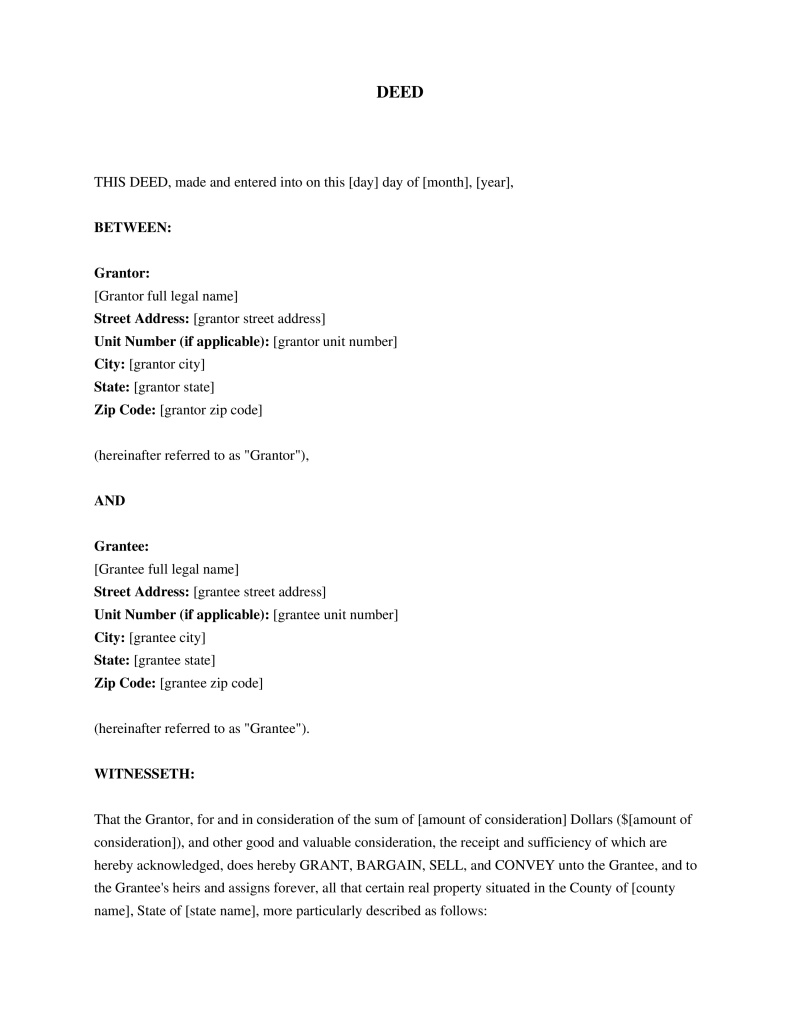
A deed is a formal legal instrument, often executed under seal, that serves as a primary means to convey or confirm an interest in real property from one party to another.
Answer the question(s) below to create your Deed
Deed Type
Select the type of deed that best fits the transaction. Warranty and Quitclaim are most common for real property.
Provide a description if 'Other' was selected.
Table of Contents
What is a Deed?
A deed is a formal legal document that transfers ownership of real property from one party to another. It serves as evidence of title and outlines the rights and interests conveyed between the grantor (the party transferring ownership) and the grantee (the party receiving ownership). Deeds are fundamental instruments in real estate transactions, ensuring a clear record of property transfers and establishing legal ownership.
Essential Elements of a Deed
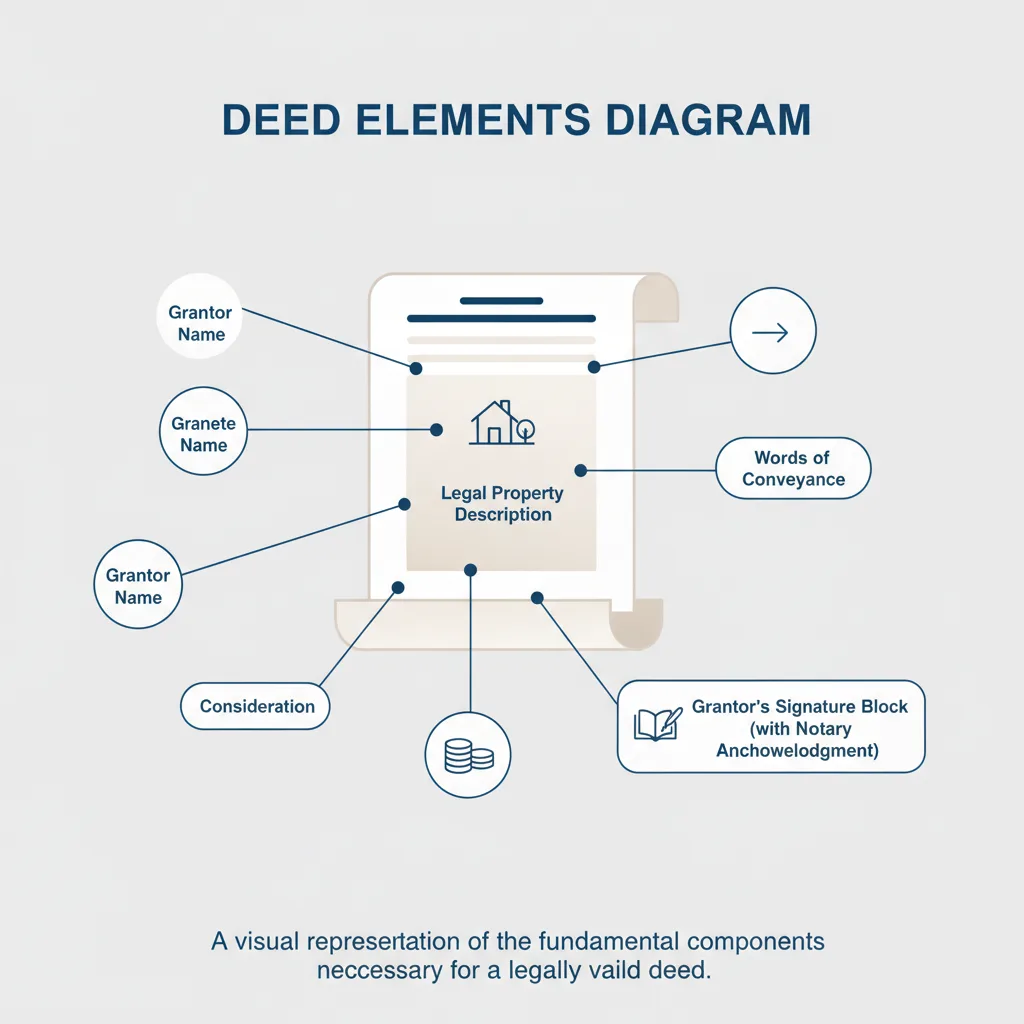
For a deed to be legally valid and effective in conveying real property, it must contain several essential elements. These elements ensure clarity regarding the parties, the property, and the intent of the transfer.
- Identification of Grantor and Grantee - Clearly states the full legal names of both the party conveying the property and the party receiving it.
- Words of Conveyance (Granting Clause) - Expresses the grantor's intention to transfer the property to the grantee, often using phrases like "grant, bargain, sell, and convey."
- Legal Description of Property - A precise and unambiguous description of the land being transferred, typically using metes and bounds, plat book references, or other recognized legal methods.
- Consideration - Indicates that something of value has been exchanged for the property, although it can often be a nominal amount such as "ten dollars and other good and valuable consideration."
- Signature of Grantor - The grantor, or their authorized representative, must sign the deed to validate the transfer.
- Acknowledgment - The grantor's signature is typically notarized by a public official, verifying the authenticity of the signature and that it was made voluntarily.
- Delivery and Acceptance - The grantor must physically or constructively deliver the deed to the grantee, and the grantee must accept it, signifying the completion of the transfer.
Types of Deeds
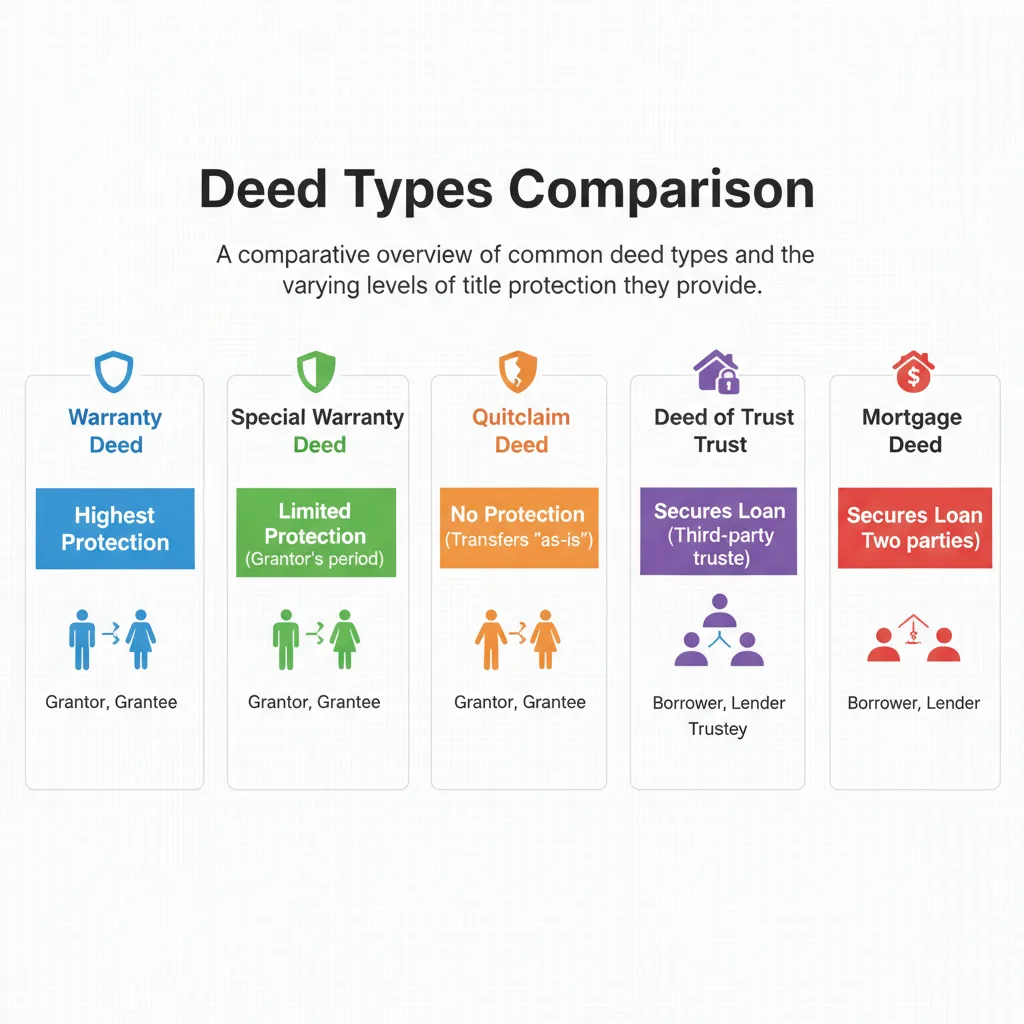
Different types of deeds offer varying levels of protection to the grantee regarding the property's title. The choice of deed depends on the nature of the transaction and the extent of the grantor's covenants and warranties.
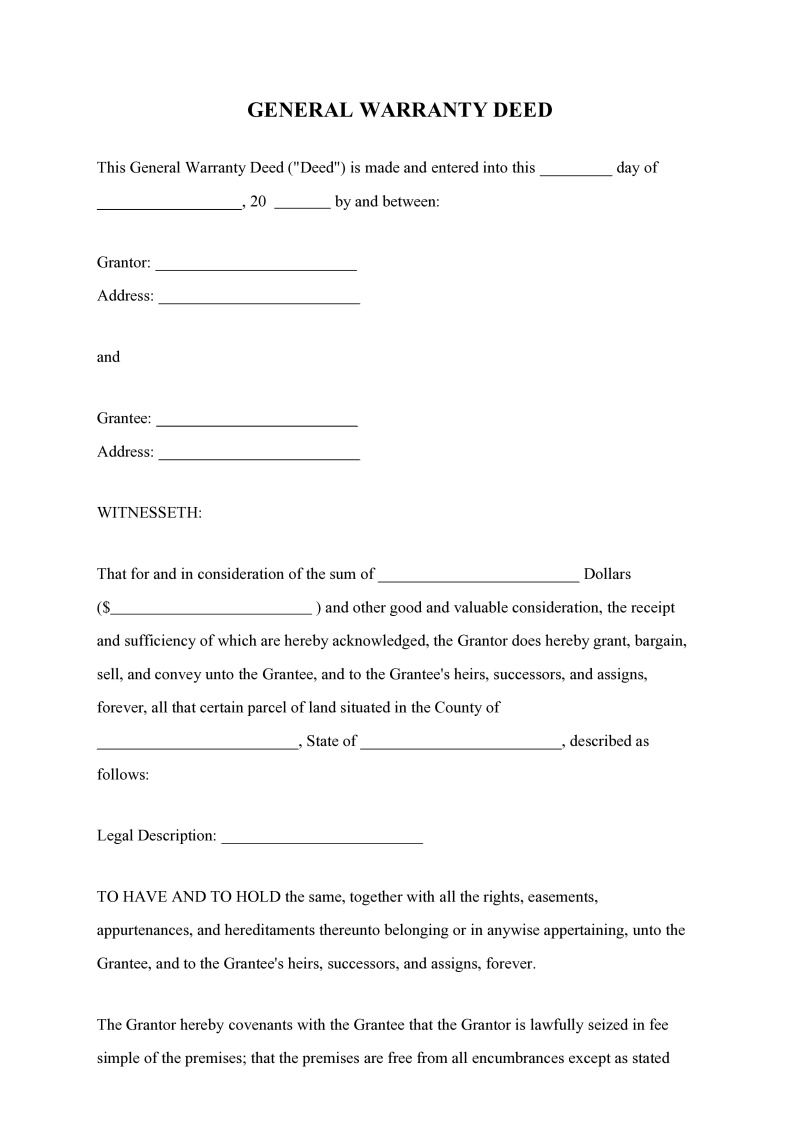
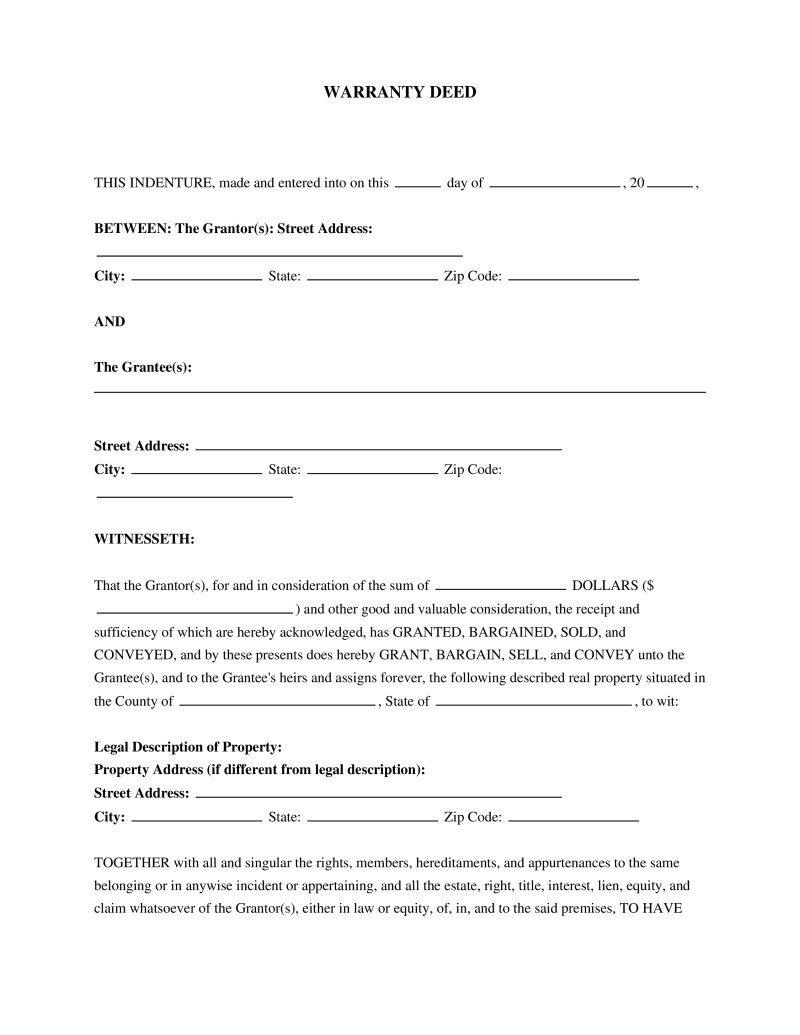
- Warranty Deed - This type of deed provides the highest level of protection to the grantee. The grantor guarantees that they hold clear title to the property, have the right to sell it, and will defend the grantee against any future claims against the title. The District of Connecticut offers a sample Warranty Deed form for use in federal court proceedings.
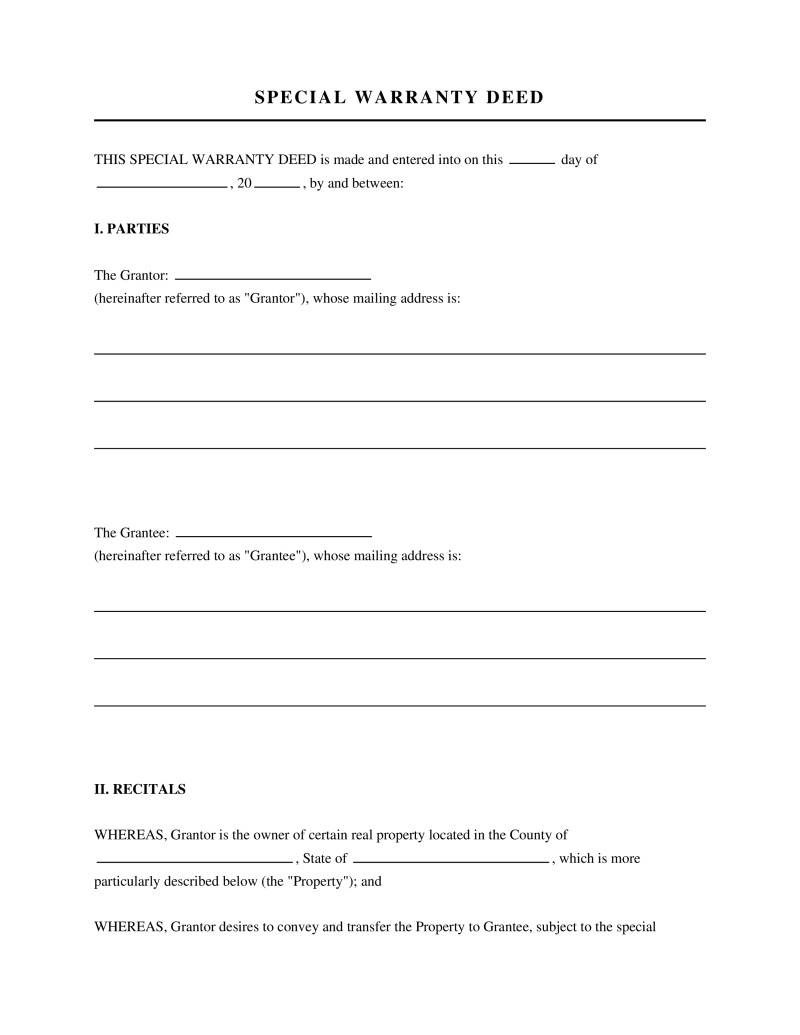
- Special Warranty Deed - Similar to a warranty deed, but the grantor only guarantees the title against defects or encumbrances that arose during their period of ownership. They do not warrant against issues that existed before they acquired the property.
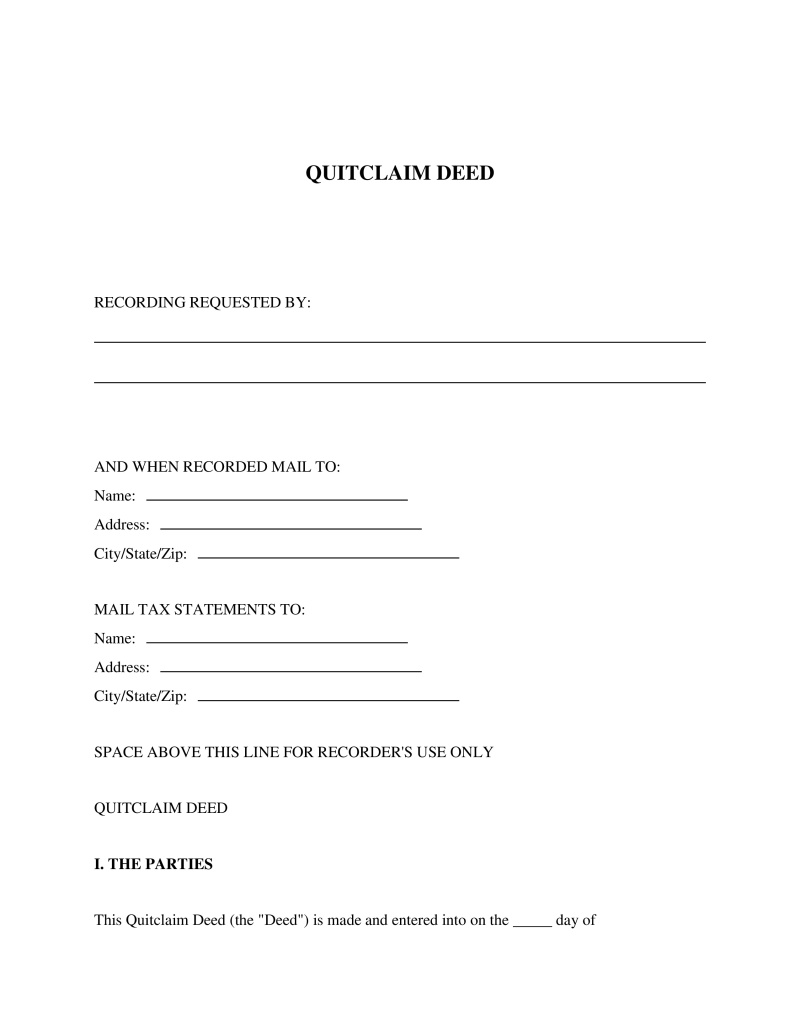
- Quitclaim Deed - This deed provides the least amount of protection. The grantor merely transfers whatever interest they may have in the property, without making any warranties or guarantees about the title's validity or whether they even own the property. It is often used to clear up title defects or transfer property between family members.
- Deed of Trust - Used in certain states as a financing instrument in real estate transactions, involving three parties: the borrower (grantor), the lender (beneficiary), and a neutral third party (trustee) who holds legal title until the loan is repaid. The Middle District of Tennessee offers a Deed of Trust form for use in federal court proceedings.
- Mortgage Deed - In many states, a mortgage deed is used as a financing instrument where the borrower grants a lien on the property to the lender as security for a loan. Unlike a deed of trust, it typically involves two parties: the borrower and the lender. The District of Connecticut offers a sample Mortgage Deed form for use in federal court proceedings.
Deed of Trust vs. Mortgage Deed
The Deed of Trust and the Mortgage Deed are both legal instruments used to secure a loan with real property, but they differ in structure and the process for foreclosure. These distinctions are largely determined by state law.
A Mortgage Deed directly creates a lien on the property in favor of the lender. In the event of default, the lender typically must initiate a judicial foreclosure process, which involves court proceedings to obtain a judgment and authorize a sale of the property. This process can be lengthy and costly.
In contrast, a Deed of Trust involves a third-party trustee. When a borrower defaults on a loan secured by a Deed of Trust, the trustee generally has the power to sell the property without court intervention through a non-judicial foreclosure process, provided the deed contains a "power of sale" clause. This process is often faster than judicial foreclosure. The Central District of California outlines procedures for reconveyance of a Deed of Trust in federal court cases once the loan is satisfied.
Execution and Recording of Deeds
The proper execution and recording of a deed are critical steps to ensure the legal transfer of property and to protect the grantee's ownership rights.
- Signing Requirements - The grantor must sign the deed. Some jurisdictions may also require witnesses to attest to the grantor's signature.
- Notarization - Most jurisdictions require that the grantor's signature be acknowledged before a notary public. This notarization confirms the identity of the signatory and that the deed was signed voluntarily.
- Delivery and Acceptance - For a deed to be effective, it must be delivered by the grantor and accepted by the grantee. Delivery signifies the grantor's intent to transfer title, and acceptance indicates the grantee's willingness to receive it.
- Recording the Deed - After execution, the deed should be recorded in the public land records office (often the county recorder or registrar of deeds) where the property is located. Recording provides constructive notice to the public of the new ownership and protects the grantee's interest against subsequent claims or transfers. Failure to record a deed promptly can jeopardize the grantee's title.
Purpose and Function of Deeds
Beyond simply transferring ownership, deeds serve several crucial functions in the legal and financial landscape of real estate. They are the cornerstone of a clear chain of title and provide essential legal protections.
A primary purpose of a deed is to provide a clear and legally binding record of property ownership. When recorded, it becomes part of the public record, allowing anyone to ascertain the legal owner of a property and track its history of ownership. This transparency is vital for buyers, sellers, lenders, and local government authorities.
Deeds also define the extent of the interest being conveyed, such as fee simple absolute, a life estate, or an easement. The specific language within the deed dictates the rights and limitations associated with the transferred property. This precision prevents future disputes over property boundaries, usage rights, and ownership claims, contributing to stability in property law.
Frequently Asked Questions
A deed is the physical legal document used to transfer ownership of property. Title refers to the legal right of ownership itself, not a physical document.
Yes, a deed is legally required to transfer ownership of real property from one party to another. Without a properly executed and delivered deed, legal title does not pass.
While not always legally mandated, consulting a lawyer to prepare or review a deed is highly recommended. Legal professionals ensure the deed accurately reflects the parties' intentions and complies with all state and local laws.
If a deed is not recorded, the new owner's interest may not be protected against subsequent claims or transfers by the previous owner to another party. Recording provides public notice of the ownership change.
A deed can be challenged in court on grounds such as fraud, undue influence, forgery, or lack of mental capacity of the grantor. If successful, a court can declare the deed void or voidable.
Sources
- Deed of Trust Form - Provides a sample Deed of Trust form used in federal court proceedings.
- Reconveyance/Deed of Trust - Details procedures for reconveyance of a Deed of Trust in federal court cases.
- Mortgage Deed - Provides a sample Mortgage Deed form for use in federal court proceedings.
- Warranty Deed - Provides a sample Warranty Deed form for use in federal court proceedings.
Related Documents
Forms commonly used with Deed.
Not the form you're looking for?
Try our legal document generator to create a custom document
Disclaimer: The templates available on this website are provided for general informational purposes only and do not constitute legal advice. They are not intended to be, and should not be interpreted as, compliant with any specific legal, regulatory, or privacy requirements. These templates are not a replacement for professional legal guidance and should not be relied upon for any particular matter or circumstance. Users are strongly encouraged to seek advice from a qualified attorney licensed in their jurisdiction before using, modifying, or relying on any template.
All templates are provided on an "as is," "with all faults," and "as available" basis. The provider disclaims any and all warranties of any kind, whether express, implied, statutory, or otherwise, including without limitation warranties of merchantability, fitness for a particular purpose, title, or non-infringement.
LegalTemplates.com makes no guarantees or representations regarding the accuracy, completeness, expected outcomes, or reliability of the materials contained in these templates or any materials referenced or linked from them.