Bargain and Sale Deed
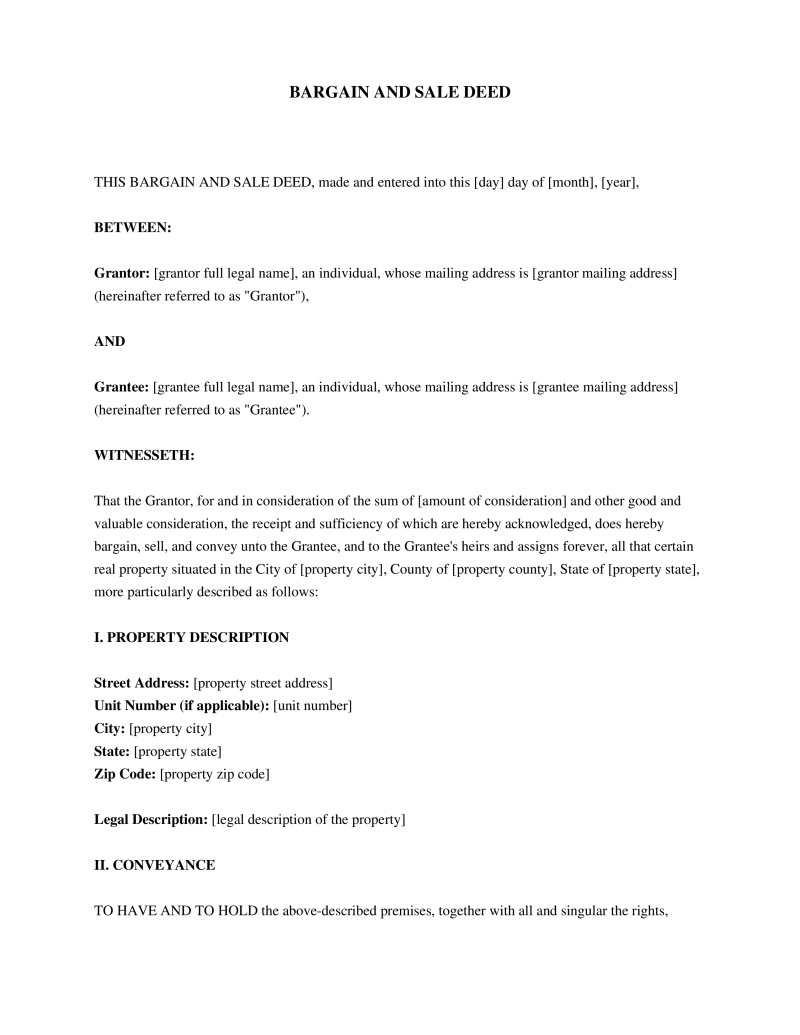
A Bargain and Sale Deed is a legal instrument used to convey real property, implying that the grantor holds title but without providing covenants of warranty against encumbrances.
Deed Covenant Level
A bargain and sale deed commonly conveys title without full warranties. Some jurisdictions or transactions add limited covenants, such as a covenant against the Grantor's own acts.
Use carefully drafted language. Custom deed covenants can affect title liability and insurability.
Table of Contents
What is a Bargain and Sale Deed?
A bargain and sale deed is a legal instrument used to transfer title to real property from a grantor to a grantee. This type of deed implies that the grantor holds title to the property but does not provide specific warranties against encumbrances. It is commonly employed in situations where the grantor may not want to assume the full liability of a general warranty deed, such as in foreclosure sales, tax sales, or transfers by fiduciaries.
Characteristics and Implied Warranties
The defining feature of a bargain and sale deed is its limited scope of covenants or promises made by the grantor. Unlike a general warranty deed, it does not guarantee the property is free from all encumbrances or that the grantor will defend the title against all claims. Instead, it typically contains only one implied warranty: that the grantor has not done anything to encumber the property during their period of ownership.
Key characteristics include:
- Implied Seisin - The deed implies that the grantor actually owns the property being conveyed.
- No Warranties Against Encumbrances - The grantor does not guarantee that there are no liens, easements, or other claims against the property, beyond those they may have created.
- Limited Grantor Liability - The grantor is generally not liable for title defects that arose before their ownership.
This limited assurance means that the grantee assumes more risk regarding potential title defects compared to receiving a general warranty deed. Buyers often conduct thorough title searches and may purchase title insurance to mitigate these risks.
Common Scenarios for Use
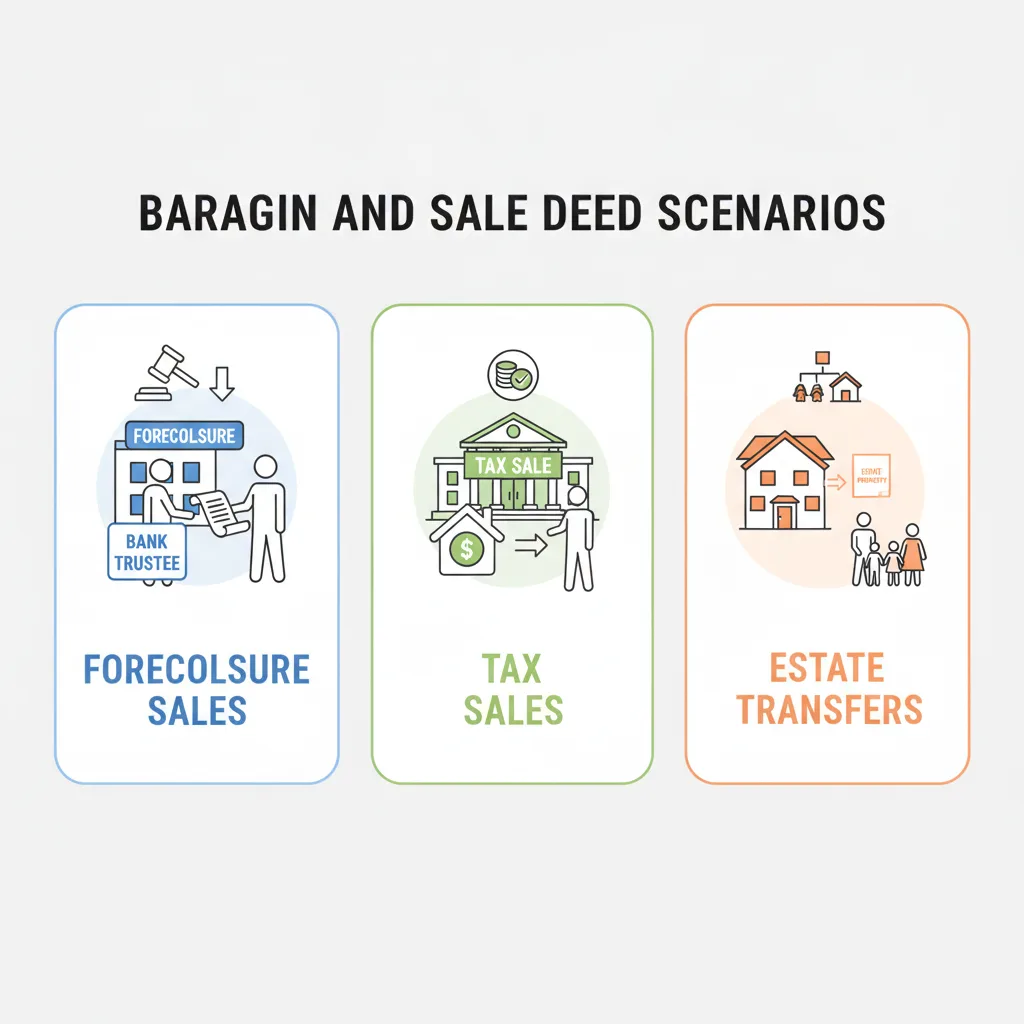
Bargain and sale deeds are frequently utilized in specific real estate transactions where the grantor's knowledge of the property's history is limited or where they wish to minimize their liability. These scenarios often involve transfers where the seller is not the original owner or is acting in a representative capacity.
Common applications include:
- Foreclosure Sales - When a lender or trustee sells a property following a foreclosure, they typically use a bargain and sale deed to convey title without making extensive warranties about the property's history before the foreclosure.
- Tax Sales - Properties sold due to unpaid property taxes are often conveyed via a bargain and sale deed. Federal statutes outline the process for issuing deeds for real property sold under tax collection procedures, specifying that such a deed transfers the rights of the delinquent party to the purchaser (26 U.S.C. § 6338, 26 U.S.C. § 6339).
- Estate Sales - Executors or administrators of an estate may use a bargain and sale deed to transfer property to heirs or purchasers, as their knowledge of the property's full title history might be limited to the period of the decedent's ownership.
- Government or Municipal Sales - Government entities selling seized or surplus property may opt for this type of deed to limit their liability.
Comparison with Other Deed Types
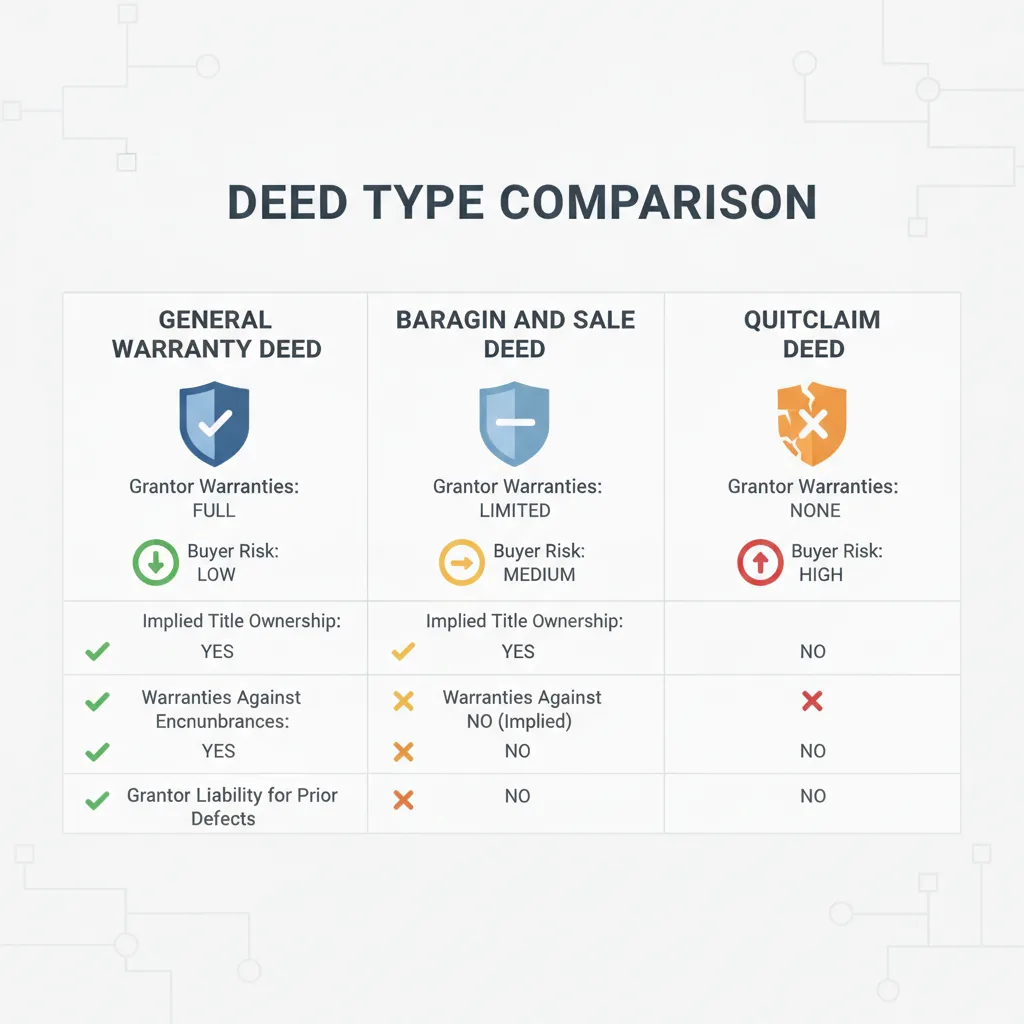
Understanding the bargain and sale deed requires distinguishing it from other common types of deeds, primarily the general warranty deed and the quitclaim deed. Each deed type offers a different level of protection and assurance to the grantee.
The primary differences are:
- General Warranty Deed - This offers the highest level of protection to the grantee. The grantor provides covenants that they hold clear title, that the property is free from encumbrances (except those stated), and that they will defend the title against all claims, even those arising before their ownership.
- Bargain and Sale Deed - This deed sits between a general warranty deed and a quitclaim deed. It implies that the grantor holds title but does not warrant against encumbrances. The grantor only implicitly guarantees that they have done nothing to cloud the title during their ownership.
- Quitclaim Deed - This deed offers the least protection to the grantee. The grantor merely conveys whatever interest they may have in the property, without making any warranties or representations about the title's validity or whether they even own the property. It is often used to clear title defects or transfer property between family members.
The choice of deed type depends heavily on the nature of the transaction, the relationship between the parties, and the grantor's willingness to provide title assurances.
The Concept of a "Bargain Sale"
Beyond its use as a specific type of deed, the term "bargain sale" also refers to a transaction where property is sold for less than its fair market value. This concept is particularly relevant in the context of charitable contributions, where a seller transfers property to a charitable organization at a price below its market value. The difference between the fair market value and the sale price can then be considered a charitable contribution for tax purposes.
Federal regulations define and provide guidance on the tax implications of such transactions:
- Bargain Sale to a Charitable Organization - This regulation outlines how to determine the amount of a charitable contribution when property is sold to a charitable organization at a price lower than its fair market value, effectively treating the transaction as part sale and part gift (26 CFR § 1.1011-2).
While a bargain sale transaction may utilize various types of deeds for conveyance, including a bargain and sale deed, the term in this context primarily describes the financial arrangement of the sale rather than the specific legal instrument used to transfer title.
Legal Implications for Grantor and Grantee
The legal implications of using a bargain and sale deed differ significantly for both the grantor and the grantee. These implications stem directly from the limited nature of the warranties provided.
For the grantor:
- Reduced Liability - The grantor's liability for title defects is significantly limited, typically only extending to issues they themselves created during their ownership.
- Faster Transaction - In situations like tax sales or foreclosures, where the grantor seeks to quickly divest property, this deed facilitates a quicker transfer by avoiding extensive title warranty negotiations.
For the grantee:
- Increased Risk - The grantee assumes a higher risk of encountering undisclosed title defects or encumbrances that existed before the grantor's ownership.
- Importance of Due Diligence - It becomes crucial for the grantee to conduct thorough title searches, surveys, and potentially purchase title insurance to protect against potential future claims against the property.
- Limited Recourse - If a title defect arises, the grantee's recourse against the grantor is often limited compared to what would be available under a general warranty deed.
Therefore, while a bargain and sale deed can facilitate certain types of property transfers, it places a greater burden of investigation and risk mitigation on the buyer.
Frequently Asked Questions
Sources
- 26 CFR § 1.1011-2 - Bargain sale to a charitable organization - Provides tax-related information on bargain sales to charitable organizations.
- 26 USC § 6338 - Certificate of sale; deed of real property - Details the process of issuing certificates of sale and deeds for real property sold under tax collection procedures.
- 26 USC § 6339 - Legal effect of certificate of sale of personal property and deed of real property - Explains the legal effects of certificates of sale and deeds issued for property sold under tax collection procedures.
Not the form you're looking for?
Try our legal document generator to create a custom document
Disclaimer: The templates available on this website are provided for general informational purposes only and do not constitute legal advice. They are not intended to be, and should not be interpreted as, compliant with any specific legal, regulatory, or privacy requirements. These templates are not a replacement for professional legal guidance and should not be relied upon for any particular matter or circumstance. Users are strongly encouraged to seek advice from a qualified attorney licensed in their jurisdiction before using, modifying, or relying on any template.
All templates are provided on an "as is," "with all faults," and "as available" basis. The provider disclaims any and all warranties of any kind, whether express, implied, statutory, or otherwise, including without limitation warranties of merchantability, fitness for a particular purpose, title, or non-infringement.
LegalTemplates.com makes no guarantees or representations regarding the accuracy, completeness, expected outcomes, or reliability of the materials contained in these templates or any materials referenced or linked from them.