Motion for Extension of Time
A Motion for Extension of Time is a formal written request submitted to a court or administrative body seeking an adjustment to a previously established deadline.
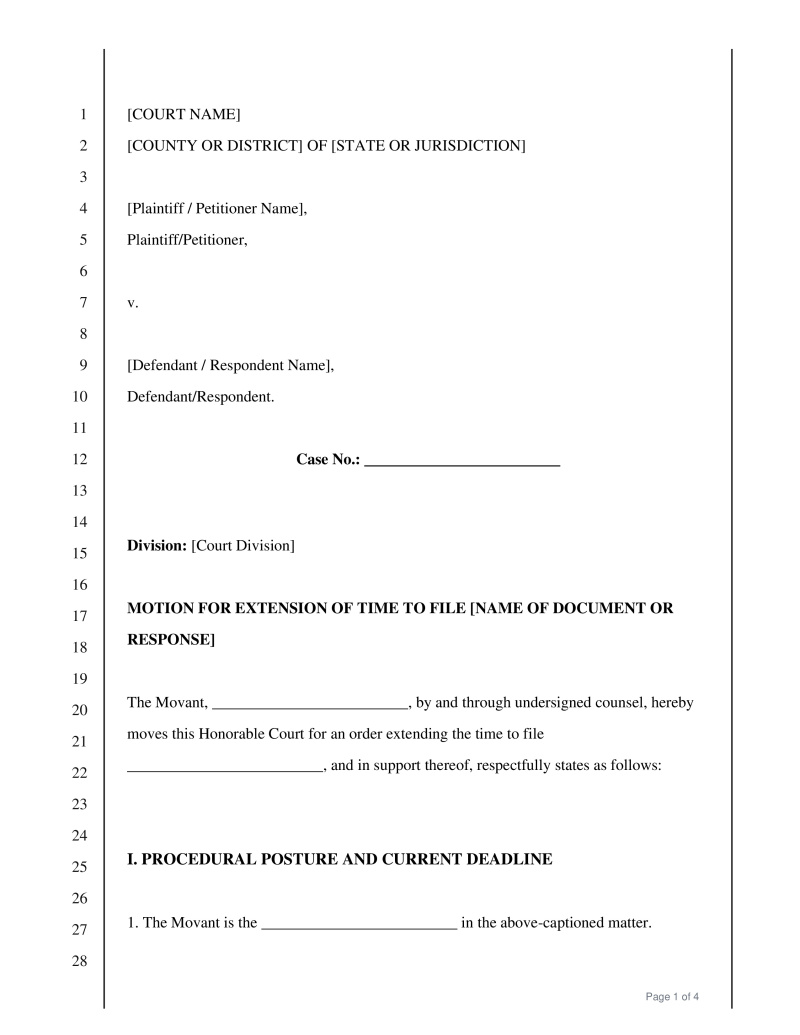
Deadline Type
Select the option that best describes the deadline being extended.
Use the court's terminology if known.
Table of Contents
What is a Motion for Extension of Time?
A Motion for Extension of Time is a formal request filed with a court or administrative body to obtain additional time to meet a deadline, file a document, or perform a required action in a legal proceeding. Parties in civil, criminal, and bankruptcy matters utilize these motions when unforeseen circumstances, procedural complexities, or scheduling conflicts prevent compliance with established timelines. The motion serves as a procedural mechanism to preserve a party's legal rights and avoid default judgments, dismissals, or other sanctions resulting from missed deadlines.
Common Applications and Uses
Litigants file these motions across various stages of litigation and in different court systems. Common scenarios prompting the filing of a Motion for Extension of Time include:
- Appellate Filings - Requesting more time to file a notice of appeal in civil cases to preserve the right to review.
- Brief Submission - Seeking extra days to prepare and submit appellate briefs when standard or streamlined extensions are unavailable or exhausted.
- Bankruptcy Transcripts - Requesting additional time for court reporters to prepare and file official transcripts of bankruptcy proceedings.
- General Pleadings and Discovery - Asking for extensions to respond to complaints, answer interrogatories, or produce documents during the discovery phase of litigation.
Types of Motions for Extension of Time
The specific type of motion filed depends on the stage of the legal proceedings and the nature of the deadline. The following are common types of motions:
- Motion for Extension of Time to File Appeal - A request submitted to a trial court seeking permission to file a notice of appeal after the standard statutory deadline has passed but within a permitted grace period.
- Motion for Extension of Time for Non-Brief Documents - A procedural request, such as Ninth Circuit Form 14, used to extend deadlines for filing documents other than appellate briefs.
- Motion for Extension of Time Regarding Transcript - A motion filed by a court reporter or a party in bankruptcy or district court seeking to extend the deadline for submitting official transcripts.
- Motion to Extend Time in Bankruptcy Proceedings - A motion governed by specific bankruptcy rules used to extend deadlines for filing schedules, statements of financial affairs, or plans of reorganization.
Essential Elements of the Motion
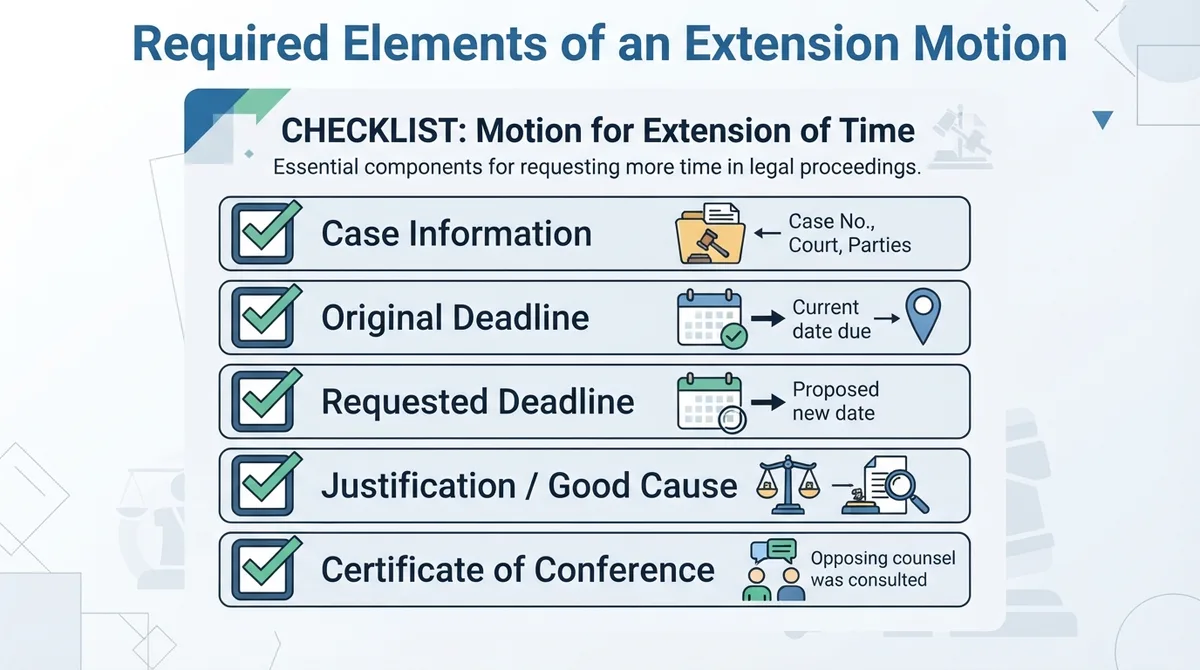
To ensure clarity and compliance with court rules, a Motion for Extension of Time must contain specific factual and legal details. Courts typically require the following elements:
- Case Information - The standard court caption, including the names of the parties, the case number, and the designated judge.
- The Original Deadline - The exact date on which the document or action was originally due under the applicable rules or court order.
- The Requested Deadline - The specific new date requested by the moving party, rather than an indefinite request for more time.
- Justification for Request - A detailed explanation of the reasons the party cannot meet the current deadline, demonstrating diligence and good cause.
- Certificate of Conference - A statement indicating whether the moving party contacted opposing counsel to obtain consent and whether the motion is opposed or unopposed.
Procedural Rules and Judicial Standards
Courts evaluate requests for additional time based on established procedural standards and rules. The legal frameworks governing these decisions include:
- Federal Rules of Appellate Procedure Rule 4 - Governs requests to extend the time to file a notice of appeal, requiring a showing of excusable neglect or good cause (FRAP 4(a)(5)).
- Federal Rules of Civil Procedure Rule 6 - Establishes the general framework for computing and extending time in federal civil matters, distinguishing between requests made before and after the deadline expires (FRCP 6(b)).
- Federal Rules of Bankruptcy Procedure Rule 9006 - Controls the enlargement of time in bankruptcy cases, outlining which deadlines may be extended and the standards for doing so (FRBP 9006(b)).
- Ninth Circuit Court of Appeals Form 14 - Serves as the official standardized format for requesting extensions for documents other than briefs or when streamlined options are unavailable (9th Cir. Form 14).
Factors Considered by Courts
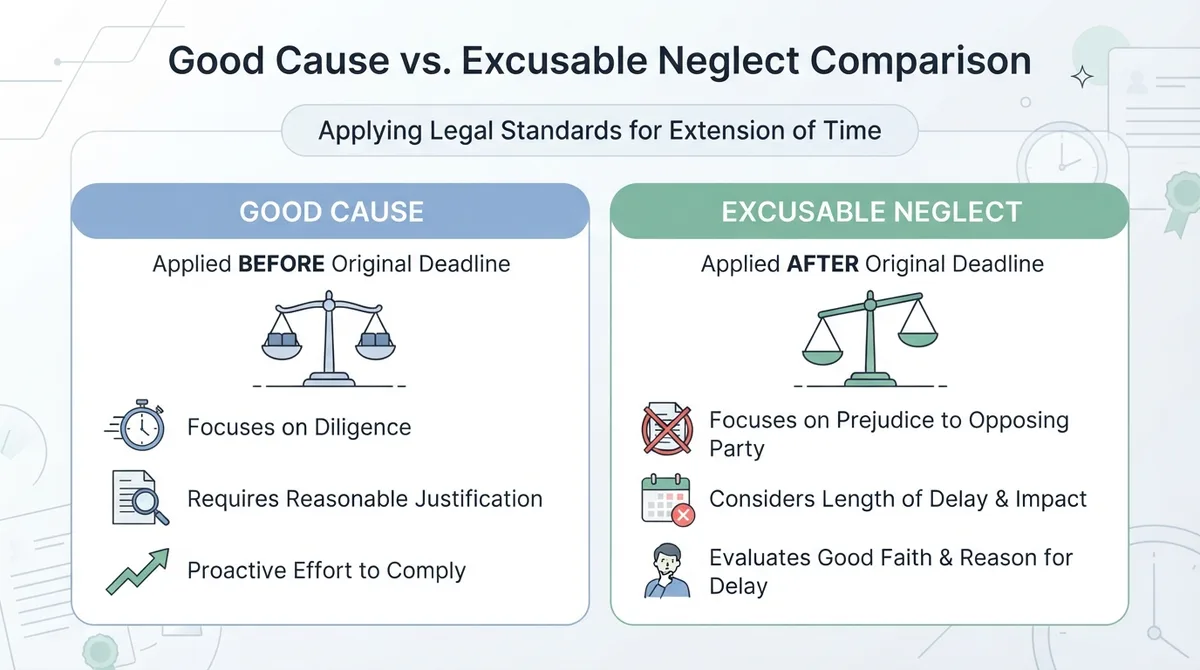
Courts distinguish between requests filed before a deadline passes and those filed after. When a party files a Motion for Extension of Time before the deadline, the court generally applies the lenient good cause standard. When a party files after the deadline has expired, the court applies the much stricter excusable neglect standard.
The determination of excusable neglect involves a multi-factor test:
- Danger of Prejudice - The potential harm or unfair disadvantage the non-moving party might suffer if the court grants the extension.
- Length of Delay - The duration of the delay and its potential impact on the overall judicial administration and court schedule.
- Reason for Delay - The specific cause of the delay, including whether the circumstances were within the reasonable control of the moving party.
- Good Faith of Movant - Whether the moving party acted honestly, diligently, and without intent to disrupt or delay the proceedings.
Frequently Asked Questions
Sources
- Form 14. Motion for Extension of Time - Provides Form 14 for requesting an extension of time to file documents other than briefs or to file a brief when a streamlined extension is unavailable.
- Motion for Extension of Time to file an Appeal - Civil Case - Provides a form for requesting an extension of time to file an appeal in civil cases.
- Motion for an Extension of Time to File a Notice of Appeal - Provides a form for requesting an extension of time to file a notice of appeal.
- Motion for Extension of Time Regarding Transcript - Provides instructions for filing a motion for an extension of time regarding a transcript in bankruptcy cases.
- Motion to Extend Time - Provides guidelines for filing a motion to extend time in bankruptcy cases, including filing requirements and applicable rules.
Not the form you're looking for?
Try our legal document generator to create a custom document
Disclaimer: The templates available on this website are provided for general informational purposes only and do not constitute legal advice. They are not intended to be, and should not be interpreted as, compliant with any specific legal, regulatory, or privacy requirements. These templates are not a replacement for professional legal guidance and should not be relied upon for any particular matter or circumstance. Users are strongly encouraged to seek advice from a qualified attorney licensed in their jurisdiction before using, modifying, or relying on any template.
All templates are provided on an "as is," "with all faults," and "as available" basis. The provider disclaims any and all warranties of any kind, whether express, implied, statutory, or otherwise, including without limitation warranties of merchantability, fitness for a particular purpose, title, or non-infringement.
LegalTemplates.com makes no guarantees or representations regarding the accuracy, completeness, expected outcomes, or reliability of the materials contained in these templates or any materials referenced or linked from them.