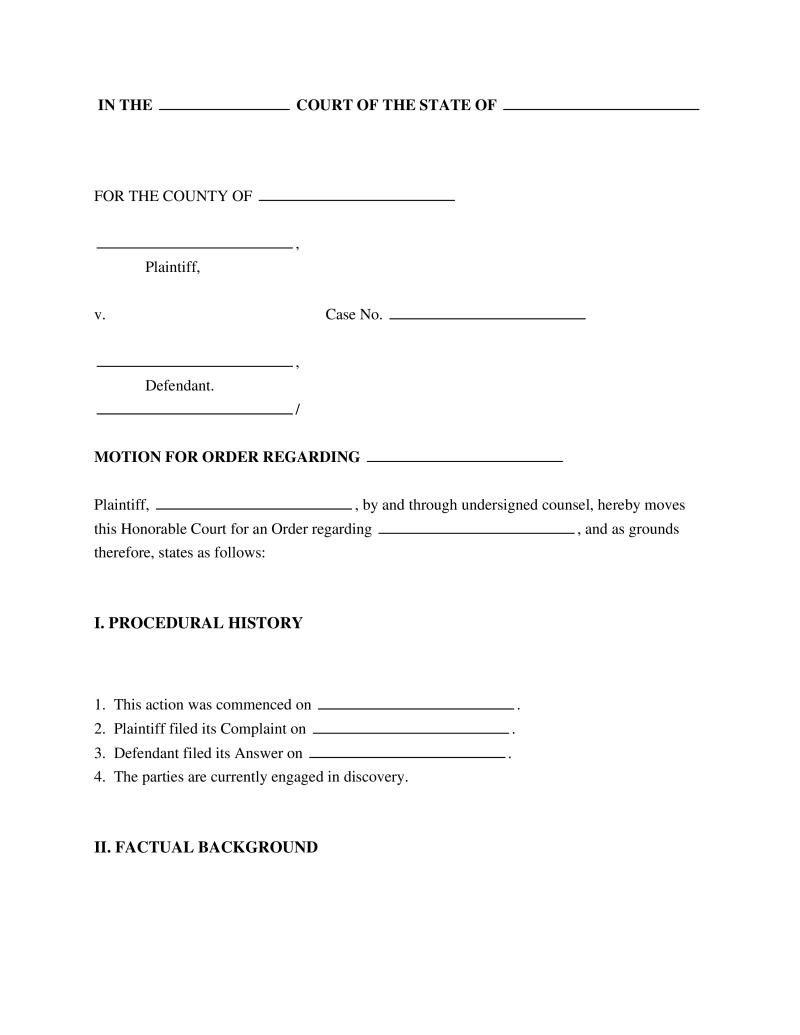
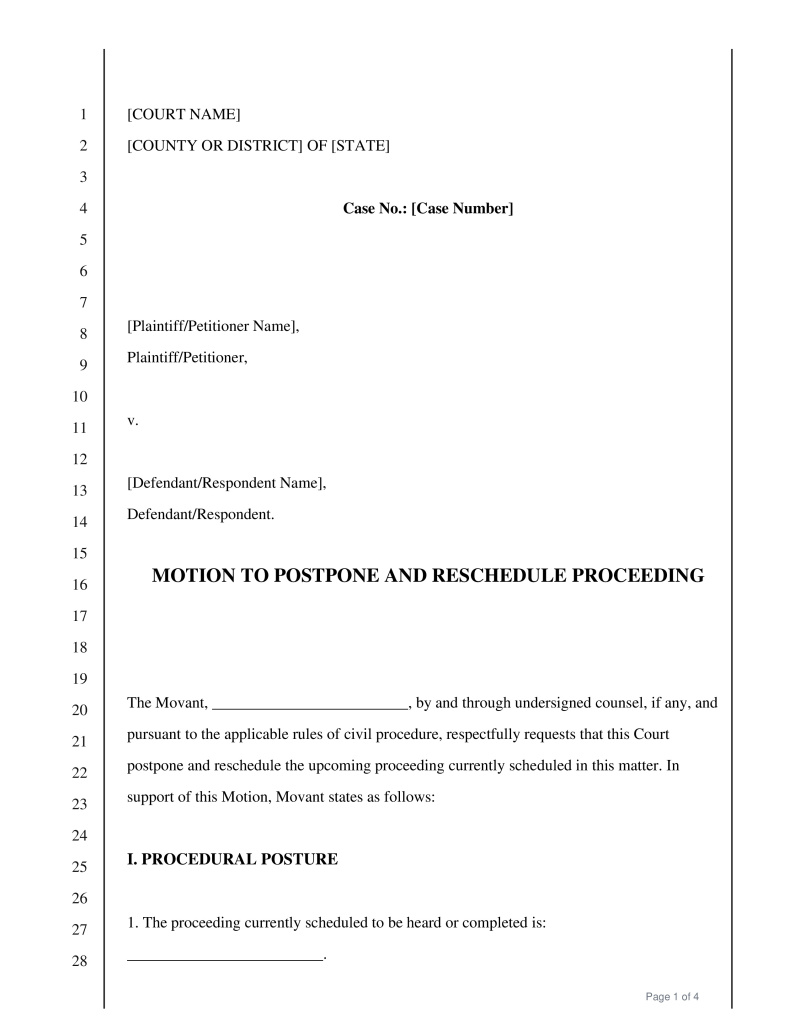
Motion
Create Motion
Motion
A Motion is a formal request or application made to a court or tribunal seeking a specific order, ruling, or action on a particular matter.
Answer the question(s) below to create your Motion
Case Posture
Most motions are filed in an existing case. If no case number has been assigned yet, choose new case filing.
Enter the number exactly as it appears on prior court papers.
Table of Contents
What is a Motion?
In legal proceedings, a motion is a formal request made to a court or judge for an order or ruling on a specific point. It serves as a primary mechanism for parties to seek judicial intervention or resolution of issues that arise throughout a lawsuit, from its inception through to post-judgment enforcement. Motions are used by all parties involved in litigation, including plaintiffs, defendants, and sometimes third parties, to advance their case, challenge an opponent's position, or obtain necessary procedural directives.
Legal Framework
Motions are integral to the adversarial system, providing structured opportunities for parties to present arguments and evidence to the court on particular matters. Their purpose can range from purely procedural requests, such as extending deadlines, to substantive challenges that could significantly impact the outcome of a case, like seeking summary judgment. The proper use of motions ensures that legal disputes are managed efficiently and that all parties have a fair chance to present their positions before the court makes a decision.
The procedural framework for motions is primarily governed by rules of civil or criminal procedure, which dictate their form, content, timing, and service requirements. Adherence to these rules is critical, as a failure to comply can lead to the motion being denied or even dismissed. Courts rely on motions to clarify factual disputes, interpret legal standards, and make preliminary or final determinations without the need for a full trial on every issue.
Required Elements of a Valid Motion
For a motion to be considered valid and properly before the court, it must typically include several essential components. These elements ensure that the court and all parties understand the nature of the request and the basis for it:
- Title and Caption - Clearly identifies the court, the names of the parties involved, and the case number.
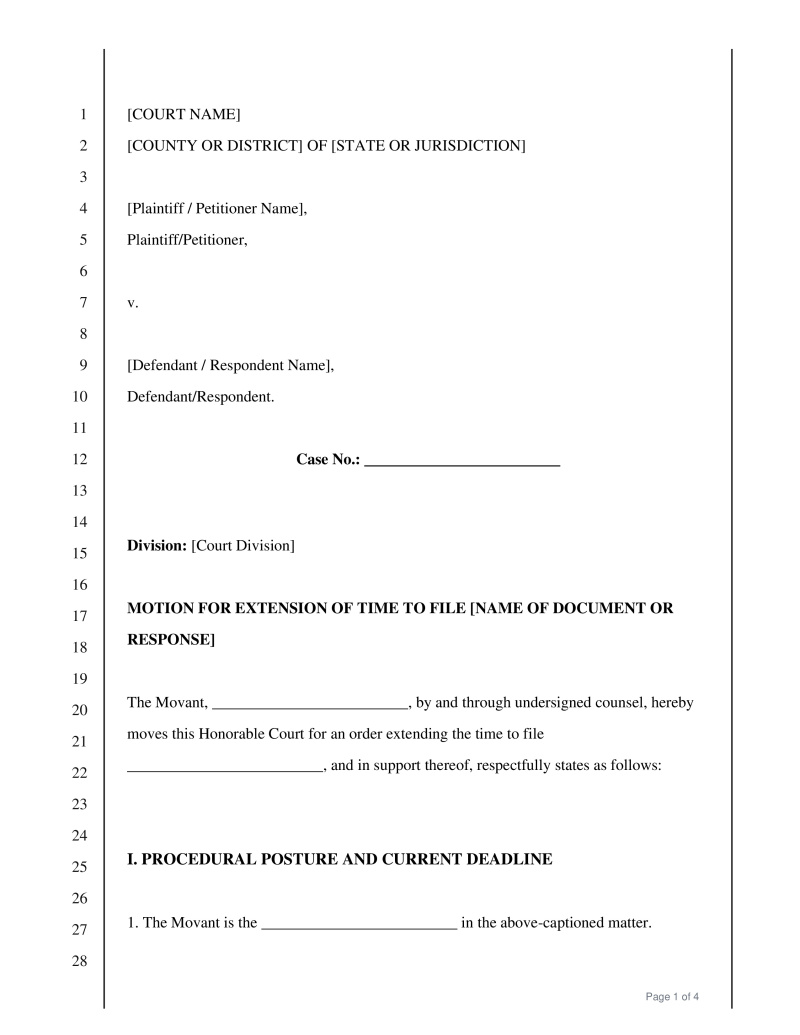
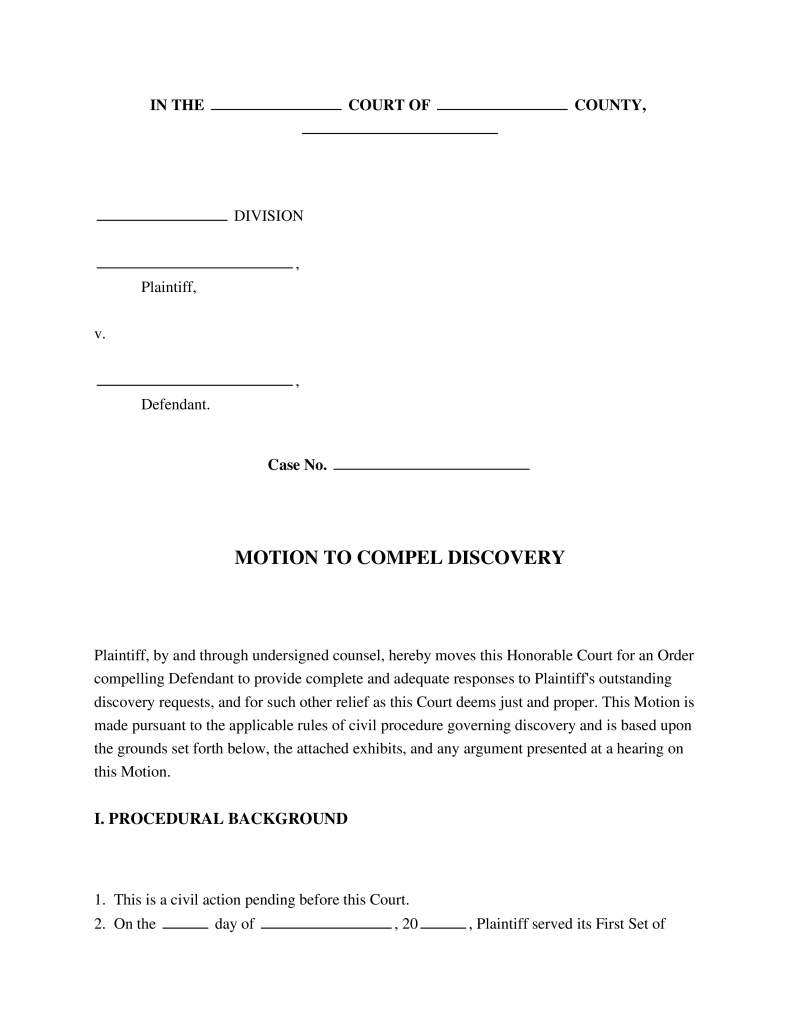
- Designation of the Motion - A clear and concise title stating the type of motion being filed (e.g., "Motion for Summary Judgment," "Motion to Compel Discovery").
- Statement of Relief Sought - A precise articulation of the specific order or action the movant is asking the court to grant.
- Factual Basis - A concise statement of the relevant facts that support the motion, often presented in numbered paragraphs.
- Legal Authority - Citations to statutes, rules, case law, or other legal principles that justify the requested relief.
- Memorandum of Points and Authorities - A detailed legal argument explaining why the movant is entitled to the requested relief, applying the law to the facts.
- Proposed Order - A draft order for the judge to sign if the motion is granted, outlining the specific relief to be provided.
- Signature - The signature of the attorney or the unrepresented party, affirming that the motion is made in good faith and is well-grounded in fact and law.
- Certificate of Service - A statement certifying that a copy of the motion and all supporting documents has been properly served on all other parties in the case.
How to File a Motion
The process of filing a motion involves several distinct stages, each requiring careful attention to detail and adherence to procedural rules.
- Drafting the Motion and Supporting Documents - This initial step involves meticulously preparing the motion itself, including the title, statement of facts, legal arguments, and the specific relief requested. It is crucial to cite relevant statutes, court rules, and case precedents. Concurrently, all necessary supporting documents, such as affidavits, exhibits, declarations, or discovery responses, must be gathered and organized for attachment, ensuring they are properly authenticated and referenced within the motion.
- Reviewing Local and Court-Specific Rules - Before finalizing, it is imperative to consult the specific local rules of the court where the case is pending, as well as any individual judge's standing orders. These rules often dictate precise formatting requirements, page limits, font sizes, and electronic filing protocols that may differ from general federal or state rules. Non-compliance with these specific rules can lead to rejection or denial of the motion.
- Filing with the Court - Once the motion and all supporting documents are prepared, they must be officially filed with the court clerk. This can be done electronically through an e-filing system, if available, or by submitting physical copies to the clerk's office. A filing fee may be required, and the clerk will assign a file-stamped copy or provide electronic confirmation of the filing.
- Serving Opposing Parties - After filing, a copy of the motion and all attached exhibits and supporting documents must be formally served on all other parties to the lawsuit. Service must comply with the applicable rules of civil procedure, which specify acceptable methods such as mail, personal delivery, or electronic service. Proof of service, typically in the form of a Certificate of Service, must then be filed with the court to confirm that all parties have received notice.
- Scheduling and Hearing - Depending on the nature of the motion and the court's practices, a hearing may be scheduled. The movant might need to contact the court clerk or the judge's chambers to obtain a hearing date or to confirm if the motion will be decided on the papers without oral argument. Parties then prepare for the hearing, presenting oral arguments to the judge, who will ultimately issue an order granting, denying, or modifying the requested relief.
Rights and Obligations of Parties Involved
Both the party filing the motion (the "movant") and the party responding to it have specific rights and obligations that govern their conduct and participation in the motion practice. These are designed to ensure fairness, efficiency, and adherence to legal principles throughout the litigation process.
The movant has the right to seek judicial intervention on any matter relevant to the case, provided the request is made in good faith and supported by law and fact. Their primary obligation is to present a clear, concise, and legally sound argument, supported by accurate factual assertions and proper legal authority. They must also ensure that the motion is properly served on all other parties and that all procedural requirements, such as filing deadlines and formatting rules, are strictly observed.
The responding party has the right to oppose a motion, presenting counter-arguments, alternative interpretations of facts, or differing legal analyses. Their obligation is to file a timely response that addresses the movant's arguments and provides the court with reasons to deny or modify the requested relief. Like the movant, the responding party must ensure their opposition is well-grounded in fact and law, properly served, and compliant with all procedural rules. Both parties are generally obligated to engage in good faith efforts to resolve disputes without court intervention, where appropriate, and to act with candor toward the tribunal.
Governing Laws and Rules
The legal framework for motions is primarily established through procedural rules at both the federal and state levels, ensuring uniformity and fairness in judicial proceedings. These rules dictate everything from the form of a motion to the timing of responses and the conduct of hearings.
- Federal Rules of Civil Procedure (FRCP) - Governs civil actions in U.S. district courts, providing comprehensive rules for motion practice, including requirements for written motions, service, and timing (e.g., Fed. R. Civ. P. 7, 11, 12, 56).
- Federal Rules of Criminal Procedure (FRCrP) - Sets forth the procedures for criminal proceedings in federal courts, outlining various motions pertinent to criminal cases, such as motions to suppress evidence or for a new trial (e.g., Fed. R. Crim. P. 12, 33).
- State Rules of Civil Procedure - Each U.S. state has its own set of civil procedure rules that largely mirror the FRCP but may include state-specific variations regarding motion practice. These rules govern civil cases within state court systems (e.g., California Rules of Court, Rule 3.1110 et seq.; New York Civil Practice Law and Rules, Article 22).
- State Rules of Criminal Procedure - Similar to civil rules, states also have specific rules governing criminal motions within their respective jurisdictions, addressing issues unique to criminal litigation (e.g., Texas Code of Criminal Procedure, Article 28.01 et seq.; Florida Rules of Criminal Procedure, Rule 3.190).
- Rule 11 of the Federal Rules of Civil Procedure (FRCP 11) - Imposes an obligation on attorneys and unrepresented parties to certify that any pleading, written motion, or other paper presented to the court is not being presented for any improper purpose, is warranted by existing law, and has factual support. Violations can lead to sanctions, including monetary penalties, designed to deter frivolous filings and ensure the integrity of the judicial process.
- State Sanction Provisions - Many states have analogous rules to FRCP 11, providing for sanctions against parties or attorneys who file frivolous motions or engage in other abusive litigation tactics. These state-specific rules aim to prevent misuse of the court system and ensure that motions are filed in good faith.
Non-compliance with these procedural rules can result in significant penalties. A court may deny a motion that fails to meet formatting or timing requirements, or it may strike a pleading that is improperly filed. More seriously, filing a motion without a reasonable basis in law or fact, or for an improper purpose (such as harassment or delay), can lead to judicial sanctions. These sanctions can range from an order to pay the opposing party's attorney's fees incurred in responding to the frivolous motion to more severe disciplinary actions against the attorney.
Frequently Asked Questions
A motion is a request for a court order or ruling on a specific issue, while a pleading (like a complaint or answer) is a formal document that sets forth a party's claims or defenses in a lawsuit. Pleadings define the scope of the dispute, whereas motions address particular aspects or requests within that dispute.
While most motions must be submitted in writing, some courts allow oral motions during a hearing or trial, particularly for minor procedural issues or when the need for the motion arises suddenly. However, major substantive motions almost always require a written submission to ensure proper record-keeping and due process.
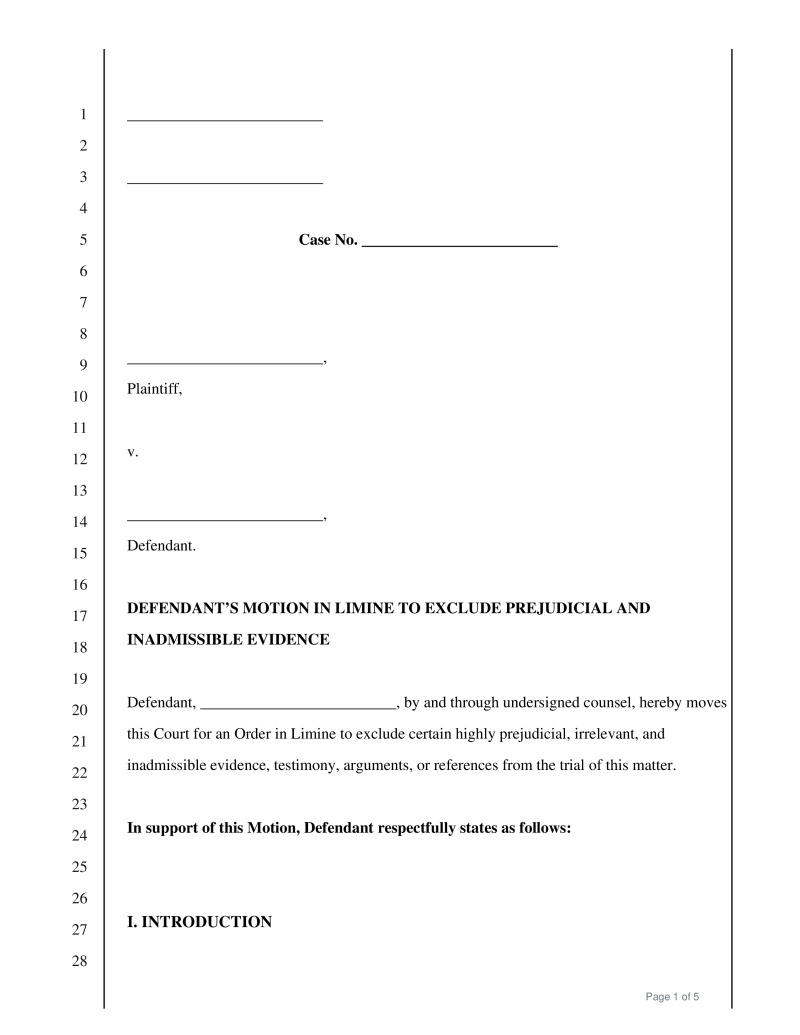
A motion in limine is a pretrial motion asking the court to exclude certain evidence from being presented to the jury during trial or to prevent certain information from being mentioned in the jury's presence. It aims to prevent highly prejudicial information from tainting the jury even before it is formally offered as evidence.
The time it takes for a court to rule on a motion can vary significantly depending on the court's caseload, the complexity of the motion, and whether a hearing is required. Some simple procedural motions might be ruled on within days, while complex substantive motions can take weeks or even months.
If a motion is denied, the requested relief is not granted, and the case typically proceeds as if the motion had never been filed regarding that specific issue. In some instances, a party may be able to refile a modified motion if new facts emerge or if the original denial was based on a procedural defect that can be corrected.
No, a motion is not an appeal. A motion is a request made to the court currently handling the case, asking for an order within that ongoing proceeding. An appeal, conversely, is a request made to a higher court to review a decision made by a lower court after a final judgment has been entered.
A motion for summary judgment asks the court to rule in favor of one party without a full trial because there are no genuine disputes of material fact, and the moving party is entitled to judgment as a matter of law. If granted, it effectively ends the case or a significant portion of it.
Related Documents
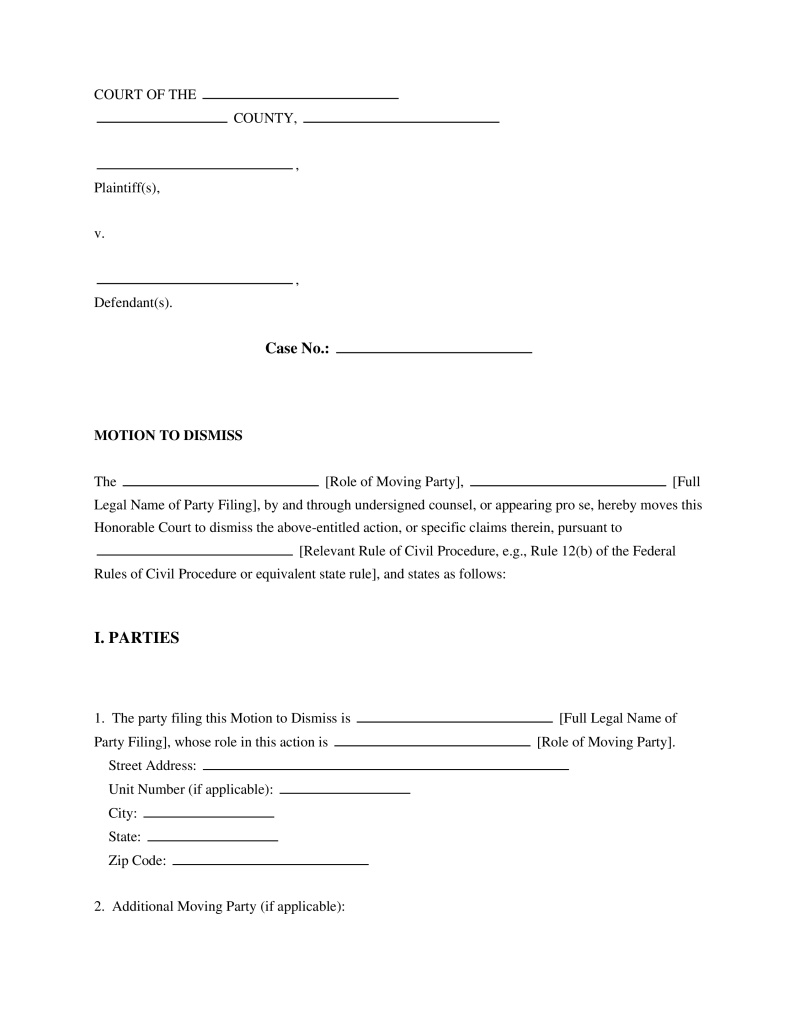
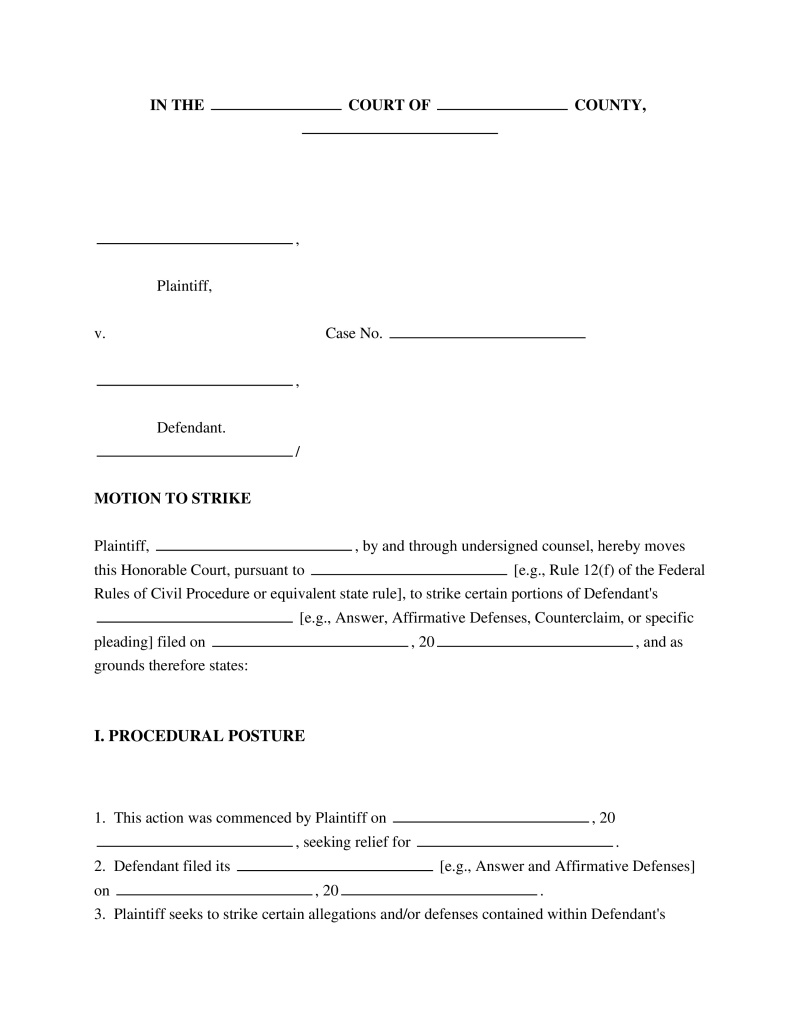
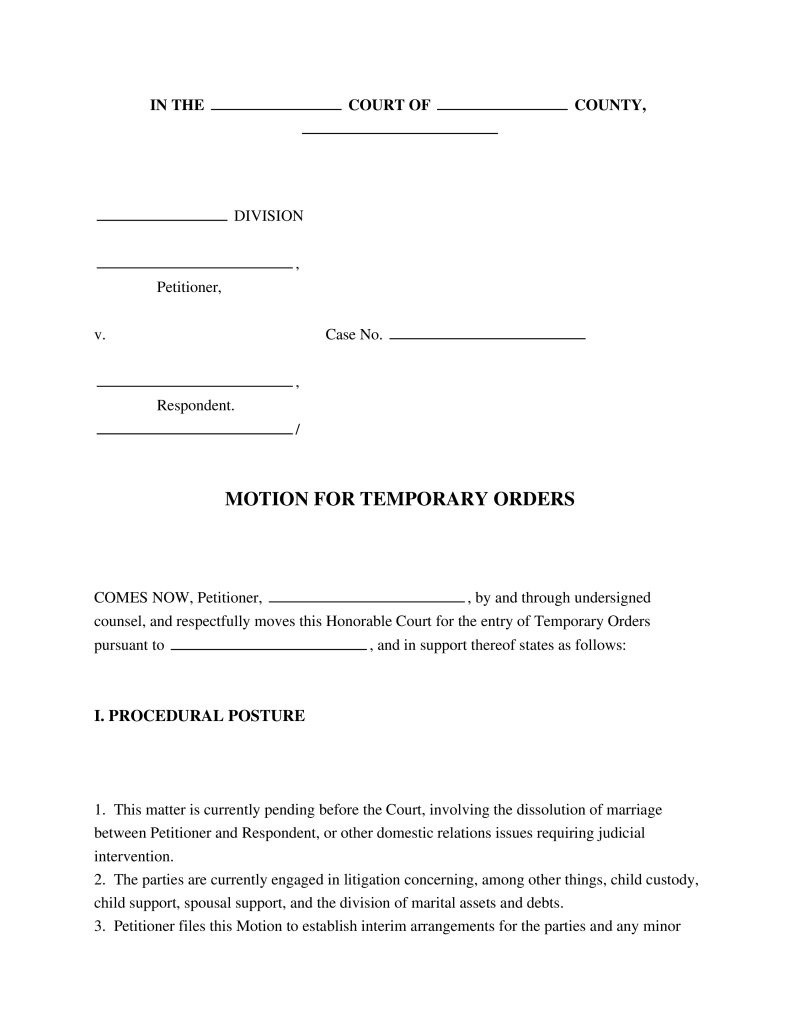
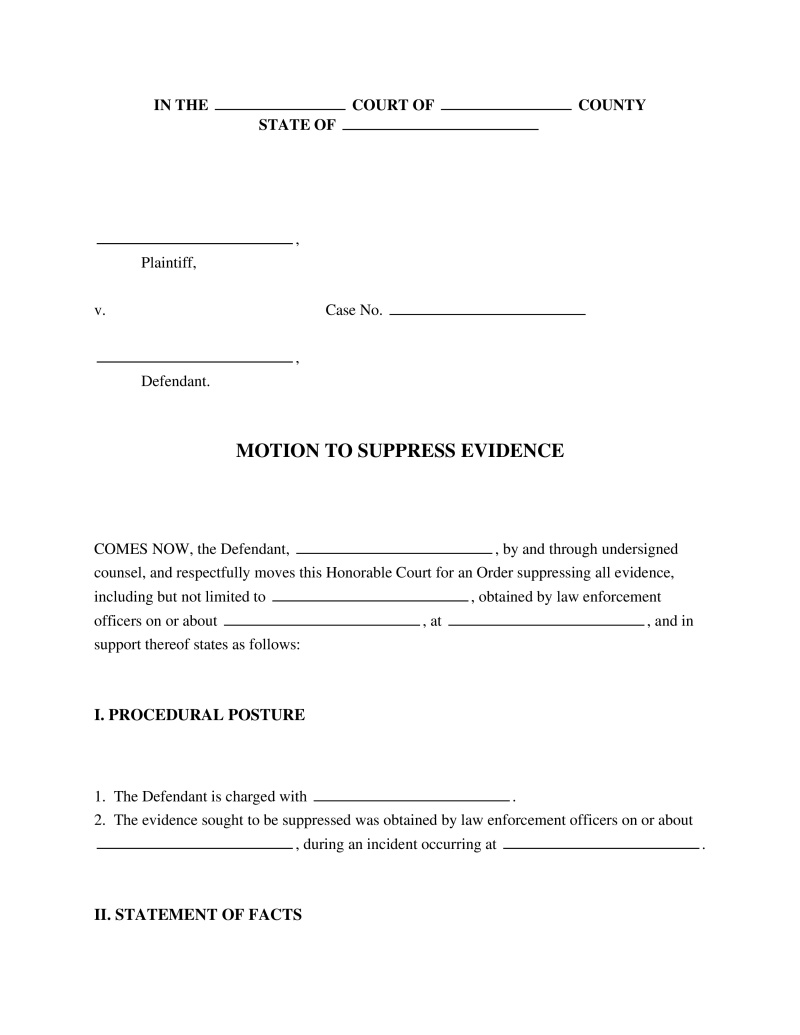
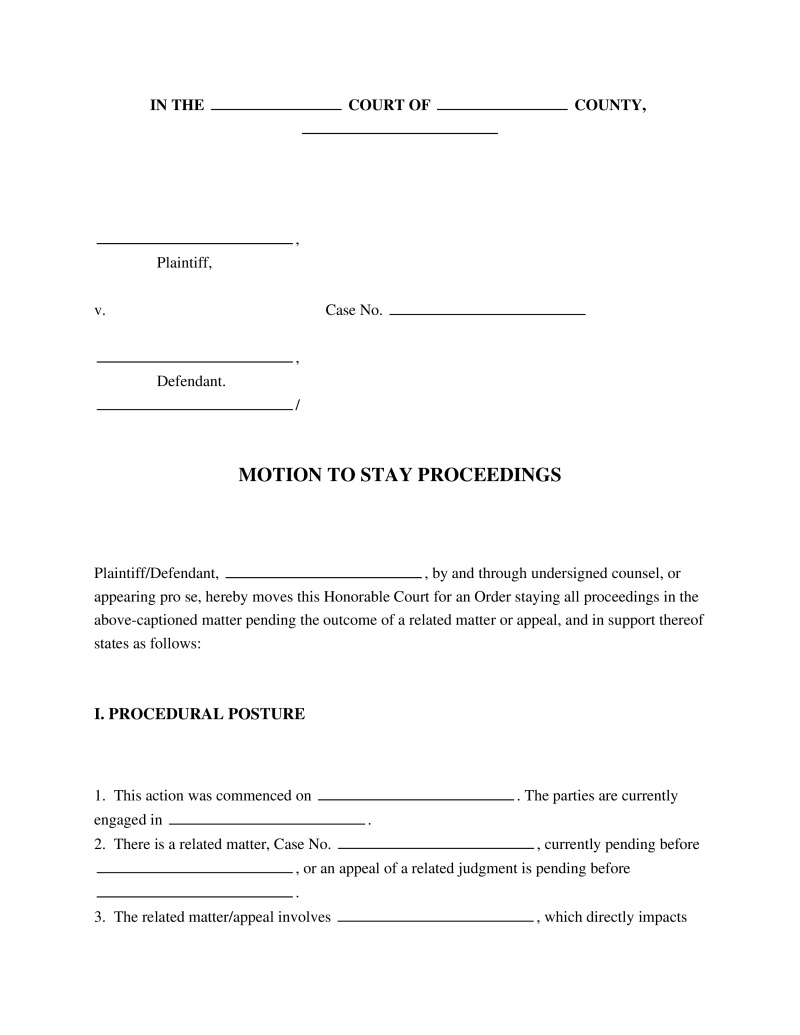
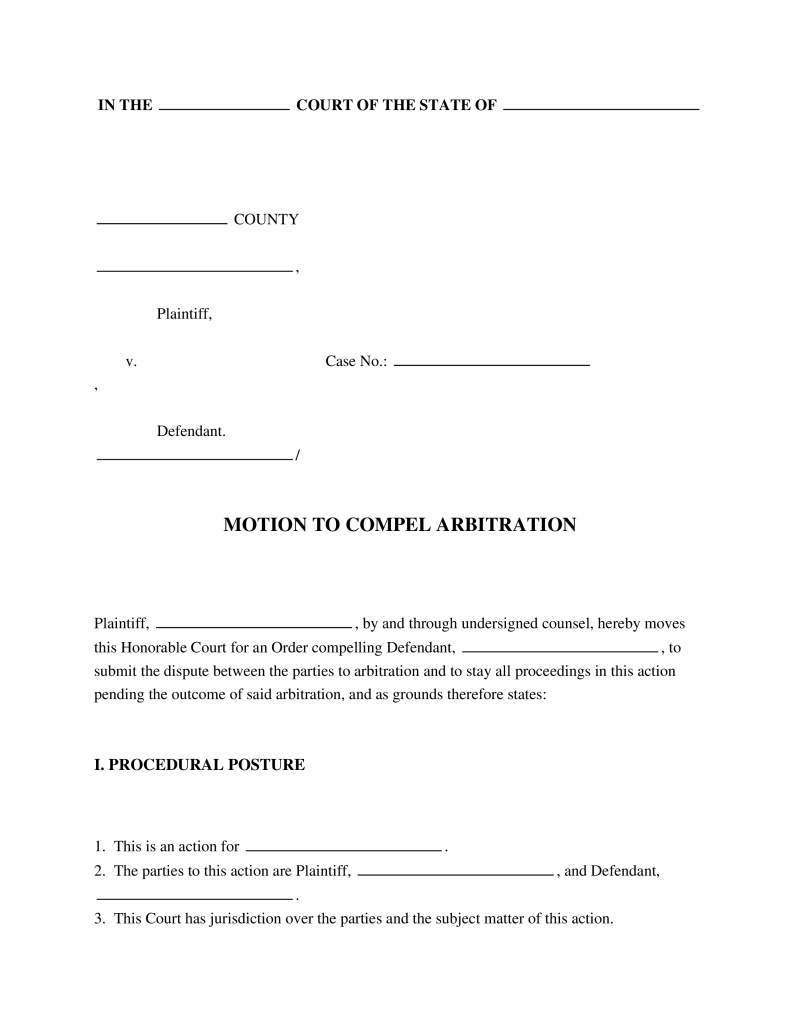
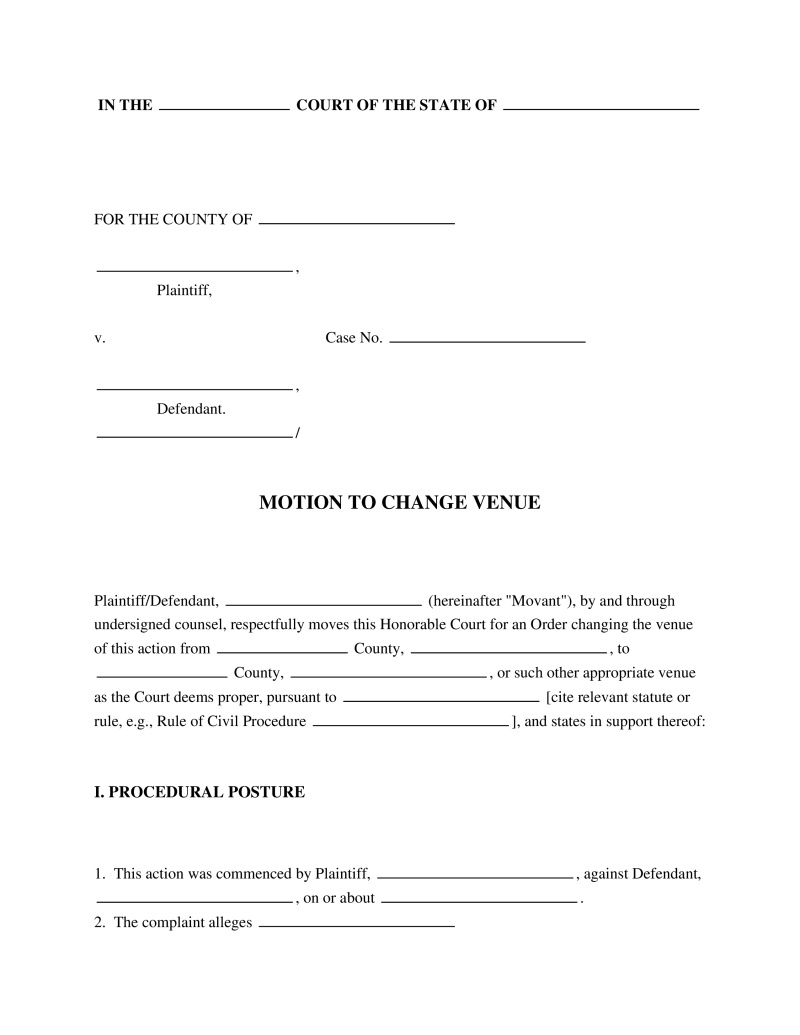
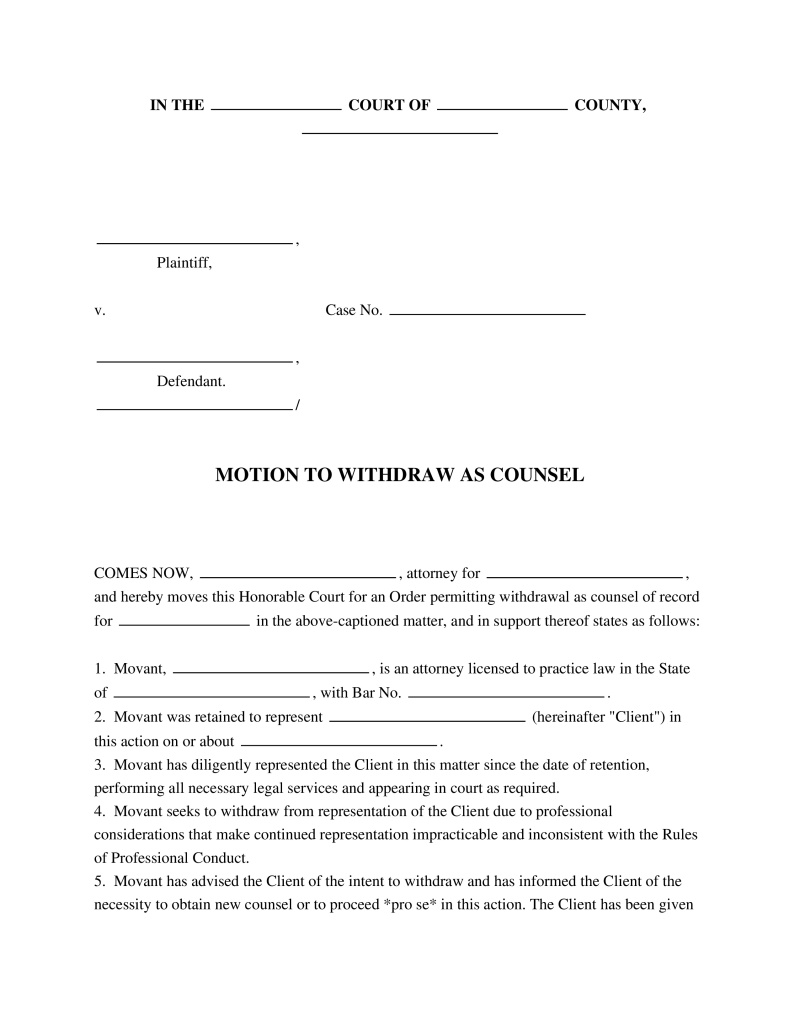
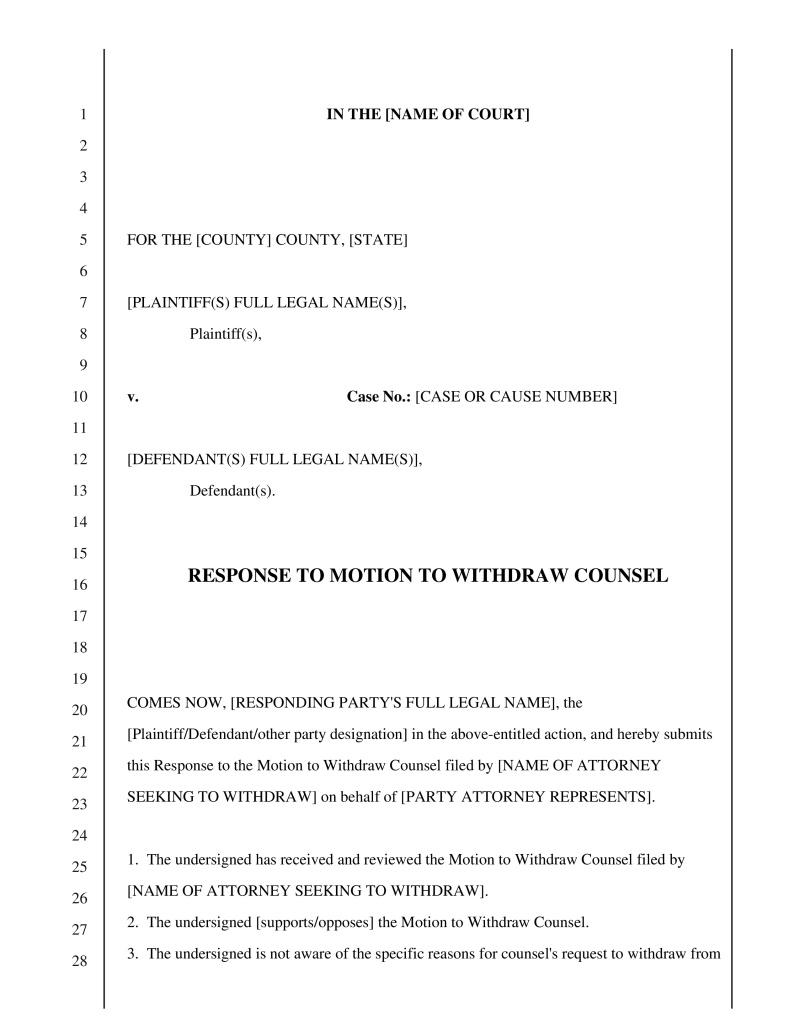
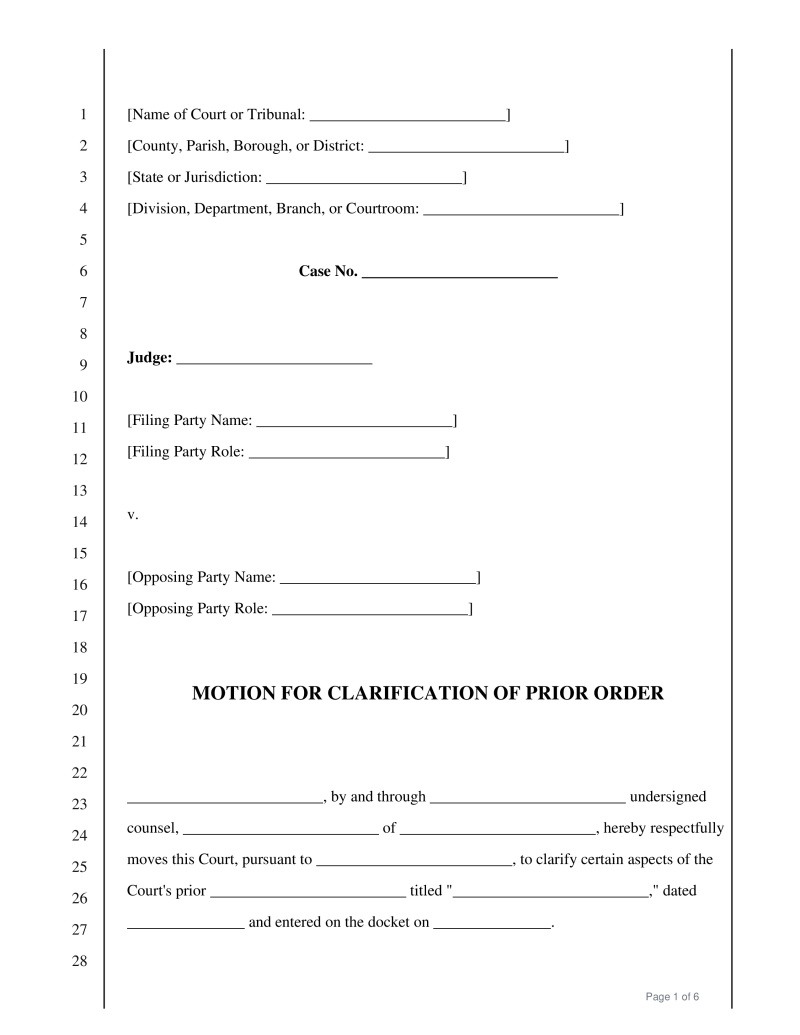
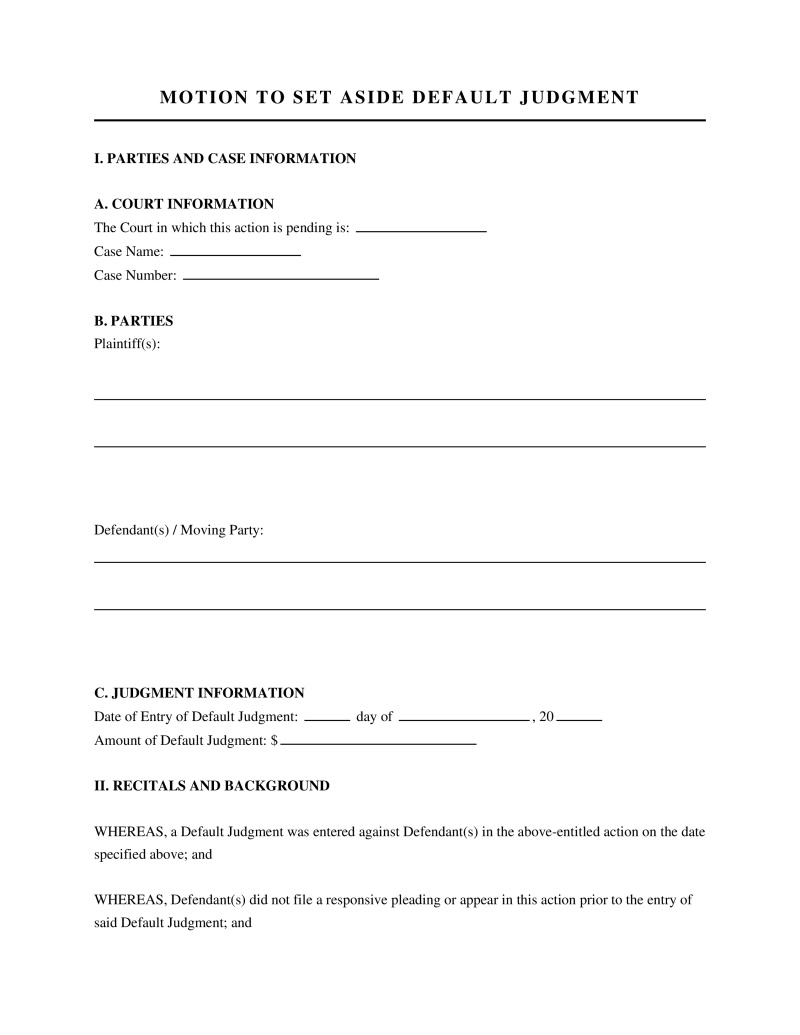
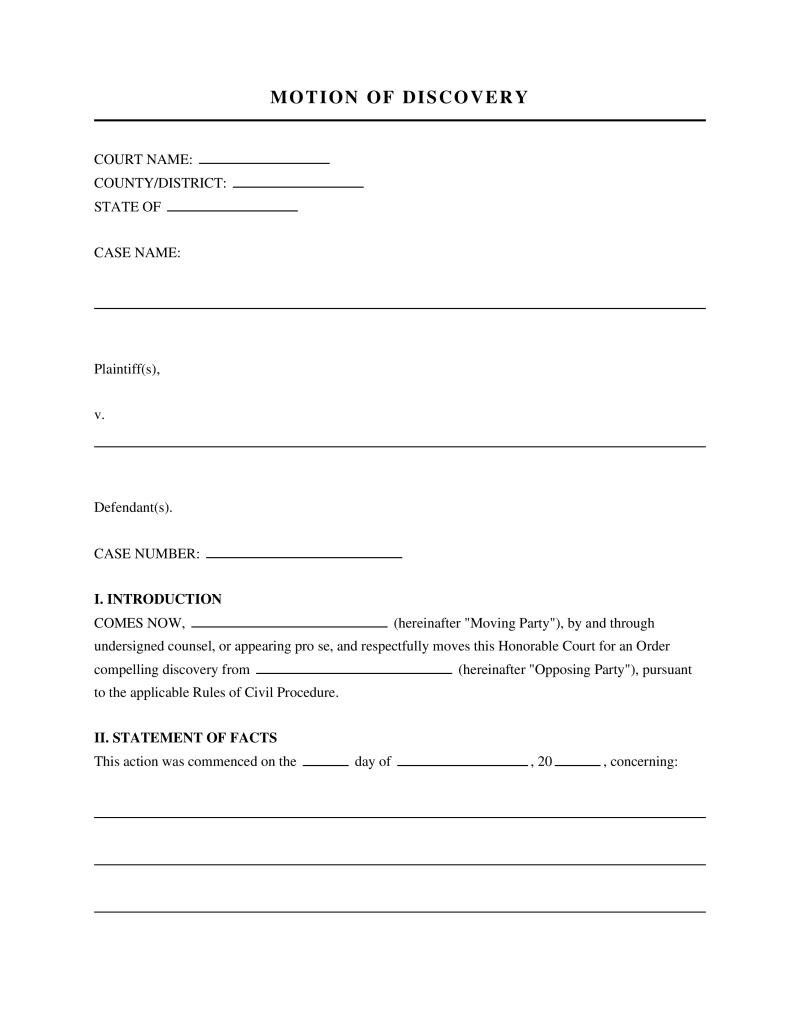
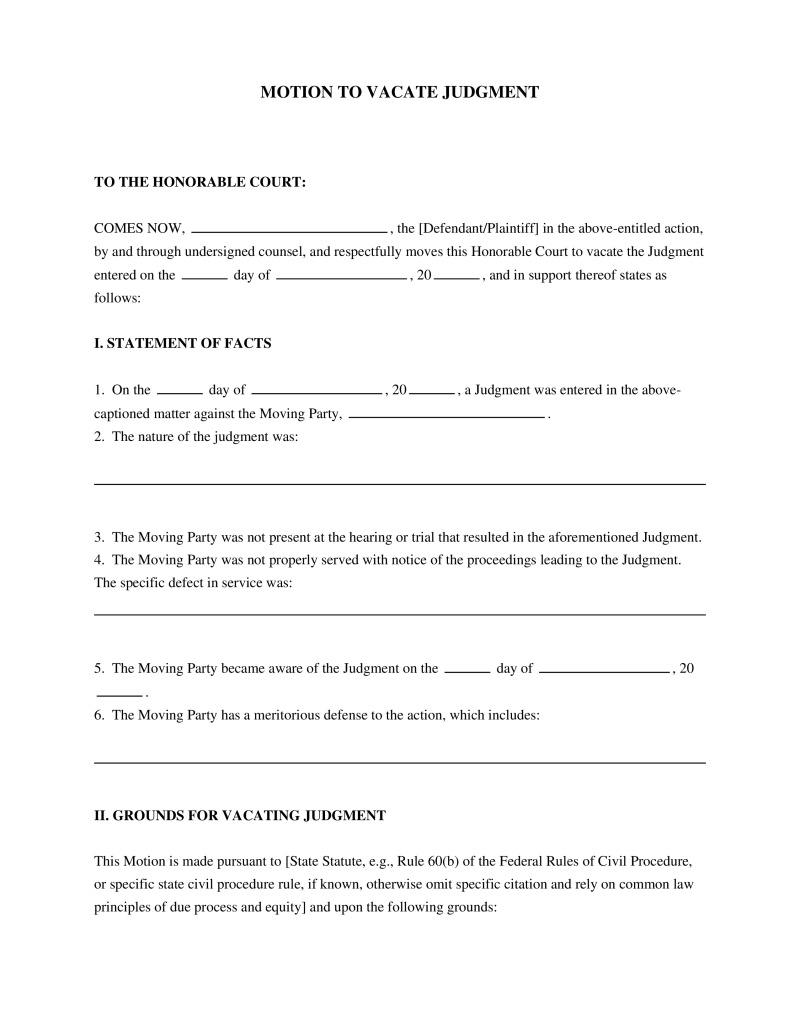
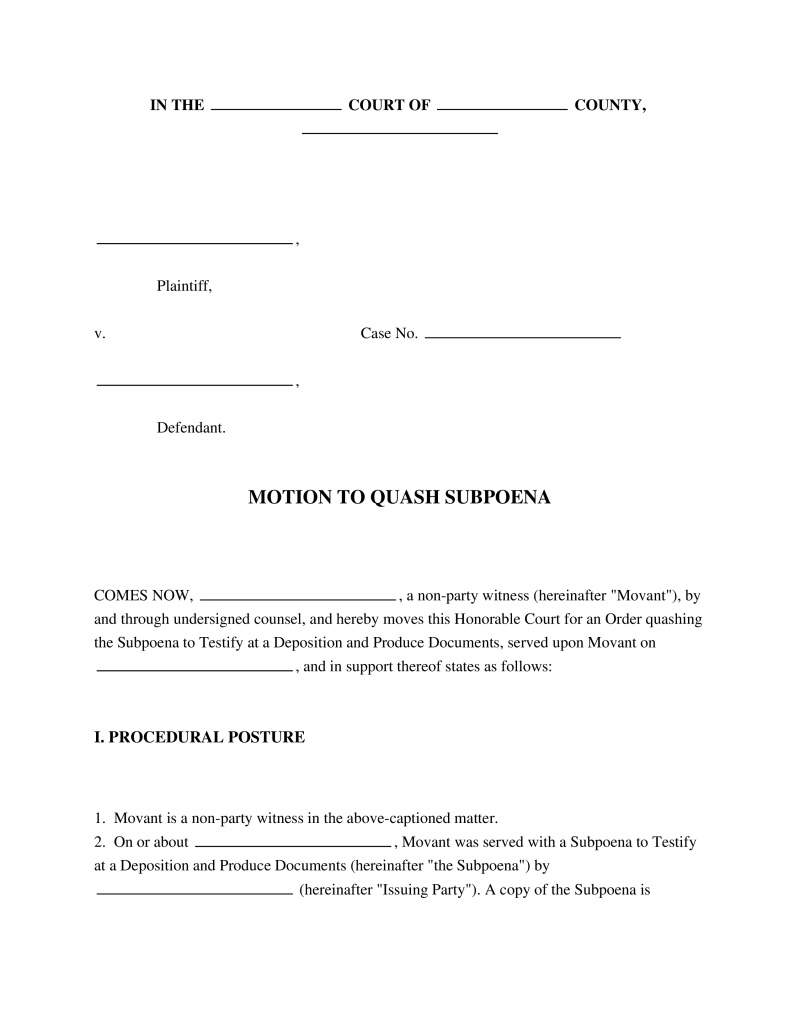
Forms commonly used with Motion.
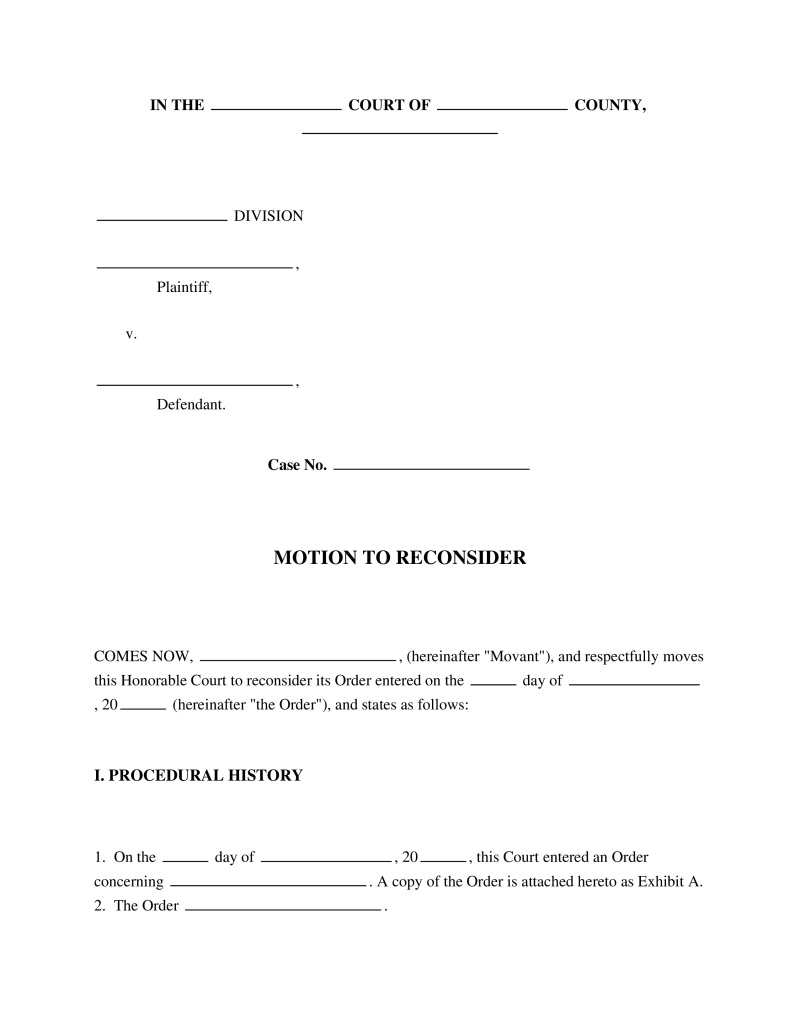
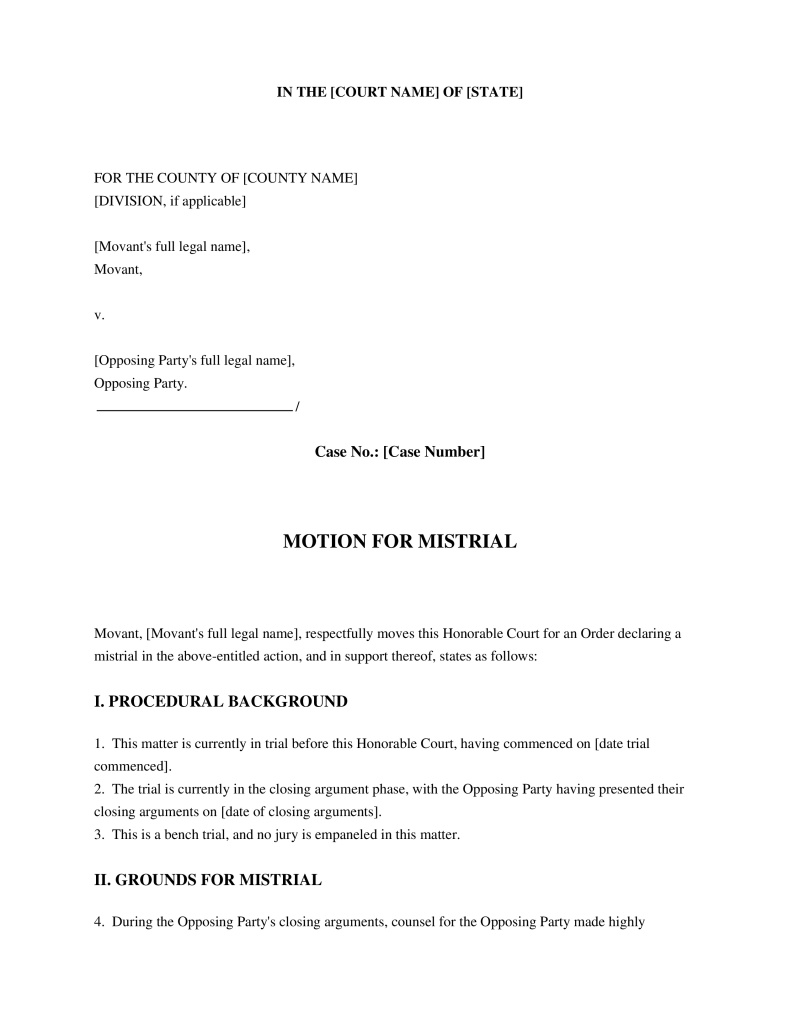
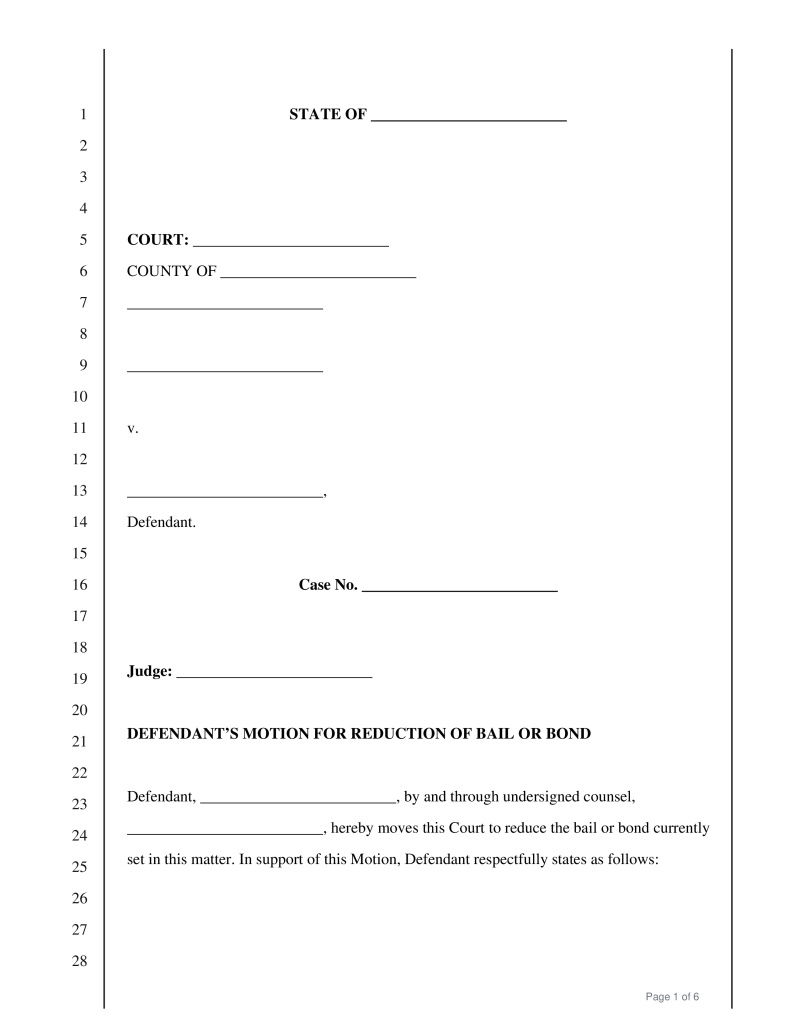
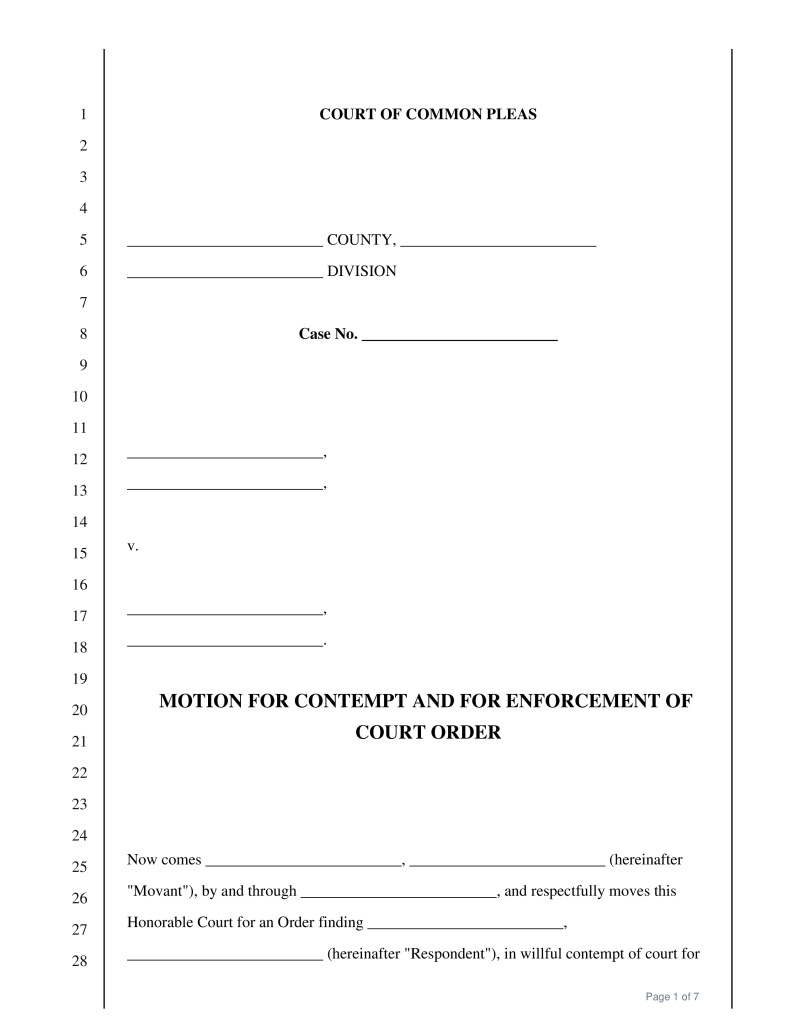
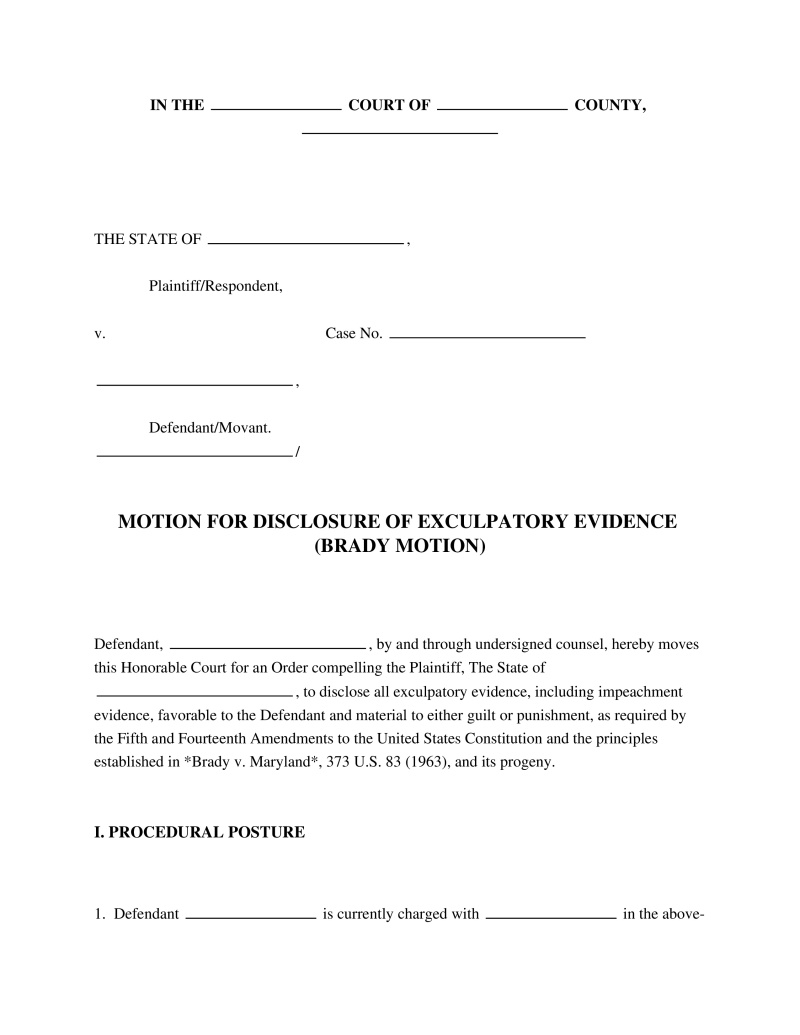
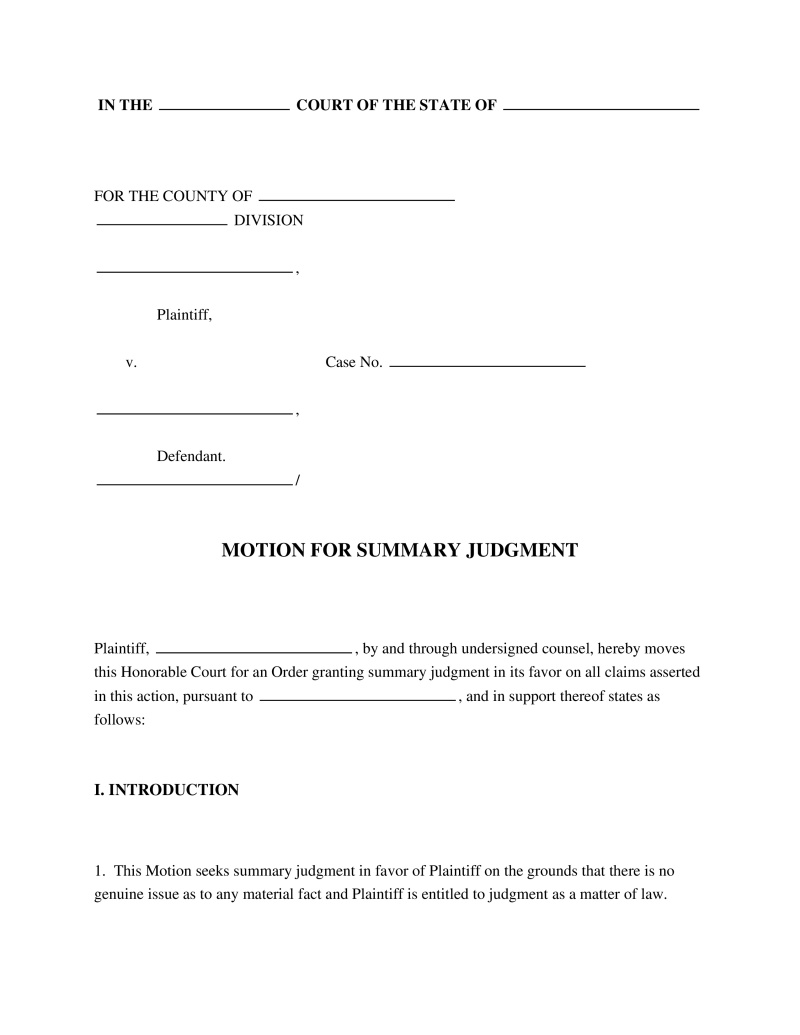
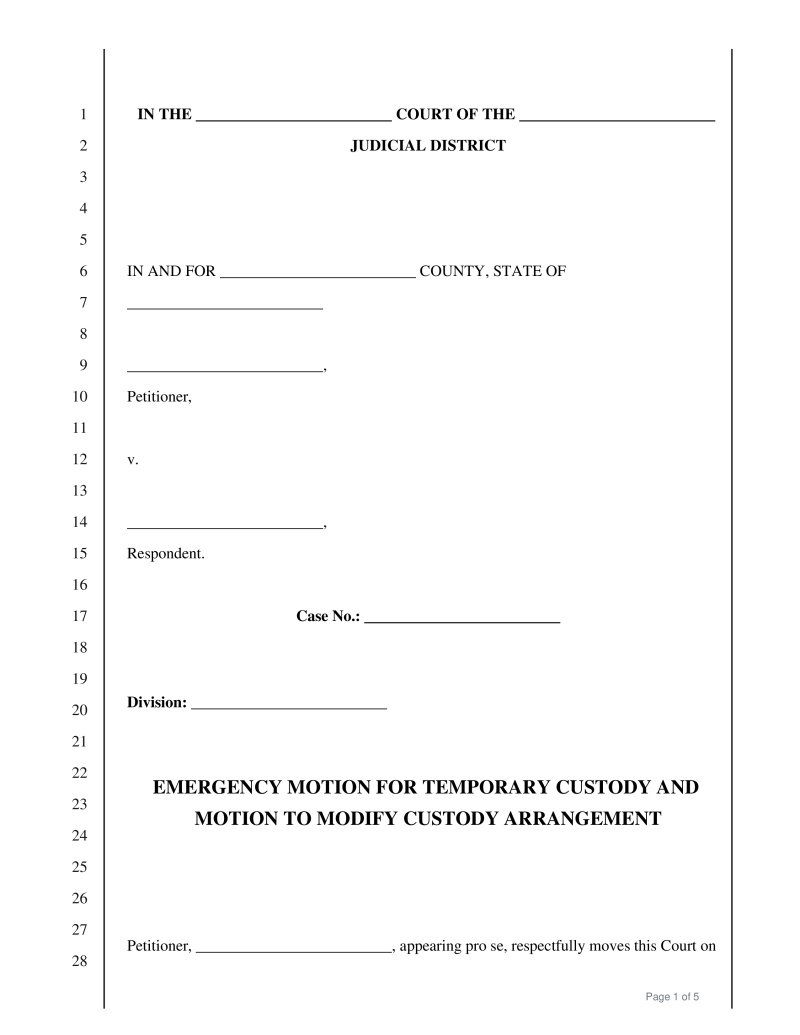
Not the form you're looking for?
Try our legal document generator to create a custom document
Disclaimer: The templates available on this website are provided for general informational purposes only and do not constitute legal advice. They are not intended to be, and should not be interpreted as, compliant with any specific legal, regulatory, or privacy requirements. These templates are not a replacement for professional legal guidance and should not be relied upon for any particular matter or circumstance. Users are strongly encouraged to seek advice from a qualified attorney licensed in their jurisdiction before using, modifying, or relying on any template.
All templates are provided on an "as is," "with all faults," and "as available" basis. The provider disclaims any and all warranties of any kind, whether express, implied, statutory, or otherwise, including without limitation warranties of merchantability, fitness for a particular purpose, title, or non-infringement.
LegalTemplates.com makes no guarantees or representations regarding the accuracy, completeness, expected outcomes, or reliability of the materials contained in these templates or any materials referenced or linked from them.