Emergency Motion for Custody
An Emergency Motion for Custody is a formal legal petition filed with a family court requesting immediate, temporary intervention to protect a child from imminent harm or disruption.
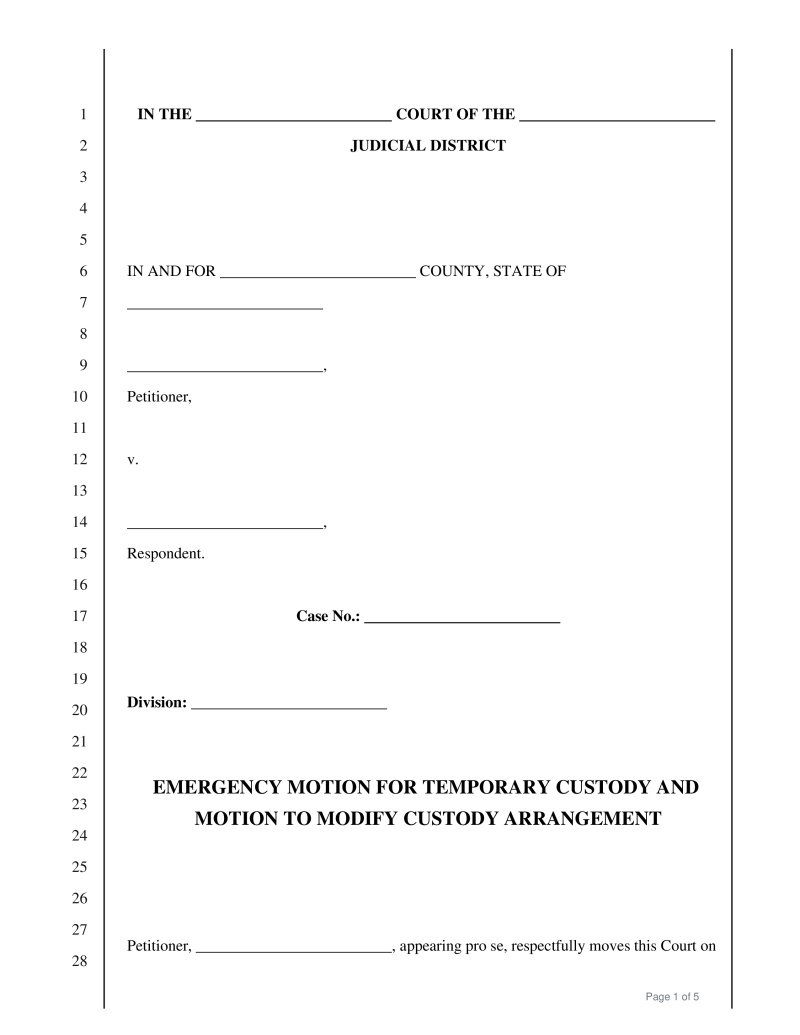
Case Posture
Choose "Existing case" if a custody, divorce, paternity, guardianship, dependency, or protection-order case already has a case number.
Enter the exact number assigned by the clerk, if available.
Table of Contents
What is an Emergency Motion for Custody?
An Emergency Motion for Custody is an urgent legal request filed in a family court to obtain immediate, temporary legal and physical custody of a minor child. Parents or legal guardians typically initiate this process when a child faces an immediate threat of physical harm, neglect, or abduction. The primary purpose of this motion is to bypass the standard, multi-month custody litigation timeline to secure a protective order swiftly. Because of the drastic nature of altering custody without a full trial, courts apply strict standards of proof to these filings.
Circumstances Justifying an Emergency Motion
Courts only grant emergency custody orders under extreme conditions where a child faces immediate danger. Standard custody disputes regarding visitation schedules or minor disagreements do not qualify for emergency intervention. Valid grounds for filing an Emergency Motion for Custody include:
- Physical or Sexual Abuse - Direct evidence or credible allegations that a parent or someone in their household is abusing the child.
- Severe Neglect - Situations where a parent fails to provide essential food, shelter, medical care, or supervision, leaving the child in danger.
- Substance Abuse - Active drug or alcohol abuse by a custodian that directly impairs their ability to care for the child safely.
- Risk of Abduction - Credible threats or actions indicating that a parent plans to flee the jurisdiction or country with the child without consent.
- Unstable Living Environment - Exposure of the child to criminal activity, domestic violence, or hazardous living conditions.
Key Information Required in the Motion
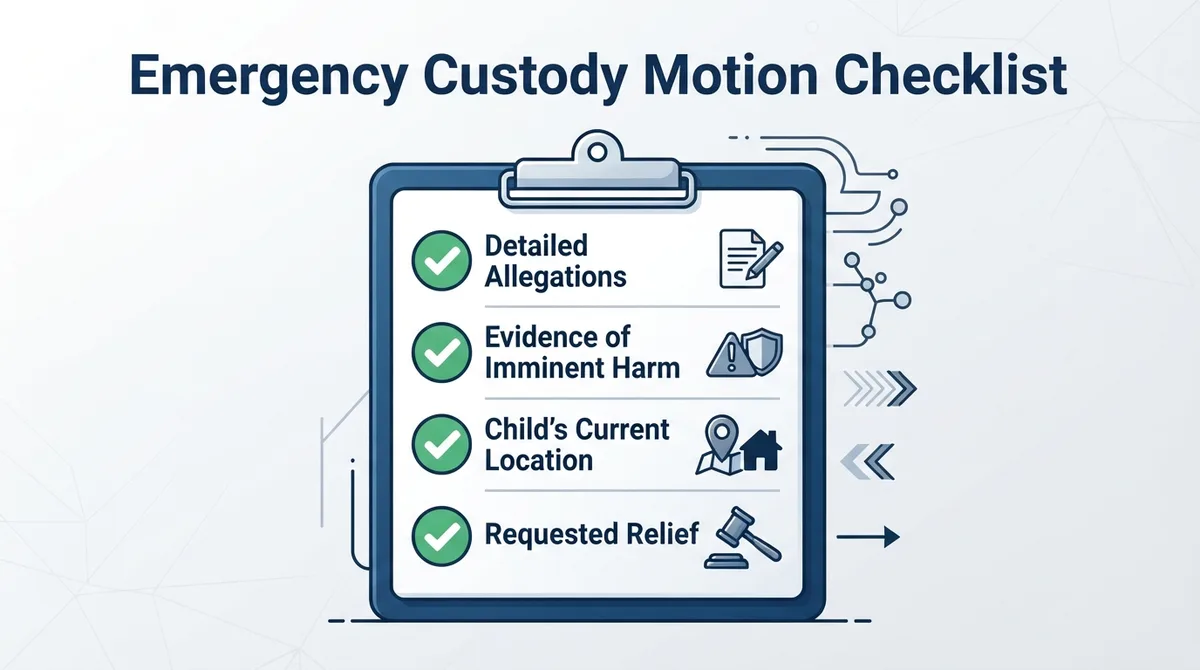
A petitioner must draft the motion with precise factual details rather than vague assertions. Judges rely heavily on the written petition to decide whether to grant an immediate hearing or temporary order. The filing must contain specific elements:
- Detailed Allegations - Specific dates, times, and descriptions of the incidents that created the emergency situation.
- Child Information - The full names, ages, and current physical locations of all children involved in the action.
- Requested Relief - A clear statement of the exact custody and visitation arrangements the petitioner is asking the court to order.
- Supporting Evidence - Attached documentation such as police reports, medical records, child protective services findings, or witness affidavits.
- Jurisdictional Statement - Information establishing that the court has the legal authority to make a custody determination under local laws.
Procedural Framework and Court Rules
The procedure for filing emergency motions varies significantly by jurisdiction, but courts universally enforce strict deadlines and documentation requirements to prevent abuse of the emergency system. Many jurisdictions require specific certificates or forms to verify the urgency of the filing. Examples of strict procedural rules in federal and state court systems include:
- Ninth Circuit Emergency Motion Certificate - Requires a specific certificate to accompany emergency motions to verify the urgent nature of the request and provide contact details for all parties (Circuit Rule 27-3).
- Fifth Circuit Filing Deadline - Dictates that emergency motions should be submitted by 2:00 p.m. CST on the day of filing to ensure prompt administrative processing (Fifth Circuit Guide to Filing Emergency Motions/Petitions).
- Ex Parte Hearing Procedures - Allows a judge to hear the motion without the presence of the other parent if notifying them would put the child in immediate danger.
- Temporary Order Duration - Limits the lifespan of emergency orders, requiring a full evidentiary hearing within ten to twenty-one days.
Types of Emergency Custody Orders
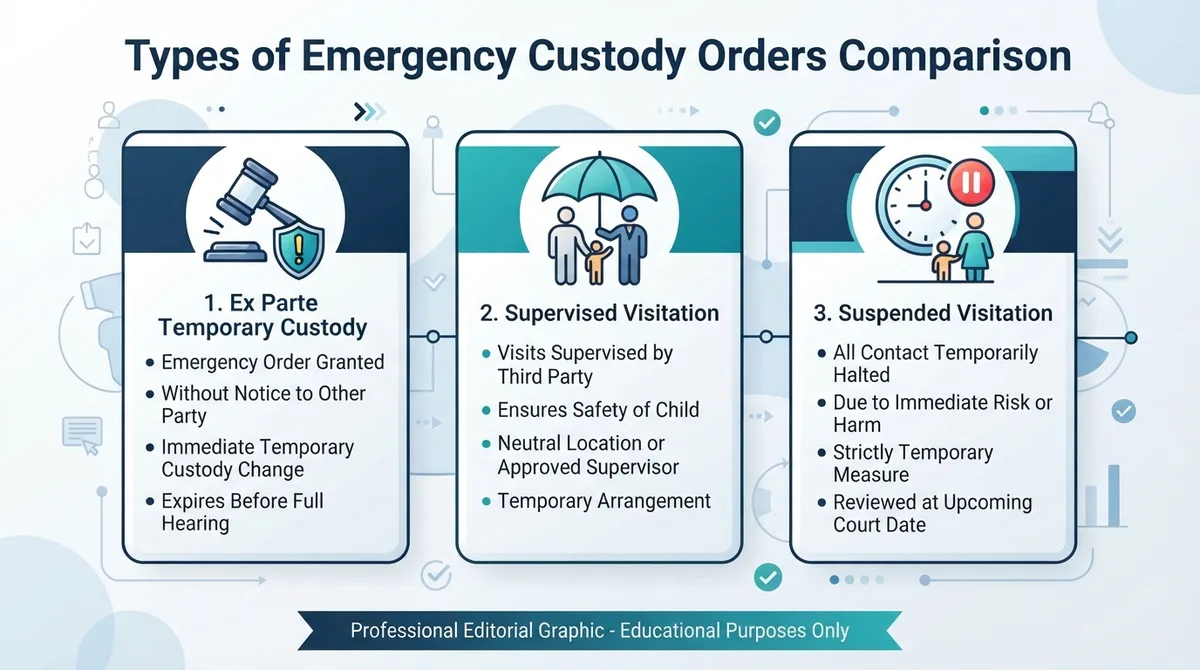
Courts can issue different forms of relief depending on the severity of the situation and the immediate needs of the child. These orders remain in place until the court holds a comprehensive hearing with both parents present. Common types of emergency custody orders include:
- Ex Parte Temporary Custody Order - An order granted by a judge based solely on the petition of one party without prior notice to the responding parent.
- Supervised Visitation Order - An order allowing the responding parent to see the child only under the supervision of an approved third party or professional agency.
- Suspended Visitation Order - A temporary ruling that completely halts all contact between the child and the responding parent until a full hearing occurs.
- Law Enforcement Assistance Order - A directive authorizing local police to assist the petitioner in recovering the child from a dangerous situation.
Common Mistakes in Emergency Custody Filings
Filing an emergency motion without legal justification can damage a parent's credibility in subsequent custody proceedings. Judges closely scrutinize these motions to ensure the process is not being used as a tactical maneuver. Common errors in these filings include:
- Lack of Imminent Harm - Filing a motion for issues that do not present an immediate physical or psychological threat to the child.
- Insufficient Evidence - Relying on hearsay, speculation, or uncorroborated statements rather than objective documentation.
- Procedural Non-Compliance - Failing to follow local court rules regarding filing deadlines, notification requirements, or mandatory forms.
- Overreaching Requests - Asking for permanent changes to custody agreements rather than temporary emergency relief.
Frequently Asked Questions
Sources
- Form 16. Circuit Rule 27-3 Certificate for Emergency Motion - Provides a form and instructions for filing an emergency motion in the Ninth Circuit Court of Appeals.
- Guide to Filing Emergency Motions/Petitions - Offers guidance on filing emergency motions in the Fifth Circuit Court of Appeals, including requirements and procedures.
Not the form you're looking for?
Try our legal document generator to create a custom document
Disclaimer: The templates available on this website are provided for general informational purposes only and do not constitute legal advice. They are not intended to be, and should not be interpreted as, compliant with any specific legal, regulatory, or privacy requirements. These templates are not a replacement for professional legal guidance and should not be relied upon for any particular matter or circumstance. Users are strongly encouraged to seek advice from a qualified attorney licensed in their jurisdiction before using, modifying, or relying on any template.
All templates are provided on an "as is," "with all faults," and "as available" basis. The provider disclaims any and all warranties of any kind, whether express, implied, statutory, or otherwise, including without limitation warranties of merchantability, fitness for a particular purpose, title, or non-infringement.
LegalTemplates.com makes no guarantees or representations regarding the accuracy, completeness, expected outcomes, or reliability of the materials contained in these templates or any materials referenced or linked from them.