Answer
An Answer is a formal written pleading filed by a defendant in response to a civil complaint, admitting or denying the allegations and setting forth any defenses or counterclaims.
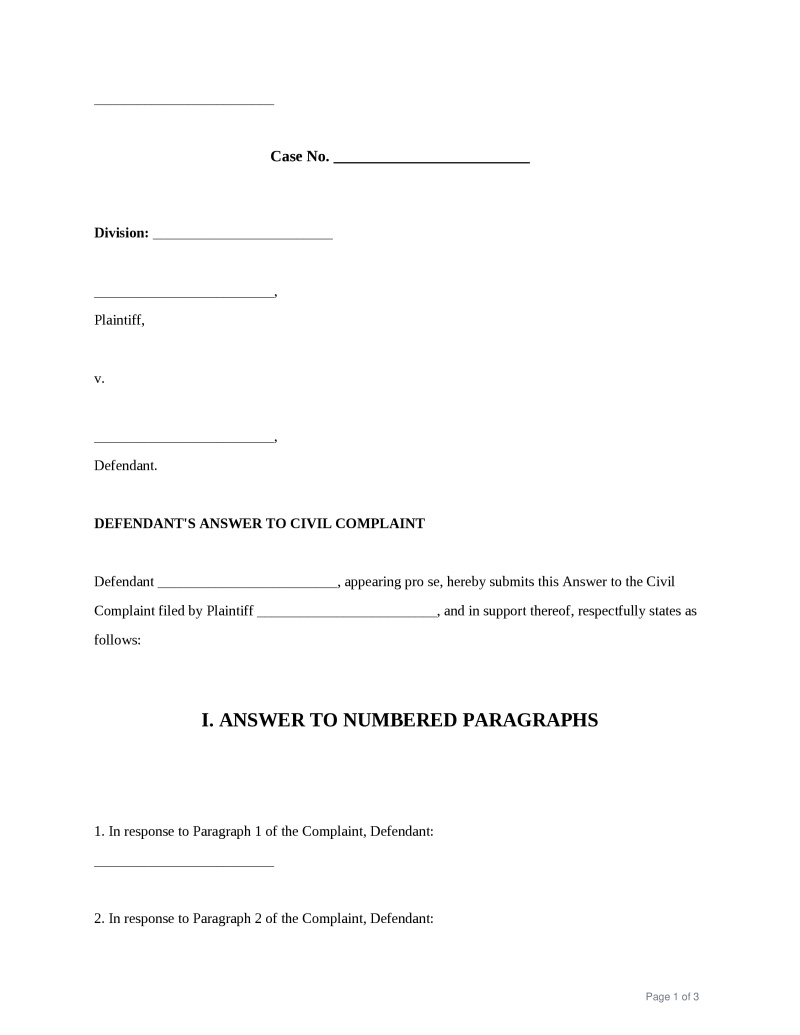
Pleading Answered Type
Choose the document that started the claims against the Defendant or Respondent. This helps use the correct wording throughout the Answer.
Use the title exactly as it appears on the pleading, if possible.
Table of Contents
What is a Answer?
An Answer is a formal written pleading filed by a defendant in response to a civil complaint. This document serves as the defendant's initial opportunity to address the allegations made by the plaintiff and set forth their position in the litigation. The primary purpose of the filing is to admit or deny each allegation, assert affirmative defenses, and present any counterclaims or cross-claims. By submitting this document, the defendant prevents the plaintiff from obtaining a default judgment and helps narrow the legal and factual issues for the court.
Core Functions of the Pleading
The primary function of the pleading is to respond directly to each numbered allegation in the complaint. Defendants must address every statement individually to ensure the court understands which facts are in dispute.
Civil procedure rules dictate how a defendant must respond to each paragraph:
- Admission - The defendant confirms that the specific allegation is true, removing that fact from dispute during the litigation.
- Denial - The defendant disputes the truth of the allegation, requiring the plaintiff to prove it during the trial.
- Lack of Knowledge - The defendant states they do not possess sufficient information to form a belief about the truth of the allegation, which legally operates as a denial.
Types of Answers
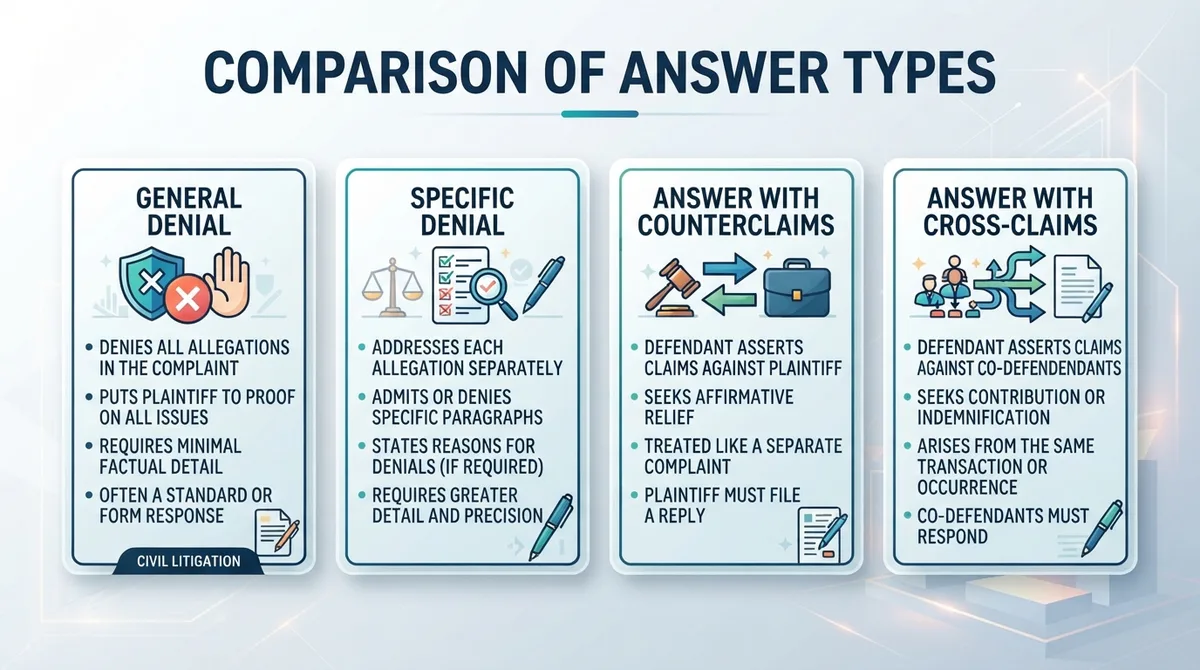
Defendants utilize different formats of this pleading depending on the nature of the claims and the applicable rules of civil procedure:
- General Denial Answer - A response where the defendant denies every single allegation contained within the complaint in a single, broad statement.
- Specific Denial Answer - A detailed response where the defendant addresses each numbered paragraph of the complaint individually, admitting some allegations while denying others.
- Answer with Counterclaims - A pleading that responds to the plaintiff's allegations and simultaneously asserts independent legal claims against the plaintiff.
- Answer with Cross-claims - A response filed by one defendant that includes legal claims directed against a co-defendant in the same lawsuit.
Affirmative Defenses
An affirmative defense is a legal argument that, if proven, defeats or mitigates the plaintiff's claim even if the factual allegations in the complaint are true. Defendants must raise these defenses in their initial response, or they risk waiving them for the remainder of the litigation. Common affirmative defenses in civil litigation include:
- Statute of Limitations - Asserting that the plaintiff filed the lawsuit after the legally prescribed time limit for the claim had expired.
- Accord and Satisfaction - Claiming that the parties previously resolved the dispute through a separate agreement and settlement.
- Assumption of Risk - Arguing that the plaintiff voluntarily and knowingly assumed the risks inherent in the activity that caused the injury.
- Contributory Negligence - Contending that the plaintiff's own negligent actions contributed to their damages or injuries.
- Laches - Claiming that the plaintiff unreasonably delayed bringing the lawsuit, resulting in prejudice to the defendant.
Required Elements of the Document
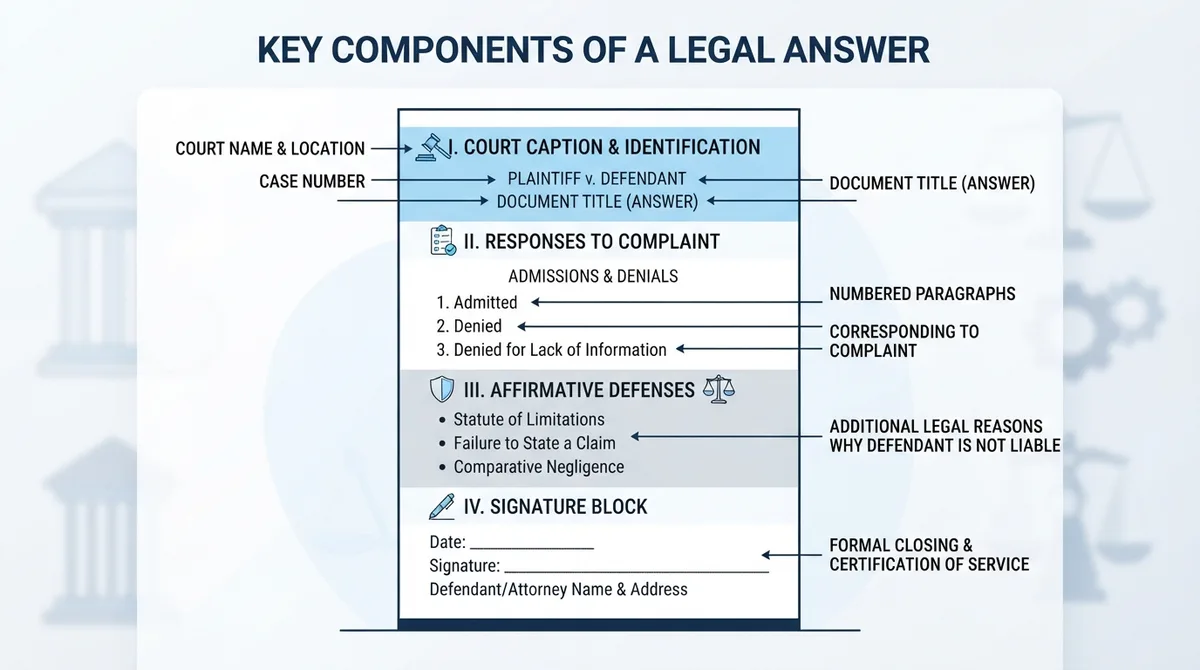
To comply with court rules, the pleading must contain several specific structural components:
- Court Caption - The header at the top of the first page identifying the court, the names of the parties, the case number, and the title of the document.
- Numbered Responses - Explicit admissions, denials, or statements of insufficient knowledge corresponding directly to each numbered paragraph in the complaint.
- Affirmative Defenses Section - A distinct portion of the pleading outlining any legal justifications that shield the defendant from liability.
- Prayer for Relief - A concluding statement requesting that the court dismiss the complaint, award costs to the defendant, or grant other appropriate remedies.
- Signature Block - The signature of the defendant's attorney, or the defendant if representing themselves, along with contact information.
- Certificate of Service - A signed statement verifying that a copy of the document was formally served on the plaintiff or their legal counsel.
Filing Deadlines and Procedural Consequences
Civil court systems enforce strict timelines for responding to a summons and complaint. Failing to submit a timely response can result in severe legal consequences for the defendant. The procedural rules governing this process typically outline the following timelines and outcomes:
- Federal Court Deadline - Defendants must file their response within 21 days of being served with the summons and complaint (Fed. R. Civ. P. 12(a)(1)(A)(i)).
- State Court Deadlines - State rules vary, typically requiring a response within 20 to 30 days from the date of formal service.
- Default Judgment - The legal consequence where the court rules in favor of the plaintiff because the defendant failed to respond within the deadline.
- Waiver of Defenses - The loss of the right to raise specific legal defenses later in the case if they were not asserted in the initial response.
Frequently Asked Questions
Not the form you're looking for?
Try our legal document generator to create a custom document
Disclaimer: The templates available on this website are provided for general informational purposes only and do not constitute legal advice. They are not intended to be, and should not be interpreted as, compliant with any specific legal, regulatory, or privacy requirements. These templates are not a replacement for professional legal guidance and should not be relied upon for any particular matter or circumstance. Users are strongly encouraged to seek advice from a qualified attorney licensed in their jurisdiction before using, modifying, or relying on any template.
All templates are provided on an "as is," "with all faults," and "as available" basis. The provider disclaims any and all warranties of any kind, whether express, implied, statutory, or otherwise, including without limitation warranties of merchantability, fitness for a particular purpose, title, or non-infringement.
LegalTemplates.com makes no guarantees or representations regarding the accuracy, completeness, expected outcomes, or reliability of the materials contained in these templates or any materials referenced or linked from them.