Domestic Partner Affidavit
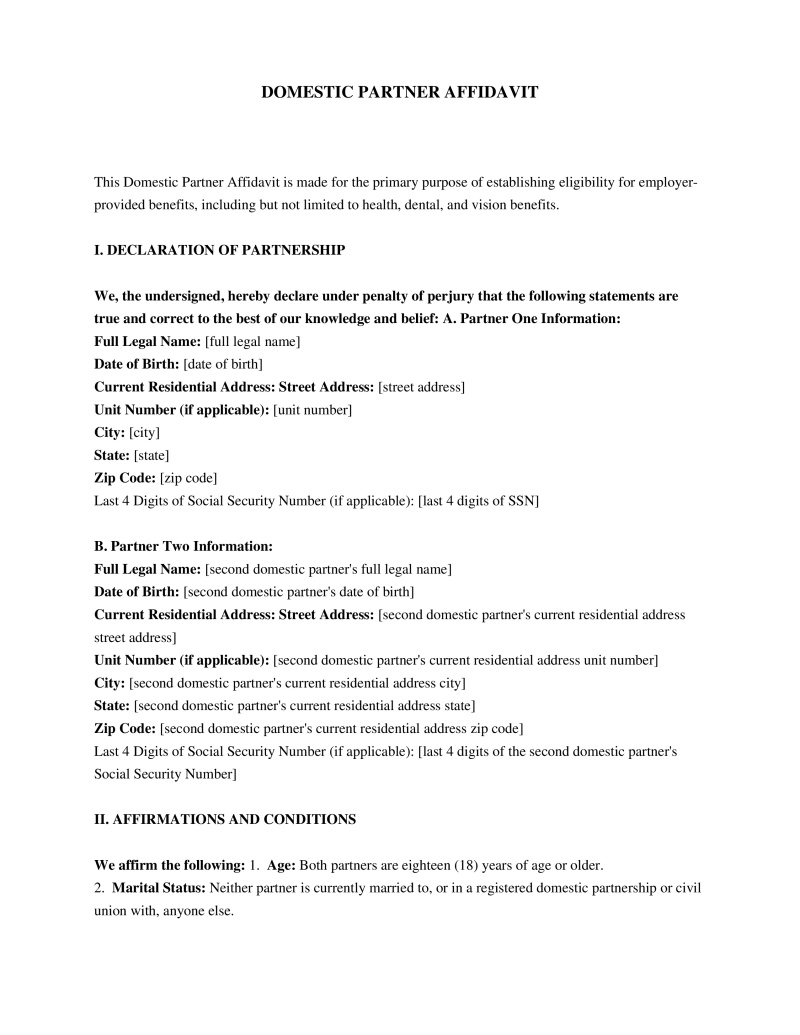
A Domestic Partner Affidavit is a sworn legal declaration affirming the existence of a domestic partnership, often utilized to secure access to benefits or official recognition.
Partnership Purpose
Select the main reason for submitting this affidavit. This may affect required supporting documentation.
Provide details if your purpose is not listed above.
Table of Contents
What is a Domestic Partner Affidavit?
A Domestic Partner Affidavit is a formal, sworn statement used by individuals to declare the existence of a domestic partnership for the purpose of accessing specific benefits or recognition, typically offered by employers, government agencies, or other organizations. This document serves as proof that two individuals meet certain criteria established by the entity offering the benefits, without necessarily requiring a state-registered domestic partnership or marriage. Its primary purpose is to extend benefits like health insurance, dental coverage, or other employee perks to an employee's unmarried partner.
Purpose and Use
The Domestic Partner Affidavit is primarily utilized by employers and institutions to administer benefits to employees' domestic partners. While the legal landscape for same-sex couples has evolved significantly, these affidavits remain relevant for various types of partnerships that do not involve legal marriage or formal state registration. Entities like state governments, county administrations, and national laboratories use these affidavits to ensure eligibility for benefits.
- Employee Benefits Enrollment - State employees in California and city employees in St. Louis, for example, use this affidavit to enroll a domestic partner in state-sponsored or city-provided benefits, including health, dental, and vision insurance (calhr.ca.gov, stlouis-mo.gov).
- Employer-Sponsored Programs - Organizations such as Brookhaven National Laboratory require an Affidavit of Domestic Partnership for employees to establish eligibility for benefits (bnl.gov).
- Government Agency Benefits - Maryland state employees must submit a notarized Affidavit of Domestic Partnership to establish a domestic partnership for benefits purposes (dbm.maryland.gov).
- Local Government Benefits - Employees of San Diego County utilize an affidavit to add a domestic partner to their employee benefits package (sandiegocounty.gov).
Common Eligibility Requirements
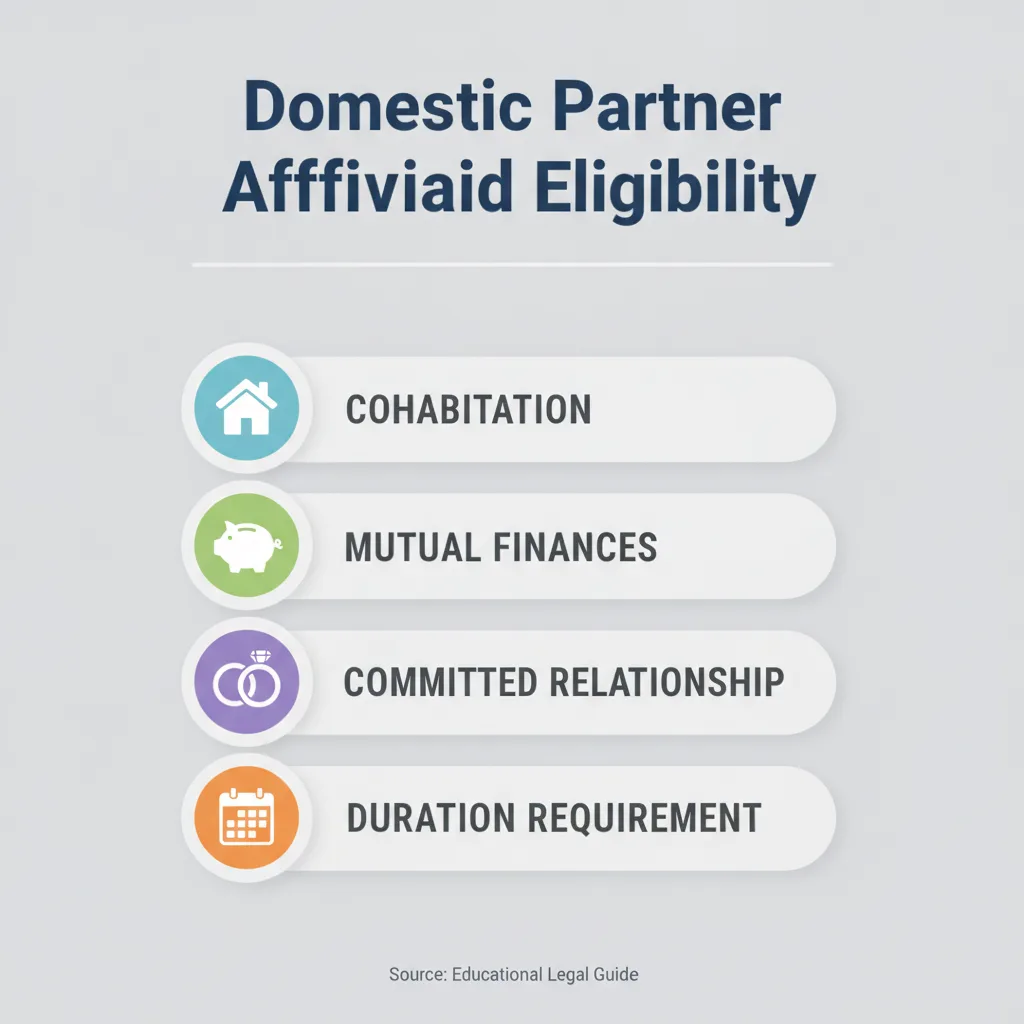
To qualify as domestic partners, individuals must typically meet a defined set of criteria, which can vary slightly between organizations but generally revolve around shared life and mutual commitment. These requirements are outlined in the affidavit itself and serve to establish the genuine nature of the partnership:
- Cohabitation - Partners are often required to have lived together for a specified period, such as at least six months (bnl.gov) or twelve months (dbm.maryland.gov), demonstrating a shared residence.
- Mutual Financial Responsibility - A declaration that partners share financial obligations and responsibilities, evidenced by joint bank accounts, shared expenses, or other financial interdependencies, is a common requirement (bnl.gov, dbm.maryland.gov, sandiegocounty.gov).
- Shared Residence - Partners must typically share a common residence, indicating a unified household (sandiegocounty.gov).
- Mutual Support and Commitment - Many affidavits require a declaration of a committed, exclusive relationship where partners are mutually responsible for each other's common welfare and support (stlouis-mo.gov).
- Age and Legal Status - Both partners must generally be at least 18 years old, not legally married to anyone else, and not related by blood to a degree that would prohibit legal marriage in their jurisdiction.
Key Elements of the Affidavit
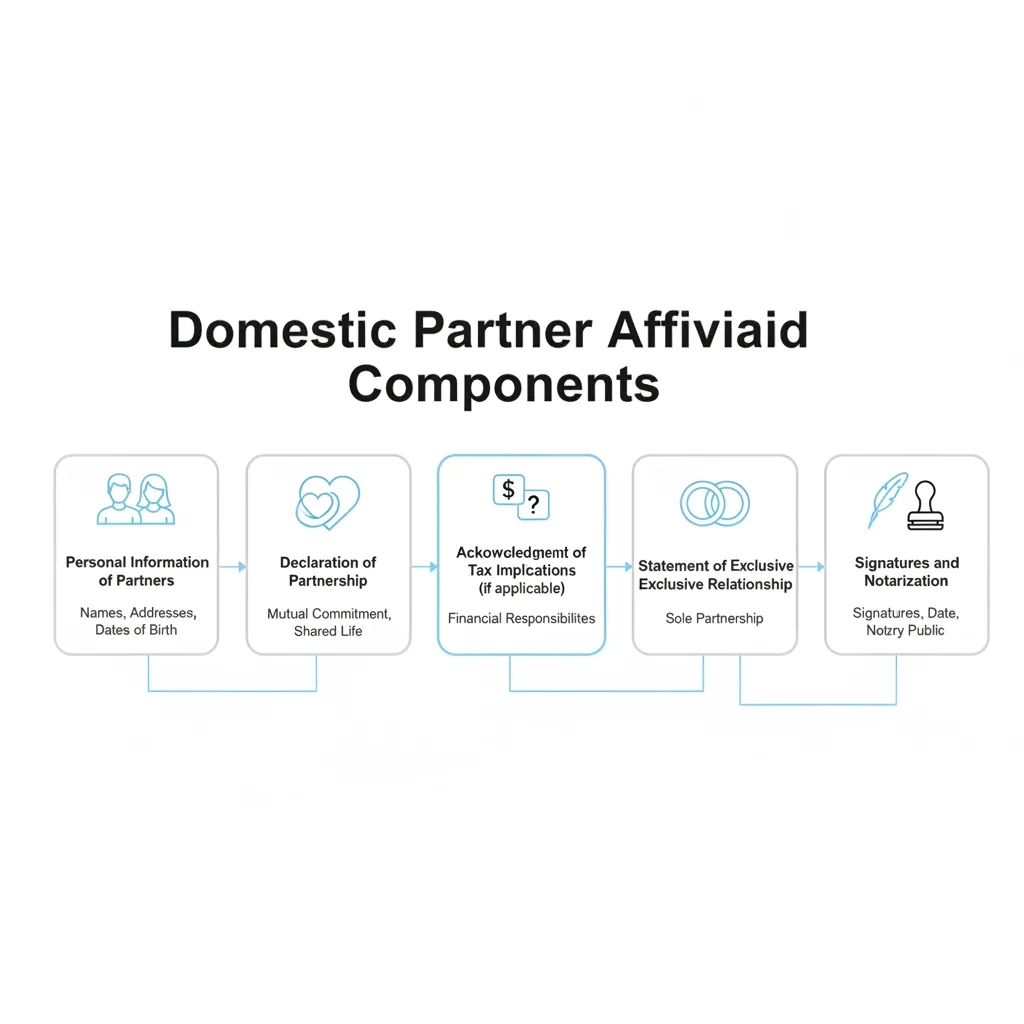
A Domestic Partner Affidavit is a structured legal document that requires specific information and declarations from the individuals involved. The content ensures that all eligibility criteria are addressed and that the partners understand the implications of their declaration.
- Personal Information - Full legal names, dates of birth, and current addresses for both domestic partners are standard inclusions.
- Declaration of Partnership - A sworn statement affirming that the individuals meet the specific domestic partnership criteria set forth by the requesting entity.
- Acknowledgement of Tax Implications - For some entities, such as California state employment, the affidavit may include an acknowledgement that the domestic partner is considered a dependent for federal income tax purposes, with potential tax liabilities (calhr.ca.gov).
- Exclusive Relationship Statement - A declaration that the partnership is exclusive and that neither partner is married to or in a registered domestic partnership with any other individual.
- Signatures - Both domestic partners must sign the affidavit, attesting to the truthfulness of the information provided.
Execution and Filing
The proper execution and timely filing of a Domestic Partner Affidavit are critical for the declaration to be recognized and for benefits to be extended. The process often involves specific legal formalities to ensure the document's validity.
- Notarization - Many entities require the affidavit to be notarized, meaning the partners must sign the document in the presence of a notary public, who verifies their identities and witnesses their signatures (dbm.maryland.gov).
- Supporting Documentation - Depending on the entity, partners may need to provide supporting documentation to substantiate their claims of cohabitation and mutual financial responsibility, such as joint utility bills, shared lease agreements, or bank statements (bnl.gov, dbm.maryland.gov).
- Submission to Benefits Administrator - Once completed and properly executed, the affidavit must be submitted to the relevant human resources department or benefits administrator of the employer or organization offering the benefits.
- Timelines - There may be specific enrollment periods or deadlines for submitting the affidavit to ensure timely access to benefits.
Relationship to Other Legal Recognition
It is important to understand that a Domestic Partner Affidavit, while legally significant for specific purposes, is distinct from a legally recognized marriage or a state-registered domestic partnership in many jurisdictions. Its scope is generally limited to the benefits and recognition offered by the particular entity requiring it.
Unlike marriage or a state-registered domestic partnership, which confer a broad range of legal rights and responsibilities under state law (e.g., inheritance, property rights, medical decision-making), an affidavit typically establishes eligibility only for the benefits specified by the employer or organization. It does not automatically grant the same legal standing or protections outside of that specific context. Therefore, individuals relying solely on a Domestic Partner Affidavit may need additional legal planning for broader protections.
Frequently Asked Questions
Sources
- Affidavit of Domestic Partnership - Provides a sample affidavit form for establishing a domestic partnership in Maryland, detailing eligibility criteria and required documentation.
- Domestic Partner Affidavit - Offers a form for California state employees to declare a domestic partnership for benefits enrollment, including tax implications and required documentation.
- Affidavit of Domestic Partnership - Provides an affidavit form for establishing a domestic partnership, outlining eligibility criteria and the need for supporting documentation.
- Affidavit for Enrollment of Domestic Partners - Offers a fillable affidavit form for enrolling a domestic partner in San Diego County employee benefits, detailing eligibility and requirements.
- Domestic Partnership Affidavit - Provides an affidavit form for St. Louis city employees to establish a domestic partnership for benefits purposes.
Not the form you're looking for?
Try our legal document generator to create a custom document
Disclaimer: The templates available on this website are provided for general informational purposes only and do not constitute legal advice. They are not intended to be, and should not be interpreted as, compliant with any specific legal, regulatory, or privacy requirements. These templates are not a replacement for professional legal guidance and should not be relied upon for any particular matter or circumstance. Users are strongly encouraged to seek advice from a qualified attorney licensed in their jurisdiction before using, modifying, or relying on any template.
All templates are provided on an "as is," "with all faults," and "as available" basis. The provider disclaims any and all warranties of any kind, whether express, implied, statutory, or otherwise, including without limitation warranties of merchantability, fitness for a particular purpose, title, or non-infringement.
LegalTemplates.com makes no guarantees or representations regarding the accuracy, completeness, expected outcomes, or reliability of the materials contained in these templates or any materials referenced or linked from them.