Summons
Create Summons
Summons
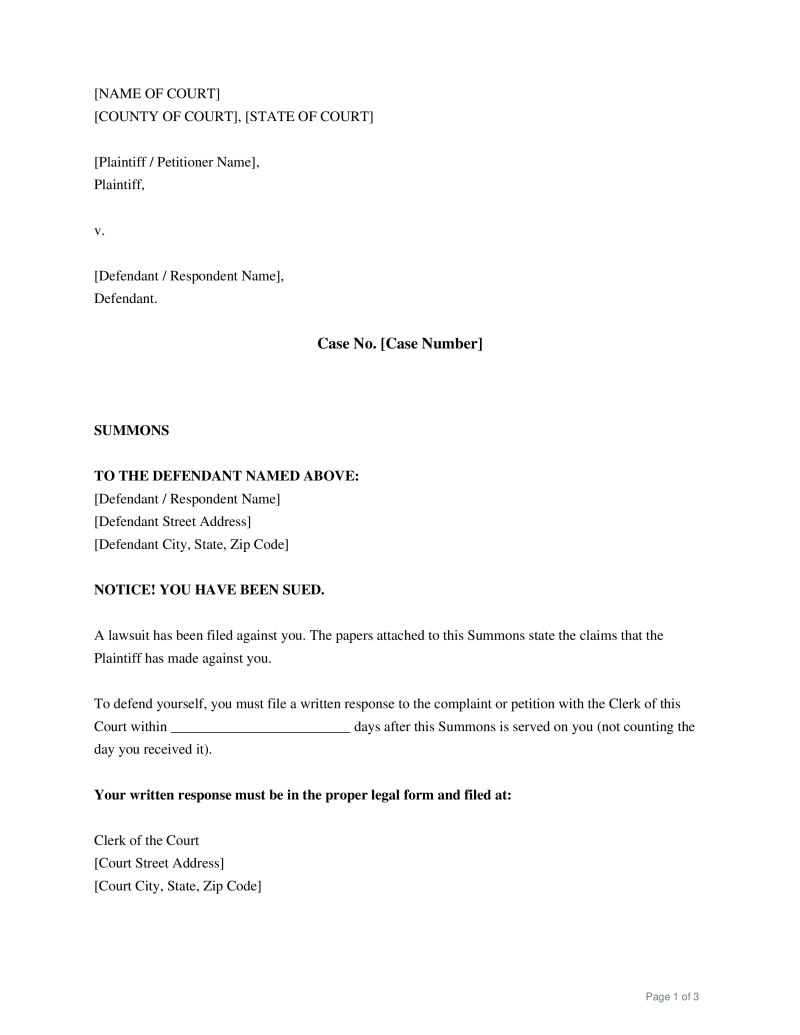
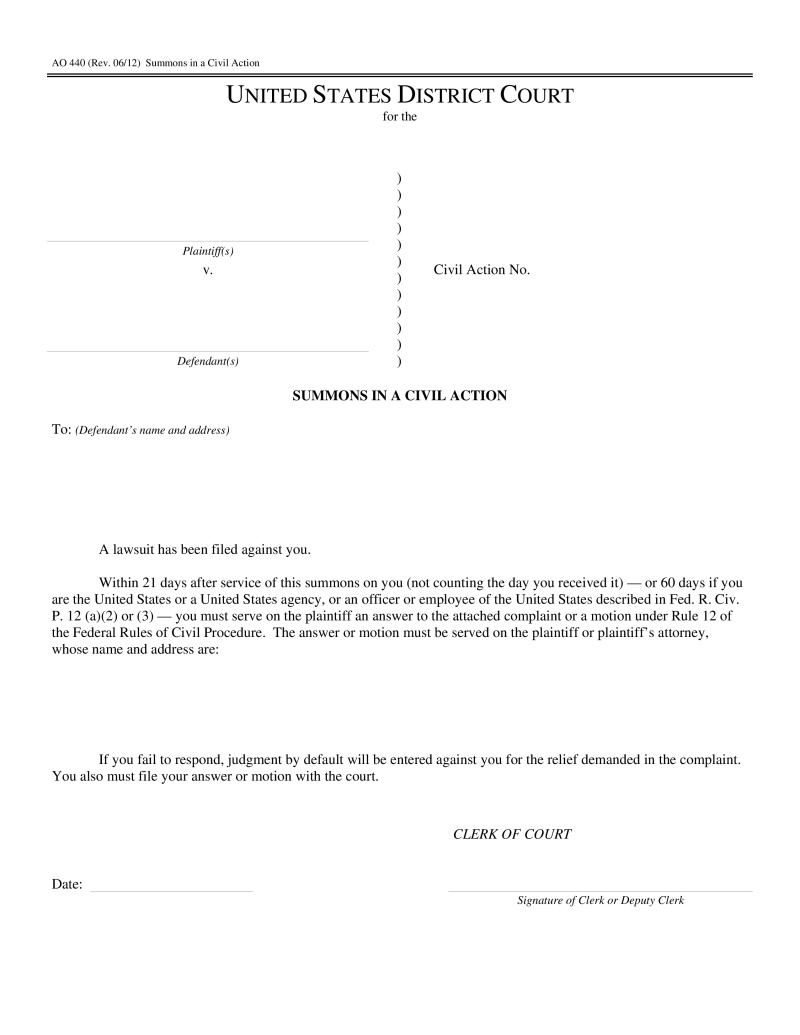
A Summons is a formal legal document issued by a court or administrative body that officially notifies a defendant of a legal action against them and commands their appearance or response.
Answer the question(s) below to create your Summons
Filing Posture
A summons is often issued at the start of a case, but it may also be issued later for an added party, amended pleading, cross-claim, or re-service.
Enter the number exactly as assigned by the court, including letters, prefixes, and dashes.
Some courts require the case number line to be left blank for the clerk, while e-filing systems may assign it automatically.
Table of Contents
What is a Summons?
A summons is an official legal document issued by a court or administrative agency that commands an individual or entity to respond to a legal action. This document serves as formal notification that a lawsuit has been initiated, establishing the court's jurisdiction over the parties. It is prepared by the plaintiff and officially signed or sealed by the court clerk before delivery to the defendant. The primary purpose is to satisfy constitutional due process requirements by ensuring that defendants receive adequate notice of the claims against them.
Types of Summons
Courts and administrative bodies issue various categories of legal notices depending on the nature of the legal action:
- Civil Summons - Directs a defendant to file a written response or appear in court to answer a civil lawsuit, such as a contract or property dispute.
- Criminal Summons - Orders an individual accused of a minor offense to appear before a judge at a specified time, serving as an alternative to an arrest warrant.
- Administrative Summons - Issued by government agencies requiring an individual to provide financial records, documents, or testimony for an investigation.
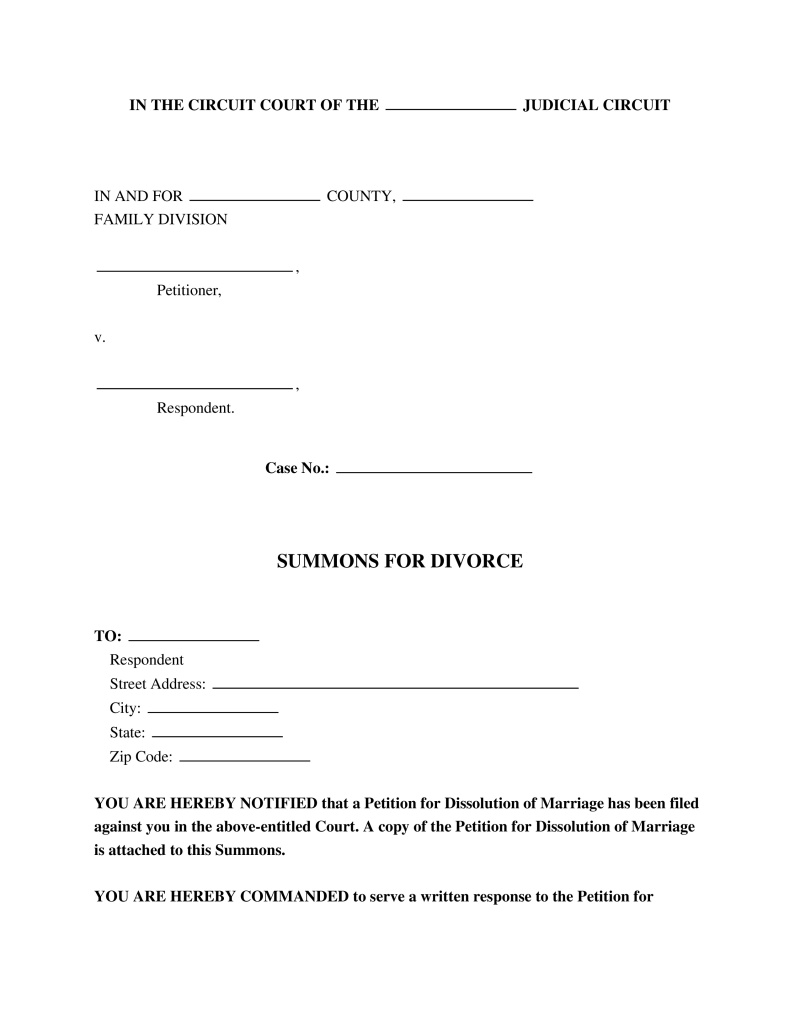
- Divorce Summons - Initiates matrimonial dissolution proceedings, notifying the spouse of the filing and outlining temporary restrictions on marital assets.
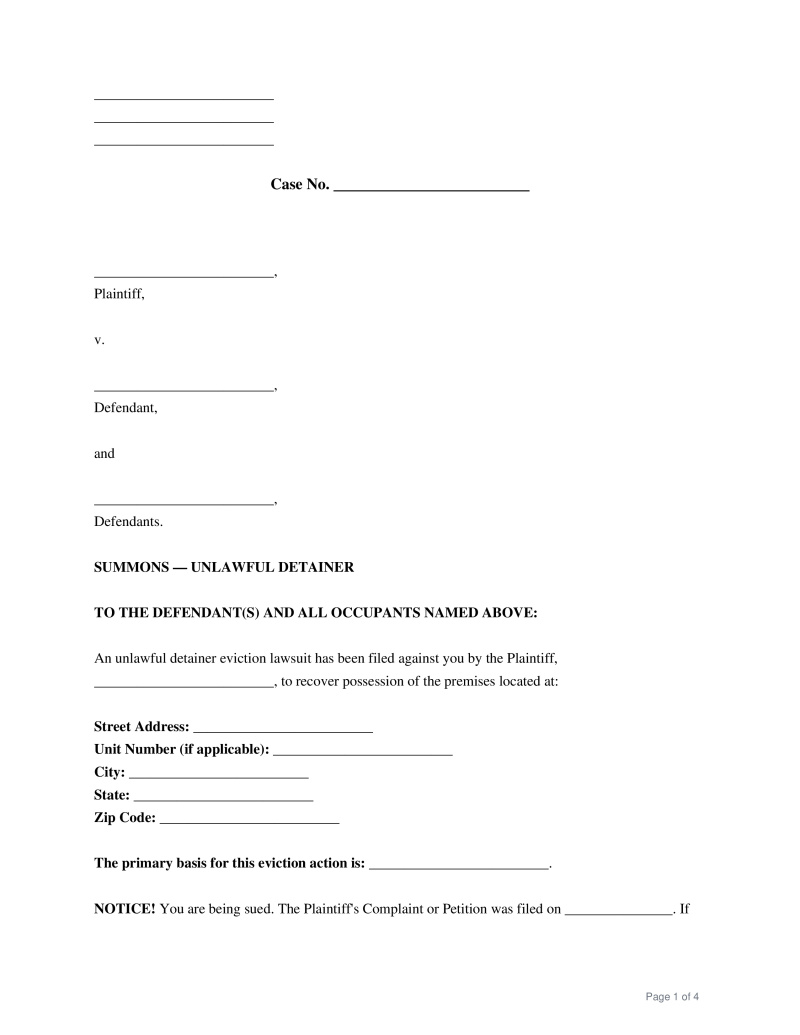
- Unlawful Detainer Summons - Used in landlord-tenant eviction proceedings, requiring a tenant to respond within an expedited timeframe to contest the eviction.
Essential Elements of a Summons
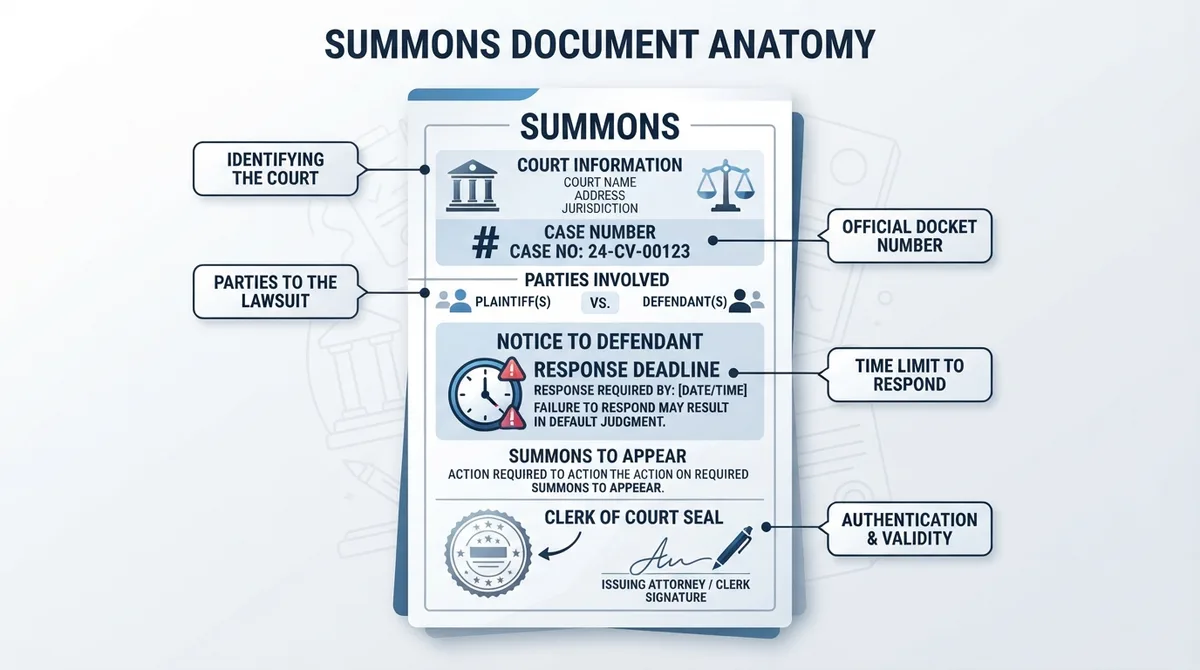
To be legally valid, the document must contain specific pieces of information that outline the nature of the legal action:
- Court Identification - Specifies the exact name of the court, the judicial district, and the county where the action is filed.
- Party Names - Lists the full legal names of the plaintiff initiating the lawsuit and the defendant being sued.
- Case Number - Provides the unique docket number assigned to the case by the court clerk for tracking purposes.
- Response Deadline - States the exact number of days the defendant has to file an answer, typically calculated from the date of service.
- Consequences Statement - Warns the recipient that failure to respond within the designated timeframe will result in a default judgment.
- Clerk Signature - Features the official signature or seal of the court clerk, validating that the document has been formally issued.
Service of Process Requirements
Delivery of the legal notice must comply with strict procedural rules to ensure the court obtains personal jurisdiction over the defendant:
- Personal Service - Handing the documents directly to the named defendant by a professional process server or an uninvolved adult.
- Substitute Service - Leaving the documents with a resident of suitable age at the defendant's home, followed by mailing a copy.
- Service by Mail - Sending the paperwork via certified mail with a return receipt requested, permitted only under specific state rules.
- Service by Publication - Publishing the notice in a local newspaper, allowed only when the defendant cannot be located after diligent search efforts.
- Federal Rules of Civil Procedure Rule 4 - Outlines the standard requirements for preparing, issuing, and serving these legal documents in United States federal courts (Fed. R. Civ. P. 4).
Consequences of Non-Response
Ignoring a formally served court notice carries severe legal ramifications that can permanently affect a party's rights:
- Default Judgment - Allows the plaintiff to win the lawsuit automatically because the defendant failed to present a defense, giving the plaintiff the right to collect damages.
- Asset Garnishment - Permits the plaintiff to legally seize a portion of the defendant's wages or freeze bank accounts to satisfy the judgment.
- Property Liens - Enables the prevailing party to place a legal claim against the defendant's real estate, preventing the sale of the property.
- Arrest Warrant - Occurs in criminal or family law cases where failure to obey the order to appear constitutes contempt of court.
Summons vs. Subpoena
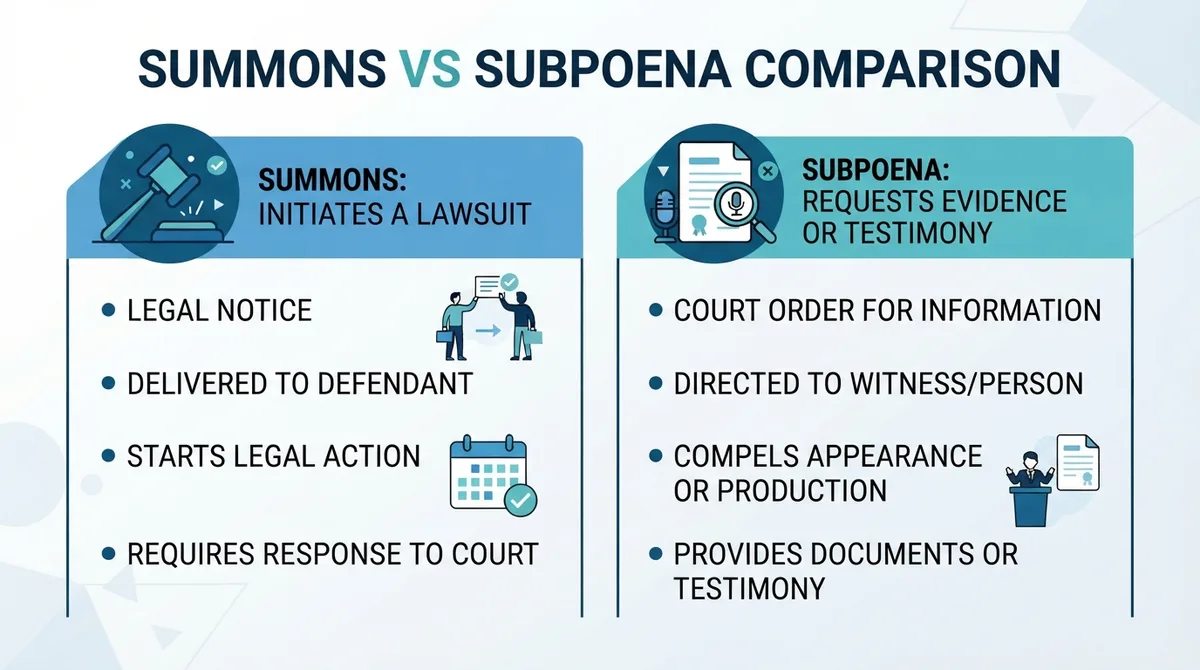
While both documents are court-ordered mandates, they serve different legal purposes and target different participants:
- Jurisdictional Initiation - A summons initiates a lawsuit and brings a defendant under court authority, whereas a subpoena is issued within an active lawsuit to gather evidence.
- Target Audience - A summons is directed to the parties named in the lawsuit, while a subpoena is directed to witnesses who are not involved in the dispute.
- Required Action - A summons demands a legal response to defend against claims, while a subpoena commands the recipient to testify or produce documents.
Frequently Asked Questions
Refusing to sign for or accept the document does not stop the legal process. Process servers can legally leave the paperwork near you or with a co-resident, and the court will consider you officially served.
The legality of serving court papers on a Sunday depends on local regulations. Some states strictly prohibit service of process on Sundays, while others allow it under specific court orders.
The response window varies by court, but it typically ranges from 20 to 30 days in civil lawsuits. Failing to respond within this timeframe can result in an immediate default judgment against you.
A summons is the official court notice informing you that a lawsuit has begun and detailing how to respond. The complaint is the separate document written by the plaintiff that outlines the specific allegations and claims.
Regular mail is generally insufficient for initial service of process unless the defendant signs a waiver of service. Most jurisdictions require certified mail or personal delivery to verify receipt.
Related Documents
Forms commonly used with Summons.
Not the form you're looking for?
Try our legal document generator to create a custom document
Disclaimer: The templates available on this website are provided for general informational purposes only and do not constitute legal advice. They are not intended to be, and should not be interpreted as, compliant with any specific legal, regulatory, or privacy requirements. These templates are not a replacement for professional legal guidance and should not be relied upon for any particular matter or circumstance. Users are strongly encouraged to seek advice from a qualified attorney licensed in their jurisdiction before using, modifying, or relying on any template.
All templates are provided on an "as is," "with all faults," and "as available" basis. The provider disclaims any and all warranties of any kind, whether express, implied, statutory, or otherwise, including without limitation warranties of merchantability, fitness for a particular purpose, title, or non-infringement.
LegalTemplates.com makes no guarantees or representations regarding the accuracy, completeness, expected outcomes, or reliability of the materials contained in these templates or any materials referenced or linked from them.