Rebuttal
A rebuttal is a formal legal document filed to contradict, disprove, or negate specific evidence or arguments presented by an opposing party.
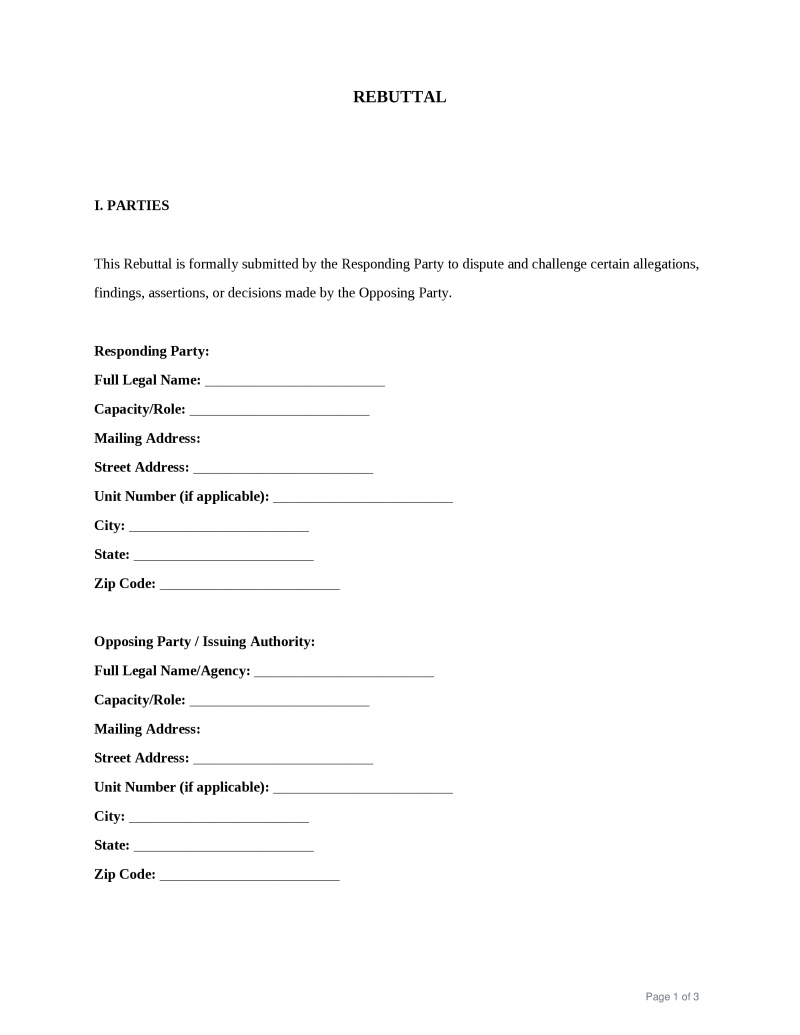
Response Posture
Select the option that best describes where the matter stands. This helps tailor deadline, filing, and outcome language.
Table of Contents
What is a Rebuttal?
A rebuttal is a legal term referring to evidence introduced by a party to meet new facts brought out in the opponent’s case in chief. The primary purpose of this process is to explain, repel, counteract, or disprove evidence presented by the opposing party. Litigants across civil, criminal, and bankruptcy courts utilize this mechanism to prevent the jury or judge from accepting uncontested testimony. It serves as a critical procedural tool to ensure balance and fairness during trial proceedings.
Types of Rebuttal Evidence
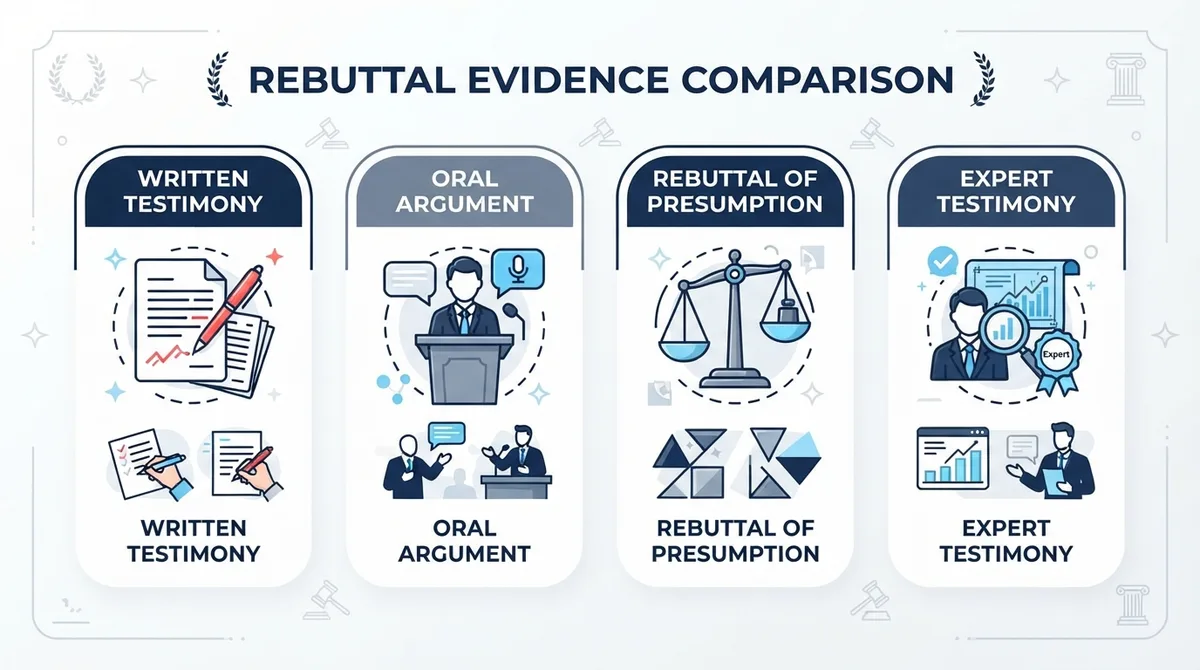
Parties may introduce various forms of evidence during the rebuttal phase depending on the nature of the trial and the specific facts in dispute:
- Written Rebuttal Testimony - Formal written statements submitted to the court to address and dispute specific facts raised in the opposing party's initial filings or testimony.
- Oral Rebuttal Argument - Verbal arguments presented by an attorney, typically an appellant, at the close of a hearing or oral argument to address points raised by the appellee.
- Rebuttal of Legal Presumptions - Evidence or arguments submitted to overcome a legally established assumption, such as a presumption of abuse or undue hardship in bankruptcy cases.
- Expert Rebuttal Testimony - Specialized evidence provided by an expert witness to challenge the methodology, findings, or conclusions of the opposing party's expert witness.
Rebuttals in Bankruptcy Proceedings
Bankruptcy courts maintain structured procedures for debtors to contest specific legal presumptions and evidence. These rebuttals require precise documentation and adherence to local court rules:
- Presumption of Abuse Rebuttal - Requires debtors to submit detailed financial calculations and document special circumstances to overcome the legal presumption of abuse in Chapter 7 filings (11 U.S.C. § 707(b)).
- Presumption of Undue Hardship Rebuttal - Demands that debtors seeking to discharge student loans or avoid certain reaffirmation agreements present evidence showing that standard payments would prevent them from maintaining a minimal standard of living.
- Written Rebuttal Testimony Filing - Governs the submission of written rebuttal statements in accordance with specific electronic case filing procedures, utilizing designated court forms and scheduling orders.
Appellate Oral Argument Procedures
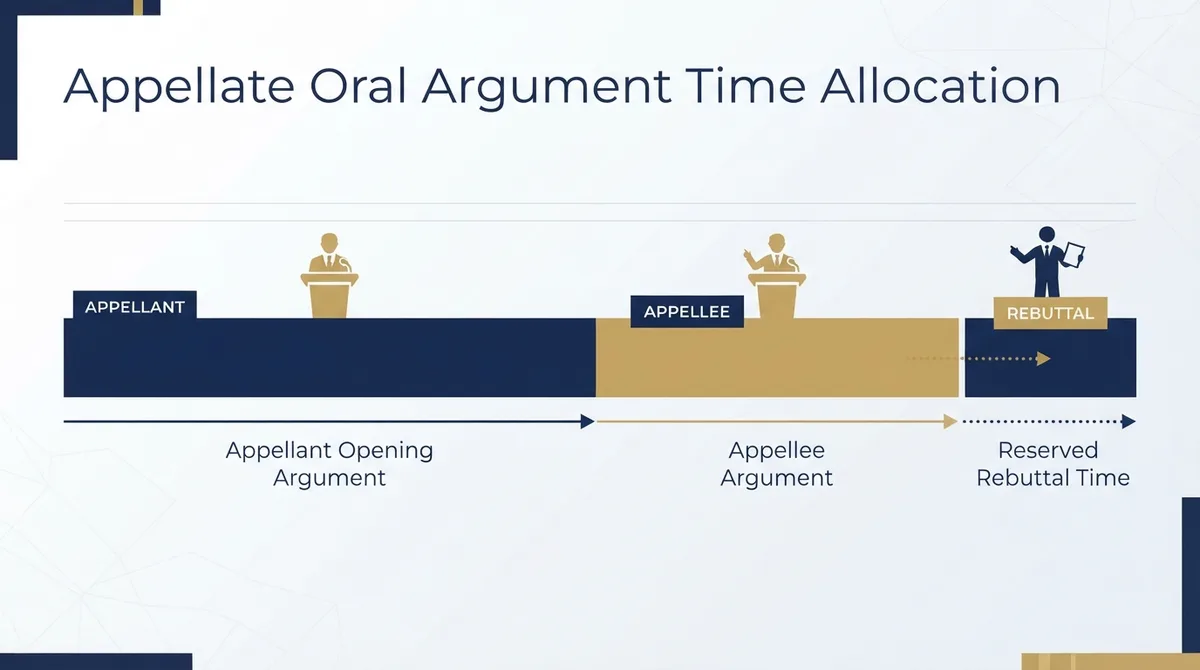
Appellate courts follow strict timelines and protocols regarding the presentation of arguments. The allocation of time for rebuttal is a key component of these proceedings:
- Appellate Time Reservation - Permits the appellant to reserve a portion of their allotted oral argument time specifically for rebuttal (10th Cir. BAP L.R. 34-1).
- Scope of Argument - Directs that rebuttal arguments must focus strictly on addressing the points raised by the appellee during their presentation.
- Clerk Notification Requirements - Mandates that counsel notify the courtroom clerk of their intent to reserve rebuttal time prior to the start of the session.
- Time Management - Requires the appellant to self-monitor remaining minutes, as any time spent on rebuttal is deducted from the appellant's total oral argument limit.
Procedural Standards and Limitations
Courts impose strict limits on the introduction of rebuttal evidence to maintain trial efficiency and prevent unfair surprise. Parties must adhere to established evidentiary standards:
- Scope Limitation - Restricts evidence solely to addressing new issues raised during the opposing party's case in chief.
- Prohibition of Case-in-Chief Repetition - Prevents parties from using this phase to present cumulative evidence or reiterate arguments that should have been introduced during their initial presentation.
- Judicial Discretion - Grants the presiding judge ultimate authority to allow or exclude specific pieces of rebuttal evidence based on relevance and procedural fairness.
- Admissibility Standards - Dictates that all submitted materials must comply with the rules of relevance and admissibility governing the specific jurisdiction (Fed. R. Evid. 401).
Rebuttal in Trial Practice and Strategy
The strategic deployment of rebuttal evidence requires careful planning during trial preparation. Attorneys must anticipate the opponent's arguments to effectively counter them:
- Anticipating the Defense - Requires plaintiff's counsel to analyze potential defenses during the discovery phase to identify areas where rebuttal evidence will be necessary.
- Impeachment of Witnesses - Involves introducing prior inconsistent statements or evidence that contradicts the witness's testimony to impeach the credibility of opposing witnesses.
- Surrebuttal Opportunity - Allows the opposing party to present a response to the rebuttal evidence under limited circumstances and strict scope limitations.
- Preservation of the Record - Mandates that counsel ensure all rebuttal evidence and arguments are properly entered into the trial record to support potential issues on appeal.
Frequently Asked Questions
Rebuttal Sample
Sources
- Glossary of Legal Terms - Provides definitions of legal terms, including 'rebuttal'.
- Rebuttal of Presumption of Undue Hardship - Guidelines for filing a rebuttal of presumption of undue hardship in bankruptcy cases.
- Debtor's Rebuttal of Presumption of Abuse - Instructions for debtors to file a rebuttal of presumption of abuse in bankruptcy cases.
- Written Rebuttal Testimony - Procedures for filing written rebuttal testimony in bankruptcy proceedings.
- Oral Argument Information - Details on oral argument procedures, including rebuttal time allocation.
Not the form you're looking for?
Try our legal document generator to create a custom document
Disclaimer: The templates available on this website are provided for general informational purposes only and do not constitute legal advice. They are not intended to be, and should not be interpreted as, compliant with any specific legal, regulatory, or privacy requirements. These templates are not a replacement for professional legal guidance and should not be relied upon for any particular matter or circumstance. Users are strongly encouraged to seek advice from a qualified attorney licensed in their jurisdiction before using, modifying, or relying on any template.
All templates are provided on an "as is," "with all faults," and "as available" basis. The provider disclaims any and all warranties of any kind, whether express, implied, statutory, or otherwise, including without limitation warranties of merchantability, fitness for a particular purpose, title, or non-infringement.
LegalTemplates.com makes no guarantees or representations regarding the accuracy, completeness, expected outcomes, or reliability of the materials contained in these templates or any materials referenced or linked from them.