Proof of Service
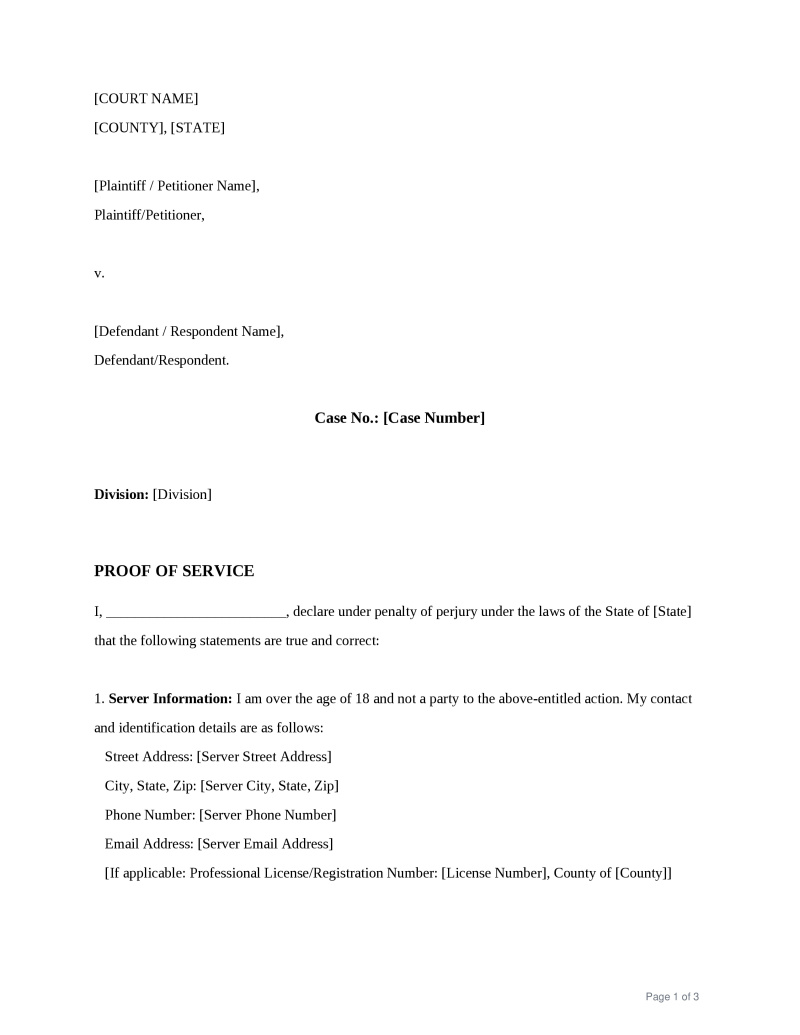
A Proof of Service is a formal legal document that certifies the delivery of legal papers, notices, or pleadings to a party or witness involved in a court proceeding.
Case Posture
Choose existing case if a court, agency, cause, docket, or case number has already been assigned.
Table of Contents
What is a Proof of Service?
A Proof of Service is a formal legal document submitted to a court to verify that specific legal papers have been successfully delivered to a party in a lawsuit. This document provides the court with official confirmation that the receiving party has been given proper notice of the legal proceedings or filings against them. It is typically completed and signed by the person who performed the delivery, serving as a critical record to establish the court's jurisdiction and ensure compliance with constitutional due process requirements.
Purpose and Legal Significance
The primary function of a Proof of Service is to satisfy the legal requirement of notice. Courts cannot proceed with hearings or make rulings affecting an individual's rights unless there is clear evidence that the individual was informed of the action and given an opportunity to respond. Filing this document prevents parties from claiming they were unaware of court dates, filings, or orders. It acts as a shield against default judgments being set aside due to lack of notice. Without this documented proof, the court lacks the authority to move forward with the litigation, effectively halting the legal process until proper notice is demonstrated.
Types of Proof of Service
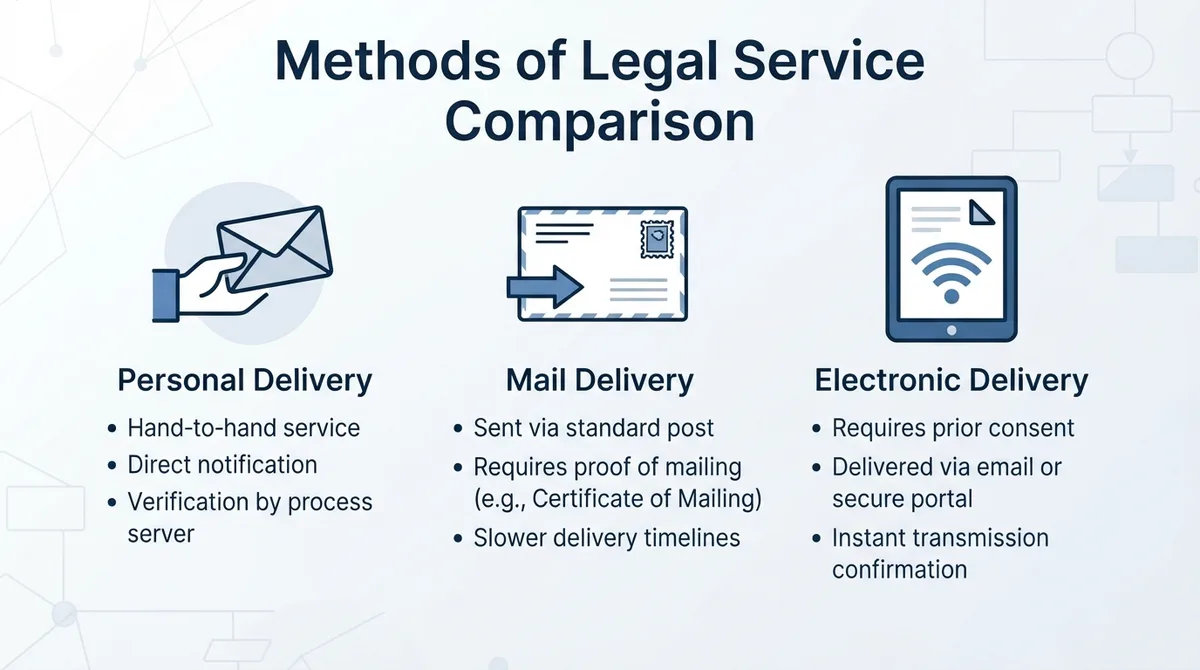
Different methods of delivering legal documents require specific proof forms to document the transaction accurately:
- Proof of Personal Service - Documents the physical, hand-to-hand delivery of legal papers directly to the recipient by an authorized server, ensuring absolute certainty of receipt.
- Proof of Service by First-Class Mail - Verifies that the legal documents were securely deposited in a United States Postal Service post office or official mailbox, properly addressed to the recipient with first-class postage fully prepaid.
- Proof of Electronic Service - Confirms that documents were transmitted electronically to the recipient's designated electronic service address, utilizing court-approved electronic filing service providers where local rules permit.
- Proof of Service—Civil - Serves as a general-purpose civil form to notify the court that legal papers other than an initial summons, such as motions, written discoveries, or notices, have been successfully delivered to the opposing party.
Requirements for the Server
To ensure impartiality and reliability, courts enforce strict rules regarding who can serve legal documents and sign the proof form:
- Age Limitation - The individual performing the physical or electronic service must be at least 18 years of age at the time the documents are delivered.
- Non-Party Status - The server cannot be a party to the legal action, meaning plaintiffs, defendants, and other individuals directly involved in the lawsuit are legally barred from serving their own documents.
- Address Disclosure - The server must provide a valid physical residence address, business address, or electronic service address on the form to establish their identity and contact information for the court.
- Declaration Under Penalty of Perjury - The server must sign a formal declaration stating under penalty of perjury under the laws of the state that all information provided on the form is true, accurate, and complete.
Essential Elements of the Form
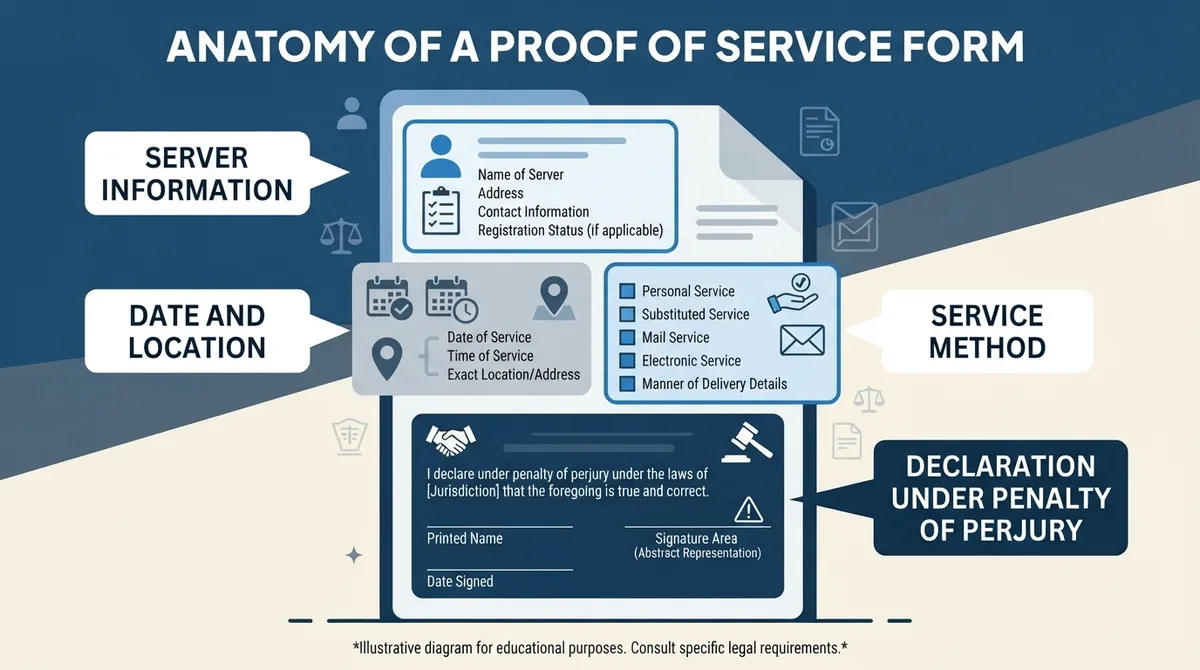
A completed Proof of Service must contain precise details to be accepted by the court clerk:
- Document Description - A clear list of all specific legal documents and forms that were delivered to the recipient.
- Recipient Information - The exact name of the person or entity to whom the documents were delivered.
- Service Details - The exact date, time, and physical location or address where the service took place.
- Method of Delivery - An explicit statement of how the documents were delivered, whether in person, by mail, or electronically.
- Server Identification - The printed name, signature, and contact information of the person who completed the service.
Consequences of Defective Service
Errors on a Proof of Service or failures in the actual delivery process can lead to significant legal complications. If the form contains inaccurate dates, incorrect addresses, or is signed by an unqualified individual, the court may deem the service invalid. Invalid service can result in the dismissal of a lawsuit, the cancellation of scheduled hearings, or the overturning of temporary orders. Parties may be forced to restart the service process, causing delays and incurring additional filing fees and process server costs. A defective proof can prevent a party from obtaining a default judgment, as judges will carefully scrutinize the proof of service before ruling in the absence of the responding party.
Frequently Asked Questions
Sources
- Proof of Service | District Courts of Appeal - Provides guidelines for completing the Proof of Service form for the Court of Appeal, including requirements for the server's age, address, and declaration under penalty of perjury.
- Proof of Service—Civil (Proof of Service) | California Courts | Self Help Guide - Explains the purpose of the Proof of Service form in civil cases and provides instructions for its completion.
- Proof of Personal Service | California Courts | Self Help Guide - Provides the form and instructions for proving to the court that the restrained person has been served in person.
- Proof of Personal Service—Civil (Proof of Service) / Information Sheet for Proof of Personal Service—Civil (POS-020) - Details the requirements for personal service in civil cases and provides instructions for completing the Proof of Personal Service form.
- Proof of Service by First-Class Mail—Civil (Proof of Service)/Information Sheet for Proof of Service by First-Class Mail—Civil (POS-030) - Explains how to complete the Proof of Service form when service is made by first-class mail in civil cases.
Not the form you're looking for?
Try our legal document generator to create a custom document
Disclaimer: The templates available on this website are provided for general informational purposes only and do not constitute legal advice. They are not intended to be, and should not be interpreted as, compliant with any specific legal, regulatory, or privacy requirements. These templates are not a replacement for professional legal guidance and should not be relied upon for any particular matter or circumstance. Users are strongly encouraged to seek advice from a qualified attorney licensed in their jurisdiction before using, modifying, or relying on any template.
All templates are provided on an "as is," "with all faults," and "as available" basis. The provider disclaims any and all warranties of any kind, whether express, implied, statutory, or otherwise, including without limitation warranties of merchantability, fitness for a particular purpose, title, or non-infringement.
LegalTemplates.com makes no guarantees or representations regarding the accuracy, completeness, expected outcomes, or reliability of the materials contained in these templates or any materials referenced or linked from them.