Moving Checklist
A Moving Checklist is an organizational instrument that delineates a structured sequence of tasks and considerations pertinent to the logistical and administrative aspects of relocating a residence or business.
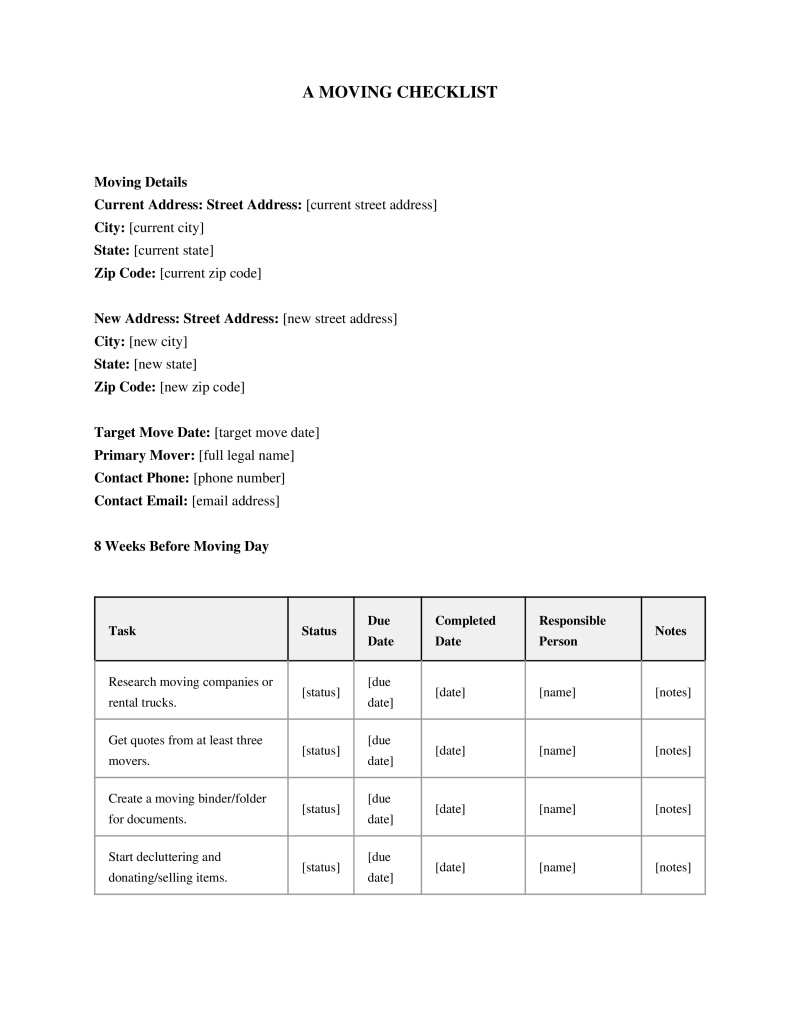
Move Timeline
Select your estimated move date range to help tailor your checklist.
Table of Contents
What is a Moving Checklist?
A moving checklist is a comprehensive, organized document or tool designed to guide individuals or families through the process of relocating from one residence to another. Its primary purpose is to systematically outline the numerous tasks and considerations involved in a move, from initial planning stages to post-relocation adjustments. By providing a structured framework, a moving checklist helps to reduce stress, ensure critical steps are not overlooked, and facilitate a smoother transition to a new home.
Purpose and Benefits
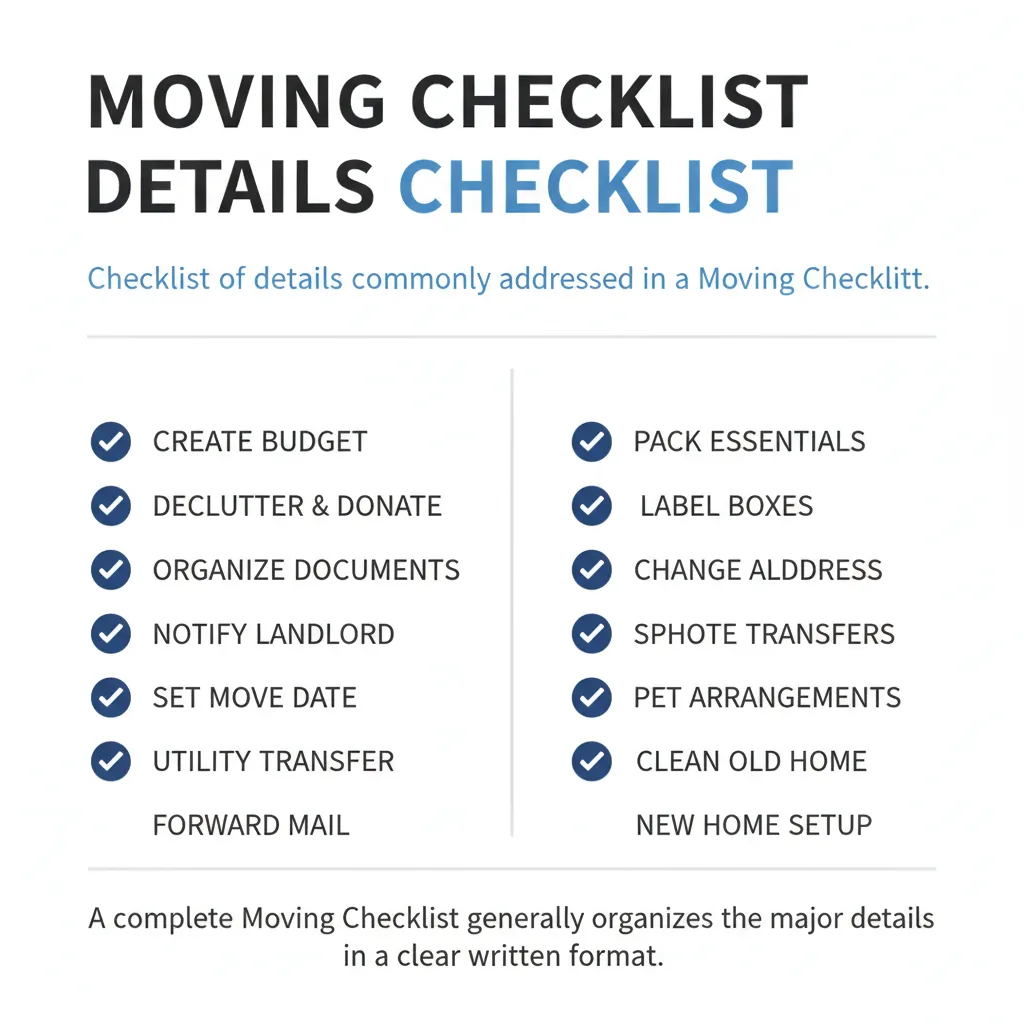
The primary benefit of utilizing a moving checklist is to provide a structured approach to a complex and often overwhelming event. Moving involves coordinating numerous tasks across various timelines, and a checklist serves as a central reference point. It helps individuals track progress, delegate responsibilities, and manage expectations throughout the relocation process.
Key advantages of employing a moving checklist include:
- Organization - It breaks down the entire moving process into manageable steps, preventing oversight of critical tasks.
- Time Management - Helps in allocating sufficient time for each task, from packing to utility transfers, often suggesting a timeline spanning several weeks or months.
- Budget Control - Can include sections for tracking moving-related expenses, such as professional movers, packing supplies, and utility setup fees.
- Stress Reduction - Provides a clear roadmap, reducing anxiety associated with the numerous responsibilities involved in relocating.
- Efficiency - Streamlines the process by ensuring tasks are completed in a logical order, minimizing last-minute rushes or forgotten items.
Key Stages of a Moving Process
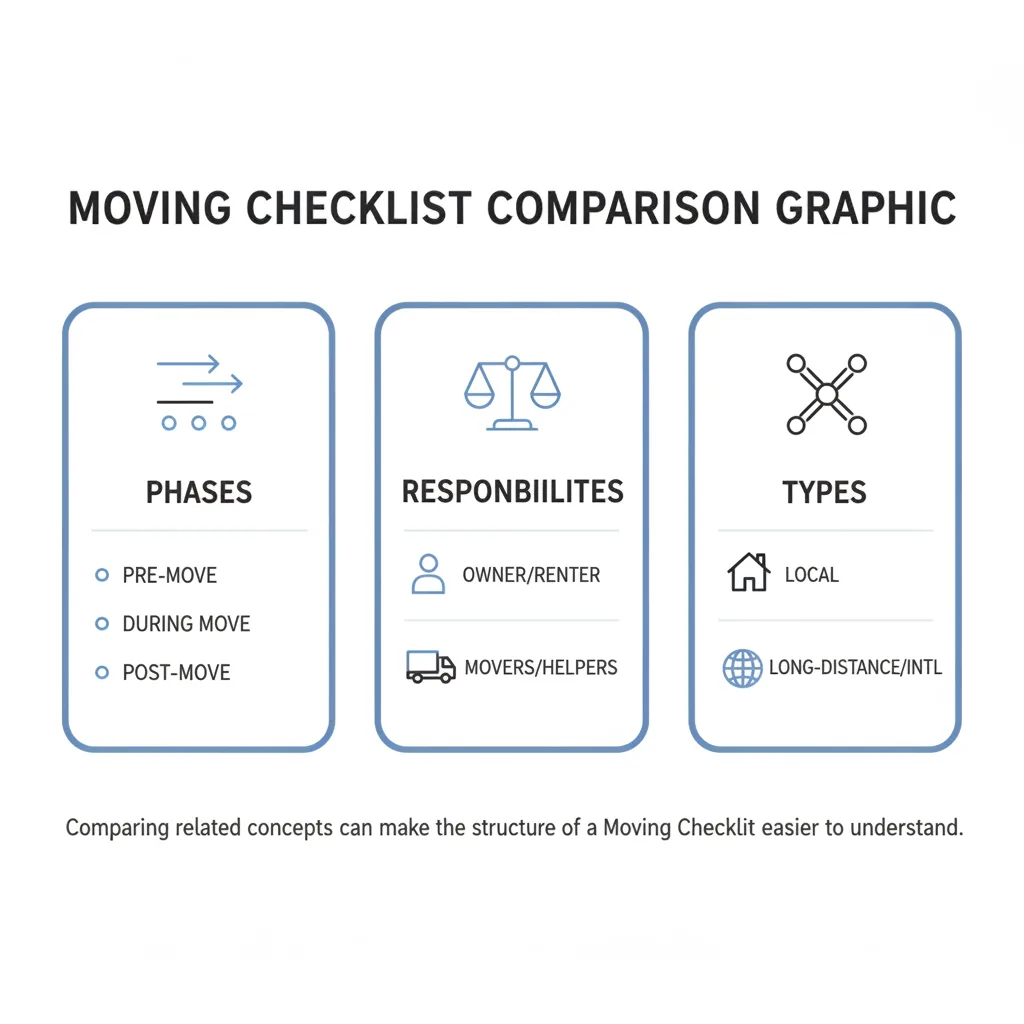
A typical moving checklist often categorizes tasks into distinct phases, reflecting the natural progression of a relocation. These stages help users focus on relevant actions at appropriate times, ensuring a methodical approach to the move.
- Planning Phase (8+ Weeks Out) - This initial stage involves foundational decisions and preparations. It includes setting a moving date, creating a budget, researching moving companies or rental trucks, and decluttering possessions. During this phase, individuals might also begin gathering important documents and making preliminary arrangements for schools or employment in the new location.
- Preparation Phase (4-6 Weeks Out) - This stage focuses on more hands-on tasks. It typically involves purchasing packing supplies, beginning the packing process for non-essential items, and confirming arrangements with moving services. This is also the critical period for notifying various entities of the impending address change and arranging for utility transfers.
- Execution Phase (1-2 Weeks Out to Moving Day) - As moving day approaches, tasks become more urgent and specific. This includes finishing packing, cleaning the old residence, confirming final details with movers, and preparing an essentials box for immediate needs at the new home. Final utility shut-offs and transfers are often confirmed during this time.
- Post-Move Phase (Immediately After Moving) - This final stage addresses tasks required upon arrival at the new residence. It involves unpacking essentials, setting up utilities, updating personal records, and completing any necessary registrations or address changes that could not be done in advance.
Pre-Move Planning and Coordination
Effective pre-move planning is crucial for a smooth transition. This phase involves a variety of administrative and logistical tasks that often begin several weeks before the actual moving date. Proper coordination ensures that essential services are maintained, and critical information is updated.
Key tasks during this planning period include:
- Address Change Notification - It is essential to update your address with the U.S. Postal Service to ensure mail forwarding to your new location. This can be done by visiting USPS.com/move or by requesting a Mover’s Guide packet at a local post office.
- Voter Registration Update - Updating your voter registration after moving is crucial to participate in local, state, and federal elections. Individuals can update their registration by visiting vote.gov, selecting their state or territory, and noting the registration deadline. Depending on state rules, changes can be made online, by mail, by phone, or in person.
- Utility Transfers and Disconnections - Contact electricity, gas, water, internet, and cable providers to schedule disconnection dates at the old address and connection dates at the new one.
- Insurance Review - Notify home, renters, and auto insurance providers of the move and update policies as necessary to cover the new residence and ensure continued protection during transit.
- Medical and School Records - Arrange for the transfer of medical records to new doctors or clinics and school records for children to their new educational institutions.
- Financial Institutions - Inform banks, credit card companies, and investment firms of the new address to ensure statements and correspondence are received correctly.
- Subscription Services - Update delivery addresses for magazines, newspapers, and various online subscription services.
Packing and Logistics Considerations
The physical act of packing and coordinating the logistics of transportation forms a significant part of any moving checklist. This stage requires careful planning to protect belongings and ensure they arrive at the new destination efficiently.
Important considerations for packing and logistics include:
- Inventory Creation - Developing a detailed inventory of all items being moved helps track possessions and assess potential damage or loss.
- Packing Supplies - Acquire necessary materials such as boxes of various sizes, packing tape, bubble wrap, packing paper, and markers for labeling.
- Categorized Packing - Pack items by room or category, clearly labeling each box with its contents and the room it belongs to in the new home.
- Essentials Box - Prepare a separate box with immediate necessities for the first night or two in the new home, including toiletries, medications, basic tools, a change of clothes, and important documents.
- Fragile Items - Use specialized packing techniques and materials for delicate items, ensuring they are well-cushioned and clearly marked.
- Moving Method - Decide between hiring professional movers, renting a moving truck, or enlisting the help of friends and family. If hiring professionals, confirm their insurance coverage and service scope.
- Vehicle Transportation - If moving long distances, arrange for the transportation of vehicles if they cannot be driven to the new location.
- Pet Relocation - Plan for the safe transportation and adjustment of pets, including necessary veterinary checks and updated identification.
Frequently Asked Questions
Sources
- How to change your address - Guidance on updating your address with the U.S. Postal Service and other government services when moving.
- How to update or change your voter registration - Instructions for updating voter registration details after moving.
Not the form you're looking for?
Try our legal document generator to create a custom document
Disclaimer: The templates available on this website are provided for general informational purposes only and do not constitute legal advice. They are not intended to be, and should not be interpreted as, compliant with any specific legal, regulatory, or privacy requirements. These templates are not a replacement for professional legal guidance and should not be relied upon for any particular matter or circumstance. Users are strongly encouraged to seek advice from a qualified attorney licensed in their jurisdiction before using, modifying, or relying on any template.
All templates are provided on an "as is," "with all faults," and "as available" basis. The provider disclaims any and all warranties of any kind, whether express, implied, statutory, or otherwise, including without limitation warranties of merchantability, fitness for a particular purpose, title, or non-infringement.
LegalTemplates.com makes no guarantees or representations regarding the accuracy, completeness, expected outcomes, or reliability of the materials contained in these templates or any materials referenced or linked from them.