Motion for Bond Reduction
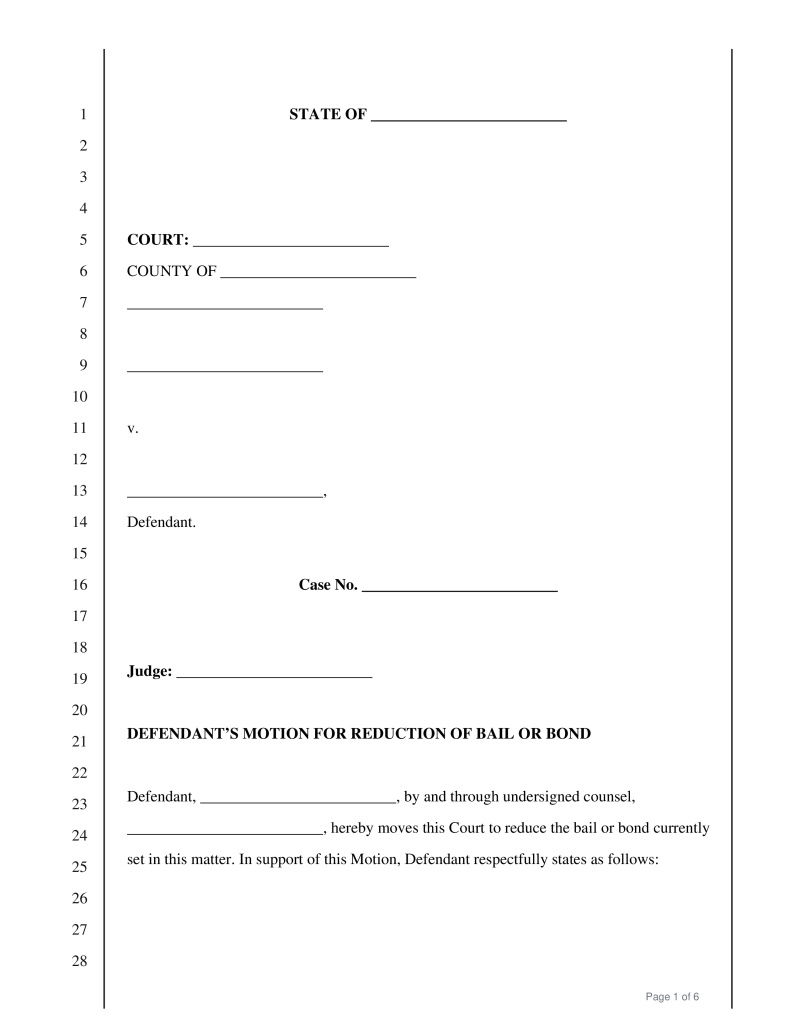
A Motion for Bond Reduction is a formal written request submitted to a court by a criminal defendant petitioning for a decrease in the financial bail amount required to secure pretrial release.
Filing Party Role
Select the role of the person submitting or assisting with the motion. This helps identify the movant and how the motion should be framed.
Use this if the filing or assisting role is not listed.
Table of Contents
What is a Motion for Bond Reduction?
A Motion for Bond Reduction is a formal legal request filed by a criminal defendant asking the court to lower the financial amount or modify the conditions of their pretrial bail. The primary purpose of this motion is to secure a more affordable release condition while the criminal case remains pending. Defendants who cannot afford the initially set bail amount rely on this mechanism to avoid prolonged pretrial detention.
Grounds for Requesting a Bond Reduction
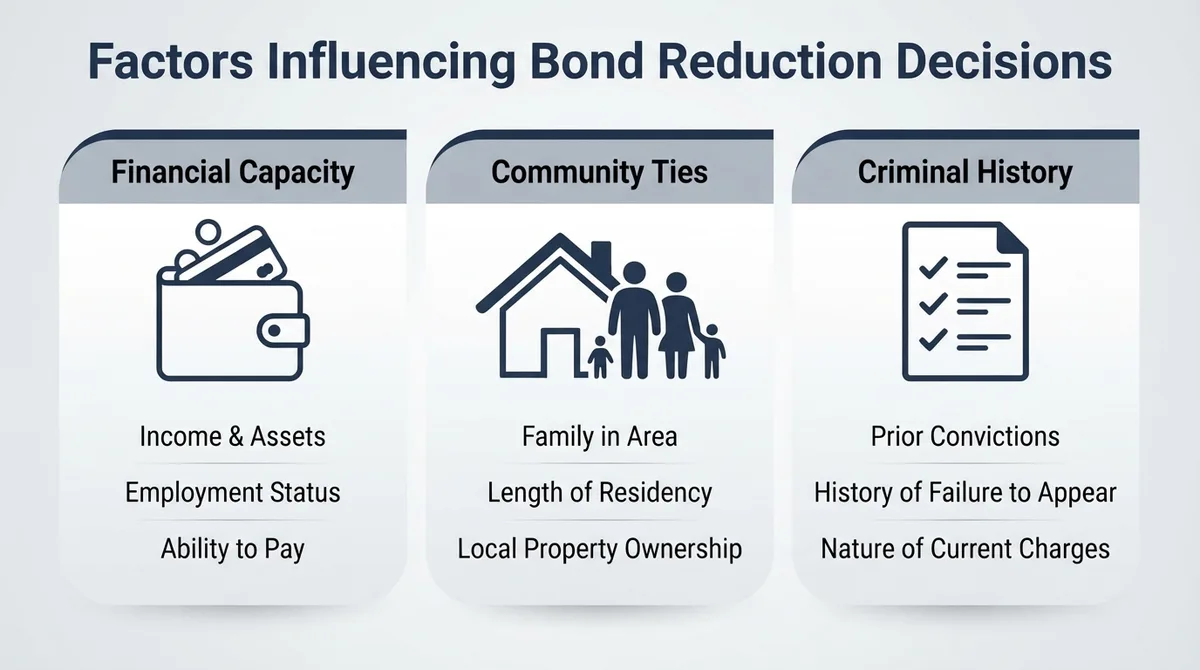
Courts evaluate several factors when determining whether to modify the bail amount originally established at the initial appearance:
- Financial Capacity - The inability of the defendant or their family to secure the funds necessary for the current bail amount.
- Community Ties - Strong local connections, including family residency, employment history, and length of time living in the area, which indicate the defendant is unlikely to flee.
- Criminal History - A minimal or non-existent record of prior arrests, convictions, or failures to appear in court.
- Nature of the Offense - The non-violent nature or relatively low severity of the charged conduct.
Types of Criminal Bonds
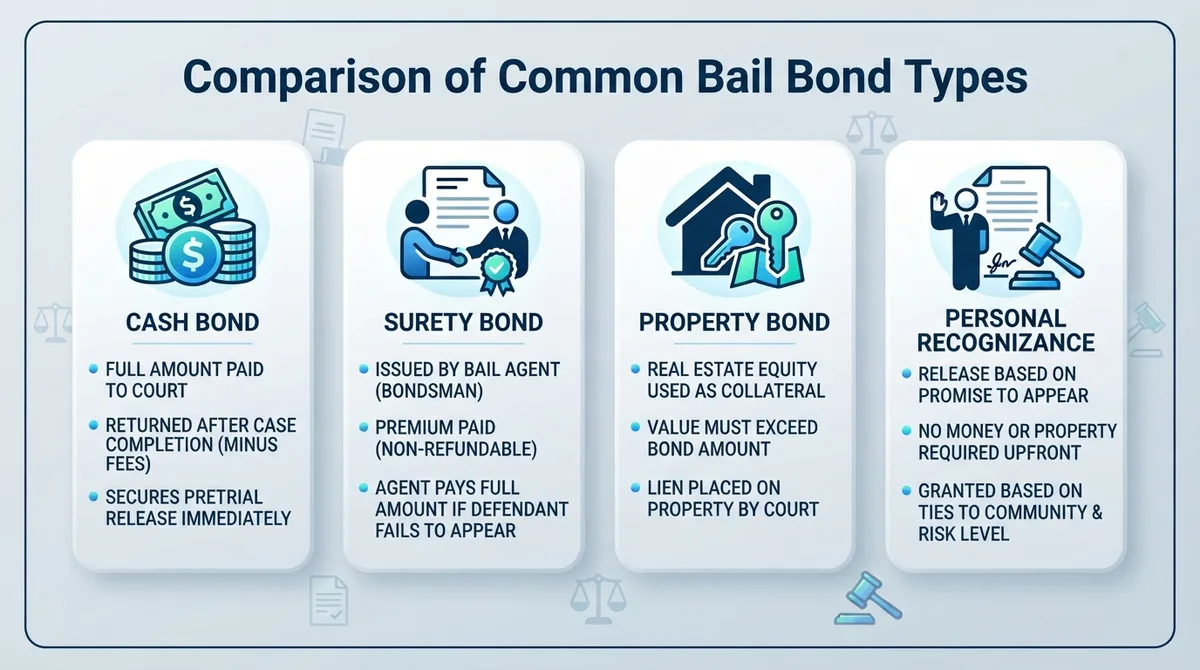
Defendants may seek to modify or transition between different categories of bail depending on their financial resources and court rules:
- Cash Bond - A requirement to deposit the full bail amount in cash with the court clerk, which may later be recovered using specific procedures.
- Surety Bond - A financial guarantee secured through a commercial bail bondsman who charges a non-refundable fee to post the full bail amount.
- Property Bond - A bond secured by real property equity, requiring specific valuation and recording procedures.
- Personal Recognizance Bond - A release granted without financial collateral, based solely on the defendant's written promise to return to court.
Required Information in a Motion for Bond Reduction
A formal motion must contain specific details to allow the presiding judge to make an informed decision regarding pretrial release:
- Case Information - The official case number, court division, name of the defendant, and the specific charges filed.
- Current Bond Status - The current financial amount and any non-monetary conditions imposed during the initial bail hearing.
- Proposed Modifications - The specific lower dollar amount requested or alternative non-monetary conditions such as electronic monitoring.
- Factual Justifications - Evidence supporting the request, including employment verification, medical records, or affidavits from community members.
Filing and Hearing Process
The procedure for seeking a bond modification involves distinct legal steps that must be completed in accordance with local court rules:
- Drafting the Written Motion - The defendant or their legal counsel prepares the formal written request detailing the reasons for the reduction.
- Filing with the Court Clerk - The completed motion is submitted to the clerk of the court where the criminal charges are pending.
- Serving the Prosecution - A copy of the filed motion is delivered to the prosecuting attorney to provide notice and an opportunity to object.
- Presenting Arguments at the Hearing - Both parties appear before a judge to present oral arguments and evidence regarding whether the bail amount should be lowered.
Jurisdictional Court Forms and Rules
Different jurisdictions maintain specific forms and procedural guidelines to manage bail modifications and the administration of secured assets:
- District Court Bond Modification - Provides a standardized procedural form for defendants seeking to alter pretrial release conditions in North Carolina (North Carolina District Court Form).
- Disbursement of Cash Bond - Regulates the return and distribution of cash funds deposited with the court registry after a case is resolved (Southern District of Florida Bond Disbursement Form).
- Real Property Bond Procedure - Establishes the requirements for securing a criminal bond using real estate equity in federal court (District of Oregon Property Bond Procedures).
Frequently Asked Questions
Sources
- Motion for and Order for Bond Reduction - District Wide Form - Official form for requesting bond reduction in North Carolina district courts.
- Motion for Disbursement of Bond Form - Official form for requesting the return of a cash bond in the Southern District of Florida.
- Procedure for Criminal Bonds Secured by Real Property - Guidelines and forms for criminal bonds secured by real property in the District of Oregon.
Not the form you're looking for?
Try our legal document generator to create a custom document
Disclaimer: The templates available on this website are provided for general informational purposes only and do not constitute legal advice. They are not intended to be, and should not be interpreted as, compliant with any specific legal, regulatory, or privacy requirements. These templates are not a replacement for professional legal guidance and should not be relied upon for any particular matter or circumstance. Users are strongly encouraged to seek advice from a qualified attorney licensed in their jurisdiction before using, modifying, or relying on any template.
All templates are provided on an "as is," "with all faults," and "as available" basis. The provider disclaims any and all warranties of any kind, whether express, implied, statutory, or otherwise, including without limitation warranties of merchantability, fitness for a particular purpose, title, or non-infringement.
LegalTemplates.com makes no guarantees or representations regarding the accuracy, completeness, expected outcomes, or reliability of the materials contained in these templates or any materials referenced or linked from them.