Gross Lease
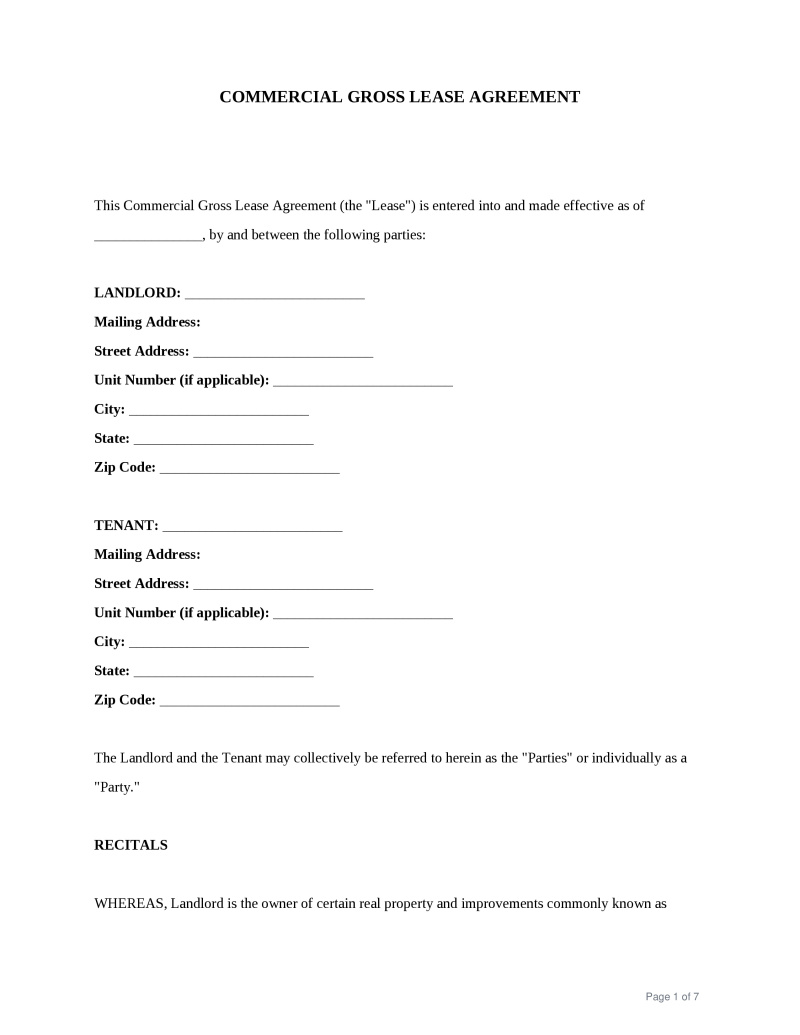
A gross lease is a commercial real estate rental agreement under which the tenant pays a flat rental amount, while the landlord is responsible for paying all property operating expenses.
Premises Category
This helps tailor use, occupancy, maintenance, and expense provisions while keeping the lease structured as a gross lease.
Use a practical description that should appear in the lease.
Table of Contents
What is a Gross Lease?
A gross lease is a standard commercial real estate agreement where the tenant pays a flat rental fee in exchange for the exclusive use of the property. Under this arrangement, the landlord assumes responsibility for all ancillary property expenses, including property taxes, insurance, utilities, and maintenance costs. This lease structure provides predictability for tenants, who can budget for a single monthly expense without worrying about fluctuating operating costs. It is commonly utilized in multi-tenant office buildings, retail spaces, and residential rentals.
Types of Gross Leases
Commercial real estate transactions utilize distinct variations of the gross lease structure to allocate operating expenses:
- Full-Service Gross Lease - A rental agreement where the landlord covers all operating expenses, including utilities, janitorial services, taxes, insurance, and maintenance, within the base rent.
- Modified Gross Lease - A hybrid rental agreement where the tenant pays a base rent and shares responsibility for specific operating expenses, such as utilities or interior maintenance, while the landlord covers taxes and insurance.
- Industrial Gross Lease - A variation typically used in industrial properties where the tenant pays a flat rent plus certain agreed-upon expenses, often tied to utility consumption or common area maintenance.
Distinguishing Gross Leases from Net Leases
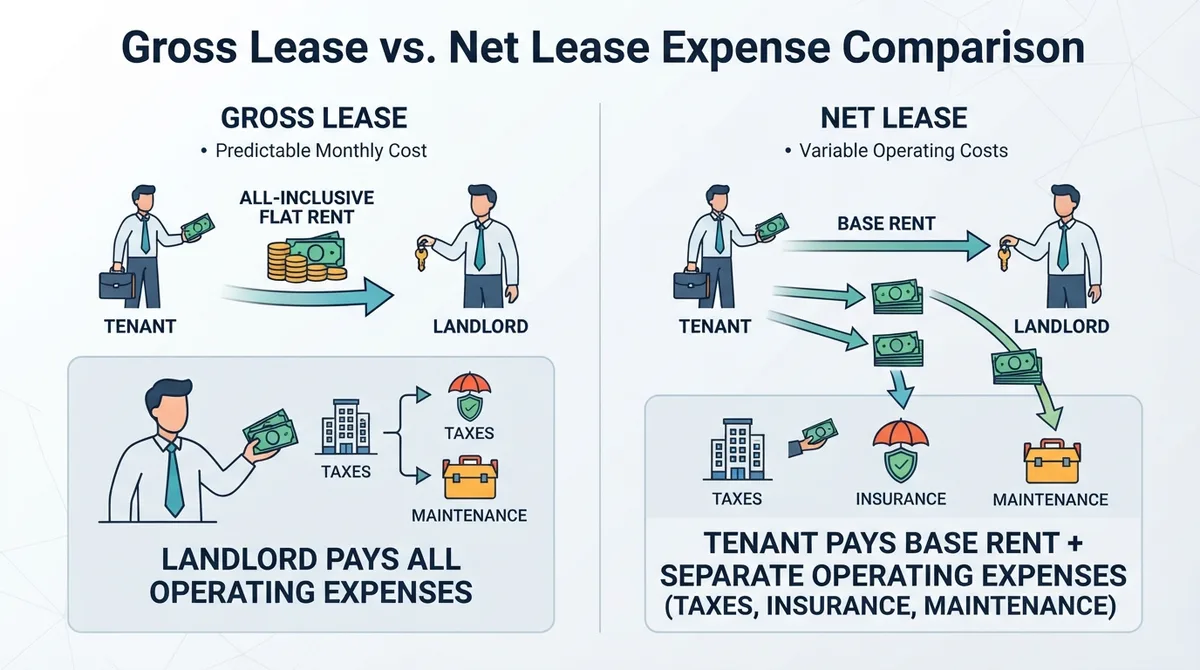
Commercial property arrangements generally fall into gross or net categories, which differ primarily in how they allocate operating costs:
- Single Net Lease - A lease where the tenant pays base rent plus their pro-rata share of the property taxes.
- Double Net Lease - An agreement requiring the tenant to pay base rent along with property taxes and insurance premiums.
- Triple Net Lease - A contract where the tenant pays base rent plus all operating expenses, including taxes, insurance, and common area maintenance.
- Expense Allocation - Gross leases centralize financial risk with the landlord, whereas net leases shift variable property expenses directly to the tenant.
Legal and Regulatory Framework
Specific federal regulations and definitions distinguish commercial lease structures from other legal agreements:
- Consumer Lease Exclusions - Federal regulations define a consumer lease as a contract for personal property used by a natural person for personal, family, or household purposes exceeding four months, specifically excluding leases for agricultural, business, or commercial purposes (12 CFR § 213.3).
- Gross Proceeds in Energy Leases - Federal administrative rules define gross proceeds in the context of oil and gas leases as the total money or consideration paid to a lessee, including payments for services like treating, measuring, and field gathering that the lessee must perform at no cost to the lessor (52 FR 4793).
- Commercial Lease Autonomy - Because commercial gross leases fall outside consumer protection statutes, contracting parties maintain broad latitude to negotiate terms, allocations, and expense caps.
Landlord and Tenant Obligations
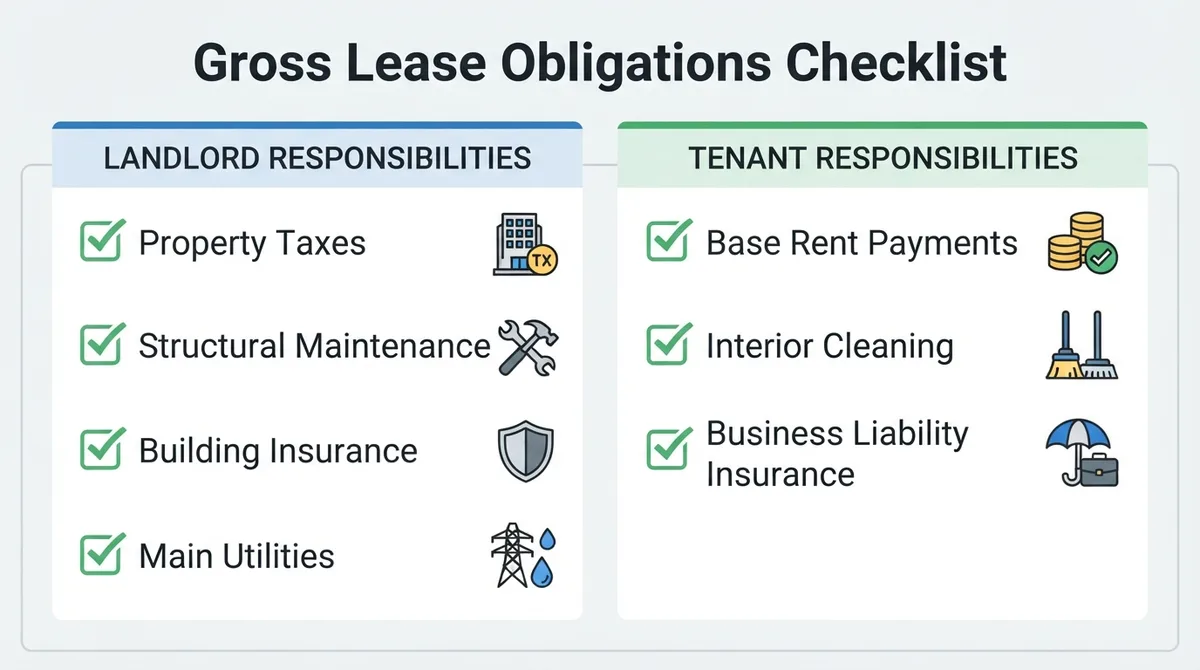
Under a standard gross lease, the division of operational duties typically follows a structured allocation:
- Landlord Financial Obligations - The property owner remains responsible for paying property taxes, building insurance, structural repairs, and common area utilities.
- Tenant Financial Obligations - The occupant is responsible for paying the agreed-upon flat monthly rent and any personal business expenses, such as liability insurance and interior cleaning.
- Maintenance Responsibilities - Landlords handle major structural integrity issues, roof repairs, and HVAC systems, while tenants maintain the interior space in a clean and safe condition.
- Expense Stop Provisions - Many gross leases include a clause that limits the landlord's exposure by requiring the tenant to pay any operating expenses that exceed a specified base year amount.
Advantages and Disadvantages of Gross Leases
Both parties must weigh specific financial and administrative trade-offs when entering into a gross lease agreement:
- Tenant Budget Predictability - Occupants benefit from stable monthly expenses, allowing for precise financial planning and cash flow management.
- Simplified Administration - Landlords manage all property bills directly, eliminating the need to calculate and invoice tenants for pro-rata shares of operating costs.
- Inflation Risk for Landlords - Property owners bear the risk of rising tax rates, insurance premiums, and utility costs, which can erode profit margins over time.
- Higher Base Rent - Landlords typically charge a higher initial rental rate to offset the financial risk of covering all operational expenses.
Frequently Asked Questions
Sources
- Federal Reserve System § 213.3 - Defines 'consumer lease' and specifies exclusions, including leases for agricultural, business, or commercial purposes.
- Federal Register / Vol. 52, No. 30 / Friday, February 13, 1987 / Proposed Rules - Proposes a definition of 'gross proceeds' in the context of oil and gas leases, including payments for services like treating, measuring, and field gathering.
Not the form you're looking for?
Try our legal document generator to create a custom document
Disclaimer: The templates available on this website are provided for general informational purposes only and do not constitute legal advice. They are not intended to be, and should not be interpreted as, compliant with any specific legal, regulatory, or privacy requirements. These templates are not a replacement for professional legal guidance and should not be relied upon for any particular matter or circumstance. Users are strongly encouraged to seek advice from a qualified attorney licensed in their jurisdiction before using, modifying, or relying on any template.
All templates are provided on an "as is," "with all faults," and "as available" basis. The provider disclaims any and all warranties of any kind, whether express, implied, statutory, or otherwise, including without limitation warranties of merchantability, fitness for a particular purpose, title, or non-infringement.
LegalTemplates.com makes no guarantees or representations regarding the accuracy, completeness, expected outcomes, or reliability of the materials contained in these templates or any materials referenced or linked from them.