Distribution Agreement
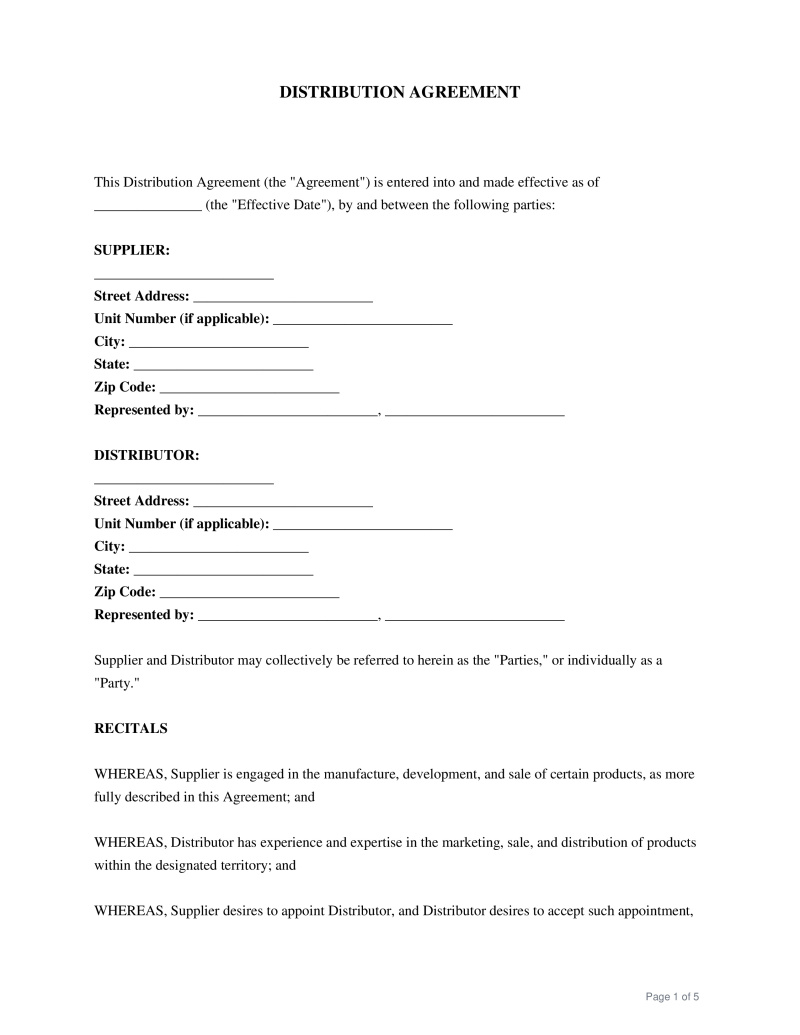
A Distribution Agreement is a legally binding contract that establishes the terms and conditions under which a distributor may purchase, market, and distribute goods or services supplied by a manufacturer.
Distribution Model
Select the commercial structure that best describes the relationship. This affects pricing, title transfer, revenue flow, and risk allocation.
Use this if the arrangement does not fit a standard buy-resell, reseller, or channel model.
Table of Contents
What is a Distribution Agreement?
A distribution agreement is a legally binding contract between a supplier and a distributor that outlines the terms and conditions under which the distributor will market and sell the supplier's products or services. This commercial contract establishes the framework of the business relationship, defining how goods are purchased, transported, and resold within designated markets. Manufacturing companies, software developers, and creators of diverse commercial goods rely on these agreements to expand their market reach without establishing their own direct retail infrastructure. By defining clear boundaries and expectations, the document protects the proprietary interests of the supplier while providing the distributor with a structured framework for sales operations.
Types of Distribution Agreements
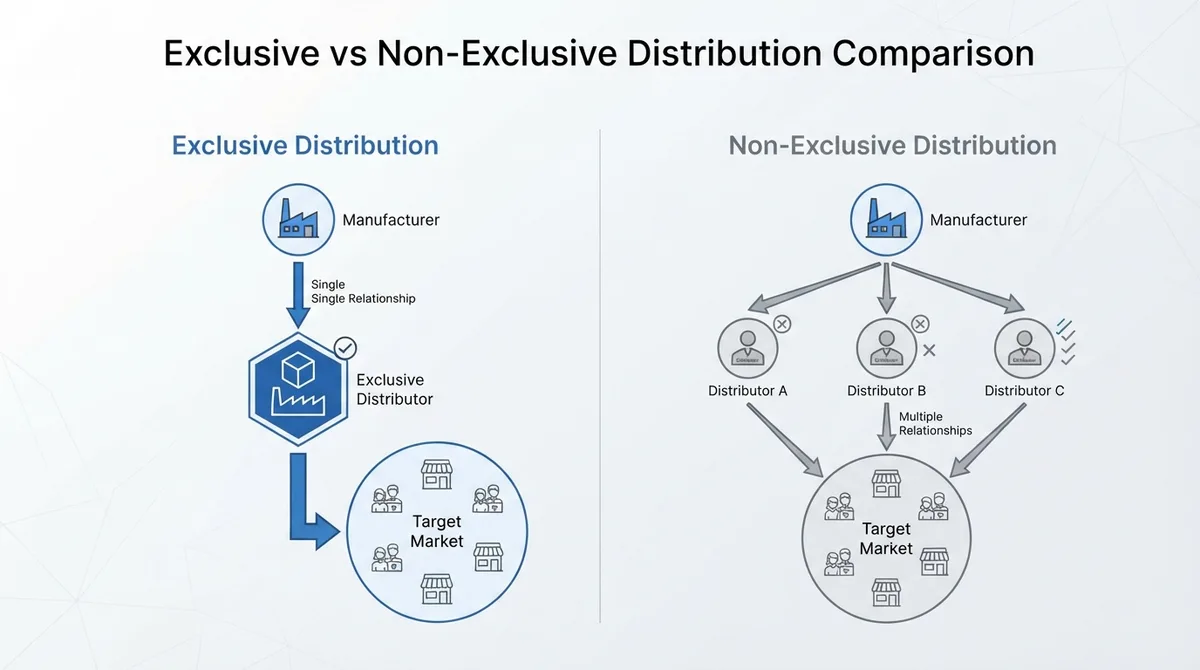
Commercial distribution arrangements vary based on the level of exclusivity and market control granted to the distributor. Common models include:
- Exclusive Distribution Agreement - Grants a single distributor the sole right to market and sell the products within a specified geographic territory or market sector, prohibiting the supplier from appointing other distributors or selling directly in that region.
- Non-Exclusive Distribution Agreement - Allows the supplier to appoint multiple distributors within the same geographic territory or market sector, creating a competitive environment for product sales.
- Sole Distribution Agreement - Permits only one distributor to operate within a specified territory, but reserves the right of the supplier to sell directly to end-users within that same territory.
- Selective Distribution Agreement - Restricts the appointment of distributors to those who meet specific qualitative or quantitative criteria, often used for luxury or highly technical products to maintain brand reputation.
Essential Provisions and Contractual Terms
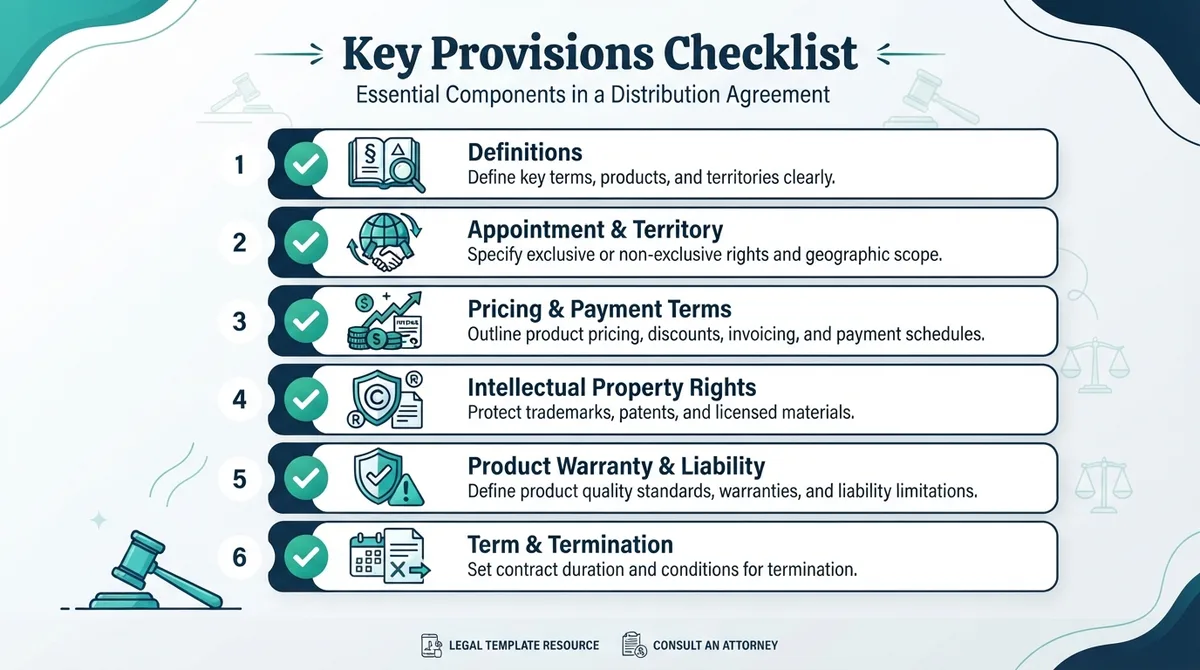
A comprehensive distribution agreement incorporates several critical clauses to govern the ongoing commercial relationship. These provisions establish financial expectations, legal boundaries, and risk allocation between the parties.
Standard agreements contain specific operational details:
- Definitions of Key Terms - Establishes precise legal meanings for terms such as licensed technology, proprietary products, net sales, and territory to prevent future contractual disputes.
- Pricing and Payment Terms - Outlines the purchase price of the goods, currency requirements, payment deadlines, and mechanisms for price adjustments over the life of the agreement.
- Intellectual Property Rights - Defines the distributor's limited rights to use the supplier's trademarks, brand names, and logos solely for marketing and sales purposes.
- Product Warranty and Liability - Allocates responsibility for product defects, customer support, and legal indemnification in the event of third-party claims or lawsuits.
- Term and Termination - Specifies the duration of the contract, renewal procedures, and the specific conditions under which either party can terminate the agreement.
Distribution Rights and Territory Allocation
The scope of distribution rights forms the core of the agreement, determining where and how the distributor can operate. Parties must clearly delineate geographic boundaries, market segments, and product lines included in the arrangement.
Territory and rights clauses typically govern the following parameters:
- Geographic Boundaries - Defines the specific countries, states, or regions where the distributor has authorization to market and sell the products.
- Channel Restrictions - Restricts sales to specific customer categories, such as retail stores, online marketplaces, or industrial end-users.
- Sub-Distribution Rights - Specifies whether the primary distributor has the authority to appoint sub-distributors or sales agents to assist in market penetration.
- Reservation of Rights - Outlines the specific markets or accounts that the supplier reserves for direct sales, bypassing the distributor.
Performance Requirements and Marketing Obligations
Suppliers often require distributors to meet specific performance benchmarks to retain their distribution rights. This ensures active market development and prevents a distributor from holding exclusive rights without generating sufficient sales volume.
Performance and marketing clauses generally include:
- Minimum Purchase Quotas - Establishes mandatory product volumes that the distributor must purchase from the supplier during specified periods to maintain the contract.
- Marketing Expenditures - Commits the distributor to investing a specific percentage of revenue or a fixed dollar amount into local advertising and promotional campaigns.
- Reporting Requirements - Mandates the regular submission of sales reports, inventory levels, and market feedback to the supplier.
- Technical Support and Training - Outlines obligations for the distributor to provide customer service, product training, and technical assistance to end-users.
Frequently Asked Questions
Sources
- Distribution Agreement between Ingram Micro Inc. and Websense, Inc. - Provides a sample distribution agreement between Ingram Micro Inc. and Websense, Inc.
- Distribution Agreement between Starco Brands, Inc. and Distributor - Contains a distribution agreement between Starco Brands, Inc. and a distributor, including definitions and terms.
- Distribution Agreement between EMI Global Music Services and Stadium Entertainment Corp. - Provides a distribution agreement between EMI Global Music Services and Stadium Entertainment Corp., including definitions and terms.
Not the form you're looking for?
Try our legal document generator to create a custom document
Disclaimer: The templates available on this website are provided for general informational purposes only and do not constitute legal advice. They are not intended to be, and should not be interpreted as, compliant with any specific legal, regulatory, or privacy requirements. These templates are not a replacement for professional legal guidance and should not be relied upon for any particular matter or circumstance. Users are strongly encouraged to seek advice from a qualified attorney licensed in their jurisdiction before using, modifying, or relying on any template.
All templates are provided on an "as is," "with all faults," and "as available" basis. The provider disclaims any and all warranties of any kind, whether express, implied, statutory, or otherwise, including without limitation warranties of merchantability, fitness for a particular purpose, title, or non-infringement.
LegalTemplates.com makes no guarantees or representations regarding the accuracy, completeness, expected outcomes, or reliability of the materials contained in these templates or any materials referenced or linked from them.