Declaratory Judgment
A declaratory judgment is a binding legal determination issued by a court that resolves uncertainty and defines the legal relationship between parties without awarding damages or ordering specific performance.
Case Posture
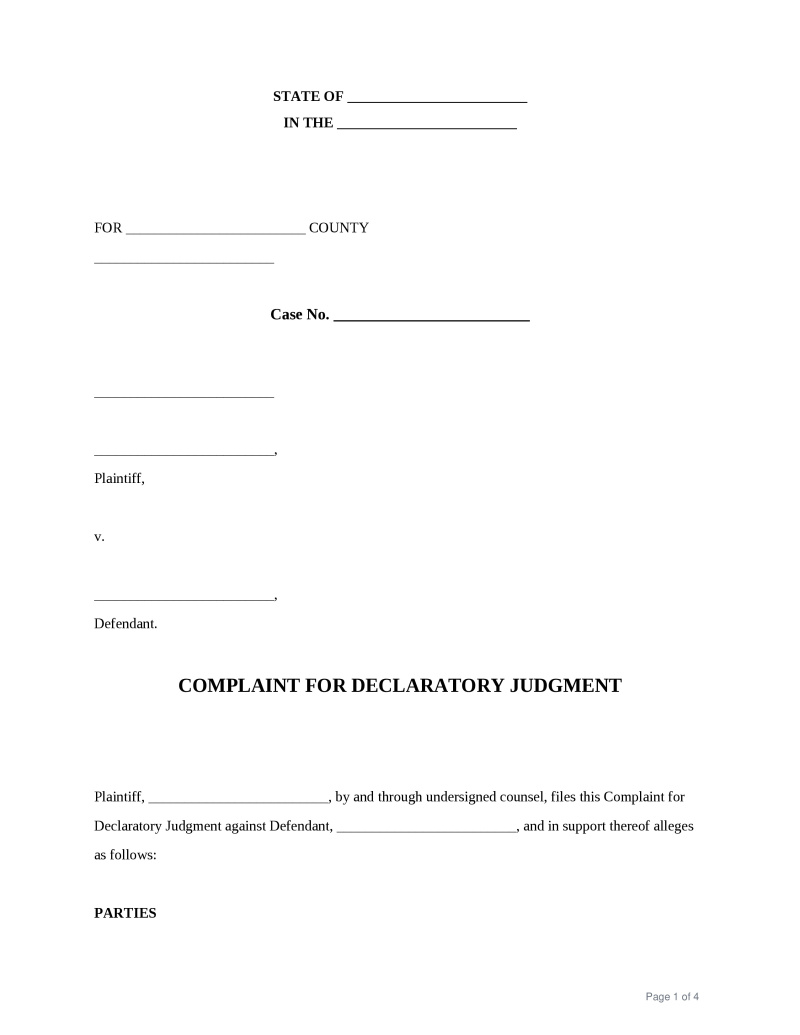
Most declaratory judgment filings begin as a complaint or petition. Sometimes declaratory relief is requested as a counterclaim, crossclaim, or amended pleading in an already pending case.
Table of Contents
What is a Declaratory judgment?
A declaratory judgment is a binding legal determination issued by a court that defines the legal relationship between parties and their rights regarding a specific matter. Unlike traditional judgments, this legal remedy does not award damages or order specific actions, instead focusing on resolving uncertainty before a conflict escalates into a breach of contract or law. Parties frequently utilize this mechanism to clarify their legal obligations, confirm the validity of contracts, or establish the constitutionality of a statute.
Purpose and Legal Function
The primary objective of a declaratory judgment is to provide preventive justice by resolving legal ambiguities before parties suffer actual harm or engage in costly litigation. It serves as a proactive instrument in civil litigation, allowing individuals and corporate entities to obtain judicial guidance on disputed legal rights. By establishing clear legal boundaries, the judgment helps parties avoid accidental breaches of contract, statutory violations, or unnecessary liability. Courts issue these judgments to promote efficiency, stabilize legal relationships, and prevent the accumulation of damages that would occur if the parties proceeded without legal clarity. This judicial mechanism allows a party to know where they stand legally before taking actions that could result in significant financial or legal exposure.
Types of Declaratory Relief
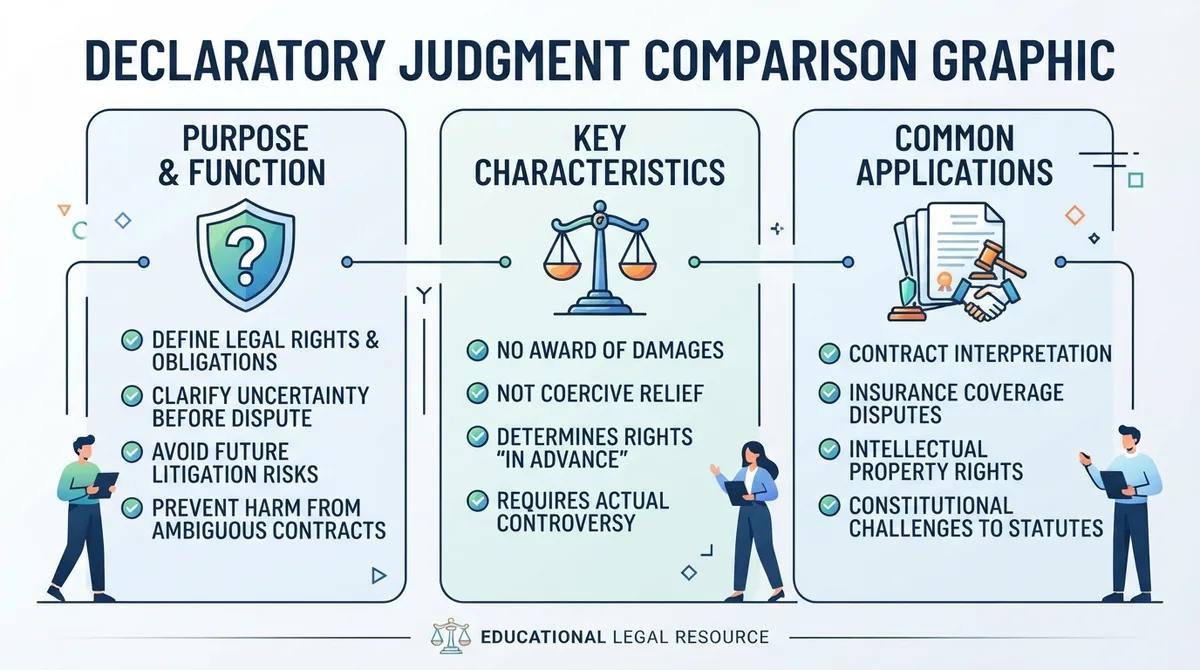
Courts grant declaratory relief in various forms depending on the underlying legal dispute:
- Contractual Declaratory Relief - Resolves disputes concerning the interpretation, validity, or termination of contract terms before a breach occurs, allowing parties to understand their obligations without risking liability.
- Statutory Declaratory Relief - Clarifies the meaning, scope, or constitutionality of a law, regulation, or municipal ordinance, helping individuals and businesses comply with public laws.
- Insurance Coverage Declaratory Relief - Determines whether an insurance policy covers a specific claim or obligates an insurer to defend an insured party in court, resolving disputes between insurers and policyholders.
- Property Rights Declaratory Relief - Establishes ownership boundaries, easement rights, or the validity of land titles to resolve real estate disputes before physical development or sale.
- Intellectual Property Declaratory Relief - Clarifies whether a product, service, or process infringes on an existing patent, trademark, or copyright, protecting developers from unexpected infringement claims.
Common Legal Contexts and Applications
Declaratory judgments are highly versatile and find application across several distinct areas of civil law:
- Insurance Policy Disputes - Insurers often seek judicial clarification on their duty to defend or indemnify a policyholder when the facts of an underlying lawsuit fall into a gray area of the policy, protecting both parties from bad-faith claims.
- Commercial Contract Interpretations - Businesses use declaratory actions to interpret complex clauses, such as non-compete agreements, termination provisions, or force majeure clauses, without risking a breach-of-contract lawsuit or operational disruption.
- Intellectual Property Clearance - Manufacturers or developers facing threats of patent infringement lawsuits may file for declaratory relief to establish that their products do not infringe on the competitor's patents, ensuring market stability.
- Constitutional and Regulatory Challenges - Private citizens, advocacy groups, or businesses challenge the validity of state or federal regulations, seeking a declaration that the government action is unconstitutional or exceeds statutory authority.
Procedural Requirements and Legal Standards
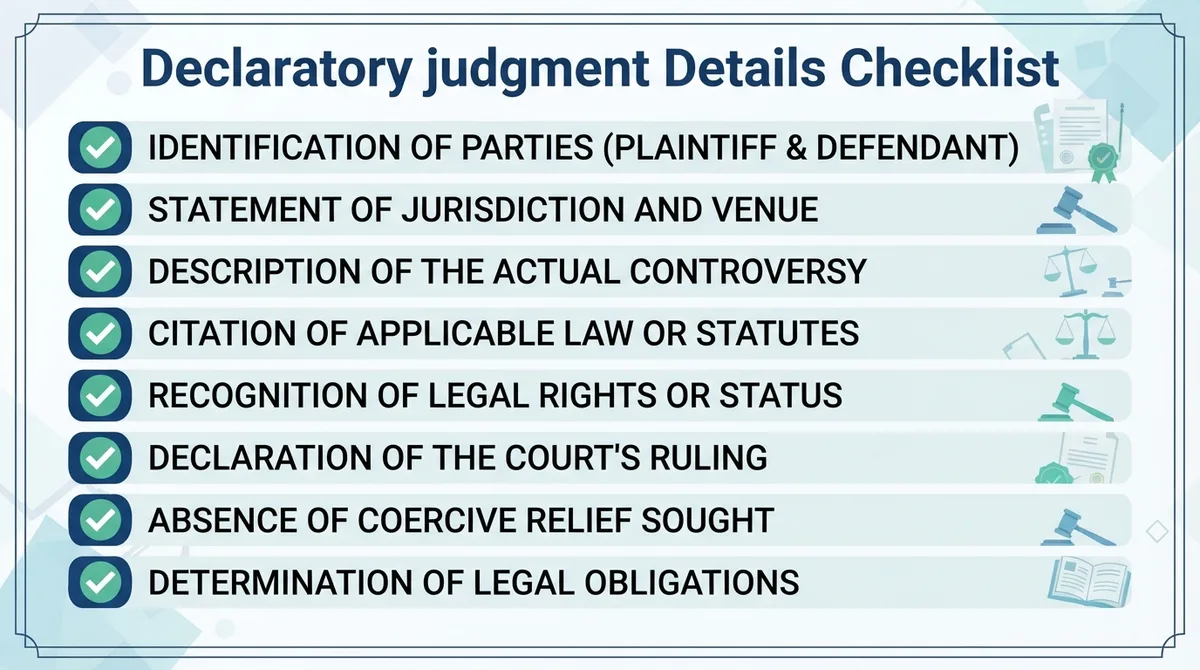
Courts do not issue advisory opinions on hypothetical scenarios; specific legal standards must be met to obtain a declaratory judgment:
- Actual Controversy Requirement - A real, substantial, and immediate legal dispute must exist between parties having adverse legal interests, ensuring the court does not rule on abstract questions (Federal Declaratory Judgment Act, 28 U.S.C. § 2201).
- Standing to Sue - The plaintiff must demonstrate a concrete, personalized interest in the outcome of the declaration and face potential harm if the legal uncertainty remains unresolved.
- Ripeness of the Issue - The dispute must be sufficiently developed for judicial review, meaning the threat of injury is imminent and not speculative or contingent on future events.
- Judicial Discretion - Courts retain the authority to refuse to hear a declaratory action if a more appropriate legal remedy exists or if the declaration would not fully resolve the underlying controversy.
Differences from Other Legal Remedies
Understanding how a declaratory judgment differs from other judicial remedies is essential for effective litigation planning:
- Injunctions - An injunction orders a party to perform or cease a specific action under penalty of contempt, whereas a declaratory judgment merely defines rights without commanding action.
- Monetary Damages - Damages compensate a plaintiff for past injuries or financial losses, while a declaratory action seeks to prevent future harm by clarifying rights before damages accrue.
- Specific Performance - Specific performance compels the execution of a contract according to its terms, while declaratory relief clarifies what those terms actually mean without forcing physical compliance.
Frequently Asked Questions
Not the form you're looking for?
Try our legal document generator to create a custom document
Disclaimer: The templates available on this website are provided for general informational purposes only and do not constitute legal advice. They are not intended to be, and should not be interpreted as, compliant with any specific legal, regulatory, or privacy requirements. These templates are not a replacement for professional legal guidance and should not be relied upon for any particular matter or circumstance. Users are strongly encouraged to seek advice from a qualified attorney licensed in their jurisdiction before using, modifying, or relying on any template.
All templates are provided on an "as is," "with all faults," and "as available" basis. The provider disclaims any and all warranties of any kind, whether express, implied, statutory, or otherwise, including without limitation warranties of merchantability, fitness for a particular purpose, title, or non-infringement.
LegalTemplates.com makes no guarantees or representations regarding the accuracy, completeness, expected outcomes, or reliability of the materials contained in these templates or any materials referenced or linked from them.