Declaration of Status
A Declaration of Status is a formal legal instrument by which an individual or entity formally asserts or clarifies their legal, civil, or national identity or standing within a specific jurisdiction.
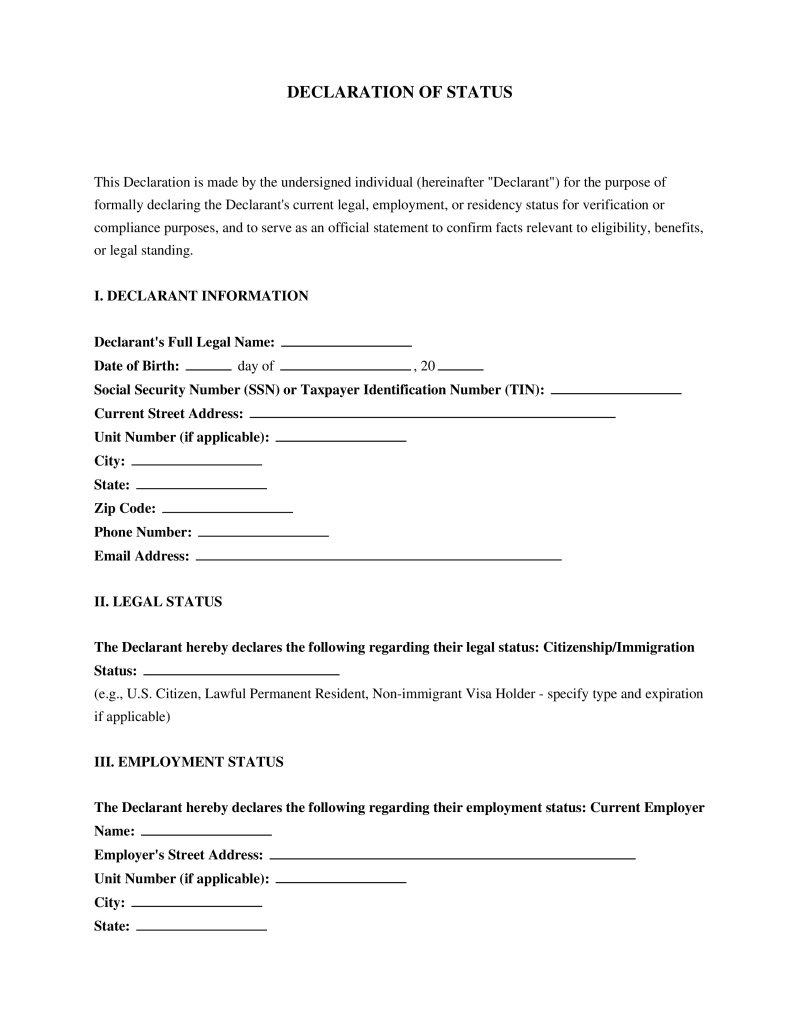
Status Category
Select the main category that best describes the status you are declaring.
Provide a brief description of the status type.
Table of Contents
What is a Declaration of Status?
A Declaration of Status is a formal written statement in which an individual or entity affirms a particular legal or factual condition. These declarations are typically made under penalty of perjury, signifying that the declarant attests to the truthfulness of the information provided and acknowledges potential legal consequences for making false statements. Such documents serve to establish or confirm a specific status for legal or administrative purposes, ensuring accuracy and accountability in official proceedings.
Purpose and Legal Basis
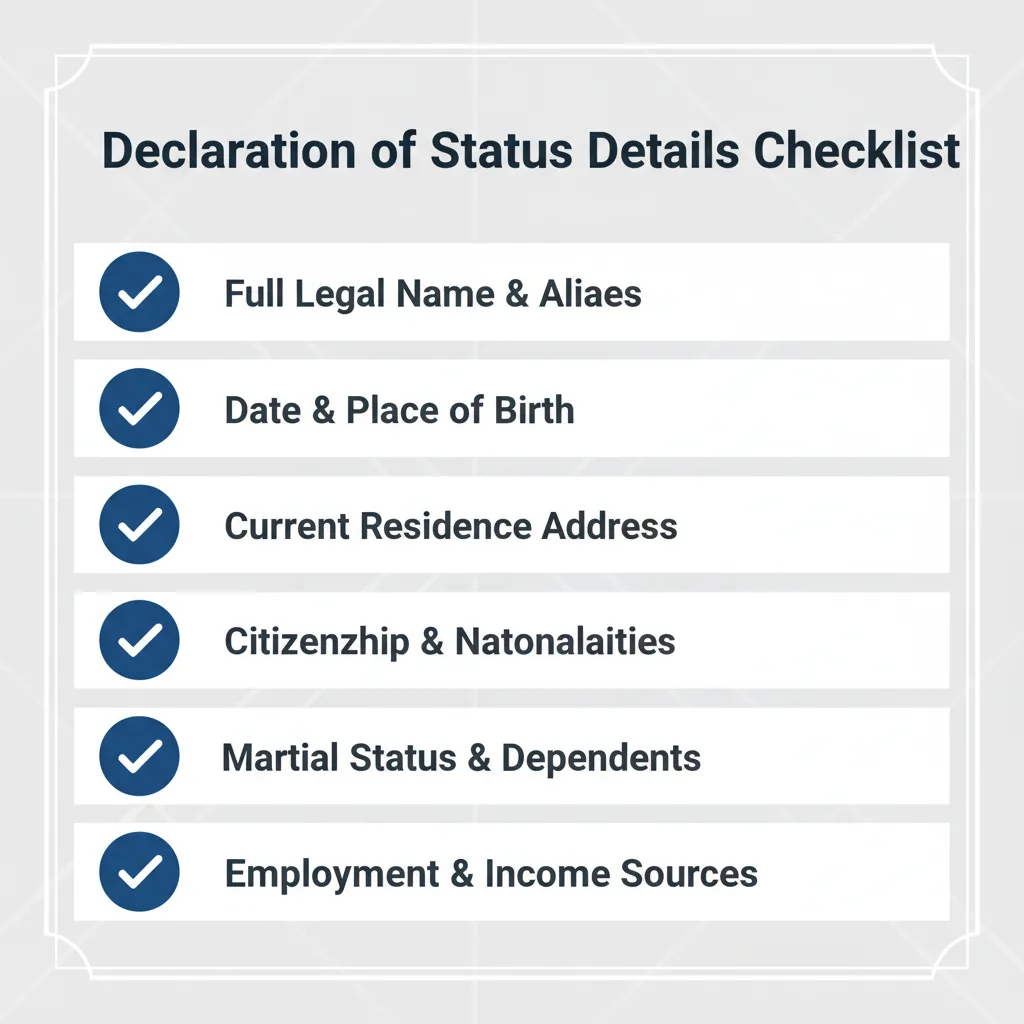
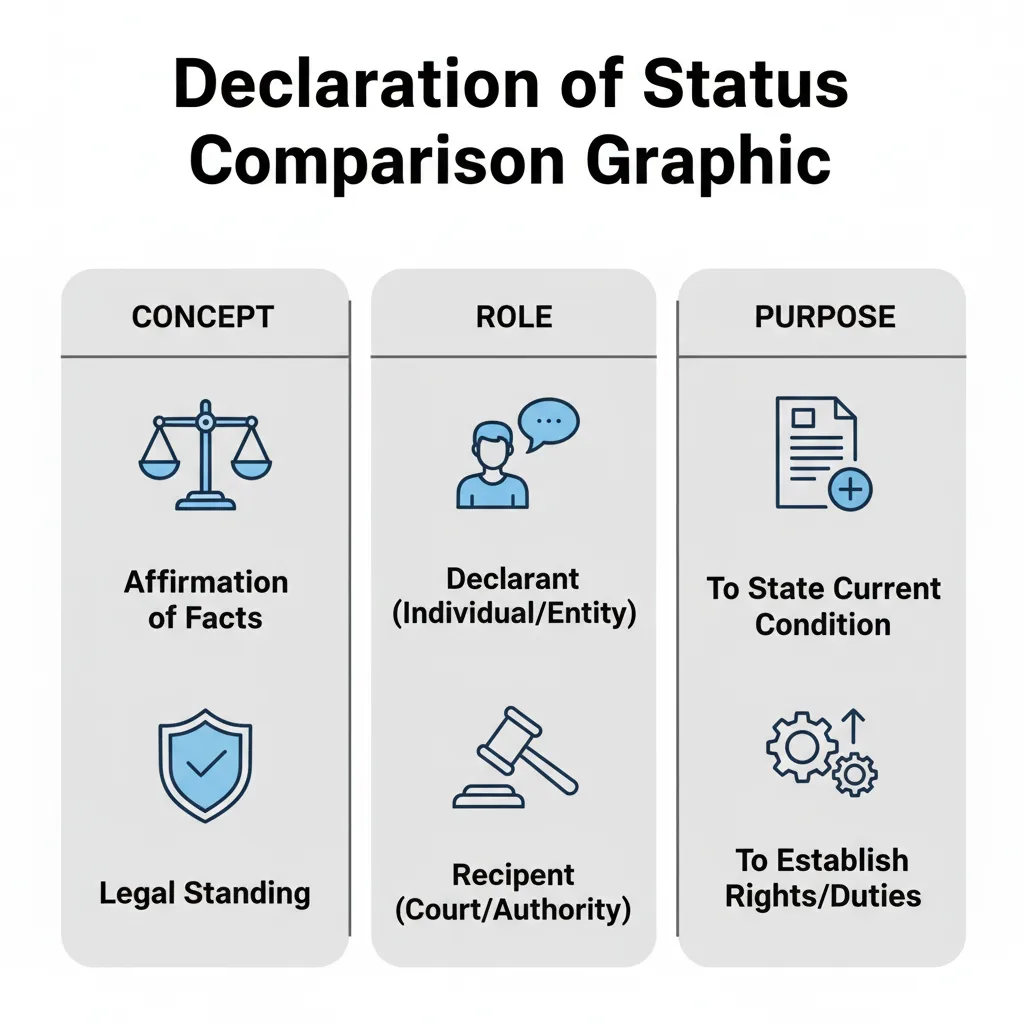
The primary purpose of a Declaration of Status is to provide verifiable information to courts, government agencies, or other official bodies. By requiring a declaration under penalty of perjury, legal systems aim to ensure the integrity of the information presented, preventing fraud and promoting transparency. This legal mechanism allows parties to formally submit facts or affirm their standing without necessarily appearing in person to testify, streamlining various legal and administrative processes while maintaining a high standard of truthfulness.
The legal basis for these declarations rests on the principle that a sworn statement carries significant weight. Making a false statement in a document filed under penalty of perjury can lead to charges of perjury, a criminal offense. This deterrent helps ensure that individuals and entities are diligent and truthful when asserting their status or providing factual information in official contexts.
Common Applications
Declarations of Status are utilized across various legal and administrative domains where a formal affirmation of one's condition is required. These applications range from judicial proceedings to eligibility determinations for public services.
Bankruptcy Proceedings
In bankruptcy cases, debtors are required to provide comprehensive and accurate financial information to the court. Several official forms serve as declarations of status related to their financial situation and eligibility:
- Declaration About an Individual Debtor’s Schedules - Individual debtors use Form B 106 Declaration to declare the completeness and accuracy of their financial schedules, which detail assets, liabilities, income, and expenses (U.S. Courts Form B 106 Declaration).
- Declaration Under Penalty of Perjury for Non-Individual Debtors - Non-individual debtors, such as corporations or partnerships, use Form B 202 to declare under penalty of perjury that the information provided in their bankruptcy filings is true and correct (U.S. Courts Form B 202).
- Declaration of Inmate Filing - Inmates filing for bankruptcy use Form B 4170 to declare their filings, addressing specific considerations related to their incarceration (U.S. Courts Form B 4170).
These forms are critical for the bankruptcy court to assess the debtor's financial state, ensure fair treatment of creditors, and determine eligibility for discharge.
Housing Assistance Programs
Government-funded housing assistance programs often require applicants to declare specific statuses to determine eligibility and compliance with program rules. For example, in New York City:
- Declaration of Citizenship Status - Applicants for housing assistance programs use Form 8 to declare their citizenship or eligible immigration status, a common requirement for receiving public benefits (NYC HRA Form 8).
This declaration ensures that assistance is provided to individuals who meet the statutory and programmatic requirements for residency and legal standing.
General Legal Context
Frequently Asked Questions
Sources
- Declaration About an Individual Debtor’s Schedules - Official bankruptcy form for individual debtors to declare their schedules.
- Declaration of Inmate Filing - Official bankruptcy form for inmates to declare their filings.
- Declaration Under Penalty of Perjury for Non-Individual Debtors - Official bankruptcy form for non-individual debtors to declare under penalty of perjury.
- Declaration (template) - Template for declarations used in the Northern District of California.
- Declaration of Citizenship Status - Form for declaring citizenship status for housing assistance in New York City.
Not the form you're looking for?
Try our legal document generator to create a custom document
Disclaimer: The templates available on this website are provided for general informational purposes only and do not constitute legal advice. They are not intended to be, and should not be interpreted as, compliant with any specific legal, regulatory, or privacy requirements. These templates are not a replacement for professional legal guidance and should not be relied upon for any particular matter or circumstance. Users are strongly encouraged to seek advice from a qualified attorney licensed in their jurisdiction before using, modifying, or relying on any template.
All templates are provided on an "as is," "with all faults," and "as available" basis. The provider disclaims any and all warranties of any kind, whether express, implied, statutory, or otherwise, including without limitation warranties of merchantability, fitness for a particular purpose, title, or non-infringement.
LegalTemplates.com makes no guarantees or representations regarding the accuracy, completeness, expected outcomes, or reliability of the materials contained in these templates or any materials referenced or linked from them.