After Care Summary
An After Care Summary is a legal document delineating post-treatment care instructions and responsibilities, often utilized by care providers to ensure compliance with regulatory standards across jurisdictions.
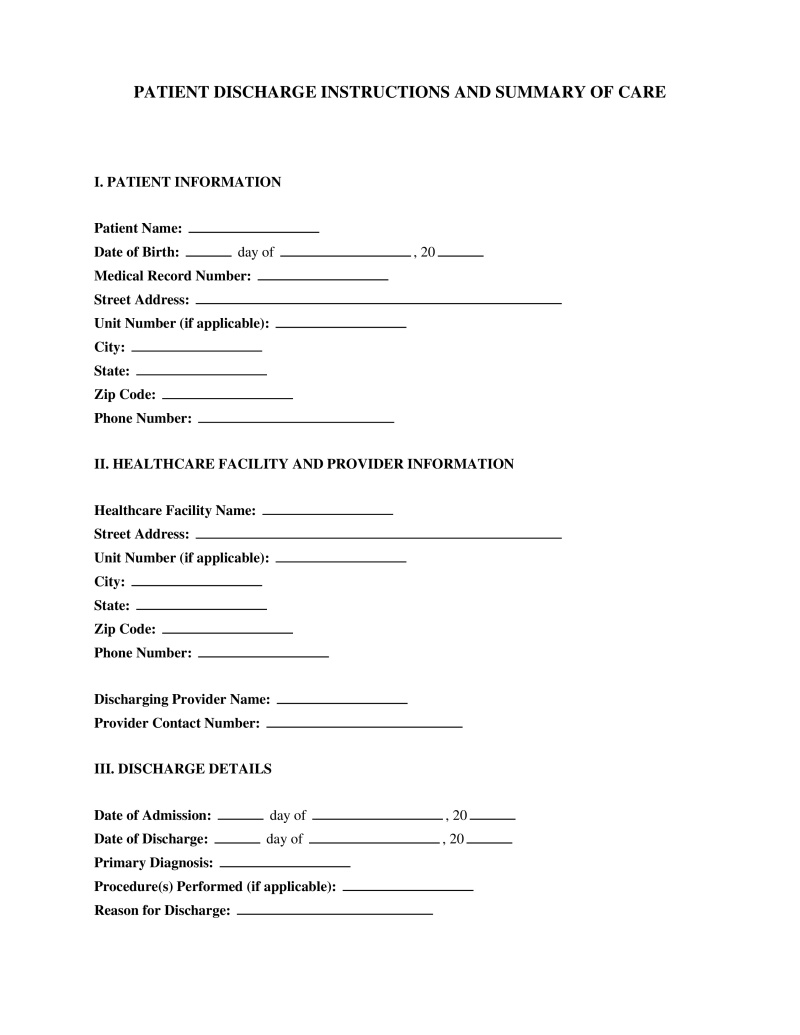
Care Setting
Select the setting where the patient received care.
Provide details if 'Other' was selected.
Table of Contents
What is an After Care Summary?
An After Care Summary is a crucial document that outlines the recommended post-treatment plan for an individual following a period of medical care, such as a hospital stay or completion of a specialized treatment program. Its primary purpose is to ensure continuity of care by providing clear instructions and referrals for ongoing support and services. Healthcare providers utilize this summary to communicate vital information to patients, caregivers, and subsequent healthcare professionals, facilitating a smooth transition from intensive care to independent management or lower levels of care.
Purpose and Significance
The After Care Summary serves as a foundational tool for promoting patient well-being and preventing readmissions or relapse by detailing the necessary steps for continued recovery. It ensures that patients and their support networks are informed about the next phase of their health journey, reducing confusion and improving adherence to prescribed regimens. This document is particularly significant in complex care scenarios, where multiple providers or services may be involved in a patient's long-term health management.
- Continuity of Care - Bridges the gap between different levels of care, ensuring that progress made during treatment is maintained and built upon.
- Patient Empowerment - Provides individuals with a clear roadmap for their recovery, including self-management strategies and resources.
- Risk Reduction - Helps mitigate risks associated with abrupt transitions in care, such as medication errors, missed appointments, or lack of support.
- Communication Facilitation - Acts as a standardized communication tool among various healthcare providers, family members, and support services.
Key Components of an After Care Summary
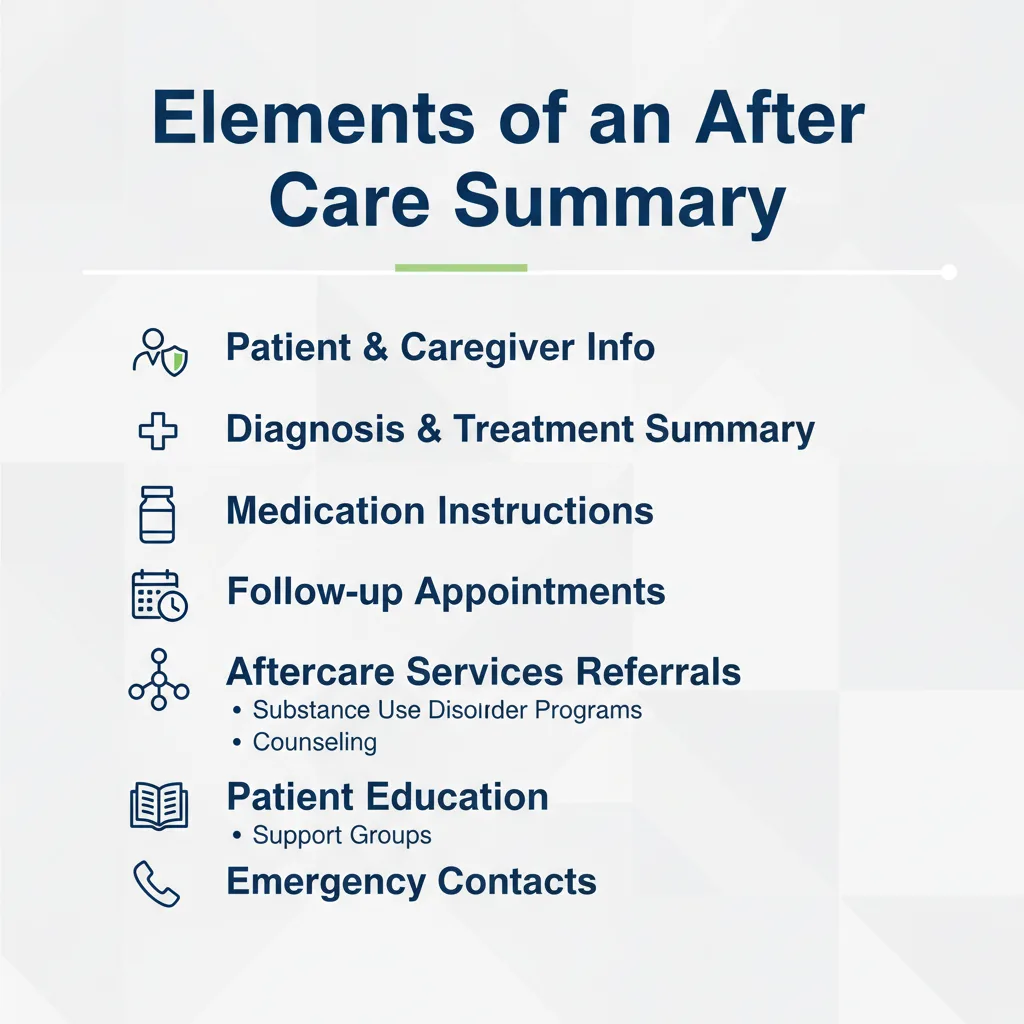
While the specific content of an After Care Summary can vary depending on the context of care, several common elements are typically included to ensure comprehensive post-treatment planning. These components are designed to cover all aspects of a patient's ongoing needs, from medical follow-up to social support.
- Patient and Caregiver Information - Includes the patient's name, contact details, and information for any designated caregivers responsible for their ongoing support (HealthChoice Substance Use Disorder Ambulatory Concurrent Review Form; Re-Engineered Discharge (RED) Toolkit: Postdischarge Followup Phone Call Documentation Form).
- Discharge Date and Location - Specifies when the patient was discharged and from which facility or program (Re-Engineered Discharge (RED) Toolkit: Postdischarge Followup Phone Call Documentation Form).
- Diagnosis and Treatment Summary - A brief overview of the primary diagnosis, the treatment received, and the patient's status at discharge.
- Medication Instructions - Detailed information about current medications, dosages, administration schedules, potential side effects, and instructions for refills.
- Follow-up Appointments - Dates, times, and locations for scheduled medical appointments, therapy sessions, or other necessary follow-up care.
- Aftercare Services Referrals - Specific recommendations and contact information for ongoing services, which may include:
- Substance Use Disorder Programs - Referrals to methadone clinics, intensive outpatient programs, partial hospitalization, residential treatment, or sober living arrangements (HealthChoice Substance Use Disorder Ambulatory Concurrent Review Form).
- Counseling and Therapy - Referrals for individual or group therapy sessions.
- Support Groups - Information on self-help groups, such as 12-step programs, for ongoing peer support (HealthChoice Substance Use Disorder Ambulatory Concurrent Review Form).
- Community Resources - Referrals to social services, housing assistance, vocational training, or other community-based support.
- Patient Education and Self-Care Instructions - Guidance on self-monitoring, symptom management, dietary restrictions, activity levels, and warning signs that require medical attention.
- Emergency Contact Information - What to do and who to contact in case of an emergency or worsening condition.
Applications and Contexts
After Care Summaries are integral across various healthcare settings, adapting their focus to the specific needs of the patient population and the type of treatment provided. Their application ensures that specialized care transitions are managed effectively, whether from acute medical events or long-term rehabilitative programs.
- Substance Use Disorder Treatment - Specifically details referrals for ongoing support, such as methadone treatment, intensive outpatient programs, individual/group counseling, and self-help groups, to prevent relapse and support long-term recovery (HealthChoice Substance Use Disorder Ambulatory Concurrent Review Form).
- Hospital Discharge Planning - Provides patients with essential instructions, medication schedules, and follow-up appointment details to manage their health at home after a hospital stay.
- Mental Health Services - Outlines ongoing therapy, medication management, and community mental health resources for individuals transitioning from inpatient or intensive outpatient mental health programs.
- Rehabilitation Services - Details physical therapy, occupational therapy, and other rehabilitative exercises and appointments necessary for continued recovery from injury or surgery.
Patient and Caregiver Engagement
Effective aftercare relies heavily on the active participation and understanding of both the patient and their caregivers. The After Care Summary serves as the primary tool to facilitate this engagement, ensuring that all parties are aligned with the post-treatment plan. Healthcare providers often use follow-up mechanisms to confirm comprehension and address any emergent issues.
- Understanding the Plan - Patients and caregivers are encouraged to ask questions and seek clarification on any aspect of the aftercare instructions.
- Follow-up Communication - Post-discharge phone calls or visits can be utilized to assess patient adherence, identify barriers to care, and provide additional support (Re-Engineered Discharge (RED) Toolkit: Postdischarge Followup Phone Call Documentation Form).
- Caregiver Support - Caregivers often play a vital role in executing the aftercare plan, requiring clear instructions and access to resources.
- Documentation of Follow-up - Healthcare systems often document details of post-discharge follow-up, including patient understanding of medication, follow-up appointments, and warning signs, to ensure adherence and address concerns (Re-Engineered Discharge (RED) Toolkit: Postdischarge Followup Phone Call Documentation Form).
Role in Coordinated Care
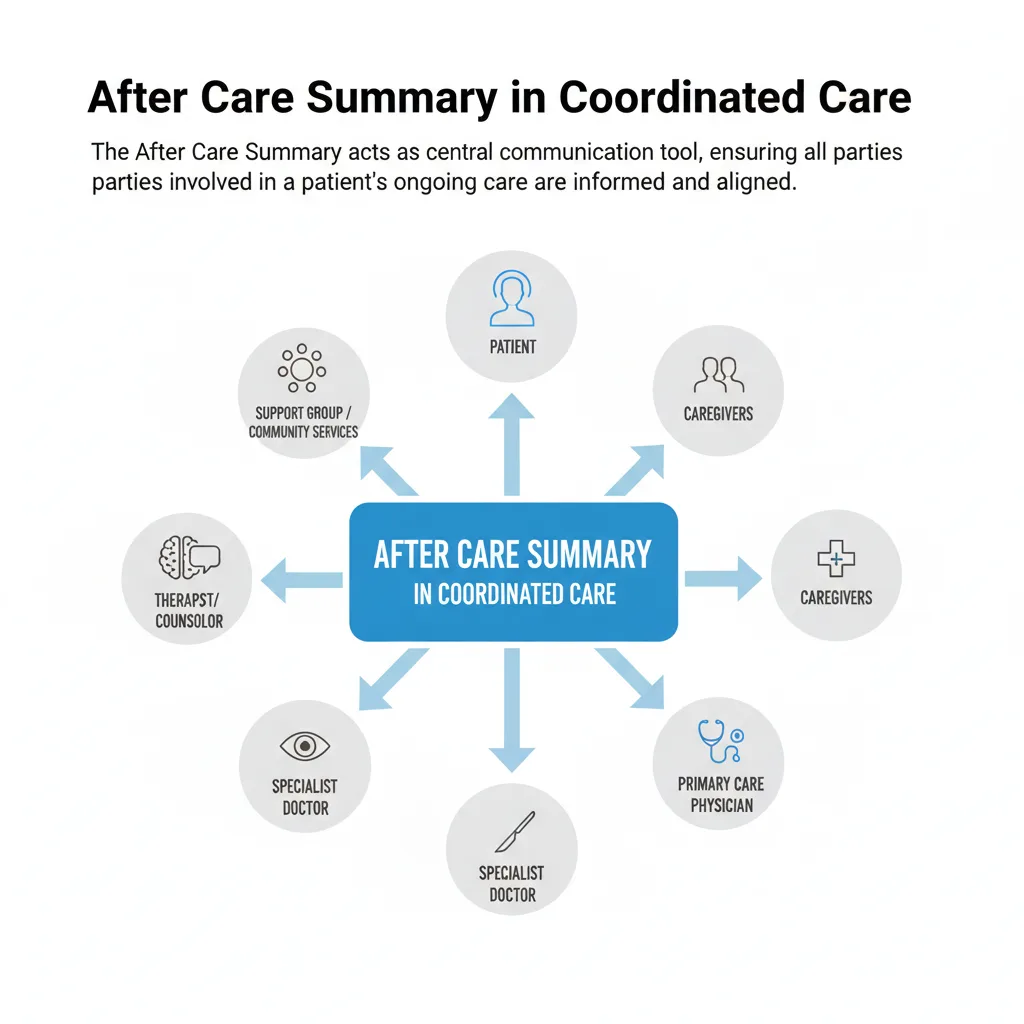
The After Care Summary is a critical element in achieving coordinated care, particularly when a patient's health journey involves multiple healthcare providers, specialists, and support organizations. It acts as a shared reference document, promoting consistent understanding and execution of the care plan across different settings.
By clearly documenting all recommended services and referrals, the summary helps ensure that each provider involved in the patient's ongoing care has access to the necessary information. This collaborative approach reduces the likelihood of fragmented care, where different providers might offer conflicting advice or duplicate services. It allows for a more holistic and integrated approach to patient management, ultimately enhancing the quality and effectiveness of post-treatment support.
Frequently Asked Questions
Sources
- HealthChoice Substance Use Disorder Ambulatory Concurrent Review Form - Provides a standardized discharge summary form for substance use disorder treatment, including aftercare services.
- Re-Engineered Discharge (RED) Toolkit: Postdischarge Followup Phone Call Documentation Form - Offers a post-discharge follow-up phone call documentation form to ensure patient understanding and adherence to aftercare plans.
Not the form you're looking for?
Try our legal document generator to create a custom document
Disclaimer: The templates available on this website are provided for general informational purposes only and do not constitute legal advice. They are not intended to be, and should not be interpreted as, compliant with any specific legal, regulatory, or privacy requirements. These templates are not a replacement for professional legal guidance and should not be relied upon for any particular matter or circumstance. Users are strongly encouraged to seek advice from a qualified attorney licensed in their jurisdiction before using, modifying, or relying on any template.
All templates are provided on an "as is," "with all faults," and "as available" basis. The provider disclaims any and all warranties of any kind, whether express, implied, statutory, or otherwise, including without limitation warranties of merchantability, fitness for a particular purpose, title, or non-infringement.
LegalTemplates.com makes no guarantees or representations regarding the accuracy, completeness, expected outcomes, or reliability of the materials contained in these templates or any materials referenced or linked from them.