Character Witness Statement
A Character Witness Statement is a formal legal document in which an individual provides written testimony regarding the moral character, reputation, and personal qualities of a defendant or party in a legal proceeding.
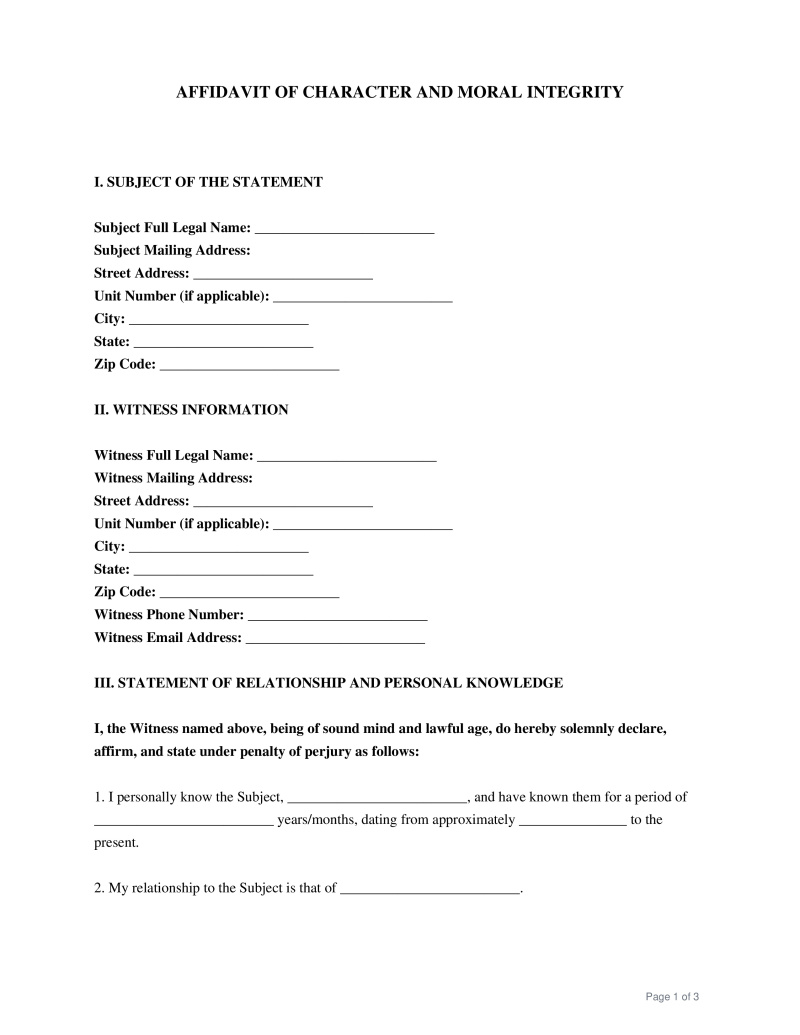
Statement Use Setting
Select the setting that best matches the intended use. This helps tailor the statement to the audience and proceeding.
Briefly identify the proceeding, review, or decision for which the statement is being prepared.
Table of Contents
What is a Character Witness Statement?
A Character Witness Statement is a formal document written by an individual who can attest to the moral integrity, reputation, and personal qualities of a party involved in a legal proceeding. This document is submitted to a court or administrative body to provide context regarding the defendant or litigant's overall behavior, work ethic, and community standing. Legal representatives often use these statements during sentencing hearings, custody disputes, or immigration proceedings to help humanize the individual before the court.
Purpose and Common Uses
Legal proceedings frequently incorporate character references to establish a broader profile of an individual beyond the specific facts of a case. These statements are utilized across various legal contexts to influence the court's perception of a party's general disposition:
- Sentencing Hearings - Submitted in criminal cases to request leniency by demonstrating the defendant's positive contributions to society and likelihood of rehabilitation.
- Child Custody Disputes - Used in family court to show a parent's nurturing qualities, stability, and fitness to care for a child.
- Immigration Proceedings - Provided to support residency or citizenship applications by demonstrating good moral character.
- Professional Licensing Boards - Submitted during disciplinary hearings to protect a professional license or regain credentials.
Types of Character Witness Statements
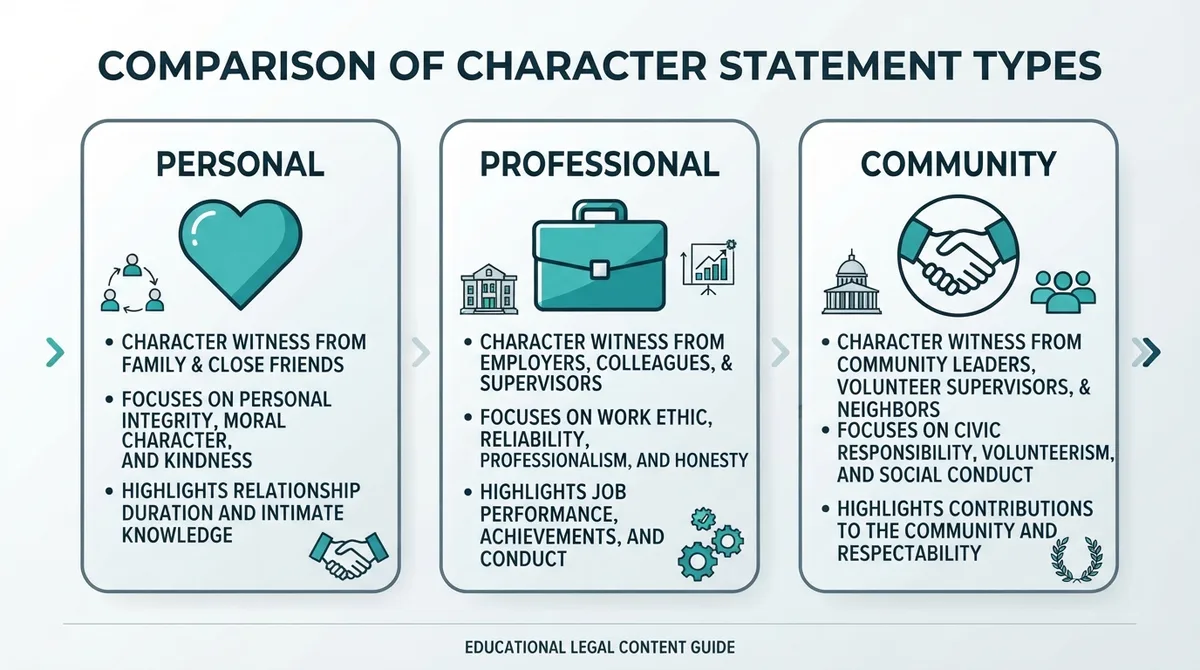
Different legal scenarios require distinct approaches to character testimony. The primary variations of these documents include:
- Personal Character Statement - Written by close friends, family members, or neighbors who can speak to the individual's personal life, integrity, and daily conduct.
- Professional Character Statement - Authored by employers, colleagues, or business partners focusing on the individual's work ethic, reliability, and professional achievements.
- Community Character Statement - Drafted by religious leaders, volunteer coordinators, or community members highlighting the individual's civic engagement and charitable contributions.
Essential Elements of a Character Witness Statement
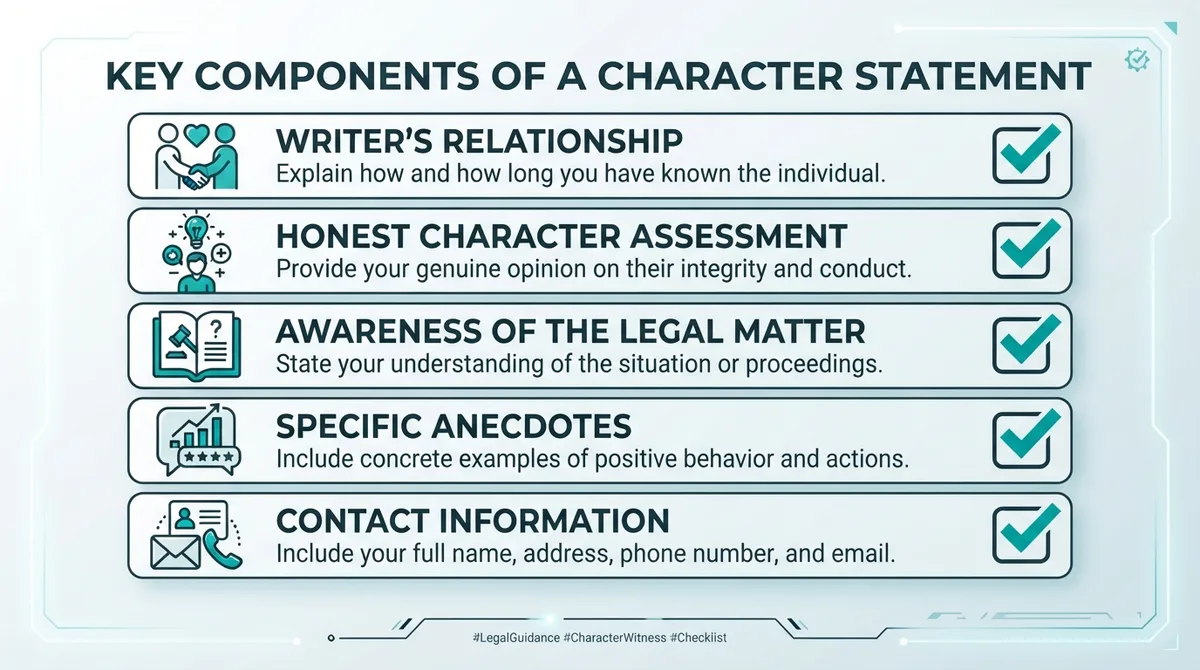
While local court rules vary, effective statements generally contain specific foundational elements to ensure credibility and relevance:
- Relationship to the Party - Clear explanation of how the writer knows the individual and the duration of their relationship.
- Honest Assessment of Character - Specific descriptions of traits such as honesty, reliability, work ethic, or compassion.
- Awareness of the Legal Matter - Explicit acknowledgment of the charges or legal issues involved, showing the writer is fully informed.
- Specific Examples - Anecdotes or concrete instances that illustrate the positive traits being claimed.
- Contact Information - The writer's phone number, email address, and physical address for verification purposes.
Court Administration and Procedural Rules
Courts maintain specific procedural rules regarding how witnesses and their statements are presented. Parties must adhere to local and national guidelines when submitting character evidence:
- National Federal Court Forms - Provides standardized templates that are legally acceptable across all federal courts (Administrative Office of the U.S. Courts, Forms and Rules).
- Local District Court Forms - Establishes customized regional requirements maintained by individual federal courts that govern specific local filing protocols (Administrative Office of the U.S. Courts, Forms and Rules).
- Witness List Requirements - Mandates the formal disclosure of all testifying individuals, including character witnesses, using standardized court forms (U.S. District Court for the District of Minnesota, Form 112).
- Federal and Military Witness Requests - Governs the authorization process required to obtain testimony or statements from federal government or military employees (U.S. District Court for the Middle District of Florida, Form FLMD-105).
Best Practices for Writing a Statement
To ensure the statement is persuasive and legally sound, writers should follow structured guidelines during drafting:
- Establish Credibility Immediately - Begin by introducing yourself, your profession, and your relationship to the individual.
- Address the Court Formally - Use proper judicial salutations such as "To the Honorable Judge" or "Dear Members of the Board."
- Maintain an Objective Tone - Avoid overly emotional pleas or direct attacks on the opposing party or prosecution.
- Provide Concrete Anecdotes - Describe specific situations where the individual demonstrated the positive traits in question.
- Conclude with a Clear Recommendation - Summarize why you believe the individual is trustworthy or capable of rehabilitation.
Frequently Asked Questions
Sources
- Forms - Provides access to national federal court forms, including those related to witness statements.
- Witness List - Offers a downloadable witness list form, which may be relevant for character witness statements.
- Request for Federal Government or Military Employee Witness - Provides a form for requesting federal government or military employee witnesses, which may be relevant for character witness statements.
Not the form you're looking for?
Try our legal document generator to create a custom document
Disclaimer: The templates available on this website are provided for general informational purposes only and do not constitute legal advice. They are not intended to be, and should not be interpreted as, compliant with any specific legal, regulatory, or privacy requirements. These templates are not a replacement for professional legal guidance and should not be relied upon for any particular matter or circumstance. Users are strongly encouraged to seek advice from a qualified attorney licensed in their jurisdiction before using, modifying, or relying on any template.
All templates are provided on an "as is," "with all faults," and "as available" basis. The provider disclaims any and all warranties of any kind, whether express, implied, statutory, or otherwise, including without limitation warranties of merchantability, fitness for a particular purpose, title, or non-infringement.
LegalTemplates.com makes no guarantees or representations regarding the accuracy, completeness, expected outcomes, or reliability of the materials contained in these templates or any materials referenced or linked from them.