Incident Report
Create Incident Report
Incident Report
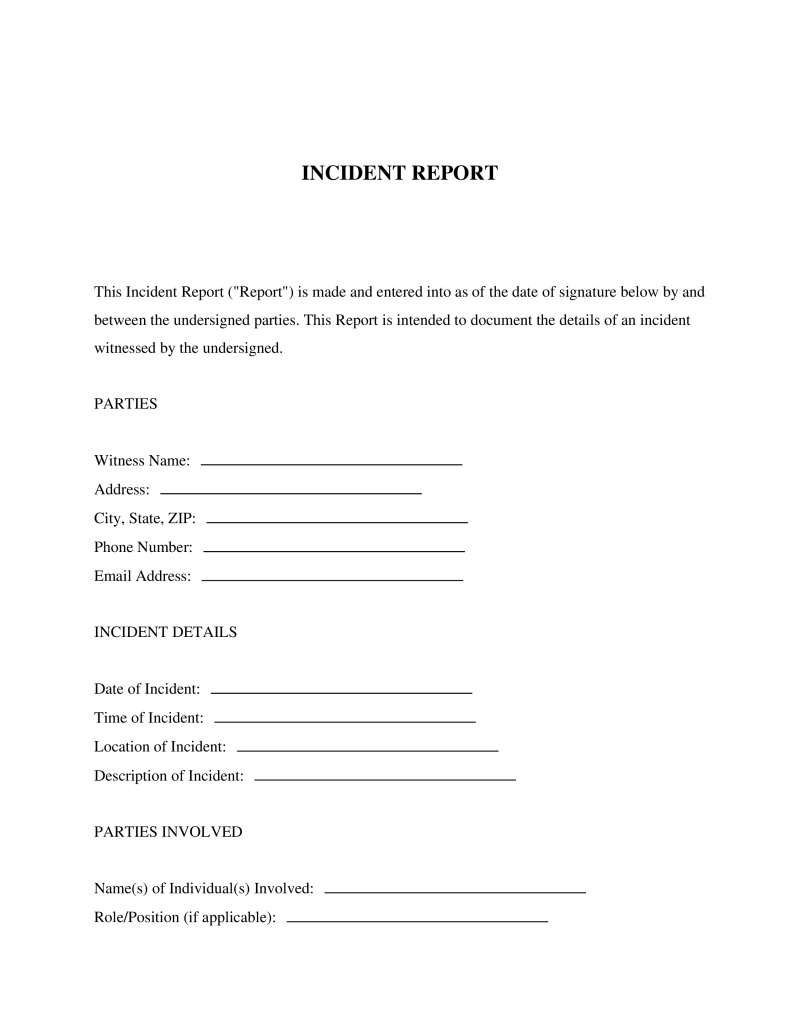
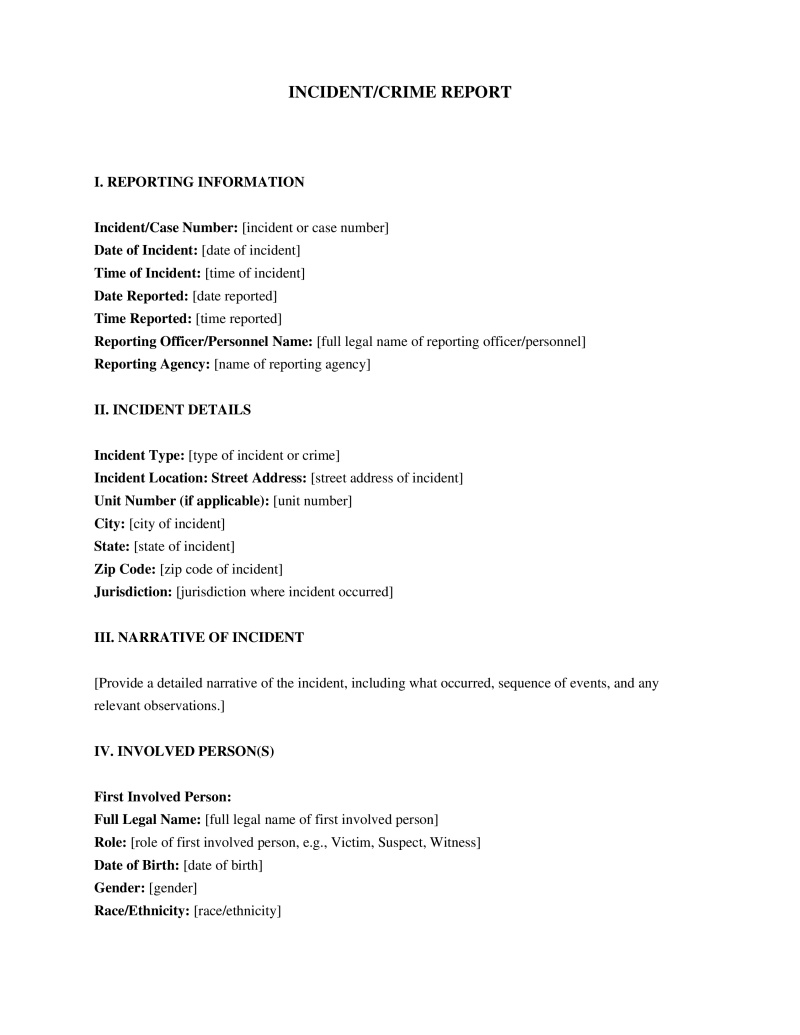
An Incident Report is a formal legal document meticulously detailing unusual occurrences within an organization, such as accidents, injuries, or security breaches, for official record-keeping and analysis.
Answer the question(s) below to create your Incident Report
Incident Category
Select the category that best describes the incident.
Provide details if 'Other' was selected.
Table of Contents
What is an Incident Report?
An Incident Report is a formal document used to record the details of an unexpected event that causes or has the potential to cause harm, injury, or loss. Its primary purpose is to document the facts surrounding an incident, allowing for investigation, analysis, and the implementation of corrective actions to prevent recurrence. Various organizations, including healthcare facilities, government agencies, and workplaces, utilize these reports to maintain a safe environment and comply with regulatory requirements.
Purpose and Significance of Incident Reports
Incident Reports serve as a crucial tool for organizations in managing risks, ensuring safety, and fostering accountability. By systematically documenting adverse events, these reports provide a factual basis for understanding what occurred, why it happened, and what steps can be taken to prevent similar incidents in the future. The use of standardized incident report forms, often provided by state agencies, is vital to ensure consistent reporting and documentation across different departments or facilities, which aids in trend analysis and broader safety initiatives.
The significance of these reports extends beyond immediate incident response. They are integral to an organization's overall risk management strategy, contributing to:
- Fact-Finding and Investigation - Providing a detailed, objective account of an event for internal or external investigations.
- Risk Mitigation - Identifying patterns and root causes of incidents to implement preventive measures and reduce future occurrences.
- Compliance and Regulatory Adherence - Meeting legal and regulatory obligations that often mandate the reporting of specific types of incidents to oversight bodies.
- Legal Protection - Serving as official documentation in potential legal disputes, demonstrating due diligence and a commitment to safety.
- Continuous Improvement - Informing policy changes, training updates, and procedural enhancements to improve operational safety and efficiency.
Key Information Contained in an Incident Report
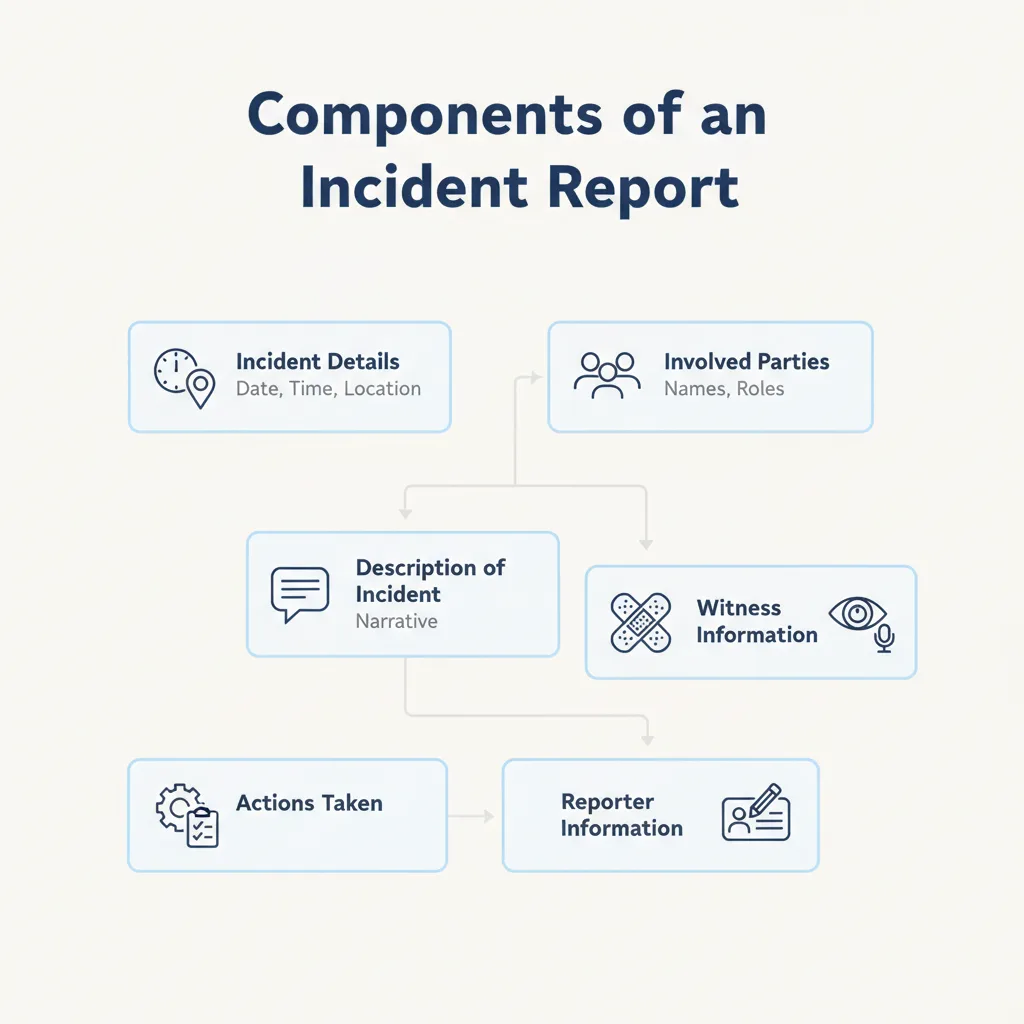
While the specific format and sections may vary between different agencies and organizations, Incident Report forms typically require a comprehensive collection of details to accurately describe the event. Standardized forms, such as those used by the New Hampshire Department of Health and Human Services, Los Angeles County Department of Health Services, and South Carolina Department of Social Services, ensure that critical information is consistently captured. Essential components generally include:
- Facility or Department Information - Details identifying where the incident occurred, including the name of the facility, department, and specific location.
- Date and Time of Incident - Precise timestamps for when the event took place, crucial for establishing a timeline.
- Date and Time of Report - When the incident was officially documented, which may differ from the incident time.
- Type of Incident - Categorization of the event (e.g., injury, property damage, near-miss, fall, medication error).
- Description of Incident - A factual narrative detailing what happened, in chronological order, without speculation or opinion. This section often includes the specific actions taken immediately after the incident.
- Involved Parties - Information about individuals directly affected by the incident, such as patients, clients, employees, or visitors, including their names, roles, and contact details.
- Witness Statements - Accounts from individuals who observed the incident, providing additional perspectives and corroborating details.
- Injuries or Damages Sustained - Specifics regarding any physical injuries, psychological impact, or property damage, often including details about medical attention sought or property repair needs.
- Contributing Factors - Identification of potential causes or environmental conditions that may have led to or exacerbated the incident.
- Actions Taken - A record of immediate responses and interventions made by staff or other individuals present at the time of the incident.
- Follow-up Actions Required - Recommendations or planned steps for investigation, corrective measures, or further review to prevent recurrence.
- Reporter Information - Details of the person completing the report, including their name, title, and contact information.
Types of Incidents Requiring a Report
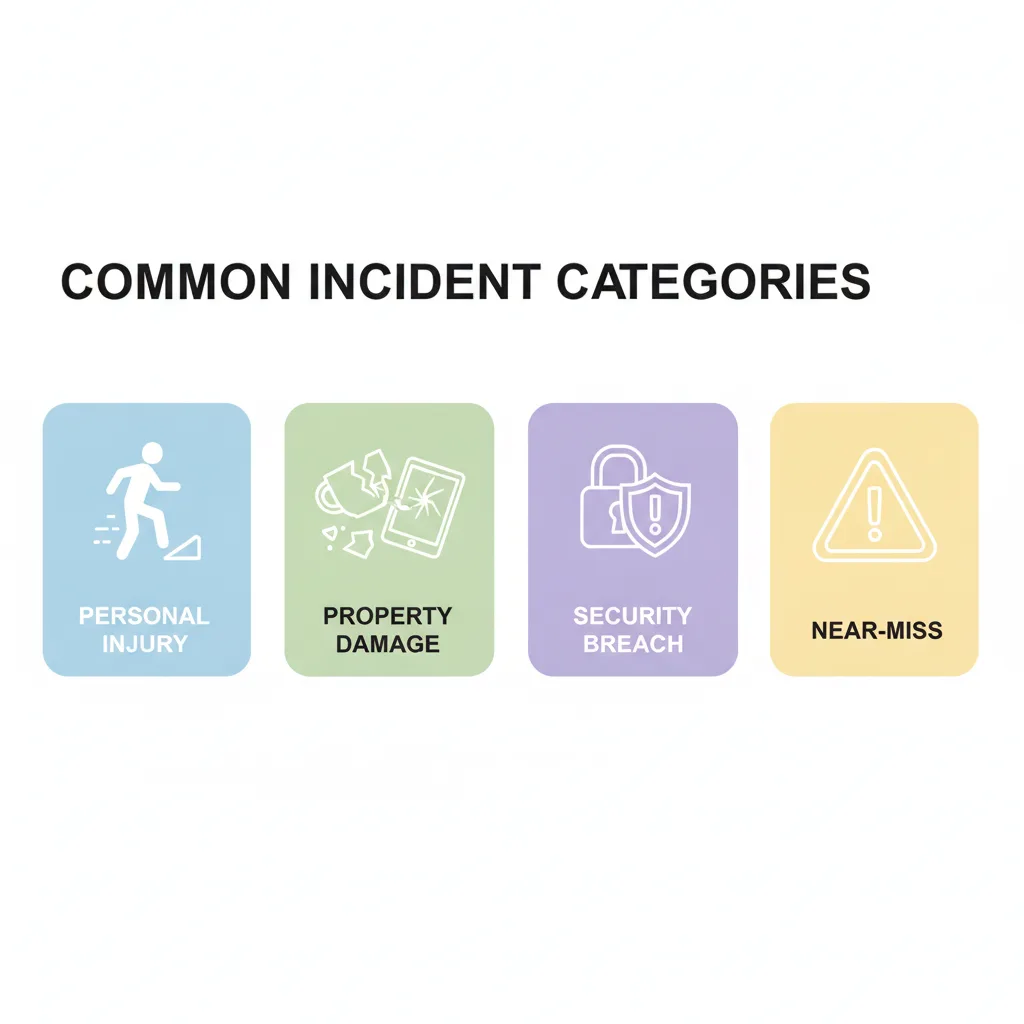
Organizations define various scenarios that necessitate the completion of an Incident Report to ensure all significant events are documented and reviewed. These categories often cover a broad spectrum of occurrences, from minor accidents to serious safety breaches. The types of incidents typically include:
- Personal Injury - Any event resulting in physical harm to an individual, regardless of severity, such as slips, falls, cuts, burns, or more serious trauma. This also extends to psychological harm resulting from an event.
- Property Damage - Any incident causing harm or destruction to company assets, equipment, facilities, or personal property on premises.
- Near Misses - Events where an accident or injury almost occurred but was narrowly avoided. Reporting near misses is critical for identifying hazards before they lead to actual harm.
- Security Breaches - Unauthorized access to facilities, data, or systems, theft, vandalism, or other violations of security protocols.
- Environmental Incidents - Spills of hazardous materials, contamination, or any event impacting the environment within or around the organizational premises.
- Patient/Client Safety Events - In healthcare or social services settings, this includes medication errors, adverse reactions, treatment delays, falls, or any event compromising the safety or well-being of a patient or client.
- Workplace Violence - Any act or threat of physical violence, harassment, intimidation, or other disruptive behavior that occurs at the workplace.
- Equipment Malfunction - Instances where equipment fails or operates incorrectly, potentially leading to injury or operational disruption.
Reporting and Submission Procedures
The effectiveness of an Incident Report largely depends on timely and accurate submission according to established organizational procedures. While specific guidelines vary, common steps for reporting and submission are designed to ensure the report reaches the appropriate personnel for review and action. The Los Angeles County Department of Health Services, for example, provides comprehensive instructions for the completion and submission of their forms to relevant departments.
General procedural considerations include:
- Timeliness of Reporting - Reports should typically be completed as soon after the incident as safely possible, often within 24 to 48 hours, while details are fresh in the minds of witnesses and involved parties.
- Accuracy and Objectivity - The reporter must focus on factual observations, avoiding assumptions, blame, or subjective language. All information should be verifiable.
- Designated Reporter - Depending on the incident, the report may be completed by the immediate supervisor, the individual involved, a witness, or a designated safety officer.
- Review and Approval - Completed reports are often reviewed by supervisors, department heads, or safety committees to ensure completeness and to initiate follow-up actions.
- Distribution and Archiving - Reports are submitted to specific departments (e.g., HR, safety, legal, risk management) and securely archived for record-keeping, compliance audits, and future reference.
- Confidentiality - Handling of Incident Reports often involves sensitive information, requiring adherence to privacy policies and regulations (e.g., HIPAA in healthcare settings) to protect personal data.
Frequently Asked Questions
Typically, the individual who witnessed the incident, was directly involved, or the immediate supervisor of the area where the incident occurred is responsible for completing the report. Organizational policies dictate the specific roles and responsibilities for reporting.
An Incident Report should be filed as soon as possible after an incident occurs, ideally within 24 to 48 hours, to ensure that all details are fresh and accurate. Prompt reporting allows for timely investigation and implementation of corrective measures.
An incident refers to an event that resulted in harm, injury, or damage. A near-miss, conversely, is an event where harm or damage almost occurred but was narrowly avoided, serving as a critical warning sign for potential future incidents.
Yes, Incident Reports can serve as official documentation in legal proceedings, providing a factual record of the event, actions taken, and compliance efforts. Their accuracy and objectivity are crucial for potential legal defense or claims.
While often used interchangeably, "incident report" is a broader term encompassing any unexpected event, including accidents, near-misses, and other adverse occurrences. An accident report specifically details events resulting in injury or damage, making it a subset of incident reports.
After submission, the report is typically reviewed by relevant management or safety personnel to assess the incident, determine root causes, and identify necessary follow-up actions. This may include further investigation, policy changes, or employee training.
Sources
- Incident Report Form - Provides a standardized form for reporting incidents, including sections for facility information, incident details, and involved parties.
- Incident Report Form - Offers a comprehensive incident report form with instructions for completion and submission to appropriate departments.
- Incident Report Form - Provides an incident report form with sections for employee information, incident details, and witness statements.
Related Documents
Forms commonly used with Incident Report.
Not the form you're looking for?
Try our legal document generator to create a custom document
Disclaimer: The templates available on this website are provided for general informational purposes only and do not constitute legal advice. They are not intended to be, and should not be interpreted as, compliant with any specific legal, regulatory, or privacy requirements. These templates are not a replacement for professional legal guidance and should not be relied upon for any particular matter or circumstance. Users are strongly encouraged to seek advice from a qualified attorney licensed in their jurisdiction before using, modifying, or relying on any template.
All templates are provided on an "as is," "with all faults," and "as available" basis. The provider disclaims any and all warranties of any kind, whether express, implied, statutory, or otherwise, including without limitation warranties of merchantability, fitness for a particular purpose, title, or non-infringement.
LegalTemplates.com makes no guarantees or representations regarding the accuracy, completeness, expected outcomes, or reliability of the materials contained in these templates or any materials referenced or linked from them.