Identity Theft Affidavit
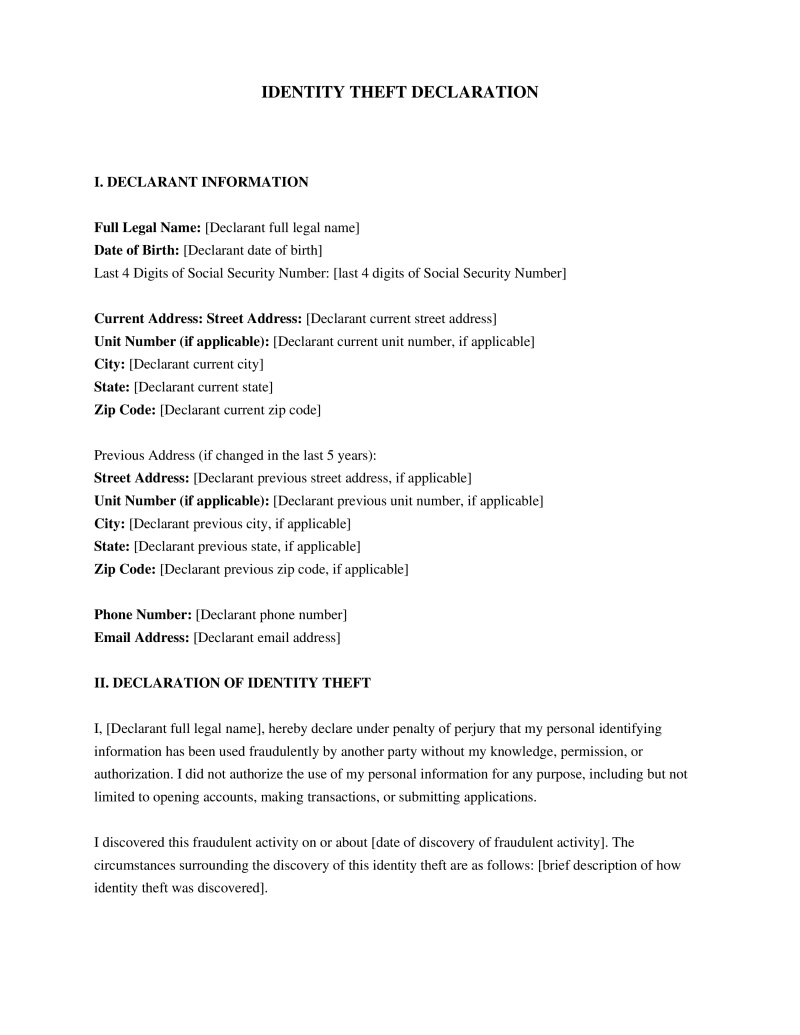
An Identity Theft Affidavit is a formal, sworn statement affirming that an individual has been a victim of identity theft, typically utilized to dispute fraudulent transactions or report the crime to relevant authorities.
Fraud Type
Select the primary category of fraudulent activity you are reporting.
Provide details if you selected 'Other'.
Table of Contents
What is a Identity Theft Affidavit?
An Identity Theft Affidavit is a standardized document used by victims of identity theft to report fraudulent activity to various companies and financial institutions. Introduced by the Federal Trade Commission (FTC), its primary purpose is to simplify and streamline the process of reporting identity theft across multiple entities. This affidavit serves as a sworn statement, detailing the specifics of the identity theft incident and asserting that the victim did not authorize the fraudulent transactions or account openings.
Purpose and Origins of the Identity Theft Affidavit
The Federal Trade Commission (FTC) introduced the Identity Theft Affidavit to assist victims in reporting identity theft more efficiently. Before its creation, victims often had to complete numerous, varying forms for each company where fraud occurred, leading to confusion and delays in recovery. The standardized affidavit aims to alleviate this burden by providing a consistent document.
The affidavit is designed to be widely accepted by:
- Credit Issuers - Companies that issue credit cards or lines of credit.
- Retailers - Stores and online merchants where fraudulent purchases may have been made.
- Banks - Financial institutions holding bank accounts or loans.
- Other Financial Institutions - Including investment firms and other lending entities.
Its acceptance by these participating entities helps victims challenge fraudulent charges and close unauthorized accounts more effectively, providing a unified declaration of the crime.
Components of the Identity Theft Affidavit
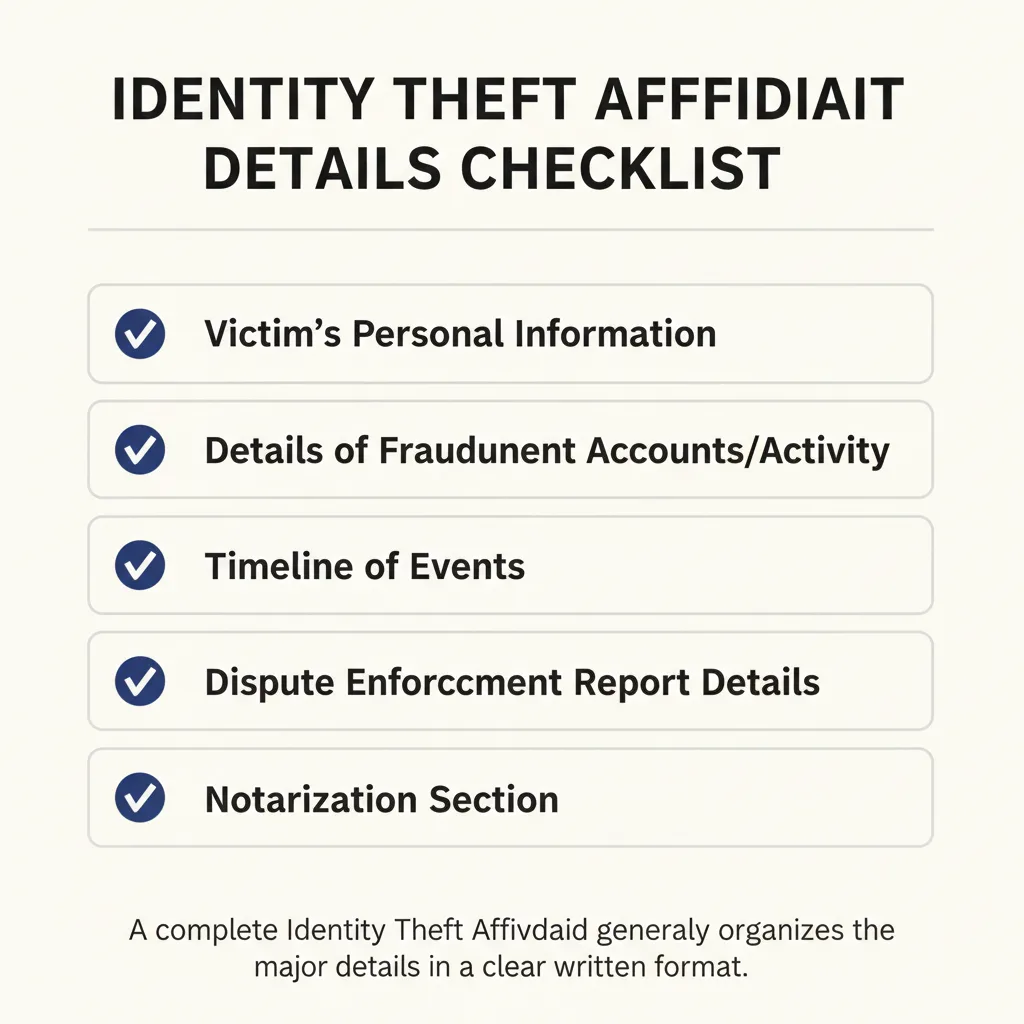
The Identity Theft Affidavit typically requires specific information to thoroughly document the incident and the victim's identity. This comprehensive approach ensures that companies have sufficient details to investigate the reported fraud.
Key information usually requested within the affidavit includes:
- Victim's Personal Information - Full legal name, current address, phone number, date of birth, and Social Security Number.
- Contact Information - How the victim can be reached for further inquiries.
- Details of the Identity Theft - A narrative description of how the victim discovered the identity theft, the approximate date it began, and any known methods used by the perpetrator.
- Affected Accounts and Transactions - A list of all known fraudulent accounts, credit cards, loans, or other financial products opened or used without authorization, including account numbers if available, and the names of the affected companies.
- Police Report Information - Details of any police report filed, including the report number, agency, and date filed.
- Declaration of Non-Authorization - A sworn statement by the victim affirming that they did not authorize the fraudulent activities and that the information provided is true and accurate to the best of their knowledge.
- Signature and Date - The victim's signature, often made under penalty of perjury, and the date the affidavit was completed.
Reporting Identity Theft and Utilizing the Affidavit
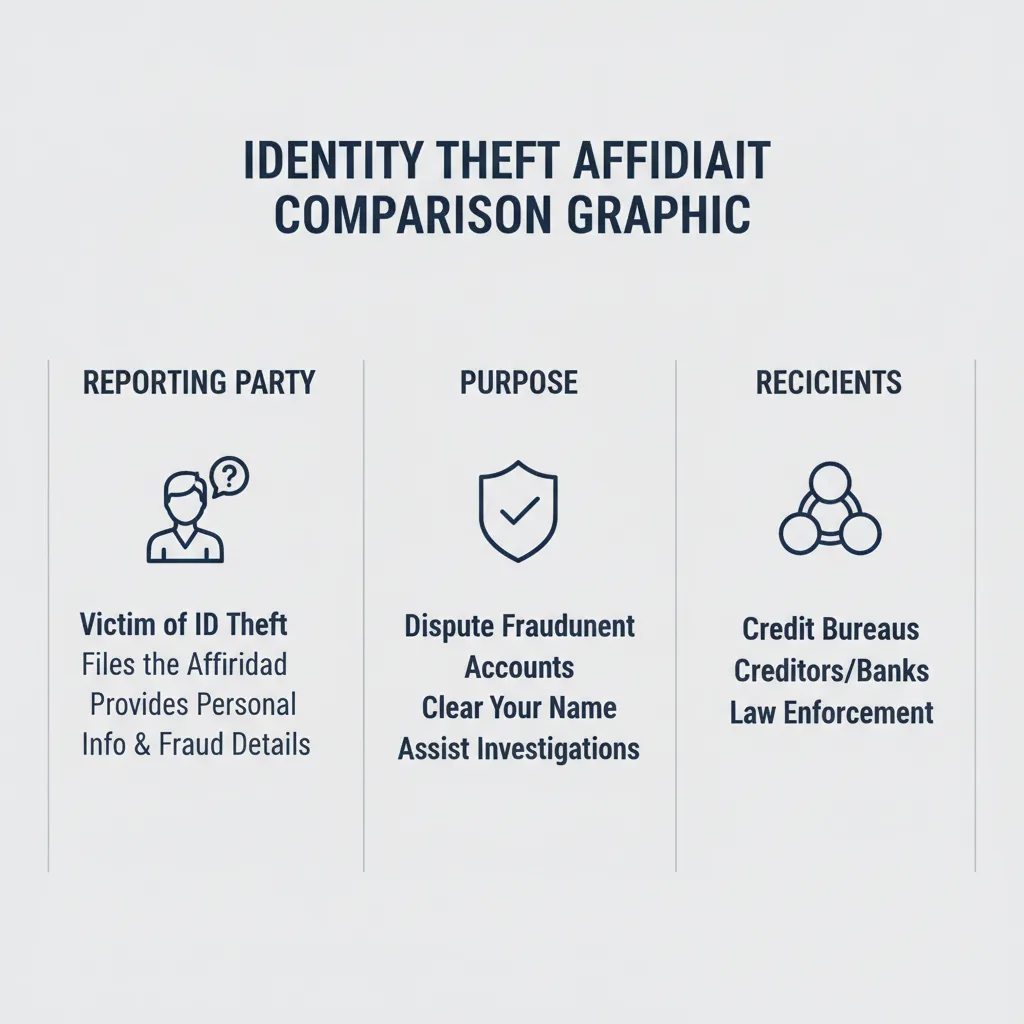
The initial step for anyone suspecting identity theft is to report the incident to the Federal Trade Commission. The FTC serves as the central clearinghouse for identity theft complaints and offers resources to aid victims in their recovery process.
The process generally involves:
- Reporting to the FTC - Victims should contact the FTC online at IdentityTheft.gov or by calling 1-877-438-4338. This initial report helps the FTC track identity theft trends and provides victims with a personalized recovery plan.
- Obtaining the Affidavit - After reporting to the FTC, victims can typically access and print the Identity Theft Affidavit directly from IdentityTheft.gov. The platform guides victims through filling out the necessary details.
- Completing the Affidavit - The victim fills out the affidavit with all relevant details about the identity theft, including personal information, a description of the fraudulent activity, and a list of affected companies and accounts.
- Distributing the Affidavit - Once completed, the affidavit should be sent to each company where fraudulent accounts were opened or transactions occurred. It acts as the official notice to these businesses regarding the unauthorized activity.
This systematic approach ensures that all relevant parties are informed and can take appropriate action to mitigate the damage caused by identity theft.
Business Obligations and Victim's Rights
Federal regulations stipulate that businesses have specific responsibilities when confronted with identity theft reports from victims. These obligations are designed to assist victims and law enforcement in investigating and resolving identity theft cases.
Businesses must provide transaction records relating to identity theft upon request to both victims and law enforcement. To request these records, victims generally need to submit:
- A Written Request - A formal letter or form requesting the specific transaction records.
- Proof of Identity - Documentation verifying the victim's identity.
- A Police Report - A copy of the official police report filed regarding the identity theft.
- A Completed Identity Theft Affidavit - The standardized affidavit confirming the fraudulent activity.
This requirement empowers victims to gather crucial evidence needed for their recovery efforts and for any potential legal action or further investigation by authorities. The affidavit plays a critical role in establishing the victim's claim of unauthorized activity, prompting businesses to comply with these record disclosure requirements.
Frequently Asked Questions
Sources
- Identity theft | USAGov - Provides information on identity theft, including how to report it and steps to protect yourself.
- What To Know About Identity Theft | Consumer Advice - Offers guidance on recognizing, protecting against, and reporting identity theft.
- Federal Trade Commission Announces ID Theft Affidavit - Announces the introduction of the ID Theft Affidavit to assist victims in reporting identity theft.
- Businesses Must Provide Victims and Law Enforcement with Transaction Records Relating to Identity Theft - Details procedures for businesses to provide transaction records to victims and law enforcement in identity theft cases.
Not the form you're looking for?
Try our legal document generator to create a custom document
Disclaimer: The templates available on this website are provided for general informational purposes only and do not constitute legal advice. They are not intended to be, and should not be interpreted as, compliant with any specific legal, regulatory, or privacy requirements. These templates are not a replacement for professional legal guidance and should not be relied upon for any particular matter or circumstance. Users are strongly encouraged to seek advice from a qualified attorney licensed in their jurisdiction before using, modifying, or relying on any template.
All templates are provided on an "as is," "with all faults," and "as available" basis. The provider disclaims any and all warranties of any kind, whether express, implied, statutory, or otherwise, including without limitation warranties of merchantability, fitness for a particular purpose, title, or non-infringement.
LegalTemplates.com makes no guarantees or representations regarding the accuracy, completeness, expected outcomes, or reliability of the materials contained in these templates or any materials referenced or linked from them.