Move Out Notice
A Move Out Notice is a formal legal notification, typically provided in writing, by which a tenant or landlord communicates an intention to terminate a lease agreement and vacate a rental property, adhering to stipulated contractual terms and legal requirements.
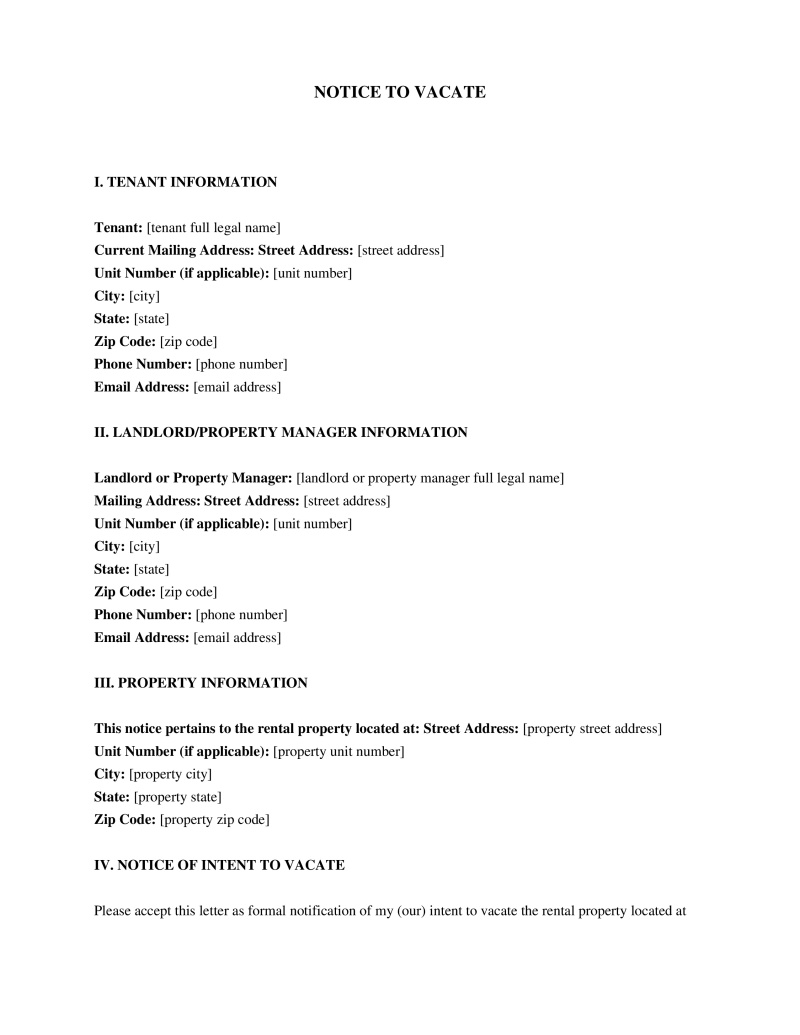
Property Type
Select the property type you are moving out of. This helps tailor the notice to your situation.
Provide details if your property type is not listed.
Table of Contents
What is a Move Out Notice?
A Move Out Notice is a formal written communication indicating the intent to vacate a rental property or to terminate a tenancy. Its primary purpose is to inform the relevant parties—either a landlord or a tenant—of the impending change in occupancy, ensuring proper procedures are followed according to lease agreements and local laws. This document initiates the formal process of ending a rental relationship, setting the timeline for vacating the premises and facilitating necessary arrangements for property handover or new tenancy.
Types of Move Out Notices
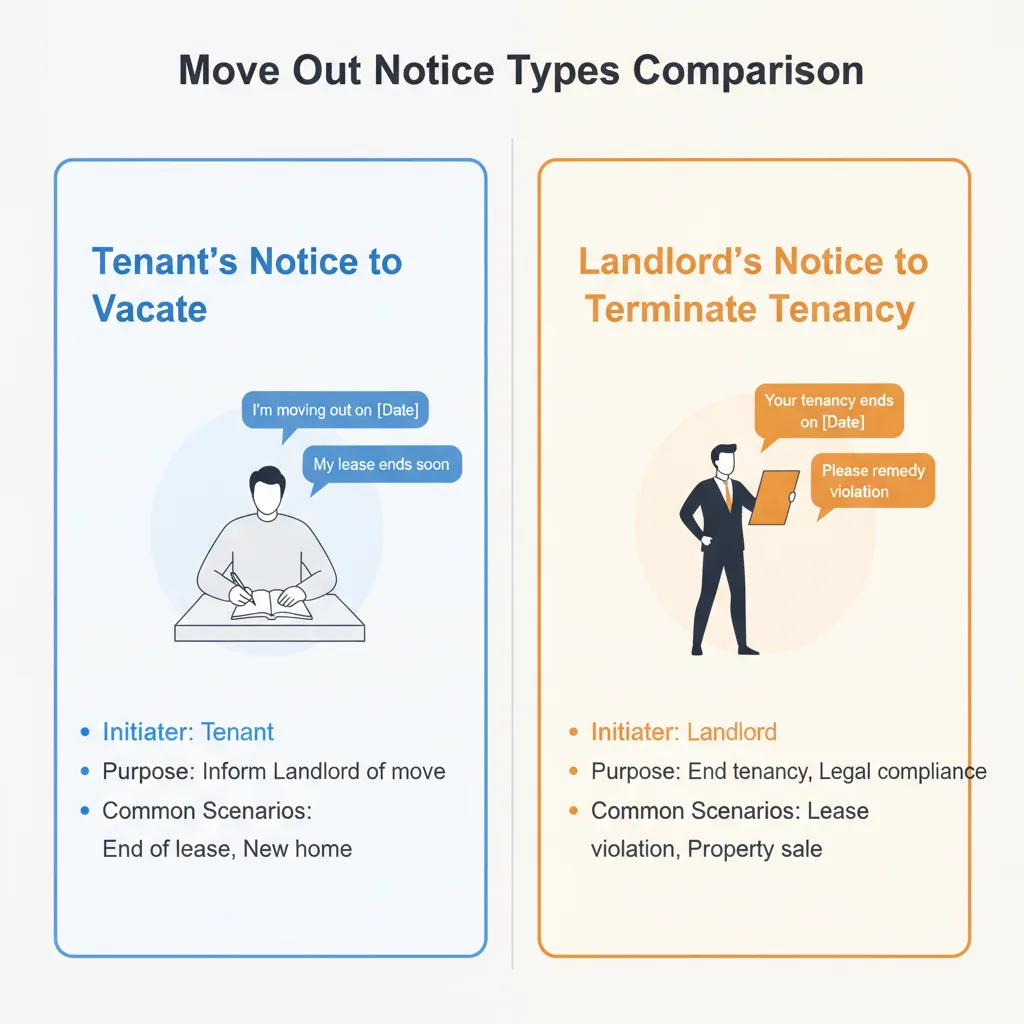
Move Out Notices can originate from either the tenant or the landlord, each serving distinct purposes and often governed by different legal requirements:
- Tenant's Notice to Vacate - This is issued by a tenant to their landlord, formally informing them of the tenant's intention to end the lease and move out of the rental unit. It typically specifies the date the tenant plans to vacate, allowing the landlord time to find new occupants and prepare for the property's turnover.
- Landlord's Notice to Terminate Tenancy - This notice is issued by a landlord to a tenant, informing them that their tenancy will be terminated. Such notices are often precursors to eviction proceedings if the tenant does not comply. Landlord-issued notices can vary significantly based on the reason for termination.
Landlord-Initiated Move Out Notices
Landlords issue various types of notices to terminate a tenancy, which serve as formal move out notices and are often prerequisites for initiating eviction proceedings. The specific type and required notice period depend on the reason for termination and the jurisdiction.
- Notice to Pay Rent or Quit - This notice is issued when a tenant fails to pay rent. It typically gives the tenant a short period, such as three to five days, to either pay the overdue rent in full or vacate the premises (California Courts, New York Courts).
- Notice to Cure or Quit - Provided when a tenant violates a term of the lease agreement other than non-payment of rent, such as having unauthorized pets or excessive noise. This notice allows the tenant a specific period to correct the violation or move out (California Courts, New York Courts).
- Unconditional Quit Notice - This notice requires a tenant to move out without the option to correct a lease violation. It is typically used for severe or repeated lease violations, or illegal activities on the property (California Courts, New York Courts).
- Notice to Terminate or End a Periodic Tenancy - For month-to-month or week-to-week tenancies without a fixed end date, a landlord may issue a notice to terminate the tenancy without cause. The required notice period, often 30 or 60 days, varies by state and the length of the tenancy (California Courts, New York Courts).
- Holdover Notices - In jurisdictions like New York, a holdover notice is used when a tenant remains in the property after their lease expires without the landlord's permission. This notice informs the tenant of the landlord's intent to recover possession of the property (New York Courts).
These notices must be properly served to the tenant and adhere to specific legal requirements regarding content and delivery. Failure to provide proper notice can invalidate subsequent eviction attempts.
Tenant-Initiated Move Out Notices
When a tenant decides to vacate a rental property, they are typically required by their lease agreement and state law to provide their landlord with a written move out notice. This notice informs the landlord of the tenant's intention to terminate the tenancy and the date they will be vacating the premises.
Key aspects of a tenant's move out notice often include:
- Notice Period - Most leases and state laws require tenants to provide a specific amount of notice, commonly 30 or 60 days, before their intended move-out date. This period allows the landlord sufficient time to market the property and find a new tenant, minimizing vacancy periods.
- Written Format - The notice should always be in writing, clearly stating the tenant's name, the rental property address, and the exact date the tenancy will end. Oral notices are generally insufficient and difficult to prove in legal disputes.
- Delivery Method - Tenants should deliver the notice in a way that provides proof of delivery, such as certified mail with a return receipt requested, or hand-delivery with a signed acknowledgment from the landlord or property manager.
Move Out Notices in Conservatorship and Guardianship Cases
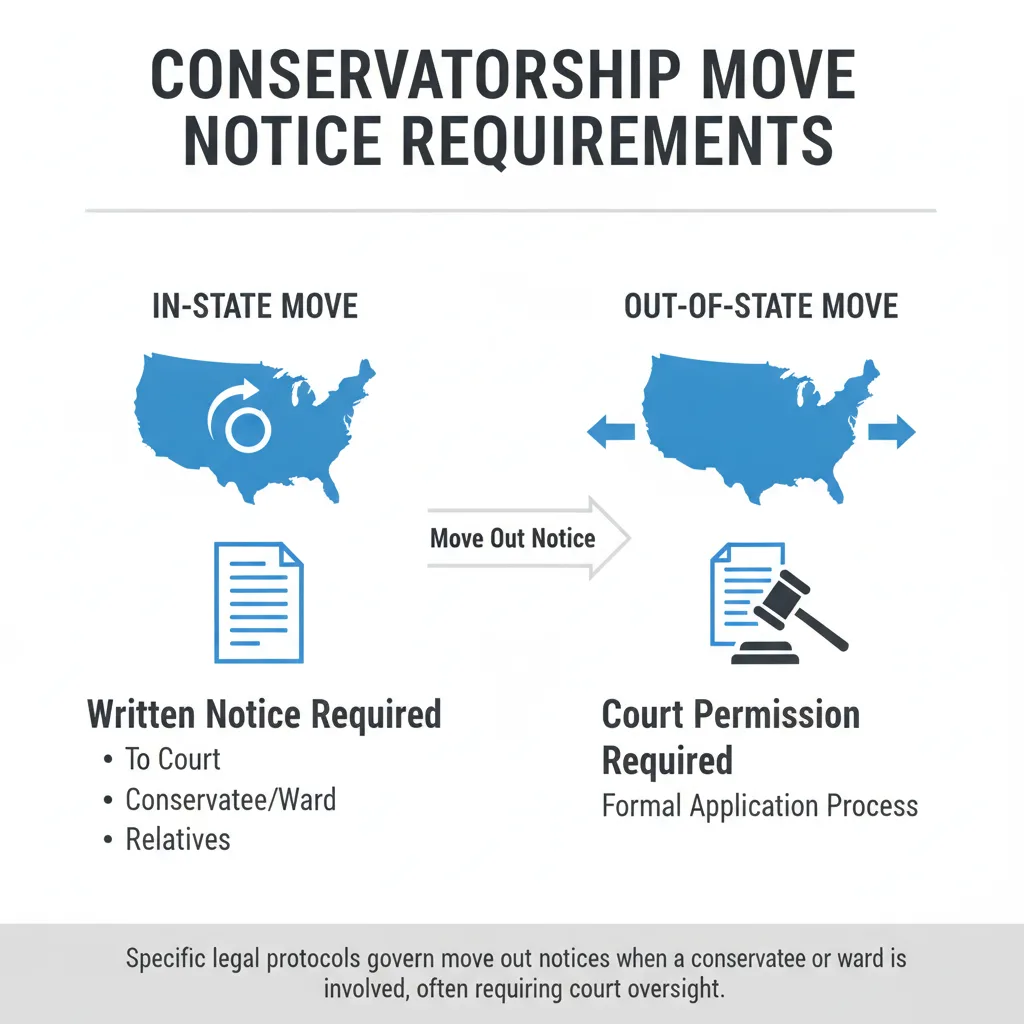
In specific legal contexts, such as conservatorships and guardianships, move out notices take on additional layers of legal oversight, particularly when a conservatee or ward is involved. These situations require court approval or specific notification procedures to ensure the well-being and legal rights of the protected individual.
- Notice for In-State Moves - A conservator or guardian must provide written notice to specific parties, including the court, the conservatee/ward, and their relatives, both before and after moving the conservatee or ward within the same state (California Courts). This ensures transparency and allows interested parties to object if the move is deemed not in the individual's best interest.
- Court Permission for Out-of-State Moves - If a conservator or guardian intends to move a conservatee or ward out of state, they must first obtain explicit court permission. This requirement is in place to protect the individual from potential harm or isolation and to ensure that the move serves their best interests (California Courts). The court will review the proposed move, considering factors such as the new living arrangements, access to necessary services, and the individual's preferences if they are able to express them.
These specialized notice requirements underscore the legal system's commitment to safeguarding vulnerable individuals under conservatorship or guardianship, ensuring that significant life changes like moving are subject to appropriate review and approval.
Frequently Asked Questions
Sources
- Moving with a conservatee | California Courts | Self Help Guide - Guidance on moving with a conservatee, including notice requirements and forms.
- Moving with a ward | California Courts | Self Help Guide - Guidance on moving with a ward, including notice requirements and forms.
- Types of eviction notices landlords | California Courts | Self Help Guide - Information on various eviction notices, including move-out notices.
- Types of eviction notices tenants | California Courts | Self Help Guide - Information on eviction notices from the tenant's perspective, including move-out notices.
- Holdover Notices | New York Courts - Guidance on holdover notices, including move-out notices.
Not the form you're looking for?
Try our legal document generator to create a custom document
Disclaimer: The templates available on this website are provided for general informational purposes only and do not constitute legal advice. They are not intended to be, and should not be interpreted as, compliant with any specific legal, regulatory, or privacy requirements. These templates are not a replacement for professional legal guidance and should not be relied upon for any particular matter or circumstance. Users are strongly encouraged to seek advice from a qualified attorney licensed in their jurisdiction before using, modifying, or relying on any template.
All templates are provided on an "as is," "with all faults," and "as available" basis. The provider disclaims any and all warranties of any kind, whether express, implied, statutory, or otherwise, including without limitation warranties of merchantability, fitness for a particular purpose, title, or non-infringement.
LegalTemplates.com makes no guarantees or representations regarding the accuracy, completeness, expected outcomes, or reliability of the materials contained in these templates or any materials referenced or linked from them.