Motion for Mistrial
A Motion for Mistrial is a formal legal request submitted to a trial court seeking to terminate ongoing proceedings due to a fundamental error or prejudice that prevents a fair trial.
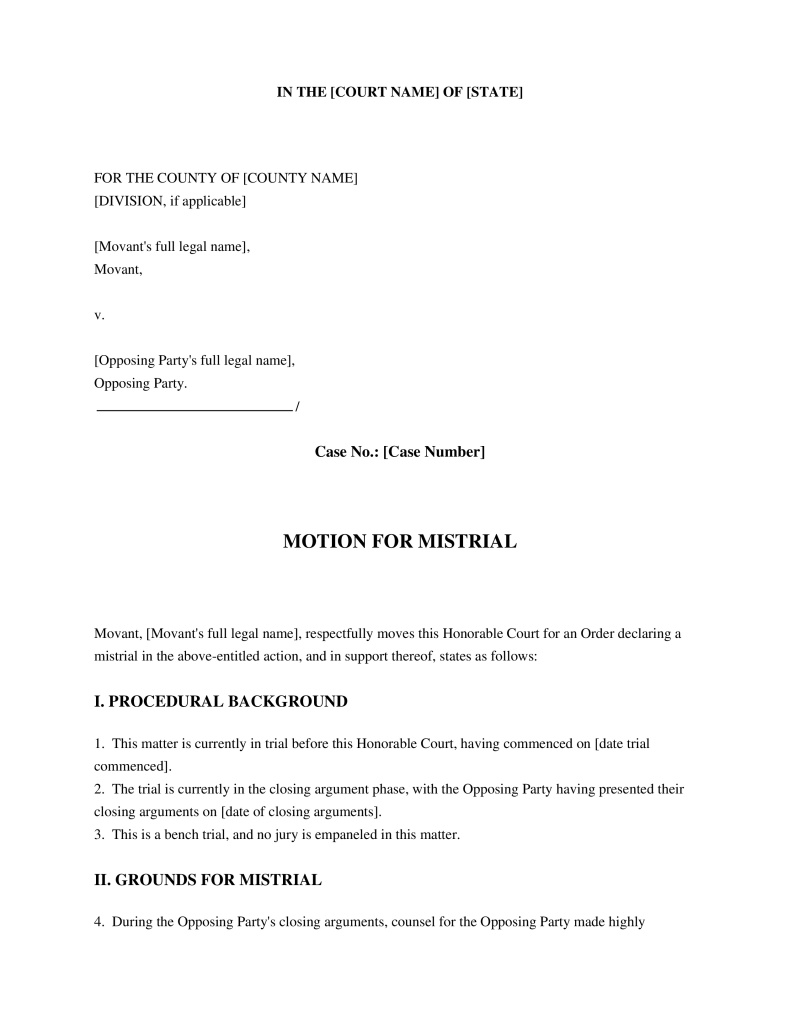
Trial Type
Select the type of trial in which this Motion for Mistrial is being filed.
Table of Contents
What is a Motion for Mistrial?
A motion for mistrial is a formal request made to a court by a party in a legal proceeding, typically during an ongoing trial. Its purpose is to ask the judge to declare the current trial invalid due to a fundamental error or serious prejudice that prevents a fair verdict. If granted, a mistrial effectively nullifies the current proceedings, requiring the trial to start again from the beginning or be dismissed.
Grounds for a Mistrial
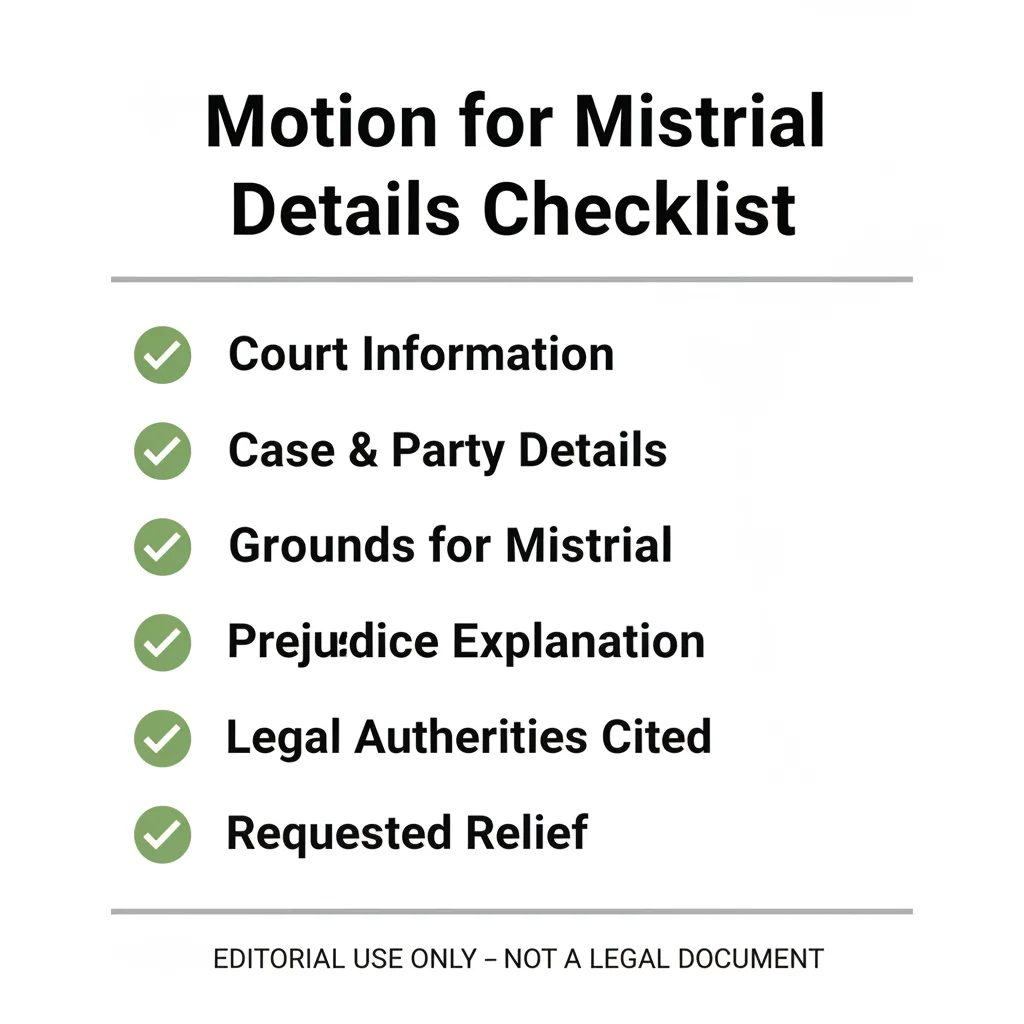
A mistrial is declared when a fundamental error occurs that compromises the fairness of the trial, making it impossible to continue justly. These errors are often unforeseen events that significantly prejudice one of the parties or taint the integrity of the judicial process. The court must determine that the error is so severe that it cannot be cured by lesser measures, such as a jury instruction.
- Jury Impropriety - This can include instances of jury tampering, a juror's undisclosed bias, a juror conducting independent research, or the jury becoming deadlocked and unable to reach a unanimous verdict.
- Prosecutorial or Judicial Misconduct - Examples include a prosecutor making highly prejudicial remarks during arguments, deliberately withholding exculpatory evidence, or a judge exhibiting bias or making improper rulings that severely disadvantage a party.
- Admission of Prejudicial Evidence - If highly inflammatory or inadmissible evidence is presented to the jury, and its impact cannot be undone, it may form the basis for a mistrial. This often occurs when evidence is disclosed in error or in violation of a court order.
- Witness Misconduct - A witness making highly prejudicial or inappropriate statements, or providing false testimony that significantly impacts the trial's fairness, can lead to a motion for mistrial.
- External Influence or Events - Significant media attention, public demonstrations, or unforeseen events like a natural disaster or a security breach that disrupt the trial or influence the jury can be grounds for a mistrial.
- Death or Illness of a Key Participant - The unexpected death or severe illness of a judge, juror, attorney, or critical witness that prevents the continuation of the trial may necessitate a mistrial.
Procedural Aspects of a Motion for Mistrial
A motion for mistrial is typically made orally in open court as soon as the fundamental error giving rise to the motion occurs. The timing is critical because a party generally must object to the error promptly to preserve the issue for appeal and allow the court to attempt to cure the issue if possible.
When filing a motion for mistrial, parties must comply with applicable rules of procedure, such as the Federal Rules of Procedure in federal courts. These rules often require the inclusion of a brief supporting the motion, detailing the grounds and legal arguments for why a mistrial is necessary. Additionally, any sensitive information included with the motion must be properly redacted to protect privacy and confidentiality.
The judge will hear arguments from both sides regarding the alleged error and its impact on the trial's fairness. The court has the discretion to grant or deny the motion based on the severity of the error and whether any curative measures, such as cautionary jury instructions, could mitigate the prejudice without declaring the entire trial invalid.
Legal Standards and Review
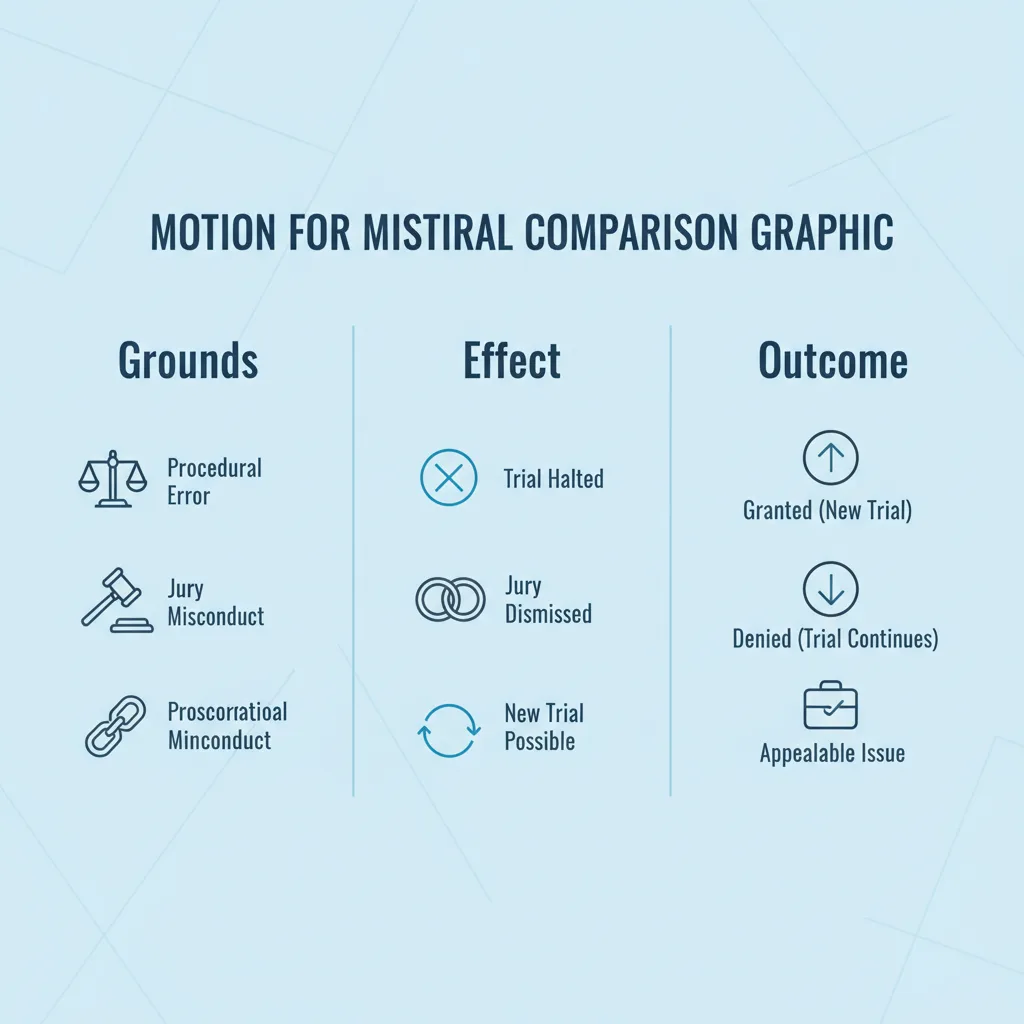
The decision to grant or deny a motion for mistrial rests within the broad discretion of the trial court. This means that the judge has considerable latitude in determining whether an error is so fundamental and prejudicial that it warrants terminating the current proceedings.
Frequently Asked Questions
Sources
- Mistrial | United States Courts - Provides a definition of 'mistrial' and its implications.
- Mistrial | United States Courts - Offers additional information on the concept of 'mistrial'.
- Mistrial | United States District Court Northern District of Oklahoma - Provides guidelines for filing a motion for mistrial in the Northern District of Oklahoma.
- Rule 50—Judgment as a Matter of Law in Jury Trials; Alternative Motion for New Trial; Conditional Rulings - Details on motions related to judgments and new trials, relevant to understanding motions for mistrial.
- Mistrial | United States Court of Appeals for the Ninth Circuit - Discusses the review process for motions for mistrial in the Ninth Circuit.
Not the form you're looking for?
Try our legal document generator to create a custom document
Disclaimer: The templates available on this website are provided for general informational purposes only and do not constitute legal advice. They are not intended to be, and should not be interpreted as, compliant with any specific legal, regulatory, or privacy requirements. These templates are not a replacement for professional legal guidance and should not be relied upon for any particular matter or circumstance. Users are strongly encouraged to seek advice from a qualified attorney licensed in their jurisdiction before using, modifying, or relying on any template.
All templates are provided on an "as is," "with all faults," and "as available" basis. The provider disclaims any and all warranties of any kind, whether express, implied, statutory, or otherwise, including without limitation warranties of merchantability, fitness for a particular purpose, title, or non-infringement.
LegalTemplates.com makes no guarantees or representations regarding the accuracy, completeness, expected outcomes, or reliability of the materials contained in these templates or any materials referenced or linked from them.