Notice to Vacate
A Notice to Vacate is a formal legal instrument issued by a landlord to a tenant, stipulating the termination of a tenancy and requiring the tenant to surrender possession of the rental property by a specified date.
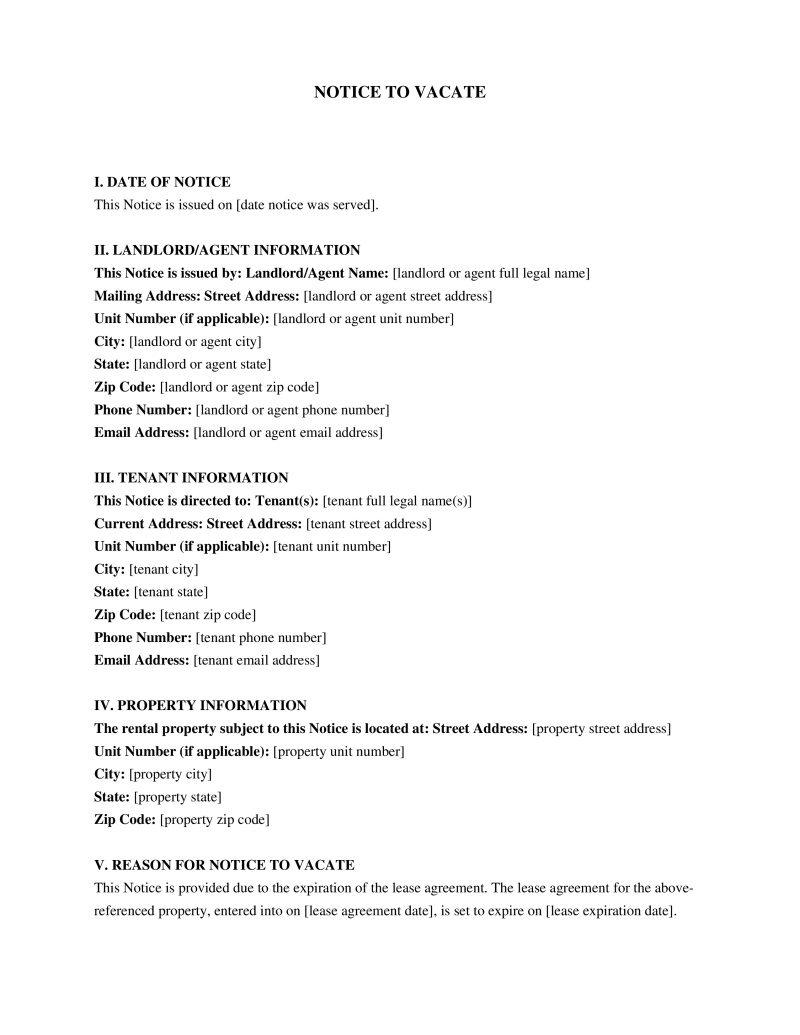
Vacate Reason
Select the main reason for requiring the tenant to vacate. This affects the required notice period and legal compliance.
Provide details if the reason is not listed above.
Table of Contents
What is a Notice to Vacate?
A Notice to Vacate is a formal written communication from a landlord to a tenant, or sometimes from a tenant to a landlord, indicating the termination of a tenancy and the requirement or intention to vacate the premises by a specified date. Its primary purpose is to provide legal notification that a tenancy is ending, initiating the process for the tenant to move out or for the landlord to regain possession of the property. This document serves as a prerequisite for further legal action, such as an eviction lawsuit, if the tenant does not comply.
Purpose and General Context
The Notice to Vacate serves as a crucial legal instrument in landlord-tenant relationships, establishing a formal record of a tenancy's termination. It is distinct from an eviction order issued by a court, as it is typically an initial step taken by one party to inform the other of their intent or requirement to end the rental agreement. This notice period allows tenants time to find new housing and move their belongings, while also allowing landlords to prepare the property for new occupants or other uses.
The specific reasons for issuing a notice to vacate can vary widely, including the expiration of a lease term, a landlord's decision not to renew a month-to-month tenancy, a tenant's violation of lease terms (such as non-payment of rent), or a landlord's need to reclaim the property for personal use or sale. Conversely, a tenant may issue a notice to vacate to a landlord to signify their intention to move out at the end of a lease or in accordance with their month-to-month agreement.
Common Types of Notices to Vacate
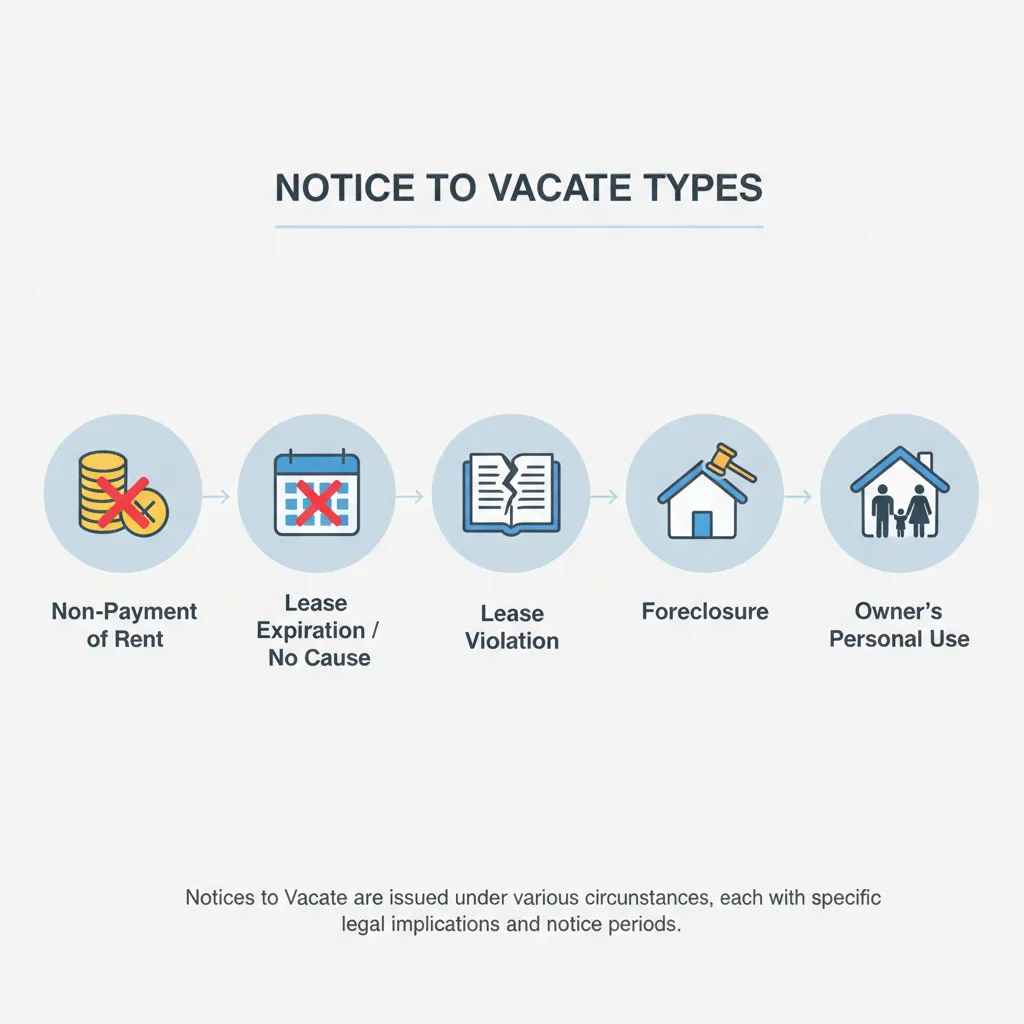
Notices to Vacate are issued for various reasons, and their specific requirements, including the notice period, often depend on the jurisdiction and the grounds for termination. Common types include:
- Notice for Non-Payment of Rent - This notice informs a tenant that they have a specified period (e.g., 3, 5, 10, or 14 days) to either pay overdue rent or vacate the premises. In Washington State, a 14-day notice to pay rent or vacate is mandated to follow a specific form (RCW 59.18.057).
- Notice to Terminate Month-to-Month Tenancy - Used when either the landlord or tenant wishes to end a month-to-month rental agreement without specific cause. The notice period varies by jurisdiction, often 30, 60, or 90 days. In Washington D.C., a 30-day written notice is required for terminating month-to-month commercial tenancies (DC Code § 42–3202).
- Notice for Lease Violation - Issued when a tenant has violated a term of their lease agreement, other than non-payment of rent. This notice may give the tenant an opportunity to cure the violation or face eviction.
- Notice to Vacate After Foreclosure - In specific situations, such as when a property has been foreclosed, existing tenants may receive a notice to vacate. In Washington State, tenants of foreclosed properties must receive a 60-day written notice to vacate before eviction (RCW 61.24.146).
- Notice for Mobile Home Park Tenancy Termination - Specific regulations often govern the termination of tenancies in mobile home parks due to the unique nature of these arrangements. Washington State outlines specific grounds and notice requirements for terminating such tenancies (RCW 59.20.080).
- Notice for Owner's Personal Use and Occupancy - Landlords may issue this type of notice when they intend to move into the property themselves or have a family member occupy it. Washington D.C. provides a sample 90-day notice to vacate for personal use and occupancy (DHCD Form 12).
Key Elements of a Valid Notice
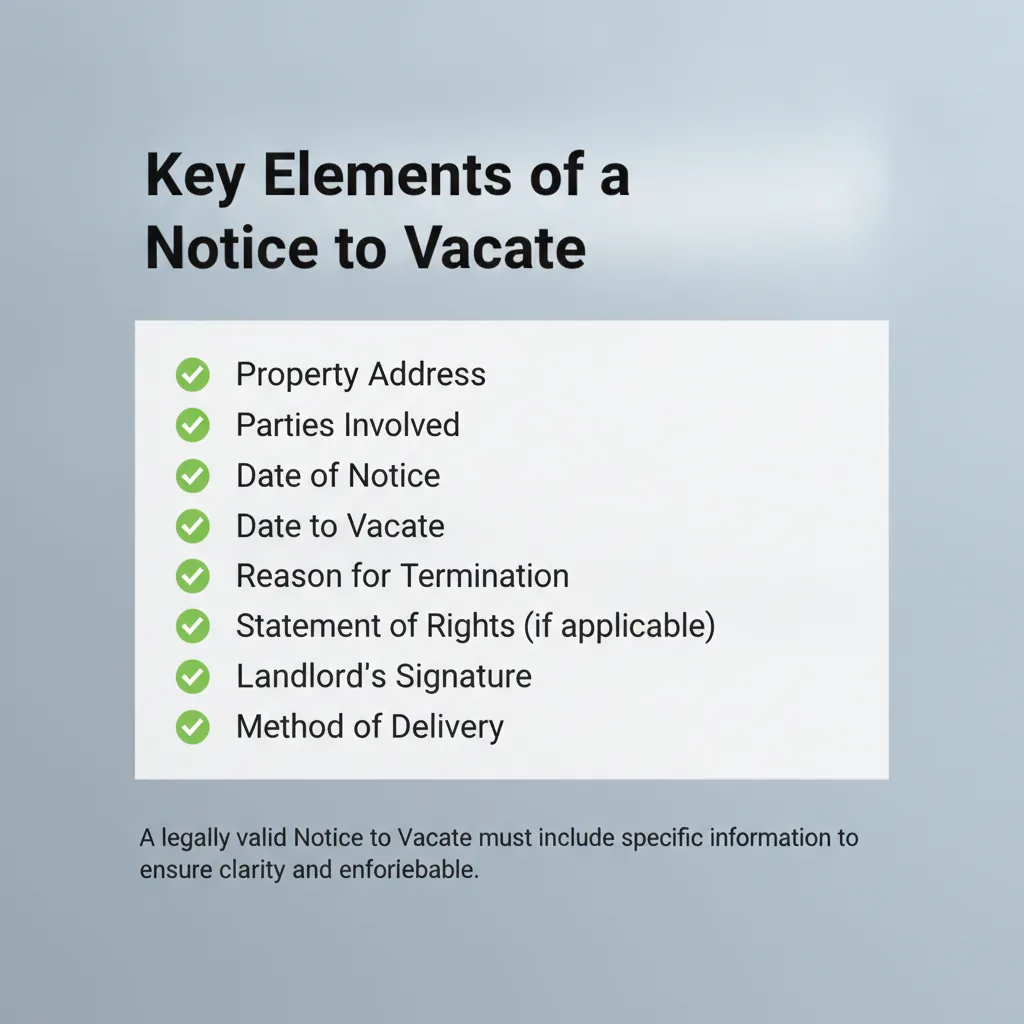
For a Notice to Vacate to be legally enforceable, it must typically contain several key pieces of information. While specific requirements can vary by jurisdiction, most notices share common elements designed to clearly inform the recipient of the impending tenancy termination.
- Property Address - The full and accurate address of the rental property, including unit number if applicable.
- Parties Involved - The full names of the landlord(s) and tenant(s) as they appear on the lease agreement.
- Date of Notice - The specific date the notice is issued.
- Date to Vacate - A clear and unambiguous date by which the tenant must vacate the premises. This date must comply with the minimum notice periods required by local and state laws.
- Reason for Termination - A statement outlining the specific reason for terminating the tenancy, such as non-payment of rent, lease expiration, or a specific lease violation. For notices without cause (e.g., month-to-month termination), it typically states that the landlord is choosing not to renew the tenancy.
- Statement of Rights (if applicable) - Some jurisdictions require the notice to inform tenants of their rights, such as the right to cure a lease violation or information about legal aid resources.
- Landlord's Signature - The signature of the landlord or their authorized agent.
- Method of Delivery - Details on how the notice was served (e.g., first-class mail, certified mail, hand-delivery, posting on the door).
Jurisdictional Requirements and Timelines
Legal requirements for notices to vacate vary significantly by jurisdiction, with specific statutes and forms often provided by state legislatures and local agencies. Adherence to these requirements is critical for the notice to be legally valid and serve as a basis for any subsequent legal action.
- Washington State Foreclosure Notice - Tenants occupying property subject to foreclosure must receive a 60-day written notice to vacate before they can be evicted by the new owner (RCW 61.24.146).
- Washington State 14-Day Pay or Vacate Notice - A specific form is mandated for a 14-day notice to pay rent or vacate, which must be strictly followed when a tenant is behind on rent (RCW 59.18.057).
- Washington State Mobile Home Park Tenancy Termination - The state outlines specific grounds and notice periods for terminating tenancies in mobile home parks, which differ from standard residential leases (RCW 59.20.080).
- Washington D.C. Commercial Month-to-Month Notice - For commercial tenancies on a month-to-month basis, a 30-day written notice to quit is required (DC Code § 42–3202).
- Washington D.C. Personal Use Notice - When a landlord intends to regain possession for personal use, a 90-day notice to vacate is typically required, with specific forms available from the Department of Housing and Community Development (DHCD Form 12).
Distinction from Eviction Proceedings
It is important to differentiate a Notice to Vacate from an eviction proceeding. A Notice to Vacate is a preliminary step, a formal communication from one party to another, signaling the end of a tenancy. It serves as a legal prerequisite for a landlord to initiate an eviction lawsuit, but it is not an eviction itself.
An eviction, also known as an unlawful detainer action, is a legal process initiated in court by a landlord to forcibly remove a tenant who has failed to comply with a valid Notice to Vacate or has otherwise breached their lease agreement. This court process involves filing a lawsuit, serving the tenant with legal papers, attending court hearings, and obtaining a judgment from a judge. If the landlord prevails, the court issues an order, often called a writ of possession, which authorizes law enforcement to remove the tenant and their belongings from the property. Failure to properly serve a Notice to Vacate or to adhere to its specific legal requirements can result in the dismissal of an eviction case.
Frequently Asked Questions
Sources
- RCW 61.24.146: Foreclosure of tenant-occupied property—Notice to vacate - Provides statutory requirements for notices to vacate in Washington State during foreclosure proceedings.
- RCW 59.18.057: Notice—Form - Specifies the required form for 14-day notices to pay rent or vacate in Washington State.
- RCW 59.20.080: Grounds for termination of tenancy or occupancy or failure to renew a tenancy or occupancy—Notice—Mediation - Outlines grounds and notice requirements for terminating tenancies in mobile home parks in Washington State.
- § 42–3202. Notices to quit. - Describes requirements for notices to quit in commercial and residential tenancies in Washington D.C.
- Form 12 - 90 Day Notice to Vacate for Personal Use and Occupancy - Provides a sample 90-day notice to vacate form for personal use and occupancy in Washington D.C.
Not the form you're looking for?
Try our legal document generator to create a custom document
Disclaimer: The templates available on this website are provided for general informational purposes only and do not constitute legal advice. They are not intended to be, and should not be interpreted as, compliant with any specific legal, regulatory, or privacy requirements. These templates are not a replacement for professional legal guidance and should not be relied upon for any particular matter or circumstance. Users are strongly encouraged to seek advice from a qualified attorney licensed in their jurisdiction before using, modifying, or relying on any template.
All templates are provided on an "as is," "with all faults," and "as available" basis. The provider disclaims any and all warranties of any kind, whether express, implied, statutory, or otherwise, including without limitation warranties of merchantability, fitness for a particular purpose, title, or non-infringement.
LegalTemplates.com makes no guarantees or representations regarding the accuracy, completeness, expected outcomes, or reliability of the materials contained in these templates or any materials referenced or linked from them.