Lease Violation Notice
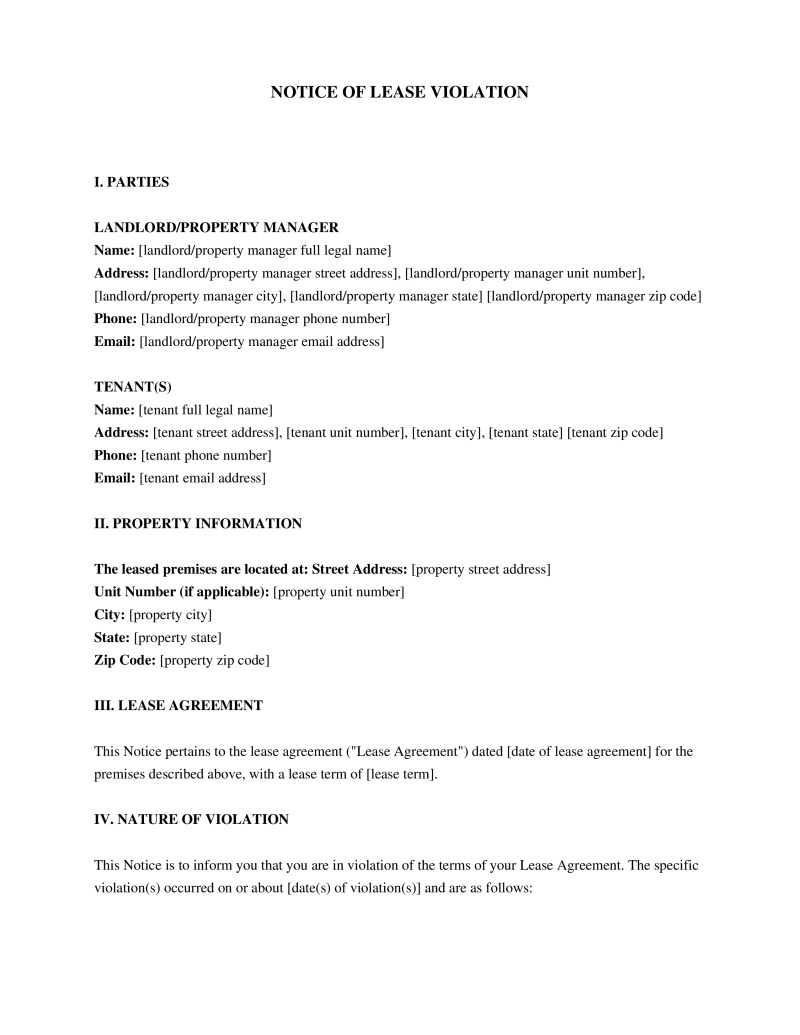
A Lease Violation Notice is a formal legal instrument issued by a landlord to a tenant, detailing specific breaches of a lease agreement and outlining required remedial actions.
Violation Category
Select the primary category that best describes the violation.
Provide details if 'Other' was selected.
Table of Contents
What is a Lease Violation Notice?
A Lease Violation Notice is a formal written communication issued by a landlord to a tenant, informing them of a breach in the terms and conditions of their rental agreement. Its primary purpose is to document the violation, provide the tenant with official notice, and typically offer an opportunity to correct the issue within a specified timeframe. This document serves as an essential step in the landlord-tenant dispute resolution process, often preceding more severe actions such as lease termination or eviction proceedings if the violation remains unaddressed.
Purpose and Function of the Notice
The Lease Violation Notice serves several critical functions in property management and landlord-tenant relations. It ensures that both parties are aware of the alleged breach and provides a clear record of communication. By formalizing the notification process, it aims to encourage compliance with the lease terms without immediately resorting to legal action.
- Formal Notification - Provides official, written documentation of a lease breach, establishing a clear record for future reference.
- Opportunity to Cure - In many jurisdictions, it offers the tenant a chance to remedy the violation within a specified period, preventing further escalation.
- Foundation for Further Action - If the violation is not cured, the notice often serves as a prerequisite for initiating lease termination or eviction proceedings.
- Clarification of Terms - Reminds tenants of specific lease clauses that have been violated, reinforcing their obligations under the rental agreement.
Common Types of Lease Violations
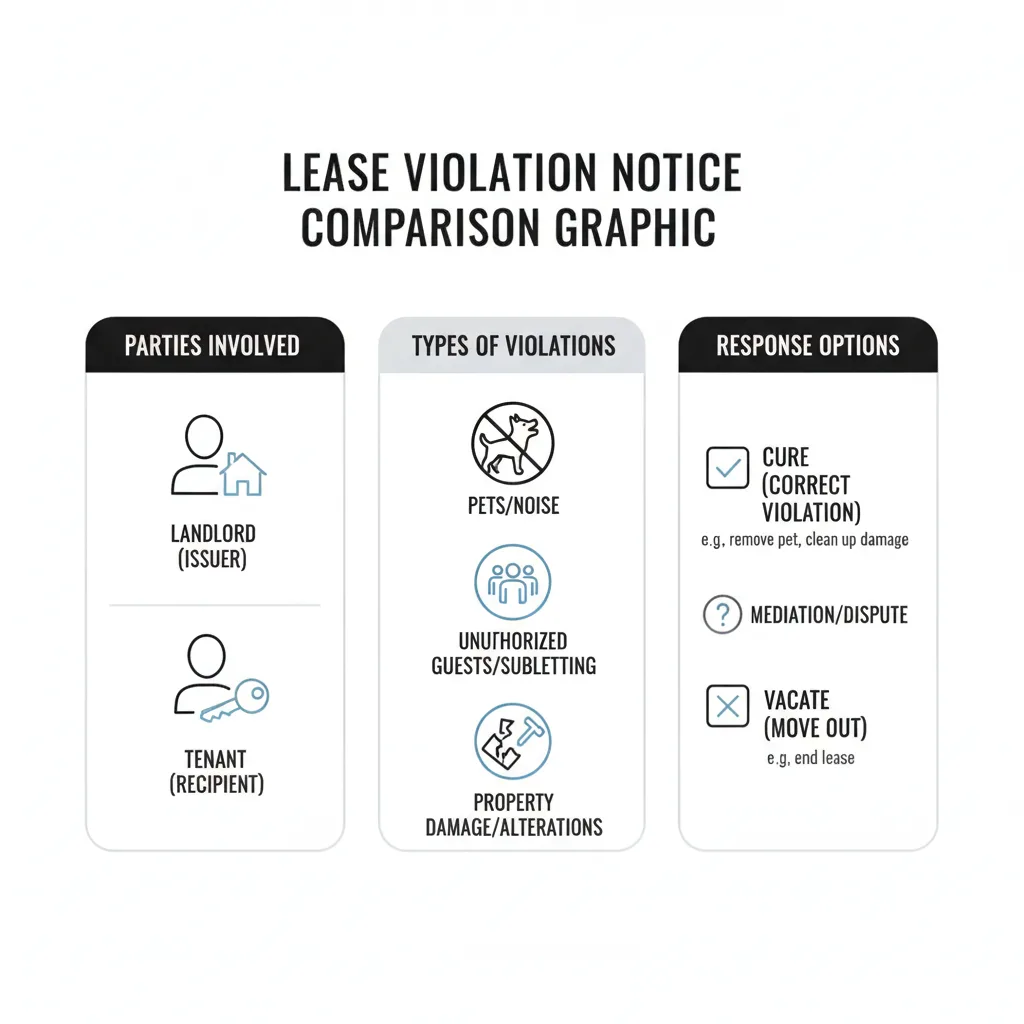
Lease agreements are legally binding contracts that outline the responsibilities of both landlords and tenants. Violations can range from minor infractions to significant breaches that impact the property or other residents. Common types of lease violations include:
- Non-Payment of Rent - Failure to pay rent by the due date, a fundamental breach of nearly all lease agreements.
- Unauthorized Occupants - Allowing individuals not listed on the lease to reside in the property without landlord consent.
- Pet Policy Infractions - Keeping pets when the lease prohibits them, or having unapproved pets in violation of size, breed, or number restrictions.
- Property Damage - Causing significant damage to the rental unit beyond normal wear and tear.
- Noise Disturbances - Creating excessive noise or engaging in disruptive behavior that violates quiet enjoyment clauses or disturbs neighbors.
- Illegal Activity - Conducting any unlawful activities on the premises, which often constitutes a severe and non-curable breach.
- Subletting Without Permission - Renting out the unit or a portion of it to another party without the landlord's explicit written consent.
- Health and Safety Violations - Actions or conditions that pose a risk to the health or safety of occupants or the property, such as excessive clutter creating fire hazards (Material Breach of the Rental Agreement (5-day Notice for Health and Safety)).
Key Elements of a Lease Violation Notice
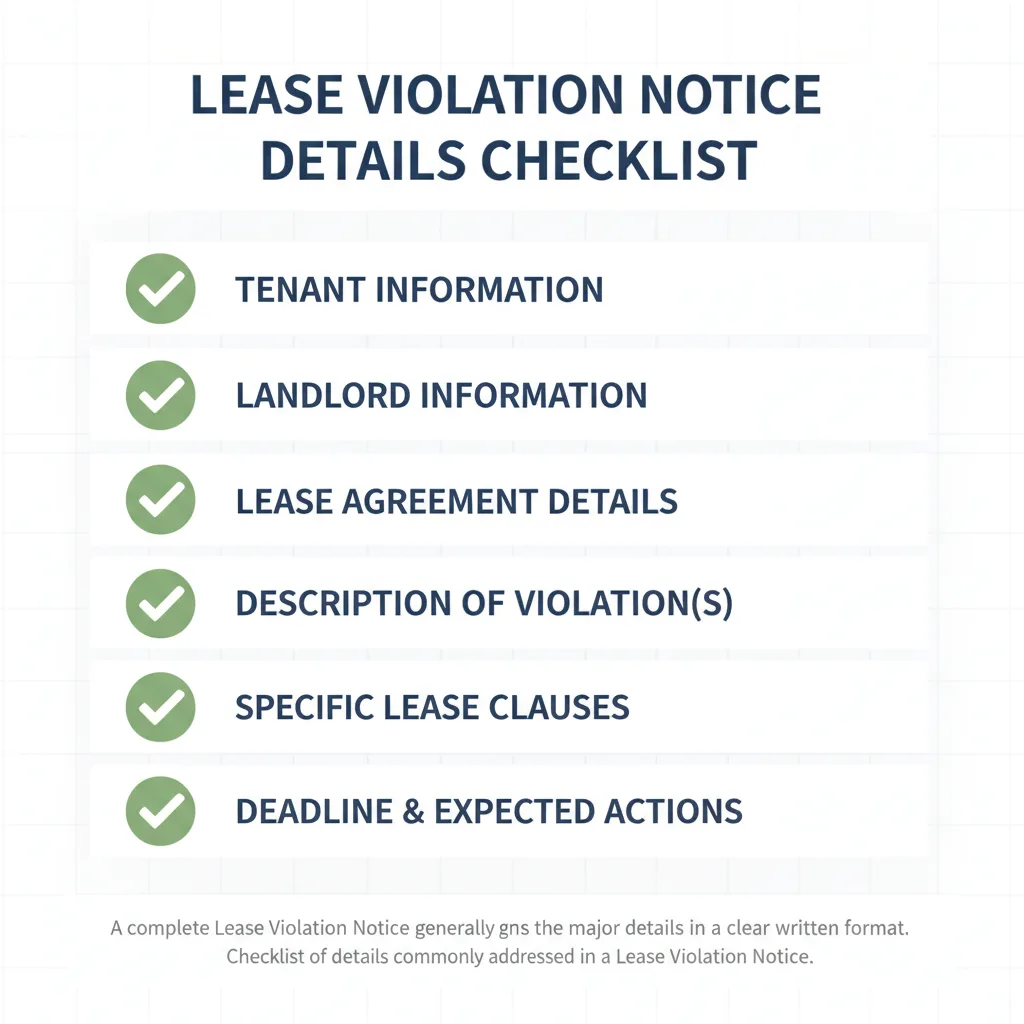
For a Lease Violation Notice to be legally effective, it must contain specific information that clearly communicates the nature of the breach and the required actions. While exact requirements can vary by jurisdiction, a comprehensive notice generally includes:
- Tenant Information - The full name(s) of the tenant(s) and the address of the rental property (Notice of Lease Violation).
- Date of Notice - The date the notice is issued.
- Description of Violation - A clear, specific, and detailed account of the lease violation, including dates, times, and any relevant circumstances (Material Breach of the Rental Agreement (10-day Notice)).
- Reference to Lease Clause - Identification of the specific section or clause in the rental agreement that has been violated.
- Required Corrective Action - A statement outlining what the tenant must do to remedy the violation (Notice of Lease Violation).
- Cure Period - The specific deadline by which the tenant must correct the violation.
- Consequences of Non-Compliance - A clear statement of the actions the landlord will take if the violation is not remedied, such as lease termination or eviction.
- Landlord Information - The landlord's name, contact information, and signature.
Legal Requirements and Timelines
The specific requirements and timelines for issuing a Lease Violation Notice are typically governed by state and local landlord-tenant laws. These laws dictate how notices must be delivered, the duration of the cure period, and the types of violations that warrant different notice periods. Examples from various jurisdictions illustrate this variability:
- Arizona Material Breach (10-day Notice) - Landlords must provide written notice specifying the violation and allow 10 days for the tenant to remedy the issue before terminating the rental agreement for a material breach (Material Breach of the Rental Agreement (10-day Notice)).
- Arizona Health and Safety Breach (5-day Notice) - For breaches materially affecting health and safety, landlords must provide written notice specifying the violation and allow 5 days for the tenant to remedy the issue before terminating the rental agreement (Material Breach of the Rental Agreement (5-day Notice for Health and Safety)).
- Washington State Repeated Violations - Landlords are required to provide written warning notices specifying the violation and allow tenants an opportunity to cure before proceeding with termination for repeated lease violations (RCW 59.18.650: Termination of Rental Agreement for Repeated Violations).
- Montgomery County, Maryland (30-day Notice to Vacate) - Landlords must give at least 30 days' written notice specifying the nature of the breach and the intention to repossess the property for a breach of lease (Notice to Vacate: Breach of Lease).
These examples highlight the importance of landlords adhering strictly to the jurisdictional requirements to ensure the notice is legally valid and enforceable.
Consequences of Non-Compliance
When a tenant receives a Lease Violation Notice and fails to remedy the specified breach within the given timeframe, the landlord may proceed with further legal action. The exact consequences depend on the severity of the violation, the terms of the lease agreement, and applicable state or local laws. Common consequences include:
- Lease Termination - The landlord may terminate the rental agreement, requiring the tenant to vacate the property.
- Eviction Proceedings - If the tenant does not vacate after the lease is terminated, the landlord may file an eviction lawsuit (unlawful detainer action) in court to legally remove the tenant.
- Financial Penalties - The lease may stipulate monetary penalties for certain violations, such as late fees for unpaid rent or charges for unauthorized pets.
- Loss of Security Deposit - Unremedied violations, especially those involving property damage, can lead to deductions from the tenant's security deposit.
Frequently Asked Questions
Sources
- Material Breach of the Rental Agreement (10-day Notice) - Provides information on the 10-day notice required for material breaches of rental agreements in Arizona.
- Material Breach of the Rental Agreement (5-day Notice for Health and Safety) - Details the 5-day notice required for breaches affecting health and safety in Arizona rental agreements.
- RCW 59.18.650: Termination of Rental Agreement for Repeated Violations - Outlines the requirements for terminating a rental agreement in Washington State due to repeated lease violations.
- Notice to Vacate: Breach of Lease - Provides guidelines for landlords in Montgomery County, Maryland, on issuing notices to vacate for lease breaches.
- Notice of Lease Violation - Offers a sample notice of lease violation form used by the USDA for tenants in violation of lease agreements.
Not the form you're looking for?
Try our legal document generator to create a custom document
Disclaimer: The templates available on this website are provided for general informational purposes only and do not constitute legal advice. They are not intended to be, and should not be interpreted as, compliant with any specific legal, regulatory, or privacy requirements. These templates are not a replacement for professional legal guidance and should not be relied upon for any particular matter or circumstance. Users are strongly encouraged to seek advice from a qualified attorney licensed in their jurisdiction before using, modifying, or relying on any template.
All templates are provided on an "as is," "with all faults," and "as available" basis. The provider disclaims any and all warranties of any kind, whether express, implied, statutory, or otherwise, including without limitation warranties of merchantability, fitness for a particular purpose, title, or non-infringement.
LegalTemplates.com makes no guarantees or representations regarding the accuracy, completeness, expected outcomes, or reliability of the materials contained in these templates or any materials referenced or linked from them.