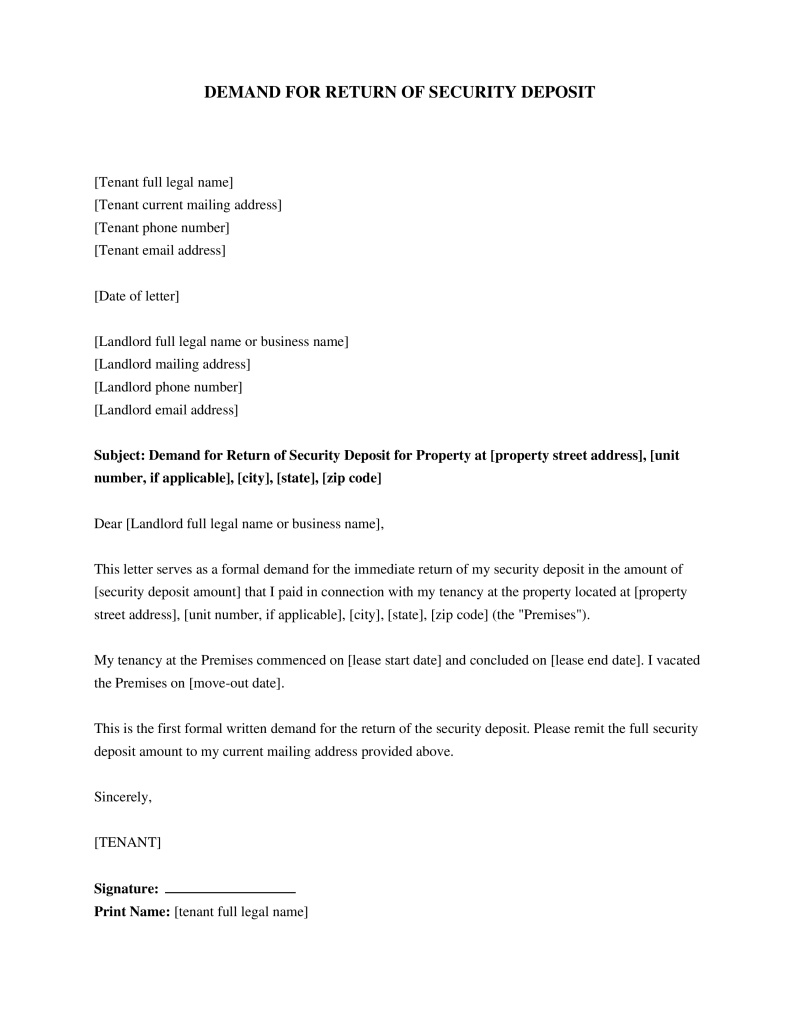
Security Deposit Demand Letter
A Security Deposit Demand Letter is a formal legal instrument, typically issued by a tenant to a landlord, asserting a claim for the return of a security deposit, often citing lease terms or statutory provisions.
Property Type
Select the type of property for which you are requesting the return of your security deposit.
Provide details if you selected 'Other'.
Table of Contents
What is a Security Deposit Demand Letter?
A Security Deposit Demand Letter is a formal written communication sent by a former tenant to a landlord, requesting the return of their security deposit. Its primary purpose is to assert the tenant's legal right to the deposit and to formally demand its return, often after a landlord has failed to return it within a legally specified timeframe or has made deductions that the tenant disputes. This letter serves as a crucial step in the process of recovering a security deposit, signaling the tenant's intent to pursue the matter further if necessary.
Purpose and Importance
The Security Deposit Demand Letter serves several critical functions in the landlord-tenant relationship, particularly at the conclusion of a lease. It acts as a formal notice, ensuring that the landlord is aware of the tenant's expectation for the return of funds. This document is often a prerequisite for further legal action, as courts typically expect tenants to have attempted to resolve the dispute amicably before filing a lawsuit.
Sending a demand letter can often prompt a landlord to return the deposit or provide a detailed explanation for any deductions, which can clarify misunderstandings and prevent more protracted disputes. It also establishes a clear timeline and record of communication, which can be valuable evidence if the matter escalates to small claims court or mediation.
Key Components of a Demand Letter
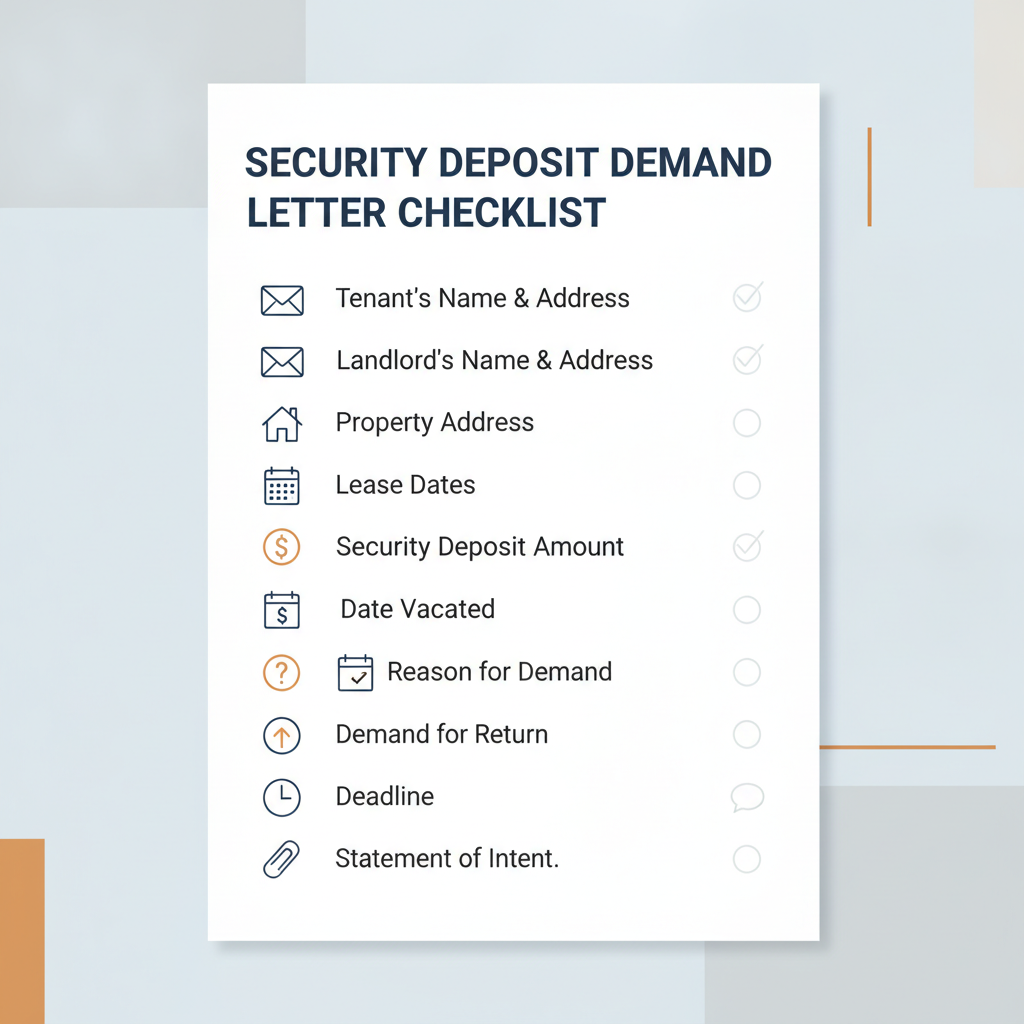
A well-drafted Security Deposit Demand Letter should be clear, concise, and contain specific information to be effective. While the exact requirements can vary by jurisdiction, several elements are universally recommended for inclusion:
- Tenant's Contact Information - Full name, current mailing address, and phone number of the former tenant.
- Landlord's Contact Information - Full name and mailing address of the landlord or property management company.
- Property Address - The address of the rental unit from which the tenant moved.
- Lease Dates - The start and end dates of the tenancy.
- Security Deposit Amount - The exact amount of the security deposit paid.
- Date of Vacating Premises - The specific date the tenant moved out and returned possession.
- Reason for Demand - A clear statement that the landlord has failed to return the deposit or provide an itemized statement of deductions within the legally required period.
- Demand for Return - A direct request for the full return of the security deposit, or the undisputed portion.
- Deadline for Response - A reasonable deadline (e.g., 7-14 days) by which the landlord should respond or return the deposit.
- Statement of Intent - A declaration that the tenant intends to pursue legal remedies if the demand is not met.
- Supporting Documentation - Reference to or enclosure of relevant documents, such as a copy of the lease agreement, move-in/move-out checklists, and photos of the property's condition.
Legal Framework and State-Specific Guidance
The laws governing security deposits and their return are primarily determined at the state and local levels. These laws often dictate the maximum amount a landlord can charge for a security deposit, the timeframe within which it must be returned, and the conditions under which deductions can be made. Many jurisdictions provide resources and sample letters to assist tenants in demanding their deposits:
- California - Tenants can utilize self-help programs offered by the courts to generate a demand letter for the return of their security deposit (California Courts). The Berkeley Rent Board also provides guidance and a sample demand letter for tenants in Berkeley, California (Berkeley Rent Board).
- Massachusetts - The state offers comprehensive information on security deposit laws, including sample forms and letters for tenants to demand the return of their deposit (Mass.gov).
- Colorado (Longmont) - The city of Longmont provides a template for a seven-day demand letter specifically regarding security deposits (Longmont, Colorado).
- North Dakota - The North Dakota Housing Finance Agency offers a sample security deposit disposition letter, which landlords might use to explain deductions, indirectly informing tenants of what to expect (North Dakota Housing Finance Agency).
These examples illustrate that various state and local agencies frequently provide templates and guidance to help tenants understand their rights and correctly draft a Security Deposit Demand Letter.
Sending the Demand Letter
The method of sending a Security Deposit Demand Letter is important for creating a verifiable record of delivery. While regular mail is an option, more secure methods are generally recommended:
- Certified Mail with Return Receipt - This method provides proof that the letter was sent and received by the landlord, including the date of delivery.
- Registered Mail - Similar to certified mail, this offers a secure way to send important documents and provides proof of mailing and delivery.
- Hand Delivery with Witness - If hand-delivering, it is advisable to have a witness present who can attest to the delivery and the date it occurred.
- Email with Read Receipt - While less formal than mail, sending an email with a read receipt can provide some evidence of delivery, especially if combined with a mailed letter.
Regardless of the method chosen, tenants should always retain a copy of the sent letter and all supporting documentation for their records. This documentation can be critical if the matter proceeds to legal action.
Next Steps and Potential Outcomes
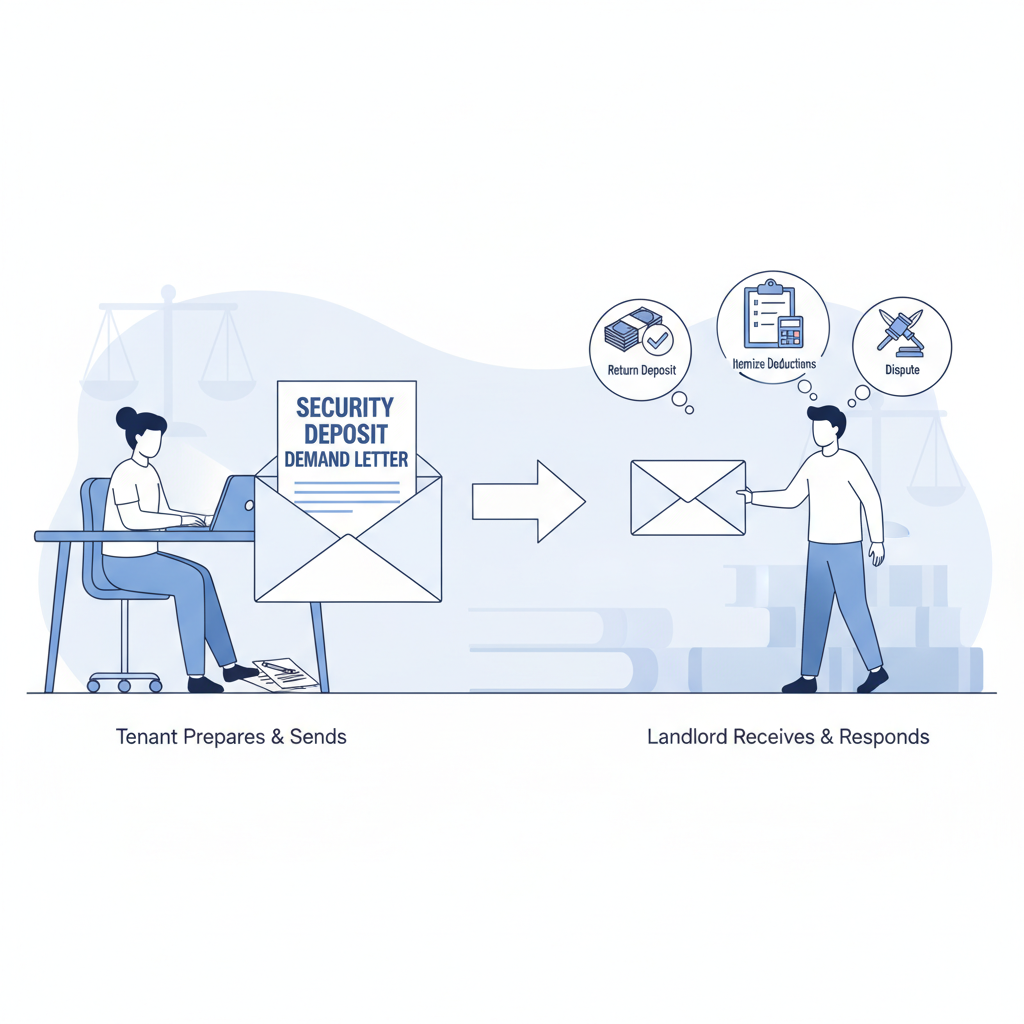
Upon receiving a Security Deposit Demand Letter, a landlord typically has a specified period, as defined by state or local law, to respond. The outcomes can vary:
- Full Return of Deposit - The landlord may agree to return the full security deposit as demanded.
- Partial Return with Itemization - The landlord may return a portion of the deposit, accompanied by an itemized list of deductions for damages or unpaid rent.
- No Response or Refusal - The landlord may fail to respond within the given deadline or explicitly refuse to return the deposit.
If the landlord does not respond or refuses to return the deposit, and the tenant believes the deductions are unwarranted or the landlord is withholding funds illegally, the tenant may then consider further legal action. This could include filing a claim in small claims court, seeking mediation, or consulting with legal aid services or a private attorney. The demand letter serves as foundational evidence in any subsequent legal proceedings.
Frequently Asked Questions
Sources
- Demand letter for security deposit | California Courts | Self Help Guide - Provides a program to help tenants write a demand letter for the return of their security deposit in California.
- Massachusetts law about tenants' security deposits | Mass.gov - Offers comprehensive information on Massachusetts laws regarding tenants' security deposits, including sample forms and letters.
- Suggestions for Recovering Your Security Deposit | Berkeley Rent Board - Provides guidance on recovering security deposits, including a sample demand letter for tenants in Berkeley, California.
- Seven Day Notice Regarding Security Deposit - Provides a template for a seven-day demand letter regarding security deposits in Longmont, Colorado.
- SECURITY DEPOSIT DISPOSITION LETTER - Offers a sample security deposit disposition letter for landlords in North Dakota.
Not the form you're looking for?
Try our legal document generator to create a custom document
Disclaimer: The templates available on this website are provided for general informational purposes only and do not constitute legal advice. They are not intended to be, and should not be interpreted as, compliant with any specific legal, regulatory, or privacy requirements. These templates are not a replacement for professional legal guidance and should not be relied upon for any particular matter or circumstance. Users are strongly encouraged to seek advice from a qualified attorney licensed in their jurisdiction before using, modifying, or relying on any template.
All templates are provided on an "as is," "with all faults," and "as available" basis. The provider disclaims any and all warranties of any kind, whether express, implied, statutory, or otherwise, including without limitation warranties of merchantability, fitness for a particular purpose, title, or non-infringement.
LegalTemplates.com makes no guarantees or representations regarding the accuracy, completeness, expected outcomes, or reliability of the materials contained in these templates or any materials referenced or linked from them.