Cover Letter Template
Create Cover Letter Template
Cover Letter Template
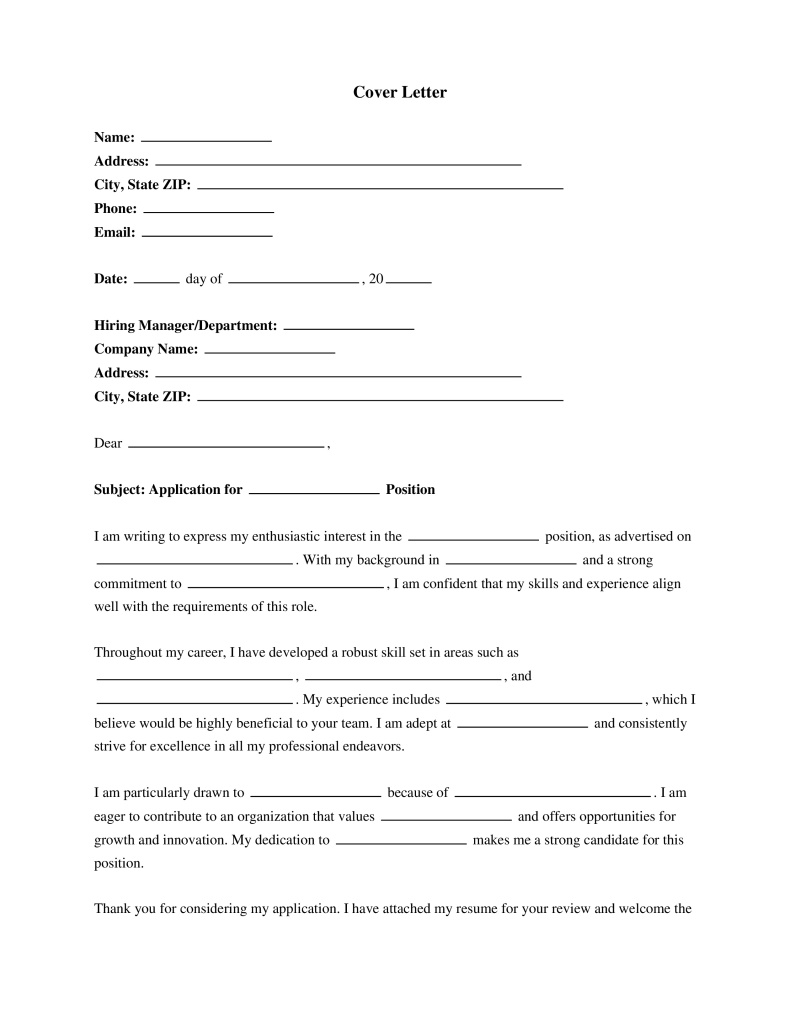
A Cover Letter Template is a pre-designed, structured document providing a standardized framework for job applicants to introduce themselves, highlight qualifications, and express interest in a specific employment opportunity.
Answer the question(s) below to create your Cover Letter Template
Cover Letter Tone
Choose the style that best fits your target employer and industry.
If you selected 'Other', describe the tone you want for your cover letter.
Table of Contents
What is a Cover Letter?
A cover letter is a formal document typically submitted with other materials, such as a resume or curriculum vitae, to provide additional information about a candidate's qualifications and interest in a specific position or opportunity. Its primary purpose is to introduce the sender, highlight relevant skills and experiences, and explain why they are a suitable match for the role or purpose. This document acts as a personalized introduction, allowing the sender to elaborate on points not fully captured in other accompanying documents.
Purpose and Function
The core function of a cover letter is to bridge the gap between a sender's qualifications and the specific requirements of a recipient, such as a prospective employer or an organization receiving a submission. It offers an opportunity to convey enthusiasm, demonstrate understanding of the recipient's needs, and articulate how one's background aligns with those needs. Unlike a resume, which provides a factual overview, a cover letter allows for a narrative that can persuade and engage the reader.
In professional contexts, cover letters serve several key purposes:
- Expressing Interest - Clearly states the sender's interest in a particular role, project, or inquiry.
- Highlighting Relevance - Connects specific skills, experiences, and achievements directly to the requirements outlined by the recipient.
- Demonstrating Communication Skills - Showcases the sender's ability to write clearly, concisely, and persuasively.
- Personalizing the Application - Allows for tailoring the message to the specific organization or individual, moving beyond generic statements.
- Explaining Gaps or Transitions - Provides an opportunity to address any potential concerns, such as employment gaps or career changes, in a positive light.
Key Elements of a Cover Letter
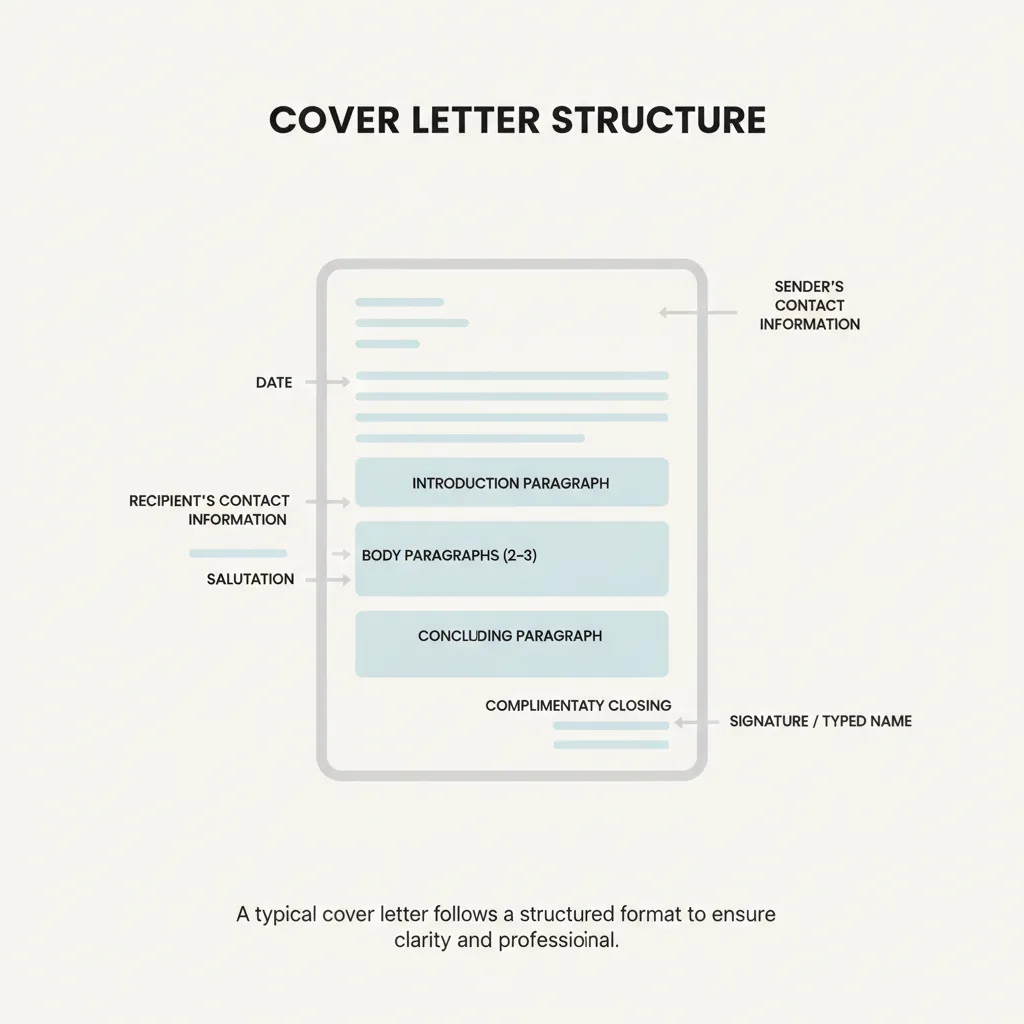
A well-structured cover letter generally includes several standard components, ensuring it is professional and easy to read. While the specific content will vary based on its purpose, the organizational framework remains consistent:
- Sender's Contact Information - Includes full name, address, phone number, and email.
- Date - The date the letter is written.
- Recipient's Contact Information - Name, title, company, and address of the person or department receiving the letter.
- Salutation - A formal greeting, ideally addressed to a specific individual (e.g., "Dear Mr./Ms. [Last Name]").
- Introduction - States the purpose of the letter, the specific position or opportunity being applied for, and where the sender learned about it.
- Body Paragraphs - One to three paragraphs detailing relevant skills, experiences, and accomplishments, connecting them directly to the requirements or needs of the recipient. This section should provide specific examples and demonstrate an understanding of the recipient's context.
- Conclusion - Summarizes the sender's interest and qualifications, reiterates enthusiasm, and includes a call to action, such as expressing a desire for an interview or further discussion.
- Complimentary Closing - A professional closing, such as "Sincerely" or "Regards."
- Signature - The sender's handwritten signature (for physical letters) followed by their typed full name.
Contexts and Applications of Cover Letters
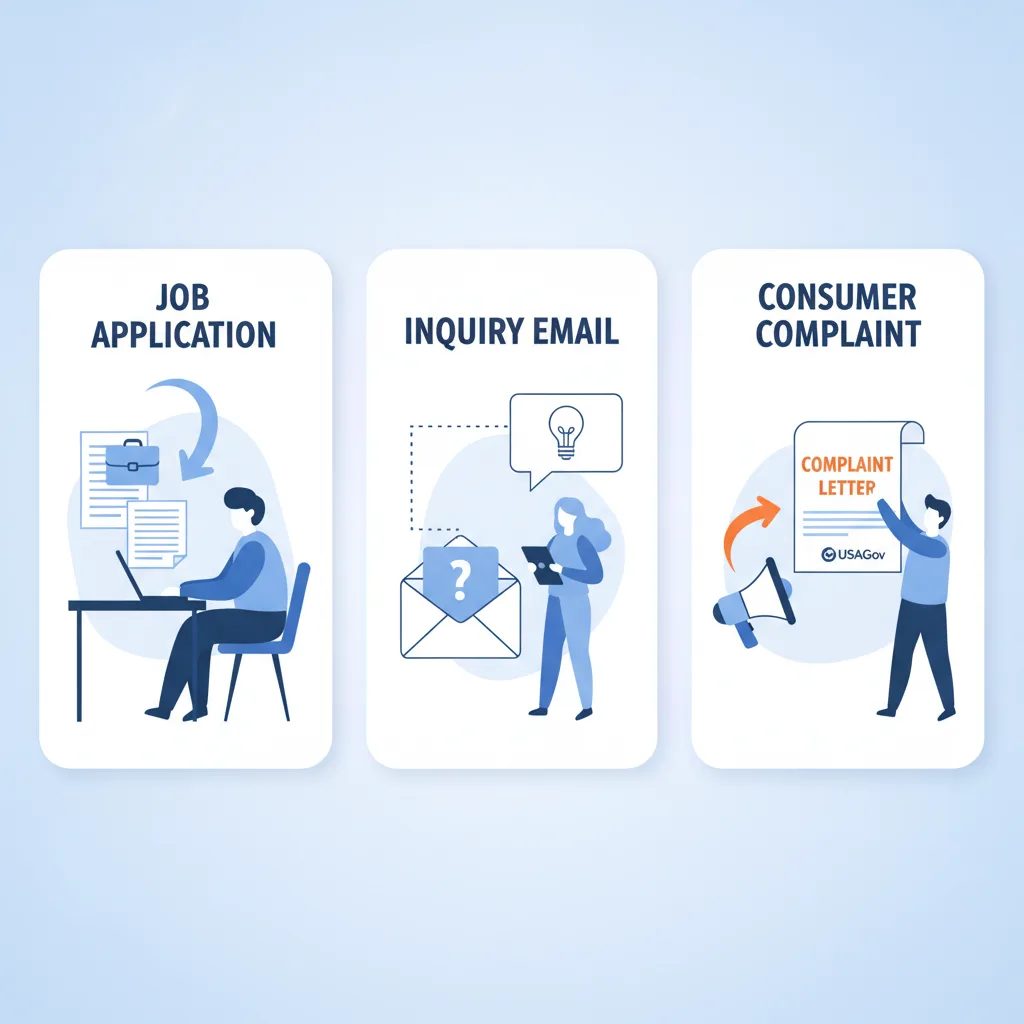
Cover letters are utilized across various scenarios beyond traditional job applications, serving as formal introductory or explanatory documents. Their format and content adapt to the specific objective, but the underlying principle of a personalized introduction remains constant:
- Job Application Letter - Accompanies a resume when applying for employment, detailing qualifications relevant to a specific job posting.
- Inquiry Letter - Sent to inquire about potential job openings, internships, or collaboration opportunities that may not be publicly advertised.
- Networking Letter - Used to connect with professionals in one's field, request informational interviews, or seek advice.
- Letter of Interest - Expresses a general interest in an organization or field, often without a specific opening in mind.
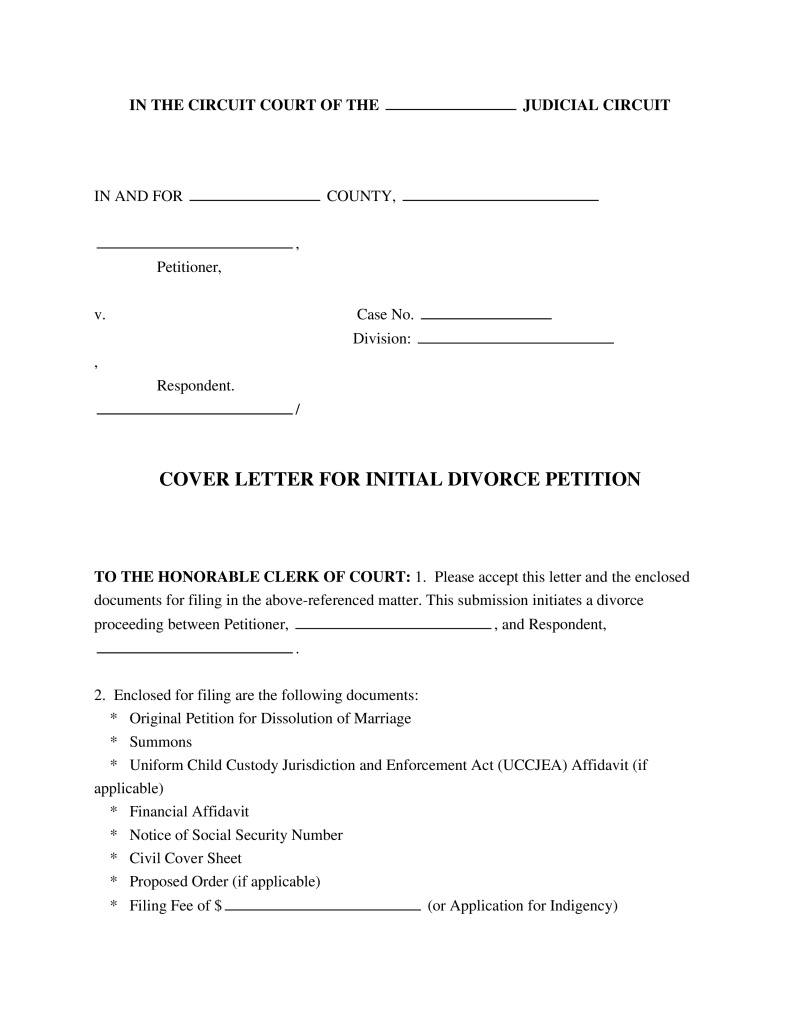
- Complaint Letter - Used by consumers to formally address issues with a company's products or services. For instance, USAGov provides sample complaint letter templates to assist consumers in addressing issues with companies' products or services, including those related to cable or satellite television.
- Academic Application Letter - Submitted with applications for educational programs, grants, or research positions, outlining academic background and research interests.
Cover Letter Templates
Cover letter templates provide a structured framework that can simplify the process of drafting a professional letter. These templates offer predefined sections for contact information, salutations, body paragraphs, and closings, helping users ensure all essential components are included. They are particularly useful for maintaining consistency in formatting and tone.
The use of a template can help users focus on the content rather than the layout, ensuring that key information is presented clearly and logically. While templates offer a starting point, it is crucial to customize each letter to the specific recipient and purpose. For example, government resources like USAGov offer sample complaint letter templates, which guide consumers on how to structure a formal complaint effectively.
Distinction from Resumes
While often submitted together, a cover letter and a resume serve distinct purposes in an application or inquiry. A resume functions as a concise, factual summary of a sender's work history, education, skills, and accomplishments, typically presented in bullet points or short phrases. It is designed for quick scanning to ascertain qualifications.
In contrast, a cover letter offers a narrative explanation, allowing the sender to elaborate on specific experiences, demonstrate personality, and articulate motivations. It provides context for the resume's factual points, making a case for why the sender is a suitable candidate or why their inquiry should be considered. The cover letter is forward-looking and persuasive, while the resume is a backward-looking record of achievements.
Frequently Asked Questions
The primary purpose of a cover letter is to introduce the sender, express interest in a specific opportunity, and highlight relevant qualifications not fully detailed in a resume. It serves as a personalized narrative to persuade the recipient.
While not always explicitly required, submitting a cover letter is generally recommended as it provides an opportunity to make a stronger, more personalized impression. It allows you to elaborate on why you are a good fit for the specific role and company.
A cover letter should ideally be concise, typically limited to one page, consisting of three to four paragraphs. This length ensures readability and respects the recipient's time while conveying essential information.
Yes, using a cover letter template is acceptable as it provides a structured starting point for formatting and content organization. However, it is crucial to customize the template's content thoroughly to reflect your unique qualifications and the specific opportunity.
The introduction should clearly state the purpose of the letter, identify the specific position or opportunity you are applying for, and mention where you learned about it. It should immediately capture the reader's attention and set the stage for the rest of the letter.
A cover letter is a narrative document that explains your interest and suitability, while a resume is a factual summary of your work history, education, and skills. The cover letter provides context and persuasion, whereas the resume offers a concise overview of qualifications.
Sources
- How to file a complaint about a company’s products or services - Provides a sample complaint letter template for consumers to use when addressing issues with a company's products or services.
- Where to file a complaint about cable or satellite television - Includes a sample complaint letter template for consumers to use when addressing issues with cable or satellite television services.
Related Documents
Forms commonly used with Cover Letter Template.
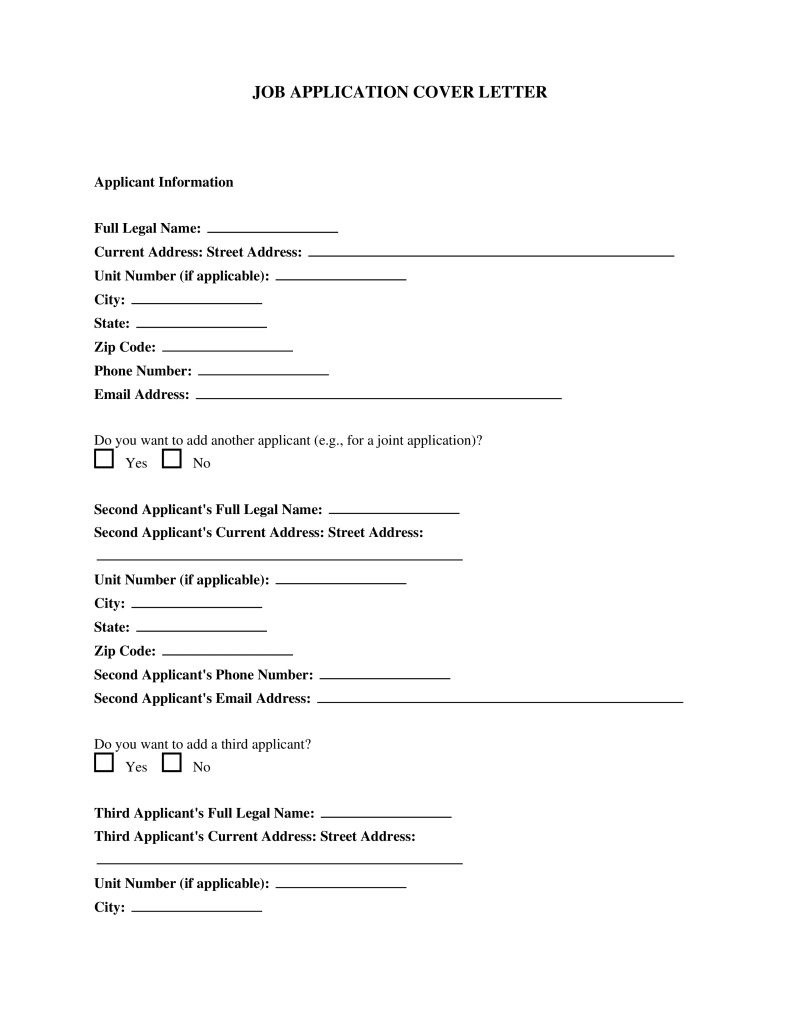
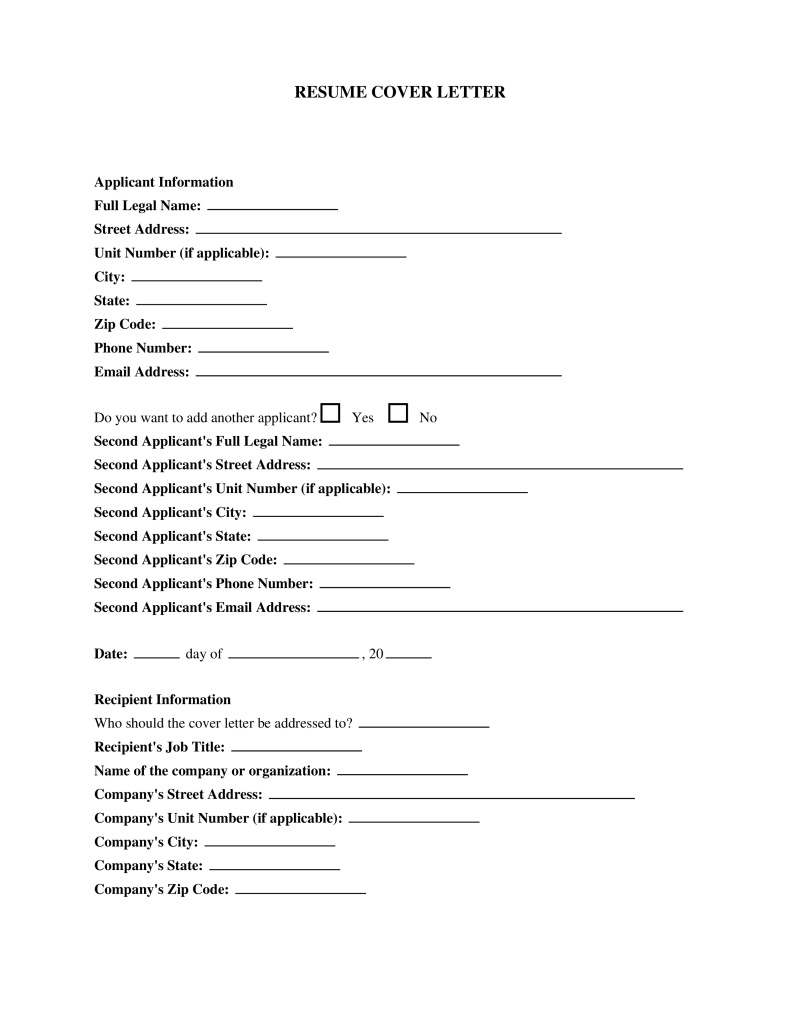
Not the form you're looking for?
Try our legal document generator to create a custom document
Disclaimer: The templates available on this website are provided for general informational purposes only and do not constitute legal advice. They are not intended to be, and should not be interpreted as, compliant with any specific legal, regulatory, or privacy requirements. These templates are not a replacement for professional legal guidance and should not be relied upon for any particular matter or circumstance. Users are strongly encouraged to seek advice from a qualified attorney licensed in their jurisdiction before using, modifying, or relying on any template.
All templates are provided on an "as is," "with all faults," and "as available" basis. The provider disclaims any and all warranties of any kind, whether express, implied, statutory, or otherwise, including without limitation warranties of merchantability, fitness for a particular purpose, title, or non-infringement.
LegalTemplates.com makes no guarantees or representations regarding the accuracy, completeness, expected outcomes, or reliability of the materials contained in these templates or any materials referenced or linked from them.