Bid Proposal Template
A Bid Proposal Template is a standardized legal document providing a structured framework for formally submitting an offer to supply goods or services, typically in response to a solicitation.
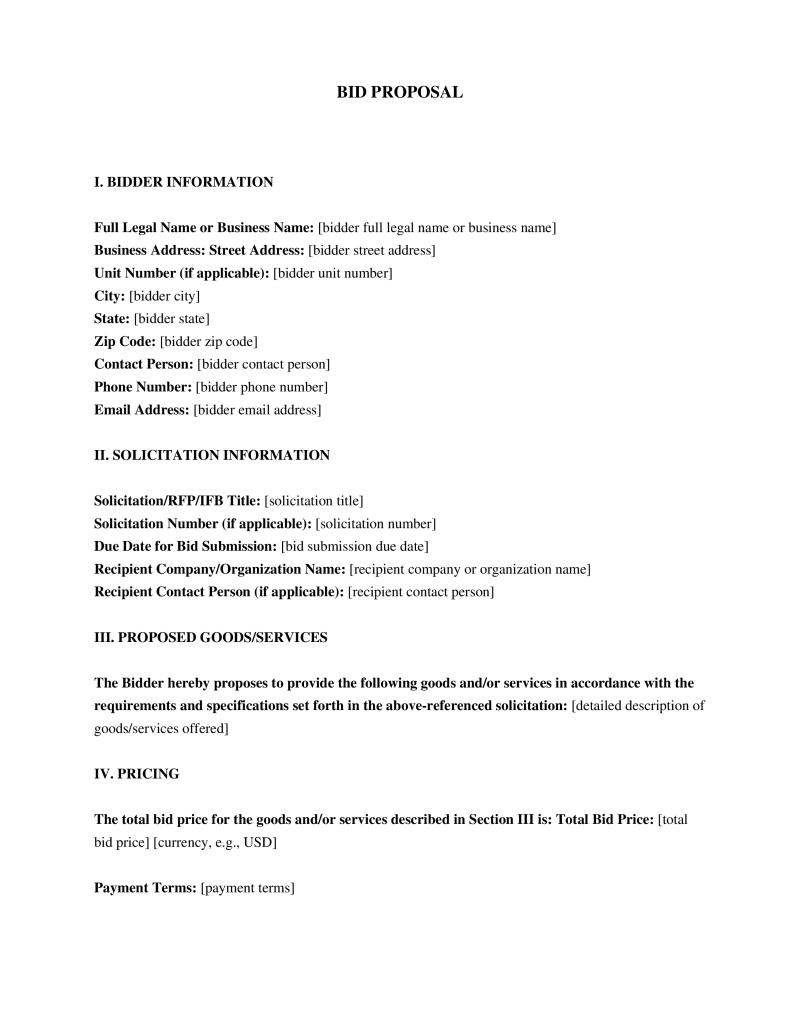
Bid Category
Select the primary category that best describes your proposal.
Provide details if you selected 'Other'.
Table of Contents
What is a Bid Proposal Template?
A bid proposal template is a standardized document structure designed to guide organizations in preparing and submitting formal offers for contracts or projects. Its primary purpose is to ensure consistency, comprehensiveness, and compliance with the specific requirements outlined in a solicitation document, such as a Request for Proposal (RFP). Businesses, non-profits, and government contractors frequently utilize these templates to streamline the proposal writing process and enhance the clarity and persuasiveness of their bids.
Purpose and Importance
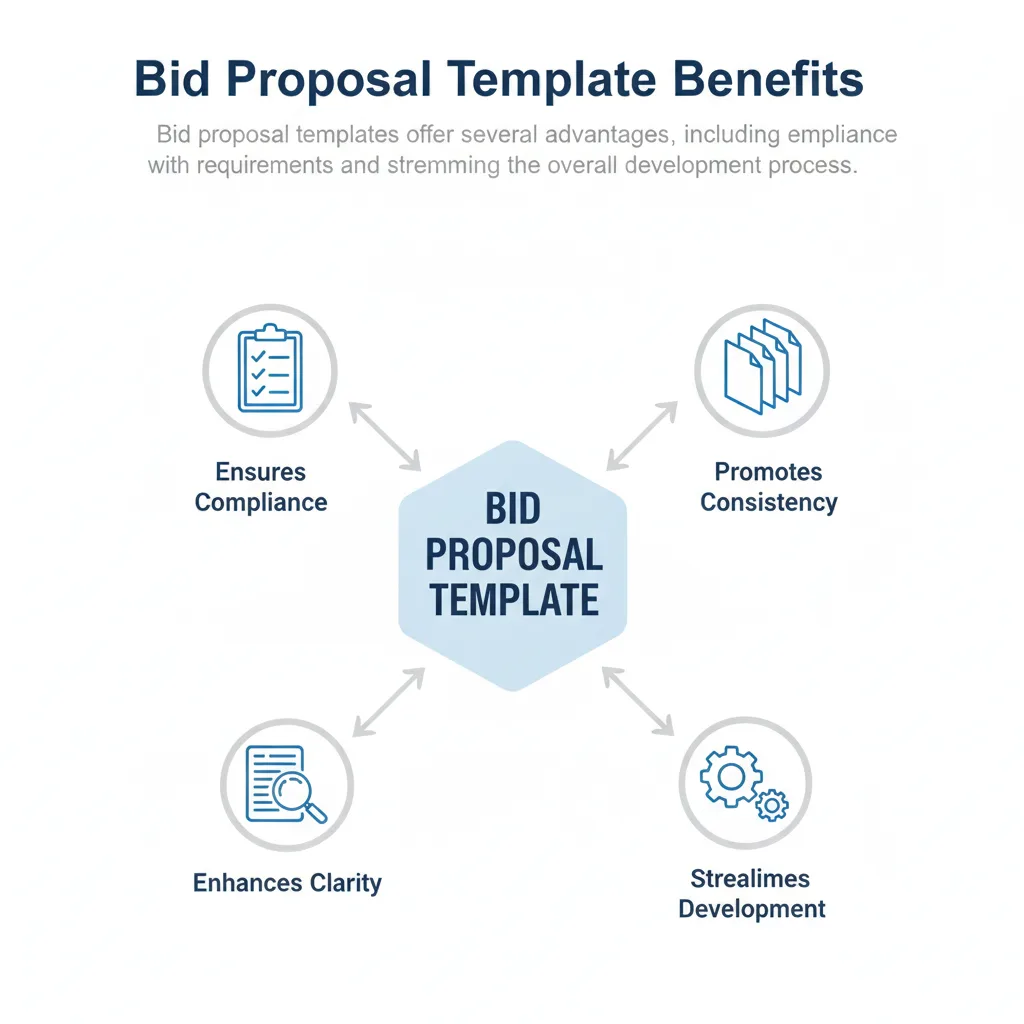
Bid proposal templates serve several critical functions in the competitive landscape of contracting and procurement. They help organizations efficiently respond to solicitations by providing a pre-defined framework, which can significantly reduce the time and effort involved in drafting a proposal from scratch. This standardization ensures that all necessary information is included, improving the chances of a compliant and compelling submission.
- Ensuring Compliance - Templates are often structured to align with the specific requirements of a Request for Proposal (RFP), Request for Quotation (RFQ), or Request for Information (RFI), helping bidders address all mandatory sections and criteria.
- Promoting Consistency - Using a template ensures a uniform presentation style and content structure across different proposals, which can be particularly beneficial for organizations submitting multiple bids or involving various team members in the process.
- Enhancing Clarity and Readability - A well-designed template provides logical flow and clear headings, making the proposal easier for evaluators to read, understand, and assess against evaluation criteria.
- Streamlining Development - Templates can include pre-written sections, boilerplate language, and placeholders for specific information, accelerating the proposal writing process and allowing teams to focus on customizing content relevant to the specific opportunity.
Key Components of a Bid Proposal Template
While the exact structure of a bid proposal template varies based on the industry, project complexity, and the specific requirements of the soliciting entity, most templates include common sections designed to provide a comprehensive overview of the bidder's capabilities and proposed solution. These components typically address both technical and financial aspects of the offer.
- Executive Summary - A concise overview of the entire proposal, highlighting the key solution, benefits, and differentiators that address the client's needs. It aims to capture the evaluator's attention and summarize the value proposition.
- Company Background and Qualifications - Information about the bidding organization, including its mission, history, relevant experience, certifications, and the qualifications of key personnel who will be involved in the project.
- Understanding of the Project/Problem - Demonstrates the bidder's comprehension of the client's requirements, challenges, and objectives, indicating a thorough review of the solicitation document.
- Proposed Solution/Technical Approach - A detailed description of how the bidder plans to address the client's needs, including methodologies, work plans, timelines, deliverables, and any innovative approaches.
- Management Plan - Outlines the organizational structure, roles and responsibilities of the project team, communication strategies, and quality assurance processes.
- Experience and Past Performance - Provides examples of similar projects successfully completed by the bidder, often including client testimonials or references to validate capabilities.
- Pricing Proposal/Cost Breakdown - A detailed breakdown of all costs associated with the proposed solution, including labor, materials, equipment, and any other expenses, presented in a clear and transparent manner.
- Terms and Conditions - Any proposed contractual terms, legal considerations, or assumptions made in the proposal.
- Appendices - Supplementary materials such as resumes of key personnel, licenses, certifications, financial statements, or detailed technical specifications.
Federal Contracting Context and Solicitation Types
In federal contracting, bid proposal templates are particularly vital due to the stringent requirements and standardized processes employed by government agencies. The General Services Administration (GSA) plays a significant role by providing official templates and guidance for various contracting mechanisms, such as the Multiple Award Schedule (MAS) offers.
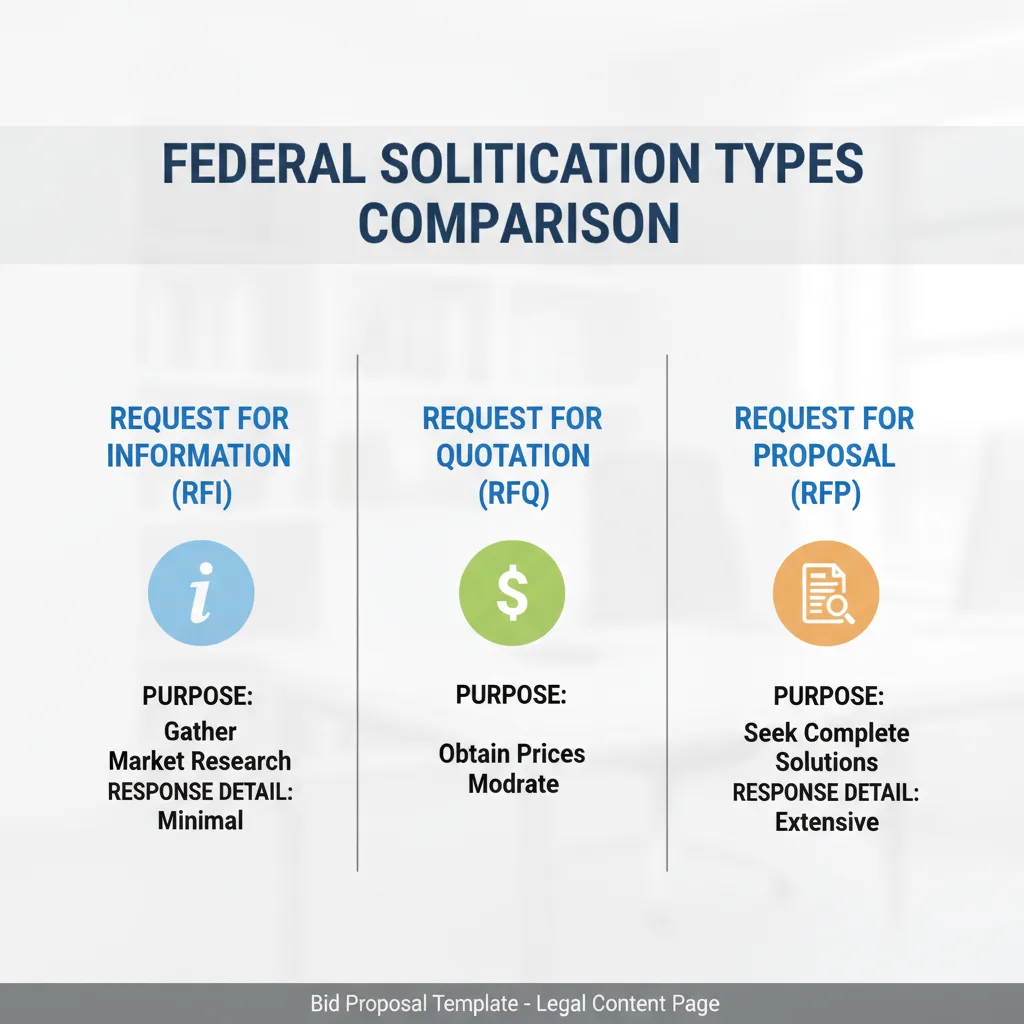
Understanding the type of solicitation is crucial for selecting and utilizing the appropriate bid proposal template. Federal agencies use different documents to solicit information or offers:
- Request for Information (RFI) - Used by agencies to gather market research and learn about available solutions or capabilities from potential vendors. An RFI typically does not lead directly to a contract and does not require a detailed bid proposal.
- Request for Quotation (RFQ) - Primarily used when agencies have a clear understanding of their needs and are seeking price quotations for specific products or services. Responses to RFQs are generally less extensive than full proposals.
- Request for Proposal (RFP) - Issued when an agency is seeking a complete solution to a complex problem and requires a detailed proposal from vendors. RFPs necessitate comprehensive bid proposals that address technical approaches, management plans, and detailed pricing, making the use of a robust template essential for an effective response.
For instance, offerors seeking a GSA Multiple Award Schedule (MAS) contract are required to use specific templates provided by the GSA for their MAS offers. These include specialized price proposal templates for various Special Item Numbers (SINs), which must be uploaded as part of the submission process to ensure compliance with federal procurement regulations.
Developing and Submitting a Bid Proposal
The process of developing and submitting a bid proposal using a template involves several key steps, focusing on tailoring the general structure to the specific requirements of the solicitation. Customization is essential to demonstrate a clear understanding of the client's needs and to articulate a compelling value proposition.
- Analyze the Solicitation - Thoroughly review the Request for Proposal (RFP) or other solicitation document to identify all mandatory requirements, evaluation criteria, deadlines, and submission instructions. This step informs which sections of the template need particular attention.
- Customize the Template - Adapt the chosen bid proposal template to align precisely with the solicitation's structure and content requirements. This may involve adding, removing, or reordering sections to match the client's outlined format.
- Develop Content - Populate the template with specific, tailored content that directly addresses each requirement of the solicitation. Focus on clearly articulating the proposed solution, its benefits, and the bidder's qualifications.
- Review and Edit - Conduct comprehensive reviews for accuracy, completeness, clarity, and compliance with all solicitation instructions. Ensure that the proposal is free of grammatical errors, typos, and inconsistencies.
- Finalize and Submit - Prepare the final proposal package, ensuring all required documents, forms, and attachments are included and correctly formatted. Submit the proposal according to the specified method (e.g., online portal, email, physical delivery) and by the deadline.
Frequently Asked Questions
Sources
- Required templates for a MAS offer - Provides official templates required for Multiple Award Schedule (MAS) offers, including price proposal templates and other necessary documents.
- Understand common federal contracting terms: RFIs, RFQs, and RFPs - Explains the differences between Request for Information (RFI), Request for Quotation (RFQ), and Request for Proposal (RFP) in federal contracting.
Not the form you're looking for?
Try our legal document generator to create a custom document
Disclaimer: The templates available on this website are provided for general informational purposes only and do not constitute legal advice. They are not intended to be, and should not be interpreted as, compliant with any specific legal, regulatory, or privacy requirements. These templates are not a replacement for professional legal guidance and should not be relied upon for any particular matter or circumstance. Users are strongly encouraged to seek advice from a qualified attorney licensed in their jurisdiction before using, modifying, or relying on any template.
All templates are provided on an "as is," "with all faults," and "as available" basis. The provider disclaims any and all warranties of any kind, whether express, implied, statutory, or otherwise, including without limitation warranties of merchantability, fitness for a particular purpose, title, or non-infringement.
LegalTemplates.com makes no guarantees or representations regarding the accuracy, completeness, expected outcomes, or reliability of the materials contained in these templates or any materials referenced or linked from them.